The UPI Ecosystem and API Banking: A CAIIB Guide for 2026
The UPI ecosystem and API banking have moved from being a payments convenience to the structural backbone of Indian banking, and for CAIIB candidates studying Information Technology and Digital Banking this is now core examinable material. By 2026 the Unified Payments Interface processes well over 16 billion transactions a month, and the same open, interoperable rails that power a small QR payment also drive lending, insurance and wealth journeys through the account aggregator framework. This article explains how UPI is architected, who the participants are, how NPCI governs the network, and how API or open banking and modern core banking systems are reshaping the way money moves in India.
UPI architecture and the participants in the ecosystem
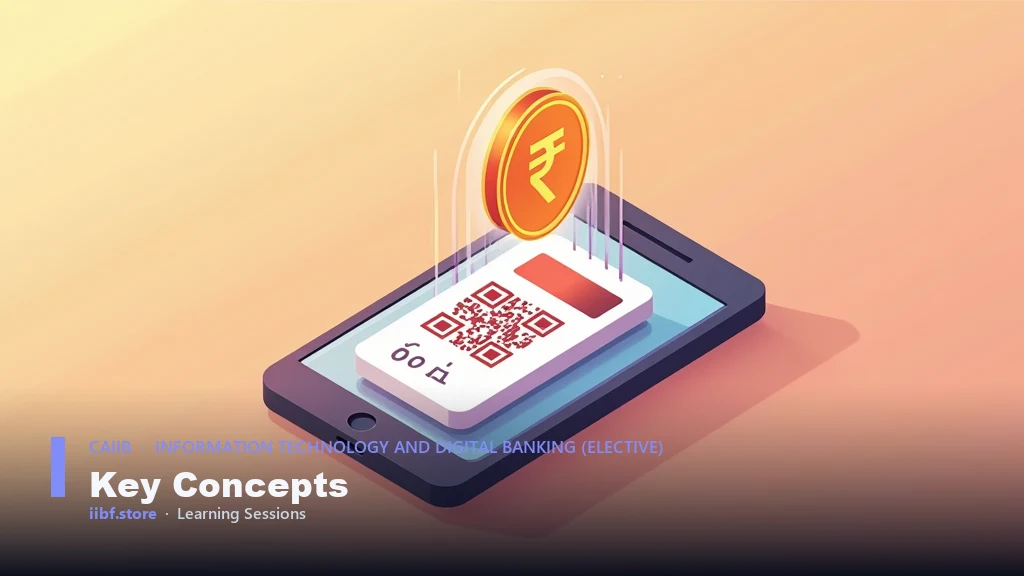
The Unified Payments Interface is a real-time, account-to-account payment system built on top of the Immediate Payment Service (IMPS). The defining feature of the UPI ecosystem is the virtual payment address (VPA), which lets a customer send and receive money without exposing the underlying account number or IFSC. A single mobile app can link multiple bank accounts, and interoperability ensures any UPI app can pay any other.
The key participants are well worth memorising for the CAIIB exam:
- Payer and payee banks debit and credit the actual accounts and remain the settlement banks.
- Payment Service Providers (PSPs) are banks that issue the UPI handle and authenticate the customer.
- Third-Party Application Providers (TPAPs) such as popular consumer apps provide the front-end but ride on a sponsor bank.
- NPCI operates the central switch that routes and reconciles every request.
Settlement happens on a deferred net basis through the Reserve Bank of India, while the customer experience is instant. Understanding this split between instant messaging and net settlement is a favourite examiner theme. For a structured revision of these concepts, the CAIIB course maps each participant to its regulatory obligation.
NPCI: the institution that governs the rails
The National Payments Corporation of India (NPCI) is the umbrella organisation for retail payments, set up in 2008 under the guidance of the RBI and the Indian Banks Association as a Section 8 not-for-profit company. NPCI owns and operates not just UPI but also RuPay, IMPS, NACH, AePS, FASTag and the Bharat BillPay system, making it one of the most important pieces of national digital public infrastructure.
For banking professionals, the value of NPCI lies in standardisation. Because every member bank connects to one switch using a common message format, a new bank can join the network and instantly transact with every other participant. NPCI also enforces the operational rules that examiners test, including:
- Transaction limits that the RBI and NPCI revise periodically for different use cases.
- Dispute and chargeback timelines handled through the Unified Dispute and Issue Resolution (UDIR) system.
- Risk and fraud controls such as device binding and two-factor authentication via UPI PIN.
NPCI International Payments Limited (NIPL) is now exporting this model abroad, with UPI acceptance live in several countries. Candidates should connect NPCI governance to the broader theme of financial inclusion and keep an eye on the latest circulars summarised in the IIBF news updates.
UPI 2.0, AutoPay and UPI Lite: the feature stack
UPI is not static; it has evolved through deliberate feature releases that each open a new business use case. UPI 2.0 introduced the overdraft account linkage, one-time mandates, signed intent for merchant payments, and the ability to view and store invoices. These features pushed UPI beyond simple person-to-person transfers into commerce.
Three innovations deserve special attention in 2026:
- UPI AutoPay uses e-mandates so customers can authorise recurring debits for subscriptions, EMIs, insurance premiums and SIPs, all within the UPI app and within RBI recurring-payment rules.
- UPI Lite creates an on-device wallet for small-value offline-style payments that do not hit the core banking system for every transaction, which dramatically reduces load on the central switch and improves success rates.
- Credit on UPI, including RuPay credit card linkage and pre-sanctioned credit lines, brings lending directly onto the payment rail.
These layers show how a single rail can serve payments, mandates and credit simultaneously. Testing your recall of which feature solves which problem is exactly the kind of application-based question the exam favours, and the match game is a quick way to drill these mappings before exam day.
API banking, open banking and the Account Aggregator framework
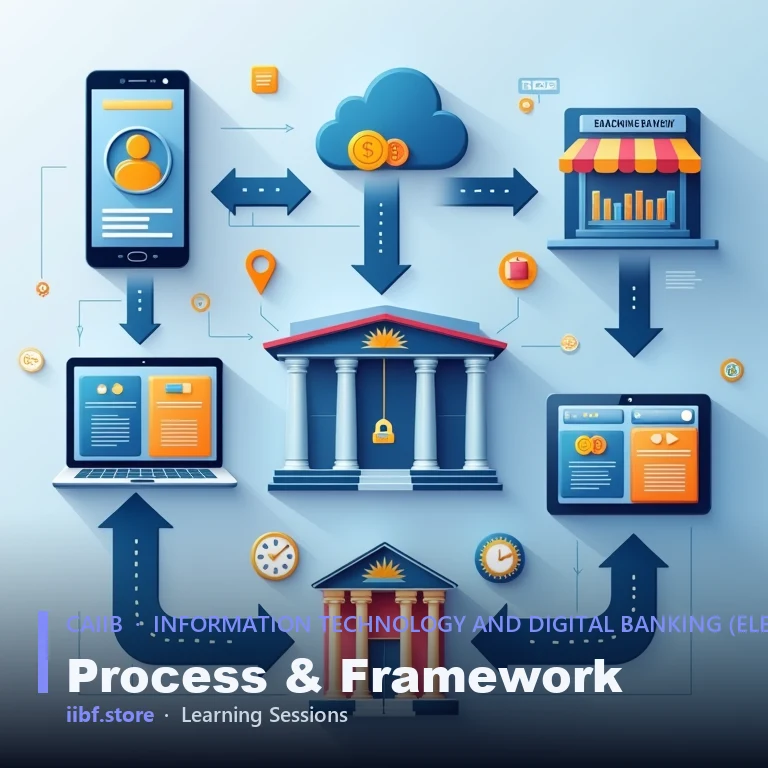
API banking exposes banking functions such as balance enquiry, fund transfer, statement retrieval and account opening through secure application programming interfaces, so fintechs and corporates can embed banking inside their own apps. This is the engine behind open banking, where, with customer consent, a regulated entity can access financial data held at another institution.
India has implemented open banking through a uniquely consent-driven design called the Account Aggregator (AA) framework, regulated by the RBI. The participants are:
- Financial Information Providers (FIPs) such as banks, insurers and tax systems that hold the data.
- Financial Information Users (FIUs) such as lenders that need the data to underwrite.
- Account Aggregators, RBI-licensed NBFCs that move encrypted data on the customer instruction.
The AA never sees the data in plain form; it is a consent and data-blind pipe. This enables faster, paperless lending and is becoming central to digital banking strategy. Closely tied to this is the core banking system (CBS), the centralised ledger that records every account in real time and now exposes APIs so that UPI, AA and channel apps can all read and write consistently. To revise the regulatory ratios and policy rates that influence these credit decisions, see the RBI rates reference.
How digital rails are reshaping payments in 2026 and your exam strategy
Put together, UPI, NPCI governance, the feature stack and the API plus Account Aggregator layer form a single interoperable fabric that is reshaping payments in 2026. Banks are moving from being product silos to being platforms, where the core banking system, the payment rail and the consent layer cooperate to deliver embedded finance. For a CAIIB candidate, the message is clear: do not memorise UPI as a standalone topic, but understand how it sits inside the wider digital banking architecture.
Practical revision tips:
- Be able to draw the UPI transaction flow from app to PSP to NPCI switch to settlement.
- Distinguish UPI 2.0, AutoPay, UPI Lite and Credit on UPI by the problem each solves.
- Explain the AA framework participants and why it is consent-driven and data-blind.
- Link core banking systems to API exposure and real-time interoperability.
Master these and you will handle both factual and scenario questions with confidence. Ready to test yourself? Attempt a focused set on the CAIIB practice tests for Information Technology and Digital Banking, and reinforce your reading with more explainers on the iibf.store blog.
What is the difference between a PSP bank and a TPAP in UPI?
A PSP bank is a payment service provider that issues the UPI handle and authenticates the customer, while a Third-Party Application Provider supplies the front-end app but must ride on a sponsor PSP bank to access the NPCI switch. The PSP carries the regulatory responsibility for the handle.
How does UPI Lite reduce load on the banking system?
UPI Lite stores a small balance on the customer device, so low-value payments are settled from this on-device wallet without sending every transaction to the core banking system in real time. This lowers traffic on the central switch and improves transaction success rates.
Who regulates the Account Aggregator framework in India?
The Reserve Bank of India regulates Account Aggregators, which are licensed as a special category of NBFC. They act as consent-driven, data-blind intermediaries that move encrypted financial data between Financial Information Providers and Financial Information Users on the customer instruction.
Why is API banking important for open banking?
API banking exposes banking functions through secure interfaces so that authorised third parties can integrate services with customer consent. These standardised APIs are the technical foundation of open banking, enabling embedded finance, faster lending and seamless interoperability across institutions.
Take a free mock test, download chapter PDFs, or watch a video class — all included on iibf.store.
Keep reading