CBDC, Video-KYC & Account Aggregator: Digital Banking 2026
CBDC, Video-KYC and the Account Aggregator framework are the three pillars that now define digital banking in India, and together they sit at the very centre of the IIBF Digital Banking certificate. The Reserve Bank of India has carried the e-Rupee from a controlled pilot into a scaled rollout, paper-based onboarding has given way to live video verification, and consent-led data sharing has quietly become the backbone of modern lending. If you are preparing for this paper, mastering how these systems connect is no longer optional — it is the difference between a pass and a high score.
This guide maps the entire 2026 digital banking stack the way an examiner expects you to understand it: clearly, with the right terminology, and with a study plan you can actually follow. We will unpack the two-tier e-Rupee model, the V-CIP onboarding rules, the Account Aggregator consent architecture, and the digital lending guidelines that tie everything together.
Key takeaways
- CBDC (e-Rupee) is sovereign digital currency issued by the RBI — a direct liability of the central bank, unlike a bank deposit or wallet balance.
- Video-KYC (V-CIP) lets banks complete KYC remotely through a live, geo-tagged video call with liveness checks.
- The Account Aggregator is a data-blind consent manager that moves encrypted financial data from a provider to a user only with your consent.
- The Digital Lending Guidelines demand a direct flow of funds, a Key Fact Statement and a cooling-off period on every digital loan.
- These four themes carry heavy weight in the IIBF Digital Banking paper and are frequently tested together.
What is CBDC? The e-Rupee in 2026
The e-Rupee — the digital Rupee, or Central Bank Digital Currency (CBDC) — is a sovereign digital currency issued directly by the Reserve Bank of India as legal tender. The single most important point to anchor in your memory is that it is a liability of the central bank itself, not of a commercial bank. That is what makes it fundamentally different from UPI, prepaid wallets and ordinary bank deposits, all of which are claims on a commercial bank rather than on the RBI.
By 2026 the RBI runs the e-Rupee in two distinct streams, and examiners love to test the contrast between them.
- CBDC-Retail (e-Rupee-R): token-based digital cash held in a wallet, usable for person-to-person and person-to-merchant payments, and designed to mirror the anonymity and offline capability of physical cash for small values.
- CBDC-Wholesale (e-Rupee-W): account-based settlement money used by banks and financial institutions for interbank transfers, the call money market and government securities settlement, reducing settlement risk.
Direct vs indirect issuance: how CBDC reaches you
A classic examination point is the difference between a direct and an indirect (two-tier) issuance model. India deliberately uses the indirect model: the RBI issues the CBDC, and banks distribute it to customers. This preserves the existing banking relationship rather than turning the central bank into everyone's retail banker.
You should also be able to list the features driving adoption: offline functionality, programmability for targeted benefit transfers, and interoperability with UPI QR codes. One subtle but high-yield fact: unlike a bank deposit, an e-Rupee holding earns no interest. That design choice protects bank deposit franchises and keeps monetary policy transmission intact. For a deeper dive, our companion guide on the Digital Rupee (CBDC) 2026: RBI Framework, Pilot & Banking Impact walks through the design choices in detail, and India's Digital Rupee (e-Rupee): CBDC Design and Use Cases covers real-world applications.
Video-KYC (V-CIP): the remote onboarding revolution
The Video-based Customer Identification Process (V-CIP) is the RBI-sanctioned method of completing Know Your Customer obligations remotely through a live video interaction. Introduced through amendments to the Master Direction on KYC, it has become the mainstream onboarding route by 2026 and has largely replaced paper-based account opening for retail customers.
In practice, V-CIP lets a bank official verify a customer face to face over a secure video call, capture a live photograph, validate an Officially Valid Document (OVD), and confirm that the customer is physically present in India. The compliance essentials a Digital Banking candidate must recall are:
- Live, consent-based interaction: the session must be a real-time audio-visual call initiated from the bank's own domain — never a recorded clip — with the customer giving explicit consent.
- Liveness detection and geo-tagging: the process must confirm the customer is live, capture geo-tags to verify presence within India, and randomly sequence questions to defeat impersonation.
- OVD and PAN verification: documents are validated against the Aadhaar database (with masking) or the Income Tax PAN service, and the official records the result.
- Trained officials and audit trail: only trained bank staff may conduct V-CIP, and the activity log — including the video recording — is retained for audit.
V-CIP slashes onboarding cost and time, extends banking to remote customers, and underpins the assisted digital lending model. It is frequently tested alongside the differences between Aadhaar e-KYC, Offline Aadhaar XML and the Central KYC Records Registry (CKYCR), so keep those three terms cleanly separated in your notes.
The Account Aggregator framework and consent architecture
The Account Aggregator (AA) framework is India's consent-based financial data-sharing infrastructure, regulated by the RBI as a distinct class of non-banking financial company (NBFC-AA). It lets a customer share financial information from one institution with another in a secure, digital and revocable manner — and crucially, without the AA ever seeing the data in plain form. By 2026 the network spans banks, insurers, mutual funds, and pension and tax data, making it the backbone of frictionless lending and personal finance.
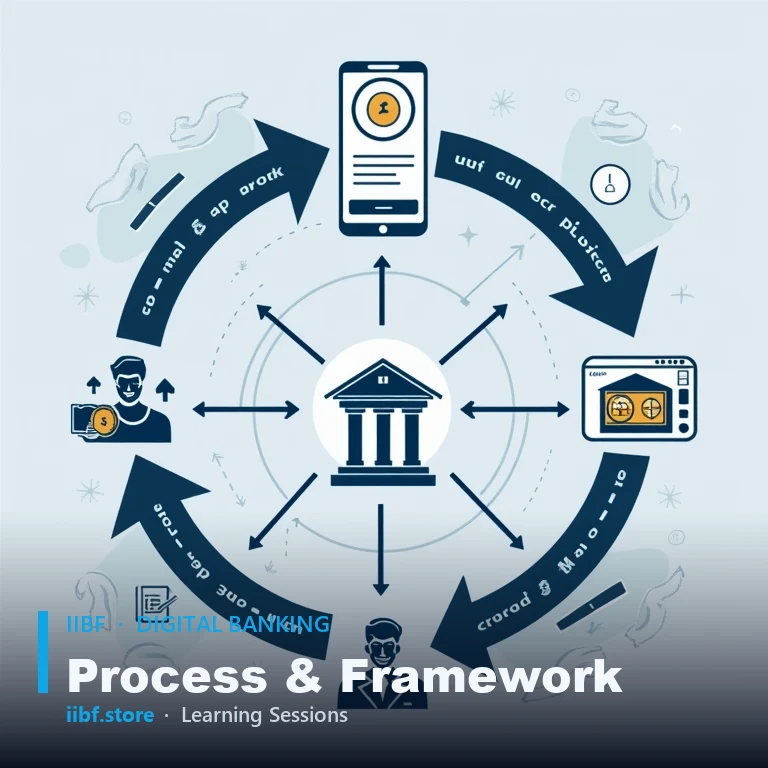
The architecture rests on three precisely defined roles that you must be able to name and distinguish:
- Financial Information Provider (FIP): the institution that holds the customer's data, such as a bank or a depository.
- Financial Information User (FIU): the institution that consumes the data, such as a lender assessing loan eligibility.
- Account Aggregator (AA): the consent manager that routes encrypted data from FIP to FIU but cannot store or read it, acting purely as a data-blind intermediary.
At the heart of the system is the consent artefact — a standardised, machine-readable digital consent that specifies the purpose, the data fields, the duration and the frequency of access. Consent is granular and can be revoked at any time, giving the customer true data sovereignty. The framework is built on DEPA (Data Empowerment and Protection Architecture) principles and aligns with the Digital Personal Data Protection Act. For the full role-by-role breakdown, study our dedicated guide on the Account Aggregator Framework: NBFC-AA, FIP, FIU & DEPA Explained for IIBF.

How the three systems fit together: a quick comparison
Candidates often blur these systems together because all three are "digital." The fastest way to keep them straight is to compare them side by side on what they actually do.
| System | What it is | Who is liable / in control | Core exam keyword |
|---|---|---|---|
| CBDC (e-Rupee) | Sovereign digital legal tender | Liability of the RBI; distributed by banks (indirect model) | Token-based, offline, no interest |
| Video-KYC (V-CIP) | Remote onboarding via live video | Trained bank official conducts and records it | Liveness, geo-tag, OVD |
| Account Aggregator | Consent-based data sharing | Customer controls via consent; AA is data-blind | FIP, FIU, consent artefact |
| Digital Lending | Rules for loans via digital channels | Regulated Entity (RE) is accountable for the LSP | KFS, APR, cooling-off |
Digital lending guidelines and the rise of neo-banking
The RBI Digital Lending Guidelines, now firmly embedded by 2026, govern every loan disbursed through a digital channel and are a high-yield area of the syllabus. They were framed to curb predatory practices by unregulated lending apps and to protect borrowers. The four rules to memorise are:
- Direct flow of funds: loan disbursal and repayment must flow directly between the borrower's bank account and the Regulated Entity (RE), with no pass-through pooling account of a Lending Service Provider (LSP).
- Key Fact Statement (KFS): the borrower must receive a standardised KFS disclosing the all-inclusive Annual Percentage Rate (APR), the recovery mechanism and the cooling-off period before signing.
- Data and consent: apps may collect only need-based data with explicit consent, and customers can revoke consent and demand data deletion.
- Cooling-off period: a borrower may exit the loan by repaying the principal and proportionate APR during a defined cooling-off window without penalty.
Running parallel to this is neo-banking — digital-only banking experiences delivered without physical branches. A frequently tested nuance is that in India neo-banks are not separately licensed: they partner with a licensed bank that holds the deposits, while the neo-bank delivers a superior digital interface, analytics and onboarding. Be ready to distinguish a neo-bank (a technology layer) from a full digital bank licence. To see how these rules apply to real lending journeys, read our guide on Digital Lending and the Account Aggregator Framework, and revisit payments fundamentals through the UPI and Digital Payment Ecosystem 2026 study guide.
A practical study plan for this section
This cluster of topics rewards structured revision rather than passive reading. Here is a simple four-step plan you can run over a week.
- Day 1-2 — Build the vocabulary. Make a one-page glossary: CBDC-R, CBDC-W, V-CIP, OVD, CKYCR, FIP, FIU, NBFC-AA, consent artefact, DEPA, KFS, APR, LSP, RE. Examiners test definitions and one-line distinctions relentlessly.
- Day 3 — Map the flows. Draw three diagrams by hand: the two-tier CBDC issuance, the V-CIP onboarding sequence, and the FIP to FIU consent route through the AA. Drawing them fixes the process order in memory.
- Day 4 — Drill the contrasts. Practise the high-frequency comparison questions: CBDC vs UPI, V-CIP vs Aadhaar e-KYC, neo-bank vs digital bank, direct vs indirect issuance.
- Day 5-7 — Test under exam conditions. Attempt full-length papers, review every wrong answer, and reinforce terminology with quick recall games.
Tip from the classroom
When a question mixes two systems — for example "a lender pulling bank statements before approving a digital loan" — name the framework first (Account Aggregator), then the role (the lender is the FIU), then the rule (the loan must follow the direct-flow and KFS norms). That three-step habit catches almost every trick question in this section.
Put the plan into action with our subject hub and live mock tests. Start from the Digital Banking exam hub, dive into the Digital Banking subject page, and then attempt a timed paper on the Digital Banking mock tests. Reinforce the tricky abbreviations with the Digital Banking matching games, and browse every guide for this paper on the Digital Banking blog.
Common mistakes candidates make
A handful of errors cost marks again and again in this section. Watch for these:
- Calling CBDC "a wallet" or "like UPI." CBDC is central-bank money; UPI is just a payment rail over commercial bank deposits. They are not the same layer.
- Assuming the e-Rupee earns interest. It does not — that is a deliberate design choice, and questions probe it directly.
- Mixing up FIP and FIU. Remember: the Provider holds the data, the User consumes it.
- Thinking the Account Aggregator can read your data. It is strictly data-blind; it only routes encrypted information.
- Confusing V-CIP with Aadhaar e-KYC. V-CIP is the broader live-video onboarding process; Aadhaar e-KYC is one identity-verification method used within it.
- Forgetting the cooling-off period and KFS when answering digital-lending questions — these are the most testable borrower protections.
Frequently asked questions
What is the difference between CBDC retail and CBDC wholesale?
CBDC-Retail (e-Rupee-R) is token-based digital cash used by the general public for everyday person-to-person and merchant payments, including offline use. CBDC-Wholesale (e-Rupee-W) is account-based settlement money used only by banks and financial institutions for interbank transfers and securities settlement. In short, retail is digital cash for everyone, while wholesale is settlement money for institutions.
Is Video-KYC (V-CIP) the same as Aadhaar e-KYC?
No. V-CIP is a live video interaction in which a trained bank official verifies the customer, captures a live photo and validates documents with geo-tagging and liveness checks. Aadhaar e-KYC is one method of identity verification that can be used within or alongside V-CIP. V-CIP is the broader remote onboarding process, not a single verification step.
Can an Account Aggregator see my financial data?
No. The Account Aggregator is data-blind by design. It routes encrypted data from the Financial Information Provider (FIP) to the Financial Information User (FIU) based on your digital consent artefact, but it cannot store, read or use the data itself. This is the single most important fact to remember about the AA framework.
What is a Key Fact Statement in digital lending?
A Key Fact Statement (KFS) is a standardised disclosure that the Regulated Entity must give the borrower before a digital loan is signed. It states the all-inclusive Annual Percentage Rate (APR), the recovery mechanism, the cooling-off period and other material terms in a clear, comparable format. Its purpose is to ensure the borrower fully understands the cost and terms before committing.
Are neo-banks separately licensed by the RBI in India?
No. Neo-banks are not separately licensed in India. They operate as a technology and experience layer that partners with a licensed bank, which actually holds the customer deposits and bears the regulatory responsibility. The neo-bank focuses on the digital interface, analytics and onboarding rather than holding a banking licence of its own.
How heavily is this topic weighted in the IIBF Digital Banking exam?
CBDC, Video-KYC, the Account Aggregator framework and digital lending are among the most heavily weighted and frequently tested themes in the Digital Banking certificate. As with all dates and the exact paper structure, you should confirm the current weightage and schedule against the latest released IIBF notification, since the regulator periodically refreshes the syllabus. Treat this cluster as a priority area in your revision.
Conclusion: master the 2026 digital banking stack
CBDC, Video-KYC and the Account Aggregator framework are no longer futuristic ideas — they are the operating reality of Indian banking in 2026 and the most rewarding topics in the IIBF Digital Banking certificate. A candidate who can confidently explain the two-tier e-Rupee model, the V-CIP compliance checklist, the AA consent architecture and the digital lending guidelines is well placed to clear the paper and to advise customers in the field with real authority.
Consolidate everything with full-length practice, fix the vocabulary with quick recall drills, and keep checking the official source for any update. You can verify the latest framework details on the official IIBF website. Start your next mock test now and turn this digital banking knowledge into exam marks.
Related Guides
📚 Free Learning Sessions resources — connect & crack your exam
- 📝 Free mock tests — chapter-wise, exam-pattern, with instant solutions
- 🎮 Matching games — gamified revision of key terms & concepts
- 📄 Study notes & PDFs — downloadable chapter material
- 🎥 Video classes on YouTube — subscribe to @learningsessions
💬 Want the full course? WhatsApp your course name to 8360944207 and our team will set you up.
📱 Study on the go — get our iOS & Android app at iibf.store/app.
Quick quiz on this topic
5 exam-style questions from our free test bank — check yourself before you move on.
Practice this topic
Take a free mock test, download chapter PDFs, or watch a video class — all included on iibf.store.
Keep reading