Digital Lending and the Account Aggregator Framework: IIBF Guide
Digital lending has moved from the fringes of the credit market to its mainstream. Reshaping how individuals and small businesses borrow in India. For candidates pursuing the IIBF Certificate in Digital Banking. A firm command of digital lending. The account aggregator framework is essential.
Because the Reserve Bank of India has built an entire supervisory architecture around app-based credit. Consent-driven data sharing and the emerging e-rupee. This guide unpacks the RBI digital lending guidelines. The role of lending service providers.
The account aggregator ecosystem. The consent layer that ties them together. And a clear overview of the Central Bank Digital Currency.
RBI Digital Lending Guidelines and the Role of LSPs
The RBI digital lending guidelines, first issued in 2022 and consolidated since, draw a hard line around who may actually lend. Only regulated entities such as banks and NBFCs may disburse and recover loans; the fintech apps that source and service those loans are classified as lending service providers, or LSPs. An LSP is an agent of the regulated entity, performing functions like customer onboarding, credit assessment support and collection, but it cannot lend on its own balance sheet without authorisation. The guidelines insist that all loan disbursals and repayments flow directly between the borrower's bank account and the regulated entity, with no pass-through pooling in an LSP or third-party account. Borrowers must receive a standardised Key Fact Statement showing the all-inclusive annual percentage rate, recovery mechanism, grievance officer and cooling-off period during which they can exit by repaying principal and proportionate charges without penalty. Platforms must also publish the names of their partner regulated entities upfront, ending the opacity that earlier let unregulated apps masquerade as lenders. The rules further require a verifiable audit trail of consent, a board-approved policy on fair recovery, and a prohibition on automatic increases in credit limits without the borrower's express request. For exam preparation, remember the core principle: data and disbursal must stay with the regulated entity, while the LSP remains a transparent, accountable intermediary whose conduct the regulated entity is fully responsible for. This shift puts the legal liability for any mis-selling squarely on the bank or NBFC, not the app. You can follow regulatory updates on our IIBF news page.
The Account Aggregator Ecosystem
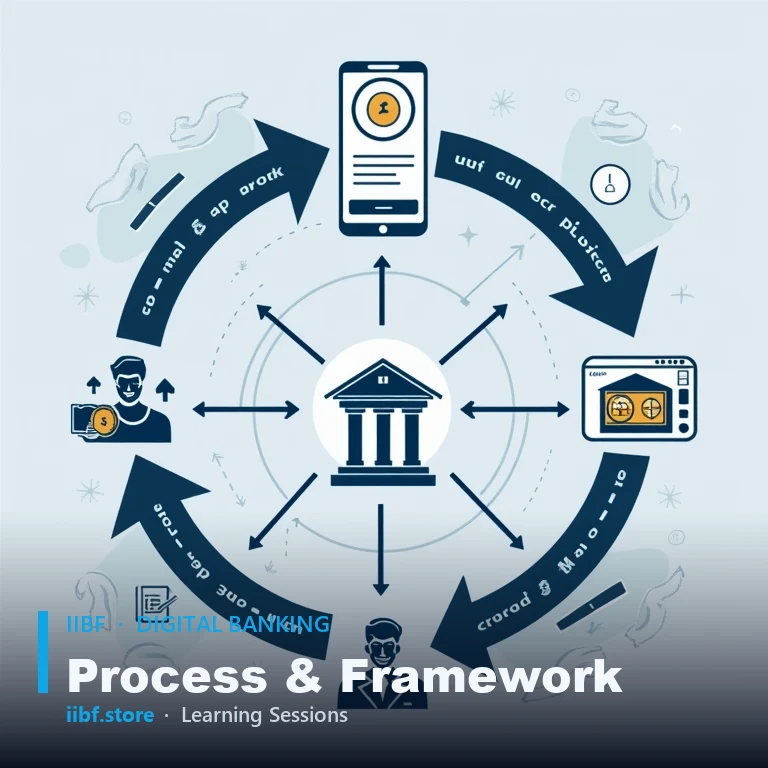
The account aggregator ecosystem is the data backbone that makes responsible digital lending possible at scale. An Account Aggregator, or AA, is a special category of NBFC licensed by the RBI to act as a consent manager, moving a customer's financial information securely from one institution to another. Crucially, the AA is "data-blind": it transports encrypted data but cannot read, store or monetise it. Three roles define the ecosystem. Financial Information Providers, such as banks, mutual funds and insurers, hold the customer's data. Financial Information Users, typically lenders, request that data to assess a loan. The Account Aggregator sits in the middle, fulfilling requests only after the customer grants explicit, time-bound consent. This replaces the old practice of borrowers sharing PDF statements or passwords, which was both insecure and easy to forge. For a lender, pulling verified bank-statement data through an AA shortens underwriting from days to minutes while reducing fraud. The framework is interoperable, so a customer can link accounts across many institutions through a single AA app, and consent can be set for a one-time pull or a recurring flow over a defined period. Because the AA never holds the underlying data at rest, a breach at the aggregator cannot expose a customer's statements, which is a deliberate privacy-by-design choice. Banks and NBFCs that join the network as users benefit from cleaner, tamper-evident data, while customers gain a single dashboard to see and withdraw every consent they have ever granted. Understanding this plumbing is a high-yield topic, and you can reinforce it with structured study on the certification course and quick recall drills on our concept-matching game.
Consent Architecture and Data Protection
At the heart of both the AA framework and the RBI digital lending guidelines lies a robust consent architecture. Every data request travels with a digital consent artefact that specifies exactly what is being shared, with whom, for what purpose, and for how long. The customer sees this in plain language and can approve or decline each request, and can revoke standing consent at any time. This granular, purpose-bound model is built on the open API standards of the DEPA, the Data Empowerment and Protection Architecture. For digital lending, the guidelines add that lenders may collect only the data strictly needed for the loan, must store it within India, and cannot access the borrower's phone contacts, photos or files. Biometric data capture is restricted, and automated credit decisions must remain explainable. The Digital Personal Data Protection Act further strengthens these rights, giving borrowers a clear legal basis to demand erasure of their data once a loan relationship ends. The practical takeaway for bankers is that consent is no longer a one-time tick box buried in fine print; it is an auditable, revocable and minimal artefact that the customer controls end to end. Lenders are also expected to appoint a nodal grievance redressal officer specifically for digital complaints and to register unresolved cases on the RBI's integrated ombudsman scheme. For aspirants, the examinable thread is the chain of accountability: data minimisation, local storage, explainable decisions and a clear right to be forgotten. Test your grasp of these concepts with timed practice on our mock tests.

CBDC and the e-Rupee Overview
The Central Bank Digital Currency, branded the e-rupee, is the digital form of sovereign currency issued directly by the RBI, and it increasingly intersects with app-based credit and payments. Unlike money held in a bank deposit, the e-rupee is a direct liability of the central bank, carrying the same legal-tender status as physical cash but in token form held in a digital wallet. The RBI runs two variants: the wholesale CBDC for settlement between banks and the retail CBDC for everyday transactions by the public. The retail e-rupee aims to offer the anonymity of cash for small payments while reducing the cost of printing and handling physical notes. For the credit ecosystem, programmable CBDC could in future allow purpose-bound disbursals, where a loan can only be spent on the intended item, tightening the link between credit and its end use. It complements rather than replaces the existing UPI rails operated through the National Payments Corporation of India. A pilot for both wholesale and retail variants has been running in phases across selected cities and banks, letting the regulator study real-world behaviour before any wider rollout. Candidates should be able to distinguish CBDC from cryptocurrency, deposits and UPI on parameters of issuer, backing, anonymity and legal status, since this comparison is a recurring exam favourite. Together with the RBI credit guidelines and the account aggregator framework, the e-rupee completes a picture of a credit and payments system that is becoming faster, safer and more transparent. Official primers are published on the Reserve Bank of India website, and you can track current policy rates on our RBI rates tracker.
Frequently Asked Questions
What is the difference between a lender and an LSP?
Only a regulated entity such as a bank or NBFC can actually lend. Recover money. A lending service provider.
Or LSP. Is an agent that handles sourcing. Onboarding and servicing for the regulated entity.
The LSP cannot disburse loans on its own balance sheet without authorisation.
How does an Account Aggregator protect my data?
An Account Aggregator is data-blind. Meaning it transports encrypted financial information without reading, storing or monetising it. Data moves only after you grant explicit.
Time-bound consent. And you can revoke that consent at any time. Replacing insecure sharing of statements or passwords.
Is the e-rupee the same as money in my bank account?
No. The e-rupee is a direct liability of the RBI. Just like physical cash, and is held in a digital wallet.
A bank deposit is a claim on your bank. The CBDC carries legal-tender status. While deposits depend on the solvency of the bank holding them.
Why is digital lending important for the IIBF exam?
Digital lending sits at the centre of the Digital Banking syllabus. Linking RBI guidelines, consent architecture, the account aggregator framework and CBDC. Examiners frequently test who may lend. How consent works and how data protection rules apply. Making it a high-yield, frequently updated topic.
Conclusion
The story of digital lending in India is one of putting the borrower's consent and the regulated entity's accountability at the centre of every transaction, with the account aggregator framework supplying secure data and the e-rupee hinting at a programmable future. For IIBF Digital Banking aspirants, mastering how LSPs, AAs, consent artefacts and CBDC fit together turns a sprawling topic into a single coherent map. Convert this understanding into marks by attempting a full-length mock test and reading more explainers on our banking exam blog today.
Quick summary in plain words
In short: keep it simple.
Read each point slow.
Take notes as you go.
Use the free tests to check what you know.
Watch the video if a part feels hard.
Do a bit each day.
Ask us on WhatsApp if you get stuck.
You can pass this exam.
Stay calm and trust your prep.
Come back to this guide often.
Small steps add up fast.
Skim the box below first.
Quick quiz on this topic
5 exam-style questions from our free test bank — check yourself before you move on.
Practice this topic
Take a free mock test, download chapter PDFs, or watch a video class — all included on iibf.store.
Keep reading