Corporate Insolvency Resolution Process (CIRP) Under IBC 2016
The corporate insolvency resolution process (CIRP) is the heart of the Insolvency and Bankruptcy Code. 2016 (IBC), India's landmark law for resolving corporate distress in a time-bound, creditor-driven manner. Before the IBC.
Recovery was slow and fragmented across multiple forums; the Code unified the framework and shifted control from defaulting promoters to a committee of creditors. For IIBF candidates. Understanding the corporate insolvency resolution process, its triggers, timelines and key players, is essential to grasp how banks recover dues from stressed companies.
This article walks through how CIRP is initiated. The role of the resolution professional, the moratorium, the committee of creditors, and the distribution waterfall when resolution fails.
How CIRP is initiated
The corporate insolvency resolution process can be triggered when a corporate debtor commits a default. Under the IBC. The minimum default threshold for initiating CIRP was raised to ₹1 crore (from the original ₹1 lakh) to keep smaller defaults out of the formal process. Three categories of applicant can file before the Adjudicating Authority, the National Company Law Tribunal (NCLT):
- Financial creditor (Section 7): a bank or lender whose debt carries the time value of money files on proof of default.
- Operational creditor (Section 9): a supplier or service provider files after serving a demand notice and receiving no satisfactory response.
- Corporate applicant (Section 10): the corporate debtor itself files to initiate its own resolution.
Once the NCLT is satisfied that a default has occurred and the application is complete, it admits the case, marking the commencement of CIRP. Admission sets the clock running on the statutory timeline. The authoritative source for the Code and its regulations is the Insolvency and Bankruptcy Board of India at ibbi.gov.in.
The interim resolution professional and moratorium
On admission, two things happen immediately. First, the NCLT appoints an Interim Resolution Professional (IRP), who takes over the management of the corporate debtor. The powers of the board of directors are suspended. And the company is run as a going concern by the IRP, later confirmed or replaced by a Resolution Professional (RP). This displacement of incumbent management is a defining feature of the corporate insolvency resolution process.
Second, a moratorium under Section 14 comes into force. The moratorium freezes all legal actions against the corporate debtor: no suits can be instituted or continued, no assets can be transferred or enforced, no recovery of property by owners or lessors, and no enforcement of security interest. This "calm period" preserves the asset base so that a resolution can be attempted without creditors dismembering the company. The IRP also makes a public announcement inviting creditors to submit claims, then constitutes the committee of creditors based on verified financial debt. Candidates can study these mechanics in depth through the CAIIB course and test recall with targeted mock tests.

The Committee of Creditors and resolution plan
The Committee of Creditors (CoC), composed of the financial creditors, is the decision-making engine of the corporate insolvency resolution process. Each creditor's voting share is proportionate to the financial debt owed to it. The CoC appoints or confirms the Resolution Professional. Oversees the running of the company, and ultimately decides the fate of the debtor by voting on resolution plans.
The RP invites resolution plans from eligible resolution applicants. Subject to the eligibility bar of Section 29A, which disqualifies defaulting promoters and certain connected persons from bidding for their own company. Each plan must provide for payment of insolvency costs.
The dues of operational creditors at least to the liquidation value, and a viable revival of the business. A resolution plan is approved if it secures the assent of creditors holding at least 66% of the voting share. The approved plan then goes to the NCLT for final sanction, after which it becomes binding on all stakeholders.
This creditor-in-control, value-maximising design is what distinguishes the IBC from earlier recovery laws.
Timelines and outcomes
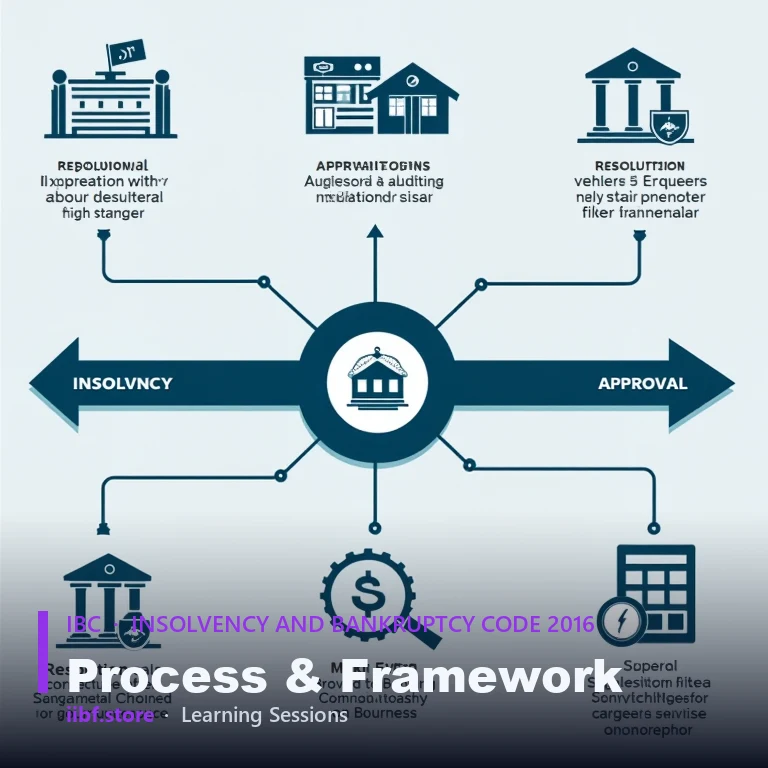
The IBC prescribes that the corporate insolvency resolution process must be completed within 180 days from commencement. Extendable once by up to 90 days, giving a base limit of 270 days. The Code further provides an outer limit of 330 days including any litigation time, to prevent indefinite delays. If a resolution plan is approved and sanctioned, the company is revived under new management. If no plan is approved within the timeline, or the CoC decides to liquidate, the NCLT orders liquidation of the corporate debtor.
In liquidation, assets are sold and proceeds distributed according to the waterfall mechanism under Section 53. The priority runs from insolvency resolution and liquidation costs, then workmen's dues and secured creditors' debts ranking together, then employee wages, then unsecured financial creditors, then government dues, and finally equity shareholders. This statutory priority is a frequent exam favourite, so memorise the order. Updates and circulars are published on the IIBF news page, with deeper explainers on the iibf.store blog.
Why CIRP matters for bankers
For a lender, the corporate insolvency resolution process is now a primary route to recover dues from a defaulting company, often yielding better outcomes than older mechanisms. Bankers must know when to file under Section 7, how to participate in the CoC, how to value security, and where their claim sits in the Section 53 waterfall. A practical way to retain the sequence of steps and the priority order is active recall, the concept-matching drill on the match game is well suited to this. Understanding CIRP also sharpens credit appraisal, since lenders price the recovery prospects of a borrower into their decisions.
Conclusion
The corporate insolvency resolution process under IBC 2016 transformed how India resolves corporate distress, putting creditors in control, fixing firm timelines, and maximising recoverable value. Master the triggers, the moratorium, the CoC's 66% threshold, the 330-day limit and the Section 53 waterfall, and you will command a high-yield portion of the IIBF syllabus. A good revision habit is to trace one hypothetical default all the way from the Section 7 application through admission, moratorium, the CoC vote and either a sanctioned resolution plan or liquidation, because seeing the full arc fixes the sequence far better than memorising isolated sections. Put it to the test today at iibf.store/tests and convert understanding into marks.
Who can initiate the corporate insolvency resolution process?
A financial creditor under Section 7. An operational creditor under Section 9, or the corporate debtor itself under Section 10 can file before the NCLT once a default of at least ₹1 crore has occurred.
What is the moratorium under Section 14?
It is a freeze imposed on the commencement of CIRP that halts all suits. Asset transfers, security enforcement and recovery actions against the corporate debtor, preserving its assets as a going concern while resolution is attempted.
What voting threshold approves a resolution plan?
A resolution plan must be approved by the Committee of Creditors with at least 66% of the voting share. After which the plan is submitted to the NCLT for final sanction and becomes binding on all stakeholders.
What is the maximum timeline for CIRP?
CIRP must ordinarily be completed within 180 days, extendable once by up to 90 days (270 days), with an outer limit of 330 days including litigation time. Failing resolution, the company proceeds to liquidation.
Free Revision PDFs — One-Liners & True/False
Printable last-minute revision sheets for Corporate Insolvency Resolution Process (CIRP) Under IBC 2016: 20 quick-fire one-liners and 20 true/false questions, each with answers & explanations. Free to download and share.
Quick quiz on this topic
5 exam-style questions from our free test bank — check yourself before you move on.
Practice this topic
Take a free mock test, download chapter PDFs, or watch a video class — all included on iibf.store.