Liquidation Process Under IBC 2016: Complete Exam Guide 2026
The liquidation process under the Insolvency and Bankruptcy Code. 2016 (IBC) is one of the most exam-critical topics for the IIBF Insolvency. Bankruptcy Code 2016 certification.
When the Corporate Insolvency Resolution Process (CIRP) fails to yield an approved resolution plan. The Adjudicating Authority. The National Company Law Tribunal (NCLT) — orders the company into liquidation.
Understanding every stage of this process. From the appointment of the liquidator to the final distribution of proceeds under the Section 53 priority waterfall. Is essential for candidates appearing in the exam. This guide provides a comprehensive.
Structured walkthrough of the liquidation process as laid down under Chapters III. IV of the IBC and the IBBI (Liquidation Process) Regulations. 2016.
When Does CIRP Lead to Liquidation?
The Corporate Insolvency Resolution Process is always the first attempt at rescuing a distressed company. However. The IBC explicitly provides that if CIRP does not result in a viable resolution. The company must be wound up through the liquidation process in an orderly manner. The NCLT passes a liquidation order under Section 33 of the IBC in the following circumstances:
- The Committee of Creditors (CoC) resolves by a vote of 66% or more of voting share to liquidate the corporate debtor at any time during CIRP.
- No resolution plan is received by the resolution professional before expiry of the CIRP period (180 days. Extendable to 330 days).
- The resolution plan submitted is rejected by the NCLT as not meeting the requirements of Section 30(2).
- The corporate debtor contravenes the terms of an approved resolution plan. An affected person files an application under Section 33(3).
Once the liquidation order is passed, a moratorium under Section 14 continues to operate and the resolution professional is replaced by (or continues as) the liquidator. The order is also communicated to the relevant registrar and the Insolvency and Bankruptcy Board of India (IBBI), which supervises the entire process. Candidates preparing for the exam through mock tests at iibf.store/tests will frequently encounter scenario-based questions on these triggers, so knowing the exact thresholds is vital.
It is important to note that the liquidation order does not dissolve the company immediately. The corporate debtor continues to exist as a legal entity until the NCLT passes a formal dissolution order after completion of the liquidation process. During this period. The liquidator manages the company's affairs solely for the purpose of winding up its business. Distributing proceeds to stakeholders.
Appointment, Powers, and Duties of the Liquidator

The liquidator is an Insolvency Professional (IP) registered with an Insolvency Professional Agency (IPA). Regulated by the IBBI. The NCLT appoints the liquidator by name in the liquidation order itself.
As a general rule. The existing resolution professional continues as the liquidator. Unless the CoC recommends a different IP or the NCLT finds it appropriate to appoint someone else.
The liquidator's fees. Expenses are charged to the liquidation estate. Rank ahead of all other creditors.
A fact tested repeatedly in certification exams.
Key Powers of the Liquidator
Under Section 35 of the IBC. The liquidator is vested with extensive powers to manage. Realise the liquidation estate:
- Take into custody or control all assets. Property, effects, and actionable claims of the corporate debtor.
- Carry on the business of the corporate debtor for its beneficial winding up with the permission of the NCLT.
- Sale assets through auction or private sale, including by going concern sale.
- Verify claims of all creditors and admit or reject them.
- Investigate the financial affairs of the corporate debtor. Make applications to NCLT for avoidance of antecedent transactions (preferential. Undervalued, fraudulent or extortionate transactions under Sections 43–51).
- Appoint professionals including advocates, accountants, and valuers to assist in the process.
- Draw. Accept. Or endorse bills of exchange. Other negotiable instruments on behalf of the corporate debtor.
Duties of the Liquidator
The liquidator must publicly announce the liquidation within five days of appointment, inviting creditors to submit their claims within 30 days. The liquidator prepares a preliminary report, an annual status report, and a final report to be filed with the NCLT and IBBI. All proceeds of realisation are to be deposited in a separate Liquidation Estate Account in a scheduled bank. Candidates can keep track of IBBI regulatory updates relevant to these duties at iibf.store/resources/iibf-news.
The Liquidation Estate: What Is Included?
Understanding the liquidation estate is central to the liquidation process. Section 36 of the IBC defines what constitutes the liquidation estate — broadly. All assets of the corporate debtor that can be realised to meet the claims of creditors. The liquidation estate comprises:
- Assets over which the corporate debtor has ownership rights. Including both tangible and intangible assets.
- Assets that may be subject to valid security interests (these are dealt with separately. But form part of the estate for accounting purposes).
- Assets that may be recovered through avoidance transaction proceedings under Sections 43–51.
- Assets overseas, subject to bilateral arrangements and applicable laws.
Crucially. Certain assets are excluded from the liquidation estate: assets held in trust for third parties. Personal assets of promoters.
Provident fund and gratuity fund balances of employees. Assets subject to contractual restrictions on transfer. And proceeds from contracts that are personal to the corporate debtor.
This distinction is tested directly in the exam.
Realisation of Assets
The IBBI (Liquidation Process) Regulations, 2016 prescribe a detailed procedure for asset realisation. The liquidator must appoint two registered valuers to assess the value of the assets. Assets are first offered for sale as a going concern (which preserves employment and avoids fire-sale losses). If a going concern sale fails, assets are sold through a public auction or private sale. The liquidator can also assign or transfer actionable claims such as book debts and receivables. Students preparing for the IBC certification can supplement their studies with the iibf.store blog for articles covering related concepts like secured creditor rights and claim verification. Proceeds from asset realisation are deposited into the Liquidation Estate Account and then distributed strictly in accordance with the Section 53 priority waterfall described below.
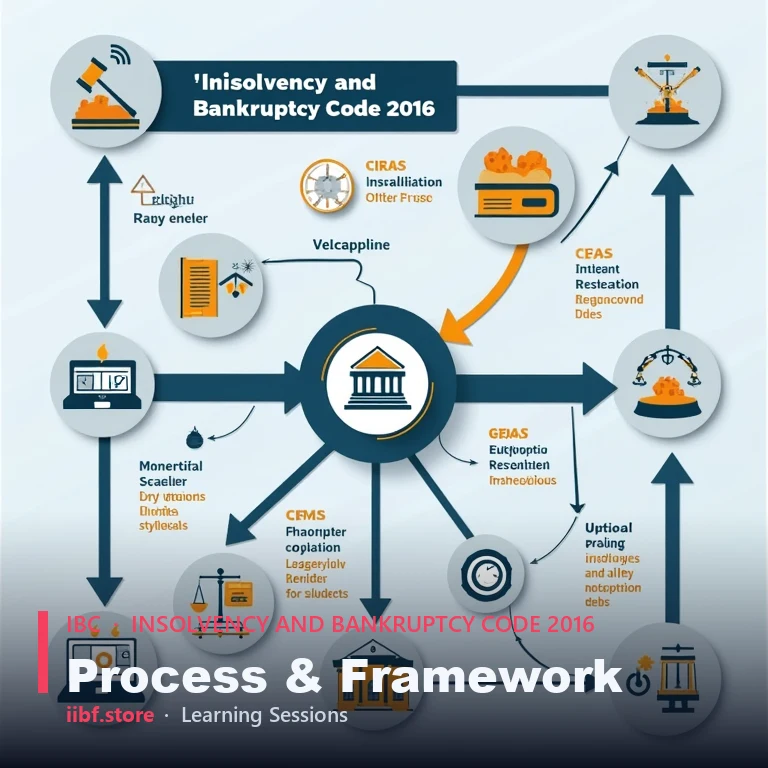
The Section 53 Priority Waterfall: Distribution of Proceeds
The priority waterfall under Section 53 of the IBC is arguably the single most tested topic in the liquidation process for the IIBF certification exam. It prescribes the strict order in. Proceeds from the liquidation estate must be distributed.
Candidates must memorise this sequence precisely. As exam questions often present a set of claimants. Ask for the correct order of payment.
The Waterfall Order (Section 53)
- Insolvency resolution process costs and liquidation process costs — including the liquidator's fees. These are paid first, in full, before any other claim.
- Workmen's dues for the 24 months preceding the liquidation order. Secured creditors' claims. These two rank pari passu (equally) with each other. This is a critical exam point. Workmen's dues do NOT rank below secured creditors.
- Wages. Unpaid dues of employees (other than workmen) for the 12 months preceding the liquidation order.
- Financial debts owed to unsecured creditors.
- Dues to Central Government. State Government (including tax dues) for the 2 years preceding the liquidation order.
- Remaining debts and dues.
- Preference shareholders.
- Equity shareholders and partners.
An important nuance: if a secured creditor realises its security interest outside the liquidation process (by enforcing its security independently), it must contribute the shortfall back into the liquidation estate if the security was insufficient to cover its debt. If there is a surplus after enforcement of security, that surplus must also be remitted to the liquidation estate. Financial creditors who have opted not to relinquish their security and instead chose to enforce it outside IBC are not entitled to claim from the liquidation estate for any remaining shortfall — exam candidates must note this carefully. For exam practice covering priority waterfall questions, visit iibf.store/games/match for interactive revision tools.

Voluntary Liquidation Under the IBC
Apart from liquidation triggered by CIRP failure. The IBC also provides for voluntary liquidation of corporate persons under Section 59 read with the IBBI (Voluntary Liquidation Process) Regulations. 2017.
This is a separate. Faster mechanism available to solvent companies that wish to wind up voluntarily. It is also covered in the IIBF IBC certification examination.
Candidates should not confuse it with the compulsory liquidation process under Section 33.
Eligibility for Voluntary Liquidation
A corporate person may initiate voluntary liquidation only if it has no debt or can fully pay its debts from the proceeds of assets to be sold. The process begins with a declaration of solvency made by a majority of the directors (or designated partners. In the case of LLPs). Confirming that the company has no debt or will be able to pay all its debts in full from the liquidation proceeds.
Procedure
- The members (shareholders) must pass a special resolution for voluntary liquidation within four weeks of the declaration of solvency. If required by the articles, creditor approval is also obtained.
- The voluntary liquidation commences from the date of the special resolution (or creditor approval. Whichever is later).
- An Insolvency Professional is appointed as the liquidator. The appointment. The declaration of solvency. And the resolution are filed with the IBBI. The Registrar of Companies within five days of the resolution.
- The liquidator follows a process similar to compulsory liquidation — public announcement. Claim verification. Asset realisation. And distribution — but on an expedited timeline (generally 12 months, extendable to 18 months).
- The Section 53 waterfall applies to voluntary liquidation as well. Though in a solvent voluntary liquidation. All creditors are fully paid and shareholders receive the residual.
The voluntary liquidation mechanism has been increasingly used in India since its introduction, particularly by holding companies to wind up dormant subsidiaries. For broader context on the Indian banking regulatory landscape, see also iibf.store/resources/rbi-rates.
Recent IBBI Changes and Regulatory Updates
The IBBI continuously refines the liquidation process framework through amendments to regulations. Circulars, and guidelines. The following recent changes are particularly important for exam candidates:
Going Concern Sale Emphasis
IBBI amendments have strengthened the preference for going concern sales of the corporate debtor as a whole (or of business undertakings) before piecemeal asset sales. This preserves employment. Maximises realisable value, and reduces the social cost of insolvency. The liquidator is now required to first explore a going concern sale seriously before moving to asset-wise auctions.
Compromise or Arrangement During Liquidation
Section 230 of the Companies Act. 2013 read with the IBC allows the liquidator to propose a scheme of compromise or arrangement with creditors. Members during the liquidation process. This provides an additional exit route that avoids final dissolution. Has been recognised by the Supreme Court of India in several landmark judgments.
Revised Timelines
IBBI has periodically revised the time standards for liquidation. The target for completion of the liquidation process has been tightened. With liquidators required to submit preliminary reports within 75 days of commencement. To complete the process within one year (extendable by the NCLT with reasons). Delays beyond two years are subject to enhanced scrutiny by the IBBI.
Digital Auction Platforms
The IBBI mandates use of electronic auction platforms for asset sales in the liquidation process to ensure transparency and maximise price discovery. This is consistent with the broader digitalisation push across Indian financial markets. Candidates should periodically check IIBF news updates to stay current with any fresh IBBI circulars before their exam date. Those preparing for related banking law exams may also find the CAIIB course at iibf.store useful for broadening their insolvency law knowledge base.
Frequently Asked Questions
What triggers the liquidation process under IBC 2016?
The liquidation process is triggered under Section 33 of the IBC when: (1) the CoC passes a 66% resolution to liquidate during CIRP. (2) no resolution plan is received within the CIRP period. (3) the NCLT rejects the resolution plan as non-compliant with Section 30(2).
Or (4) the corporate debtor contravenes an approved resolution plan. In each case. The NCLT passes a liquidation order appointing an Insolvency Professional as the liquidator.
Who has priority in the Section 53 waterfall — secured creditors or workmen?
Under Section 53 of the IBC. Workmen's dues for the 24 months preceding the liquidation order. Secured creditors rank pari passu (equally) at the second tier of the waterfall.
Neither takes priority over the other — they share the available funds proportionately. Both. However, rank below the insolvency resolution and liquidation process costs in Tier 1.
This is a frequently tested distinction in the IIBF IBC certification exam.
What is the difference between voluntary liquidation and compulsory liquidation under IBC?
Compulsory liquidation under Section 33 of the IBC is initiated by the NCLT after CIRP fails. Applies to insolvent corporate debtors. Voluntary liquidation under Section 59 is available only to solvent corporate persons.
Those that have no debt or can fully repay all debts from asset proceeds. And is initiated by the members themselves by passing a special resolution. Voluntary liquidation is faster and generally less contentious.
Both processes use an Insolvency Professional as liquidator. Follow the Section 53 distribution waterfall.
What assets are excluded from the liquidation estate under Section 36 of the IBC?
Section 36(4) of the IBC excludes from the liquidation estate: assets held in trust for third parties. Provident fund. Pension fund.
And gratuity fund balances belonging to employees. Assets subject to security interests where the secured creditor has chosen to enforce the security outside the liquidation process. Personal assets of shareholders or partners that have not been legally contributed to the corporate debtor.
And any other assets specifically excluded by the IBBI regulations. These exclusions protect employees. Genuine third-party owners from losing assets to the general creditor pool.
Conclusion and Key Takeaways
The liquidation process under the IBC 2016 is a structured, time-bound, and creditor-ranked mechanism that operates when corporate rescue through CIRP is no longer feasible. For the IIBF IBC certification exam, the following are the non-negotiable points to master: the four triggers under Section 33 for the liquidation order; the role, powers, and duties of the liquidator under Section 35; the scope of the liquidation estate under Section 36 and what is excluded; the exact eight-tier priority waterfall under Section 53 including the pari passu status of workmen's dues and secured creditors; the voluntary liquidation route under Section 59 and its eligibility conditions; and the recent IBBI regulatory updates on going concern sales, timelines, and digital auctions. Cross-referencing these provisions with actual NCLT judgments — available through the IBBI official website — will sharpen your exam preparation significantly. Ready to test yourself? Take a full-length IBC certification mock test at iibf.store/tests and benchmark your readiness today.
Quick summary in plain words
In short: keep it simple.
Read each point slow.
Take notes as you go.
Use the free tests to check what you know.
Quick quiz on this topic
5 exam-style questions from our free test bank — check yourself before you move on.
Practice this topic
Take a free mock test, download chapter PDFs, or watch a video class — all included on iibf.store.