RBI Monetary Policy Tools Explained for JAIIB 2026 (IEIFS)
The RBI monetary policy tools are the instruments the Reserve Bank uses to manage liquidity. Anchor inflation and steer interest rates across the banking system. For the JAIIB Indian Economy and Indian Financial System (IEIFS) paper in 2026.
This is one of the highest-yield topics: examiners repeatedly test the repo rate. Reverse repo, SDF, MSF, CRR, SLR and the Liquidity Adjustment Facility (LAF). Understanding how each lever works.
And how it transmits to your bank's lending rates. Turns a memorisation chore into easy marks. This guide explains every instrument clearly with current 2026 context.
What the RBI Monetary Policy Tools Actually Do
Monetary policy is the process by. The central bank controls the supply. Cost and availability of money in the economy.
In India this mandate sits with the Reserve Bank of India. Which. 2016 operates under a flexible inflation-targeting framework with a CPI inflation target of 4% (within a 2–6% band).
The six-member Monetary Policy Committee (MPC) meets bi-monthly. Sets the policy stance.
The instruments fall into two families:
- Quantitative (general) tools — repo rate. Reverse repo, SDF, MSF, CRR, SLR, LAF and open market operations (OMOs). These affect the volume and price of money broadly.
- Qualitative (selective) tools — margin requirements. Moral suasion and direct action, which target specific sectors or behaviours.
For the IEIFS syllabus you must know the quantitative tools cold. Keeping an eye on the live policy numbers helps — the current settings are tracked on the RBI rates reference page, which is a handy revision aid before the exam.
The Key Components: Repo, Reverse Repo, SDF, MSF, CRR and SLR
Each of the RBI monetary policy tools plays a distinct role within the policy corridor:
- Repo rate. The rate at. Banks borrow short-term funds from the RBI against government securities. It is the single most important signalling rate.
- Reverse repo rate — the rate at which the RBI borrows from banks. It absorbs surplus liquidity (now largely superseded operationally by the SDF).
- Standing Deposit Facility (SDF) — introduced in April 2022. It lets banks park surplus funds with the RBI without collateral. Now forms the floor of the LAF corridor.
- Marginal Standing Facility (MSF) — an emergency overnight window above the repo rate. Forming the ceiling of the corridor.
- Cash Reserve Ratio (CRR). The share of net demand. Time liabilities (NDTL) banks must keep as cash with the RBI. It earns no interest.
- Statutory Liquidity Ratio (SLR). The share of NDTL banks must hold in liquid assets such as government securities. Gold and cash.
Test your recall with the quick match-the-concept game, which pairs each instrument with its function — perfect for the rapid-fire MCQs the IEIFS paper favours.
How the LAF Corridor and Liquidity Management Work
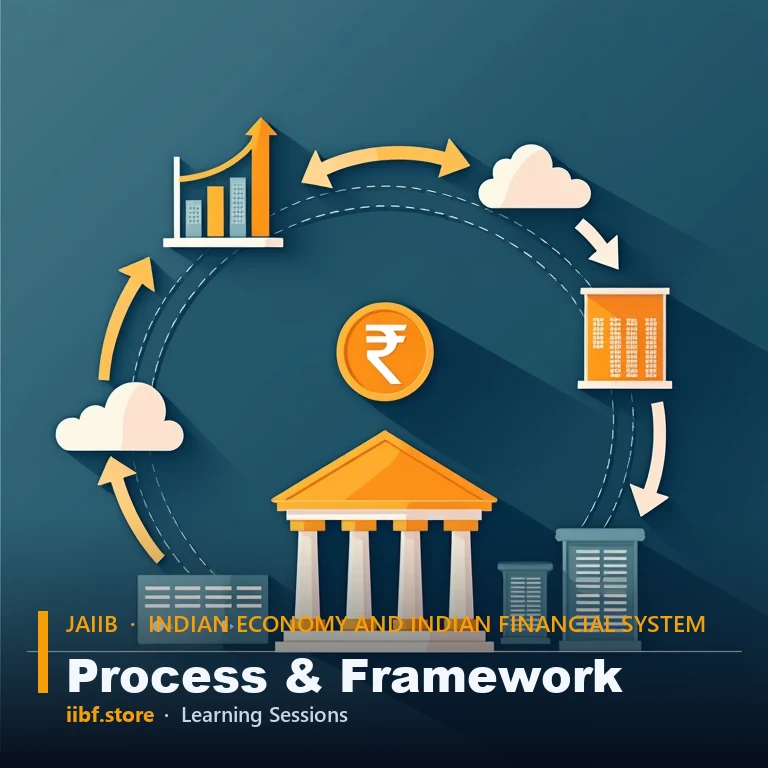
The Liquidity Adjustment Facility (LAF) is the operating framework through. The RBI injects or absorbs liquidity day to day. Within the LAF corridor.
The SDF rate sits at the floor. The repo rate in the middle as the policy rate. And the MSF rate at the ceiling.
Typically with a symmetric spread of 25 basis points on each side. When liquidity is in surplus. Banks park funds at the SDF; when there is a deficit.
They borrow at the repo or, in stress, at the MSF.
CRR and SLR work differently from the corridor rates. CRR is a blunt quantitative lever: raising it locks up cash and drains liquidity, while cutting it releases lendable funds instantly. SLR governs how much banks must invest in approved securities, supporting both liquidity and government borrowing. The RBI fine-tunes the system further through variable-rate repo (VRR) and reverse repo (VRRR) auctions and outright OMOs. Staying current with these operations is easy through IIBF news and market updates, which summarise each policy review.
2026 Relevance: Transmission to Lending Rates
The whole point of the RBI monetary policy tools is transmission. Passing the policy signal through to the interest rates households. Firms actually pay.
Since October 2019. Banks must link new floating-rate retail. MSME loans to an external benchmark.
Most commonly the repo rate (the External Benchmark Lending Rate, or EBLR). This makes transmission faster. More visible: when the MPC changes the repo rate.
EBLR-linked loan EMIs move within a quarter.
Older loans may still ride on the MCLR (Marginal Cost of Funds based Lending Rate), where transmission is slower because it reflects banks' own funding costs. In 2026, candidates should be able to contrast EBLR and MCLR transmission and explain why CRR changes (which affect funding costs) and repo changes (which affect the benchmark directly) feed through at different speeds. Practising applied questions on this on the IEIFS mock tests builds the speed you need on exam day.

Why This Matters for the JAIIB IEIFS Paper
The IEIFS paper rewards candidates who can both recall definitions and reason through cause and effect. Expect direct questions ("Which rate forms the floor of the LAF corridor?"), numerical-style questions on CRR/SLR impact on lendable resources, and conceptual questions on transmission. A reliable strategy: memorise the corridor structure (SDF floor, repo middle, MSF ceiling), distinguish quantitative from qualitative tools, and link each instrument to whether it injects or absorbs liquidity. Read explainer pieces on the IIBF exam blog and reinforce them through structured study in the JAIIB course. Connecting theory to the real 2026 policy stance makes the answers stick.
For authoritative primary sources, always cross-check the framework against the Reserve Bank of India monetary policy statements and align your exam preparation with the syllabus published by the Indian Institute of Banking & Finance.
Frequently Asked Questions
What is the difference between the repo rate and the SDF?
The repo rate is the rate at. Banks borrow secured overnight funds from the RBI against government securities. And it is the policy signalling rate.
The SDF (Standing Deposit Facility) is where banks park surplus funds with the RBI without collateral. Introduced in April 2022. The SDF now forms the floor of the LAF corridor.
Sitting 25 basis points below the repo rate.
How do CRR and SLR differ?
CRR is the percentage of net demand. Time liabilities banks must keep as cash with the RBI. Earning no interest, and it directly controls liquidity.
SLR is the percentage banks must hold in liquid assets such as government securities. Gold and cash. CRR primarily manages money supply.
While SLR also supports government borrowing. Ensures banks remain solvent and liquid.
What is the LAF corridor?
The Liquidity Adjustment Facility corridor is the band within. Overnight money-market rates fluctuate. The SDF rate forms the floor.
The repo rate is the central policy rate. And the MSF rate forms the ceiling. Usually with a 25 basis point spread on each side.
The RBI uses repo. Reverse-repo auctions within this corridor to inject or absorb liquidity day to day.
What is monetary policy transmission?
Transmission is the process by. A change in the RBI's policy rate flows through to the deposit. Lending rates that customers actually face.
With EBLR-linked loans tied to the repo rate. Transmission is fast and visible, often within a quarter. MCLR-linked loans transmit more slowly.
They reflect banks' own marginal funding costs rather than the policy rate directly.
Conclusion: Lock In These Marks for 2026
The RBI monetary policy tools are a guaranteed scoring area in the JAIIB IEIFS paper if you understand the corridor, the quantitative-versus-qualitative split and the transmission mechanism. Revise the structure, practise applied questions, and keep one eye on the 2026 policy stance. Start practising now with the IEIFS mock tests and build your foundation through the structured JAIIB course — consistent revision here will pay off on exam day.
For more on RBI monetary policy tools. See the official IIBF circulars. Our chapter-wise free notes on iibf.store.
Quick quiz on this topic
5 exam-style questions from our free test bank — check yourself before you move on.
Practice this topic
Take a free mock test, download chapter PDFs, or watch a video class — all included on iibf.store.
Keep reading