Suspicious Transaction Report Filing: Triggers, Timelines and Tipping-Off
Every bank branch trains staff to spot red flags, but knowing exactly when a suspicious transaction report filing is legally due is where most KYC-AML candidates stumble. Under the Prevention of Money Laundering Act, 2002 (PMLA) and the PML (Maintenance of Records) Rules, 2005, a reporting entity's Principal Officer must send the report to the Financial Intelligence Unit-India (FIU-IND) the moment reasonable grounds for suspicion exist — irrespective of the transaction's value. This chapter walks through the triggers, the working-day clock, the comparison with other PMLA reports, and the tipping-off trap examiners love to test.
🚩 What Triggers a Suspicious Transaction Report Filing
Rule 2(1)(g) of the PML (Maintenance of Records) Rules, 2005 defines a "suspicious transaction" broadly: one made in circumstances of unusual or unjustified complexity, one with no economic rationale or bona fide purpose, or one that gives rise to a reasonable ground of suspicion that it may involve proceeds of crime or is connected to financing of terrorism — regardless of the amount involved. Branch-level red flags include structuring cash deposits just under reporting thresholds, sudden high-value activity inconsistent with a customer's declared profile, frequent use of pass-through or shell-like accounts, unexplained third-party fund routing, and dealings linked to high-risk jurisdictions or a politically exposed person. Frontline staff are not expected to prove money laundering; they are expected to escalate anything that does not add up. Once escalated, the decision to treat a transaction as suspicious rests with the Principal Officer, not the branch manager or the relationship officer, and that decision is what starts the clock for filing. This pattern recognition is grounded in real typologies covered in our chapter on common money-laundering methods, not a generic checklist. Because the trigger is judgement-based rather than threshold-based, examiners frequently test whether candidates confuse an STR with a Cash Transaction Report, which is a very different, value-driven obligation covered in the comparison table below.
💡 Exam Tip: STR has NO monetary threshold — a suspicious transaction of even Rs 500 must be reported if grounds for suspicion exist. CTR's Rs 10 lakh limit does not apply to STRs.
⏱️ The Seven-Working-Day Filing Clock
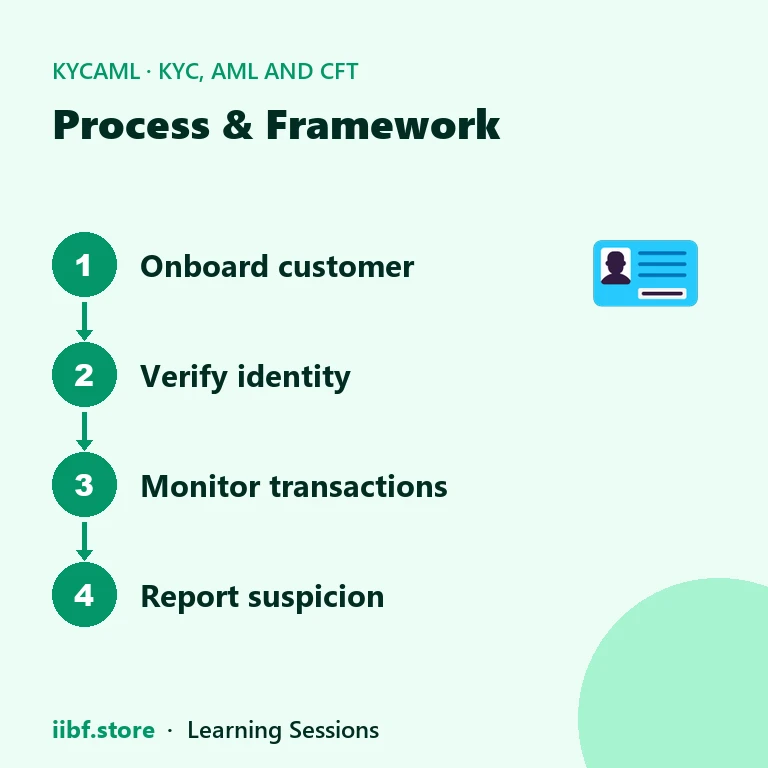
The most commonly misquoted rule in this chapter is the STR deadline. Under Rule 8(3) of the PML (Maintenance of Records) Rules, 2005, the Principal Officer must furnish the STR to FIU-IND within seven working days of arriving at a conclusion that a transaction is suspicious. Two things candidates routinely get wrong: the clock starts from the date the Principal Officer forms the opinion, not from the date of the transaction itself, and the period is counted in working days, not calendar days. A transaction flagged on a Friday and confirmed suspicious by the Principal Officer the following Wednesday only starts its seven-day countdown from that Wednesday. This is why banks maintain a documented escalation trail — branch alert, transaction-monitoring system score, STR committee or Principal Officer review, and a dated decision memo — because that date is what an examiner or auditor asks for first. The obligation sits squarely within the bank's broader reporting obligations of banks, and the escalation chain is shaped by how compliance is positioned under the bank's organisational structure for AML compliance in India. The current STR reporting formats and instructions are published directly by FIU-IND, and reporting entities are expected to use the version in force at the time of filing. A delay past seven working days, even where the STR is eventually filed, exposes the reporting entity to penalty action, so speed of internal escalation matters as much as the quality of the analysis behind it.
⚠️ Common Mistake: Candidates assume the 7-working-day period runs from the transaction date. It actually runs from the date the Principal Officer concludes the transaction is suspicious.
📊 STR vs Other PMLA Reports at a Glance
The suspicious transaction report filing obligation stands apart from every other PMLA report precisely because it carries no value floor. All the other returns are triggered by a rupee threshold and follow a monthly filing rhythm, while an STR can be triggered by a single low-value transaction and must move within days, not weeks. Confusing these deadlines is one of the most frequent errors bank staff make when a transaction-monitoring alert fires close to month-end, because the instinct is to bundle it into the next periodic return instead of routing it through the separate, faster STR process.
| Report Type | Monetary Threshold | Filing Deadline to FIU-IND |
|---|---|---|
| Suspicious Transaction Report (STR) | ✗ None | 7 working days from the Principal Officer's conclusion |
| Cash Transaction Report (CTR) | ✓ Above Rs 10 lakh (cash) | 15th of the succeeding month |
| Counterfeit Currency Report (CCR) | ✗ None (any detected note) | 15th of the succeeding month |
| NPO Transaction Report (NTR) | ✓ Above Rs 10 lakh | 15th of the succeeding month |
| Cross-Border Wire Transfer Report | ✓ Above Rs 5 lakh or equivalent | 15th of the succeeding month |
🗄️ Section 12: Record-Keeping Behind Every STR
An STR is only as strong as the records behind it, which is why Section 12 of the PMLA places the record-maintenance duty directly on every reporting entity. Banks must preserve records of all transactions, both domestic and international, in a form that allows them to reconstruct individual transactions if needed by investigating authorities, and must maintain records of customer identification obtained during KYC and CDD for a defined period after the account or transaction relationship ends. In practice, most banks calibrate their retention schedules to at least five years, covering both the transaction trail and the underlying identification documents, so that a Principal Officer building an STR — or an investigating agency following up on one — can always reconstruct the full history of an account. Getting this obligation right is core exam territory, and it is covered in far more depth, section-wise, in our dedicated piece on record retention under PMLA. The retention duty also feeds directly into the broader legislation at the national level governing AML compliance, since Section 12 obligations apply uniformly across banks, NBFCs and other reporting entities, not just to institutions that happen to file frequent STRs.
🤐 Section 13 and the Tipping-Off Trap
Filing an STR correctly is only half the exam story; keeping it confidential is the other half, and it is where careless staff create real legal exposure. Section 13 of the PMLA gives the Director, FIU-IND, power to call for records, issue directions, and impose monetary penalties on a reporting entity or its designated officers for failures connected with these reporting obligations — and one of the most serious failures is "tipping off": directly or indirectly letting a customer know that a suspicious transaction report filing has been made, is being considered, or that an investigation may follow. A relationship manager who tells a customer "your account is under review because of a suspicious transfer" has tipped off, even without naming the STR explicitly. This is why banks train staff to keep STR decisions confined to the Principal Officer's office and the compliance function, and why customer-facing explanations for a frozen or delayed transaction are worded generically rather than referencing AML scrutiny. Violating the tipping-off prohibition does not just risk a penalty on the bank; it can compromise an ongoing investigation and undermine the entire purpose of the reporting chain that starts at the branch counter.
📌 Remember: Tipping off a customer about an STR — even hinting that "your account is flagged" — is a punishable breach under Section 13, regardless of how the information was implied.
These obligations don't exist in isolation — they are exactly what India's global AML standing is judged on. Our FATF Mutual Evaluation of India guide explains how examiners assess whether banks are actually filing STRs on time, and if you are also preparing for the certification route, the AML KYC Certification Exam by IIBF guide maps how heavily this topic is weighted. Bankers working credit-side should also note the parallel discipline in stressed asset resolution, where similarly strict red-flag-to-escalation timelines apply under a different RBI framework.
🧠 Practice MCQs: Suspicious Transaction Report (STR) Filing
Q1. Under the PML (Maintenance of Records) Rules, 2005, within how many working days must a Principal Officer file an STR with FIU-IND after concluding a transaction is suspicious? (a) 7 calendar days (b) 7 working days (c) 15 working days (d) 30 calendar days
Answer: (b) — Rule 8(3) sets the deadline at 7 working days from the Principal Officer's conclusion, not from the transaction date.
Q2. What is the monetary threshold for filing a Suspicious Transaction Report (STR)? (a) Above Rs 10 lakh (b) Above Rs 5 lakh (c) Above Rs 1 lakh (d) No monetary threshold
Answer: (d) — Unlike a CTR, an STR has no value floor; suspicion alone triggers the obligation.
Q3. From what point does the 7-working-day STR filing clock start running? (a) The date the transaction occurred (b) The date the customer was onboarded (c) The date the Principal Officer concludes the transaction is suspicious (d) The date FIU-IND requests information
Answer: (c) — The clock starts only once the Principal Officer forms a reasoned conclusion of suspicion, which can be well after the transaction date.
Q4. Under Section 12 of the PMLA, reporting entities must generally be prepared to maintain transaction and KYC records for at least how long? (a) 1 year (b) 5 years (c) 10 years (d) Only until account closure
Answer: (b) — Section 12 requires records to be kept for a minimum retention period, generally taken as five years, to support investigations.
Q5. What does Section 13 of the PMLA specifically address in relation to STR confidentiality? (a) Late filing of a CTR (b) Tipping off a customer about a suspicious transaction report (c) Failure to appoint a Principal Officer (d) Non-renewal of KYC documents
Answer: (b) — Section 13 empowers the Director, FIU-IND to penalise reporting entities for lapses including tipping off a customer about an STR.
Want chapter-wise mock tests with 100+ MCQs? Start practising free →
❓ Frequently Asked Questions
Is there a minimum amount for filing a Suspicious Transaction Report?
No. Unlike a Cash Transaction Report, which applies above Rs 10 lakh, an STR must be filed whenever there are reasonable grounds to suspect money laundering or terrorist financing, regardless of the transaction amount.
Who decides whether a transaction is suspicious enough to file an STR?
The Principal Officer of the reporting entity makes the final determination, based on escalations from branch staff and alerts from the transaction monitoring system, and that decision date starts the filing clock.
What happens if a bank misses the 7-working-day STR deadline?
The reporting entity can face monetary penalties and regulatory action under the PMLA, and repeated delays can invite closer supervisory scrutiny of its entire AML compliance framework.
Can a bank tell a customer that an STR has been filed against their account?
No. Doing so is "tipping off," a specific breach addressed under Section 13 of the PMLA, and it can attract penalties in addition to compromising any resulting investigation.
Suspicious transaction report filing tests three things at once: recognising the trigger, respecting the seven-working-day clock, and never breaching tipping-off confidentiality under Section 13. Master these three and the rest of the KYC-AML chapter — record retention, reporting structure, and the surrounding legislation — falls into place. Browse more KYC-AML and CFT articles on the blog, or put this chapter to the test with a full JAIIB/CAIIB prep course and topic-wise mocks.
Quick quiz on this topic
5 exam-style questions from our free test bank — check yourself before you move on.
Practice this topic
Take a free mock test, download chapter PDFs, or watch a video class — all included on iibf.store.