Is the CAIIB HRM Book Right for You? An Honest Guide

It is 10.30 at night. You have finished a full day at the branch, the last customer left late, and your CAIIB elective is still sitting there, unread. If you chose Human Resources Management, you may be wondering whether one more book is the answer or one more thing to feel guilty about.
This article is not a sales pitch. It is a straight answer to one question: is the CAIIB HRM book right for you? We will go through four common reader profiles, say how to use a printed book in each case, and be clear about where a book alone will not be enough. If you finish reading and decide it is not for you, you should still walk away with a plan.
First, what kind of paper is HRM, really?
Many candidates treat the HRM elective as the "easy" one because the language sounds familiar. You have lived inside a bank's HR systems for years. That is exactly the trap. The exam does not ask what you have seen at your branch; it asks for the textbook definition, the correct term, the right framework.
HRM is a reading-heavy, concept-heavy paper. There are very few formulas. Marks are lost on near-identical options, on mixing up similar terms, and on running out of time because you spent too long on a case study. That shapes how you should prepare, and it is why the format of your study material matters more than people admit.
Three things that decide your preparation
- Volume of reading. The syllabus spreads across five modules, so you need a way to cover it without re-reading everything three times.
- Recall under pressure. Concepts feel obvious while reading and vanish in the exam hall. Questions are the only cure.
- Screen fatigue. After eight hours at a terminal, many bankers cannot face another PDF.
Keep these three in mind. We will come back to them for every profile below.
What the book actually contains
Let us stick to facts. The CAIIB Elective Human Resources Management printed book is the 2026 edition. It runs to 122 pages across 24 chapters and carries 360 questions. It also lists 60 case studies (240 questions) as an extra.
The chapters follow the five modules of the elective:
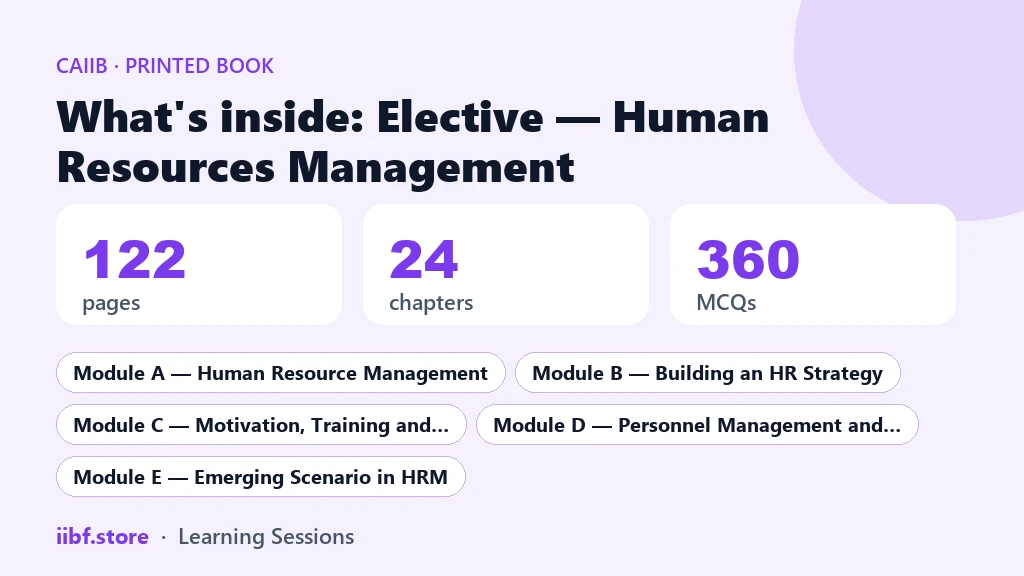
- Module A, Human Resource Management: fundamentals of HRM, organisational behaviour, organisational change, HRM in Indian banks, knowledge management.
- Module B, Building an HR Strategy: HR as a strategic player, the CEO and his/her team, communication, HR functions, performance management.
- Module C, Motivation, Training and Skill Development: the learning process, employee motivation, employee development, training methodology.
- Module D, Personnel Management and Industrial Relations: industrial relations, grievance redressal and discipline, workers participation in management, discipline management.
- Module E, Emerging Scenario in HRM: employee engagement, organisational culture and creativity, sustainability and green HRM, HR analytics and AI-based HR solutions, leading in VUCA and BANI scenarios, business ethics, governance and CSR.
At 122 pages for 24 chapters, this is a compact book. That is a strength if you are short on time and a limitation if you want an exhaustive reference. We will be honest about that below. You can also look at the full books list to compare formats before deciding.
Profile 1: the first-attempt candidate
You are new to CAIIB, or at least new to this elective. Your biggest risk is not difficulty; it is drift. Without a structure, you read the chapters you like (usually Module A) and postpone the ones you do not (usually Module D's industrial relations material).
How to use the book
Treat the module list as your calendar. Give each module a fixed block of days, finish its chapters in order, and solve that module's questions before moving on. Do not wait until you have read everything to start questions; the questions tell you what to read again.
Where it is not enough alone
A first-timer has never felt the pressure of a timed CAIIB paper. A book cannot give you that. Once you finish Module C or so, start taking timed practice papers. IIBF publishes the official syllabus and notices on www.iibf.org.in; check it for the upcoming exam cycle, and treat the printed book as a companion to that syllabus, not a replacement for reading it.
Profile 2: the repeat-attempt candidate
You have been here before. You know the pattern: you studied, you felt ready, and the result did not match. The honest question is not "do I need a new book?" but "what went wrong last time?"
If the answer was "I did not finish the syllabus", a short, structured book can help because you can finish it. If the answer was "I read everything but could not answer the questions", then reading again will not fix it. You need practice, and a bank of 360 questions is a useful start for exactly this reason.
How to use the book
Start with the questions, not the chapters. Attempt a module's questions cold, note every one you got wrong or guessed, and read only the chapters behind those misses. This turns a 122-page book into a targeted repair tool for the CAIIB HRM paper instead of a third full read.
Where it is not enough alone
Repeat candidates often fail on exam technique, not knowledge. Pair the book with full-length mock tests so you can see whether you are losing marks to time or to confusion. Our free mock tests are a reasonable place to begin without spending anything more.
Profile 3: the candidate who is short on time
Perhaps your branch is under audit, or you are covering for a colleague, or you simply registered late. You may have only a few weeks. For you, a thick reference is a source of stress, not comfort.
A compact book works in your favour here because you can see the end of it. With 24 chapters, you can plan a chapter or two per sitting and know exactly where you stand each week. The CAIIB HRM book is designed around that kind of finite, countable progress.
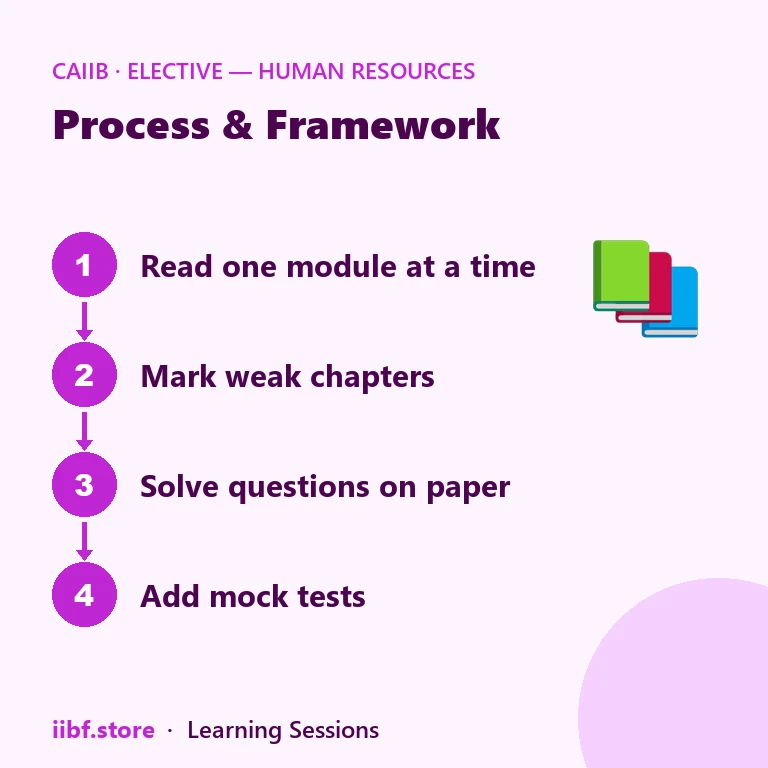
A realistic short-time plan
| Phase | What you do | Output |
|---|---|---|
| Read pass | One module at a time, chapters in order | Weak chapters marked |
| Question pass | Solve that module's questions on paper | List of wrong answers |
| Repair pass | Re-read only the chapters behind your misses | Short revision notes |
| Test pass | Timed mock papers in the last days | Speed and confidence |
Where it is not enough alone
Be honest with yourself: if you have very few weeks and have never seen the subject, no book will make you comfortable with all five modules. In that case decide which modules you can cover well and which you will only skim, rather than touching everything lightly. A compact book makes that triage easier, but it cannot do the thinking for you.
Profile 4: the person who prefers paper
Some people simply learn better on paper. You can underline, fold a corner, write in the margin, and find a page by memory of where it sat. After a day on a screen at the bank, you may also want your eyes to rest in the evening.
There is some practical sense in this. A printed book does not ping you with notifications, does not run out of battery on a late train, and does not tempt you into checking messages. You can carry it, open it on any page, and study in short gaps.
How to use the book
Write directly in it. Mark every term you confuse with another, such as similar-sounding concepts in motivation and learning. Solve the questions in a notebook, not in your head, because writing the answer is what shows you the gap.
Where it is not enough alone
Paper cannot update itself. If anything in the syllabus or the exam pattern changes for the upcoming cycle, you need to check the official site. A printed book also cannot give you a timed, scored mock; for that you will need a screen anyway. Many paper-lovers study from the book and then test on a laptop, and that combination works well. The free study material section is a handy complement for last-minute reading.
When this book is probably not the right choice
Here is the part most sellers skip. Think twice if any of these describes you:
- You want a very detailed reference. A 122-page book is compact by design. If you like to read three sources per topic, you will want more.
- You study only on a phone. A printed book will not follow you into every gap of the day the way a screen does.
- You expect the book to guarantee a pass. No book does. The result depends on your hours, your practice, and your exam-day temperament.
- You have not registered or checked the syllabus. Confirm everything on the official IIBF site first.
If you are on the fence, read the free sample before paying anything. The book page has one, and a few pages will tell you more about whether the language and layout suit you than any review can.
Price, and how to decide
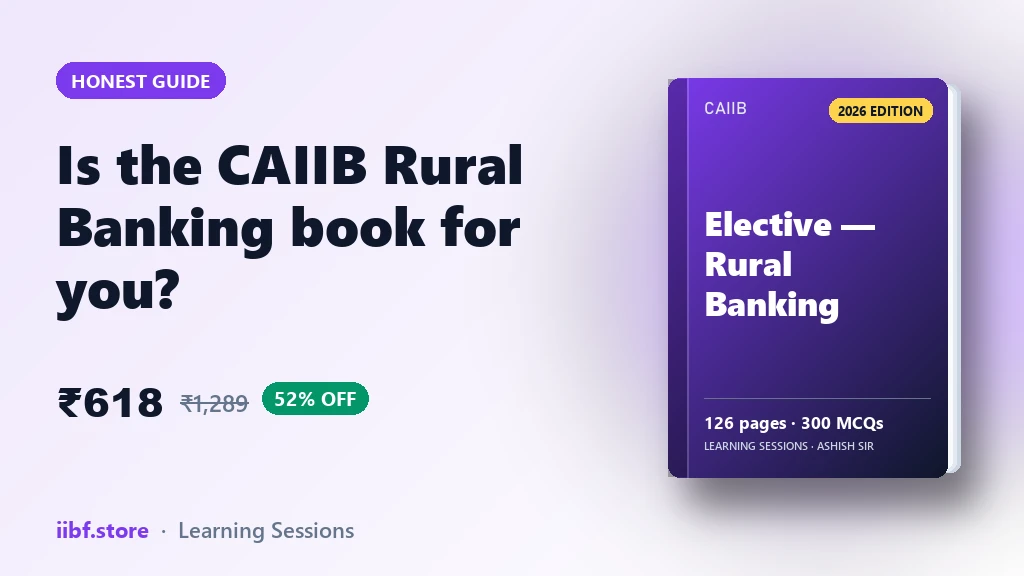
At the time of writing, the CAIIB HRM book is listed at ₹618 against an MRP of ₹1,289, which is a 52% discount. Prices and offers can change, so treat the book page as the current source.
A simple way to decide: ask yourself three questions. Do I want paper? Do I need a finite, countable syllabus plan? Will I add timed practice on top? If you answered yes to all three, the book is a sensible fit. If you answered no to the first, a screen-based route may serve you better. If you answered no to the third, fix that before buying anything, because practice is where marks are won.
Whatever you choose, keep one rule: finish a module, test it, and only then move on. For more on how other electives and papers are approached, the CAIIB course page and our blog carry further guides.
Conclusion
The CAIIB HRM book suits readers who want a compact, countable plan on paper: first-timers who need structure, repeat candidates who need a question-first repair method, and people short on time who need to see the finish line. It does not replace mock tests, the official syllabus, or your own consistent hours. Use it as one honest tool, pair it with timed practice, and you will have given your preparation a fair chance.
Frequently asked questions
How many pages and questions does the CAIIB HRM book have?
The 2026 edition has 122 pages across 24 chapters in five modules, with 360 questions. It also lists 60 case studies (240 questions) as an extra.
Can I pass CAIIB HRM with only this book?
No book can promise a pass. It gives you structure and practice questions, but you should add timed mock tests and check the official syllabus on the IIBF website.
Is there a sample I can read before buying?
Yes. The book page offers a free sample, so you can judge the language and layout before you order.
Is the price fixed?
Prices can change. The book page always shows the current price, which at the time of writing is ₹618 against an MRP of ₹1,289.
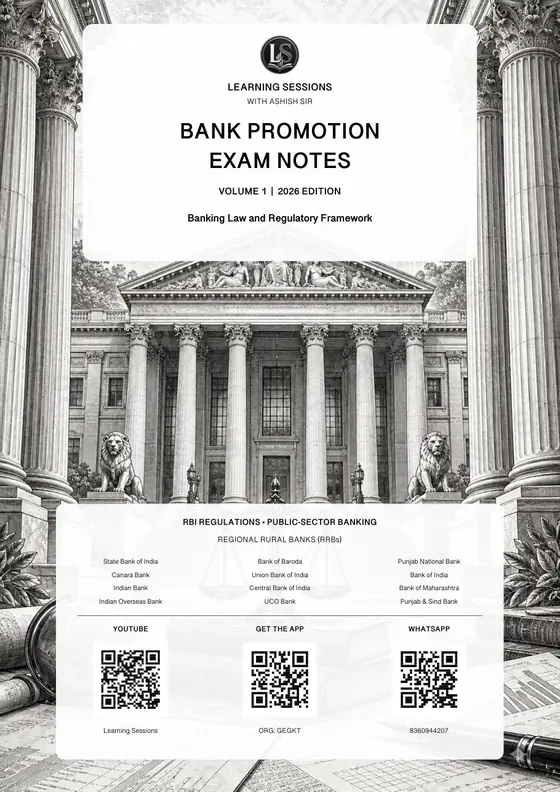
Prefer revising from a printed book?
Chapter-wise books with MCQs after every chapter — minimal pages, complete coverage, delivered anywhere in India. Every book has a free sample to read first.




Quick quiz on this topic
5 exam-style questions from our free test bank — check yourself before you move on.
Practice this topic
Take a free mock test, download chapter PDFs, or watch a video class — all included on iibf.store.