digital banking guide: UPI, CBDC & open banking for IIBF

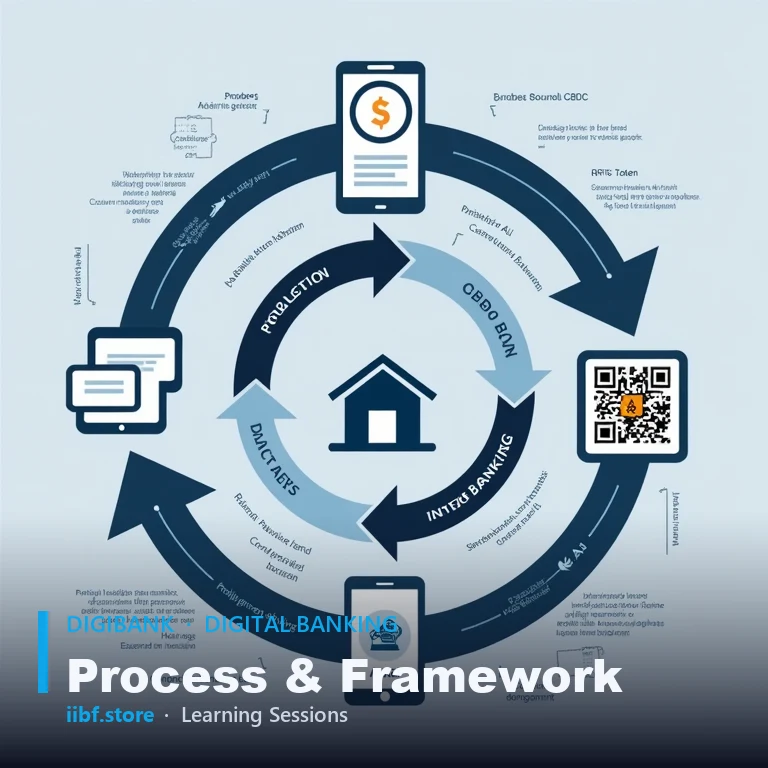
Digital banking is the delivery of banking products and services through electronic channels — mobile apps, internet banking, payment rails and APIs — without the customer needing to visit a branch. For candidates preparing for the IIBF Digital Banking certificate, mastering digital banking means understanding the full ecosystem the Reserve Bank of India has built: real-time payments through UPI and IMPS/NEFT/RTGS, the account aggregator framework, video-KYC, open banking, the digital lending guidelines, the central bank digital currency (CBDC or e-rupee), and the rise of neobanks. This guide walks through each pillar in an exam-ready, India-specific way.
The shift to digital banking has been driven by the India Stack — a layered set of public digital infrastructure (Aadhaar, UPI, account aggregators) that lets banks and fintechs build interoperable services at scale. Whether you are revising for a certificate course or refreshing your CAIIB concepts, the topics below recur in every IIBF paper.
Payment Rails: UPI and IMPS / NEFT / RTGS
At the heart of digital banking in India are four payment systems, each with a distinct role. The Unified Payments Interface (UPI), operated by NPCI, is a real-time, 24x7 mobile-first system that links multiple bank accounts to a single app using a Virtual Payment Address (VPA). It powers QR payments, person-to-person transfers, and merchant collections, and now supports features like UPI Lite, UPI AutoPay mandates and credit-on-UPI.
Alongside UPI sit the three legacy interbank systems. IMPS (Immediate Payment Service) offers instant 24x7 fund transfer up to a per-transaction ceiling. NEFT (National Electronic Funds Transfer) settles in half-hourly batches and is also available round the clock, with no minimum or maximum prescribed by the RBI. RTGS (Real-Time Gross Settlement) handles large-value transfers — minimum Rs 2 lakh — settling each instruction individually and in real time. Exam questions frequently test the differences in timing, value limits and settlement mechanism, so memorise that RTGS is gross and real-time while NEFT is deferred-net-batch. Understanding these rails is the foundation of digital banking, because most downstream services — bill payments, lending disbursals, refunds — ride on top of them. Practise these distinctions on our IIBF mock tests to lock them in before exam day.
Account Aggregator Framework and Open Banking
The account aggregator (AA) framework is RBI's consent-based data-sharing layer and a flagship example of open banking in Indian digital banking. An Account Aggregator is an RBI-regulated NBFC-AA that acts as a neutral intermediary, moving a customer's financial data from a Financial Information Provider (FIP) — such as a bank, mutual fund or insurer — to a Financial Information User (FIU), like a lender assessing a loan application. Crucially, the AA only transmits data; it cannot read or store it, and every transfer requires explicit, revocable customer consent captured through a standardised consent artefact.
This architecture embodies the open banking principle: customers own their data and can port it securely between institutions via APIs. It reduces the friction of physical document collection, speeds up underwriting, and enables flow-based lending to MSMEs and thin-file borrowers. For the IIBF Digital Banking exam, remember the four pillars of consent — purpose, consent-taker, data type and validity period — and the distinction between FIP and FIU roles. Open banking through standardised, secure APIs is what allows neobanks and fintechs to offer rich services without holding a full banking licence. You can connect these ideas to broader retail-banking topics in the JAIIB syllabus and reinforce them with targeted practice questions.
Video-KYC, Digital Lending and Customer Onboarding
Onboarding is where digital banking becomes tangible for customers. Video-based Customer Identification Process (V-CIP), permitted by the RBI under the Master Direction on KYC, lets banks complete identity verification through a live, secure video call with an official, capturing a photograph, verifying the PAN/Aadhaar and confirming the customer's presence and willingness. It replaces in-person verification while meeting anti-money-laundering obligations, and is now standard for opening accounts at neobanks and digital-first lenders.
On the credit side, the RBI's Digital Lending Guidelines govern how loans are sourced and disbursed through apps and Lending Service Providers (LSPs). Key safeguards include direct flow of loan funds between the borrower's and the regulated entity's bank accounts (no pass-through pooling via the LSP), a mandatory Key Fact Statement (KFS) disclosing the all-inclusive Annual Percentage Rate, a cooling-off period to exit without penalty, and clear data-privacy and grievance-redressal norms. These rules curb predatory digital-lending apps and protect borrowers. The full guidance is published by the Reserve Bank of India, and exam candidates should be able to list the KFS, APR disclosure and the no-automatic-increase-in-credit-limit safeguards. Test your recall with a quick match-the-concept game.

CBDC (e-Rupee) and the Rise of Neobanks
The newest frontier in digital banking is the Central Bank Digital Currency (CBDC), branded the e-rupee (e₹) by the RBI. Unlike UPI — which moves commercial-bank deposits — CBDC is a sovereign digital form of cash, a direct liability of the central bank. It comes in two flavours: CBDC-Wholesale (e₹-W) for interbank and securities settlement, and CBDC-Retail (e₹-R) for everyday public use through a token-based digital wallet that can work offline and offer cash-like anonymity for small values. For the exam, contrast CBDC with UPI: CBDC is central-bank money and legal tender in digital form, whereas UPI is merely a messaging rail over bank deposits.
Neobanks complete the picture. These are digital-only providers that deliver a slick app-based banking experience but, in India, must partner with a licensed bank because the RBI does not yet issue digital-only banking licences. They layer onboarding, budgeting, lending and payments on top of a sponsor bank's regulated infrastructure, relying heavily on open banking APIs and the account aggregator framework. Together, CBDC, neobanks, UPI and the AA ecosystem show how digital banking is converging into a single, interoperable, consent-driven stack. Keep up with regulatory changes via the latest IIBF news updates and monitor policy rates on our RBI rates tracker.
Frequently Asked Questions
What is the difference between UPI and CBDC in digital banking?
UPI is a real-time payment rail that transfers commercial-bank deposits between accounts, while CBDC (the e-rupee) is sovereign digital currency — a direct liability of the RBI and legal tender. UPI moves money; CBDC is money in digital form.
How does the account aggregator framework protect customer data?
An Account Aggregator is an RBI-regulated NBFC that only transmits financial data between an FIP and an FIU based on explicit, purpose-bound and revocable customer consent. It cannot read or store the data, ensuring privacy and customer control over data sharing.
What are the minimum and timing rules for RTGS and NEFT?
RTGS settles transactions individually in real time with a minimum value of Rs 2 lakh and no upper limit. NEFT settles in half-hourly batches with no RBI-prescribed minimum or maximum. Both are available 24x7, a frequently tested point in IIBF papers.
What safeguards do RBI's digital lending guidelines impose?
Loans must flow directly between the borrower and the regulated lender without pooling via the app, a Key Fact Statement disclosing the all-inclusive APR is mandatory, borrowers get a cooling-off period, and strict data-privacy and grievance-redressal norms apply.
Digital banking is now a core, high-weightage topic across IIBF certificate and flagship exams, blending payments, data-sharing, KYC, lending and currency innovation. The fastest way to convert this conceptual knowledge into exam marks is repeated practice on realistic questions covering UPI, the account aggregator framework, CBDC and digital lending norms. Start a free, timed practice set now on our IIBF mock test platform and benchmark your digital banking readiness before the real exam.
Take a free mock test, download chapter PDFs, or watch a video class — all included on iibf.store.
Keep reading