Statutory Bank Audit and LFAR: A Complete CAAP Guide
Bank audit is one of the most specialised. High-stakes assignments in the accounting profession. And a strong command of bank audit is exactly what the IIBF Certified Accounting.
Audit Professional (CAAP) certification is designed to build. A bank audit is far more than a routine verification of ledgers. It involves testing income recognition.
Asset classification. Provisioning. Regulatory compliance and the integrity of internal controls across thousands of branches. At the centre of the statutory exercise sits the Long Form Audit Report (LFAR). A detailed questionnaire-based report that the auditor submits alongside the main audit report.
This guide walks through the types of bank audit. The audit process. The LFAR structure. Concurrent audit. Fraud reporting in a way that maps directly to the CAAP syllabus.
Types of Bank Audit
The Indian banking system relies on several layers of bank audit, each with a distinct mandate. The statutory branch audit and statutory central audit together form the annual financial statement audit, conducted by Chartered Accountant firms appointed in consultation with the Reserve Bank of India and the bank's board. Statutory branch auditors examine selected branches and report on advances, income, expenditure and compliance, while the statutory central auditor consolidates these findings and signs off on the bank's financial statements. Alongside these, concurrent audit runs continuously through the year at high-risk and high-volume branches, providing near-real-time assurance. Internal audit and risk-based internal audit (RBIA) are carried out by the bank's own audit function to evaluate controls. Other specialised forms include information systems (IS) audit of core banking platforms, credit audit of large borrowal accounts, stock and receivables audit for working-capital limits, and revenue or income-leakage audit to recover uncollected charges. The RBI also conducts its own supervisory inspection under its risk-based supervision model. Cooperative banks and regional rural banks have their own audit arrangements, and many banks additionally commission migration audits when they switch core banking systems. For CAAP candidates, knowing which authority appoints each auditor, what each type covers, and how the layers feed into one another is foundational, because examination questions frequently test the boundary between, say, statutory audit and concurrent audit, or between internal audit and the RBI's own inspection. You can deepen these related concepts through the structured material on the CAIIB course.

The Statutory Bank Audit Process
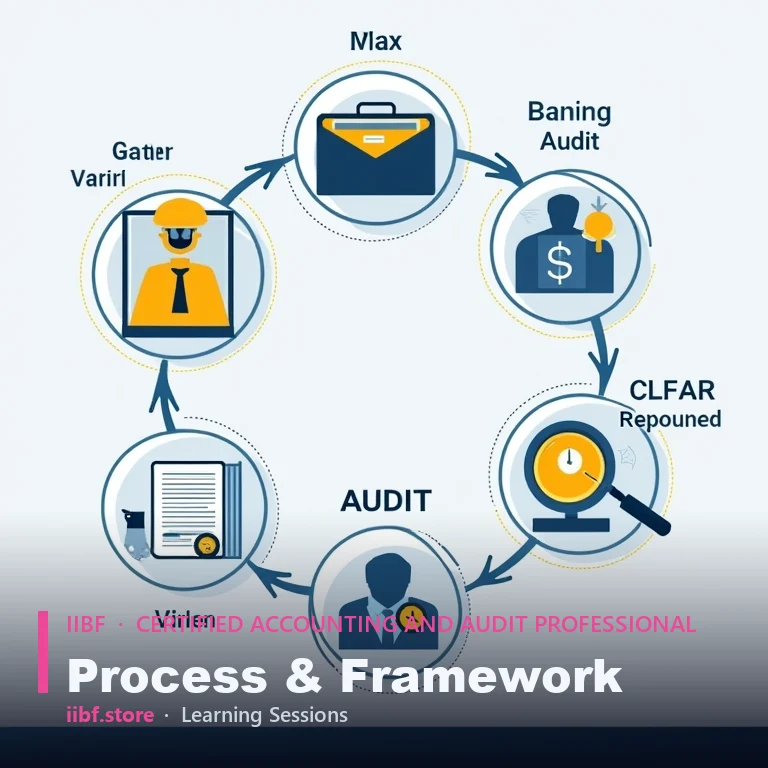
A statutory bank audit follows a disciplined, time-bound process because results must be ready within weeks of the 31 March closing. The auditor begins with engagement acceptance and study of the RBI appointment letter, closing circulars and the previous year's reports. Next comes planning and risk assessment, where the auditor identifies material advances, sensitive heads such as interest income and sundry accounts, and areas prone to evergreening. The core of the bank audit is substantive testing: verifying asset classification against the Income Recognition and Asset Classification framework, checking provisioning, scrutinising the largest borrower accounts, examining documentation and security, and testing income on a sample basis. The auditor also evaluates internal controls over the core banking system, reconciliations and inter-branch accounts. Findings are discussed with branch management, memoranda of changes (MOCs) are raised for any adjustments, and the auditor finalises the main audit report, the tax audit report where applicable, and the LFAR. Throughout, the auditor applies the Standards on Auditing issued by the Institute of Chartered Accountants of India, whose guidance notes on bank audit are an essential reference, and works within the prudential framework prescribed by the Reserve Bank of India. The auditor must also stay alert to special closing instructions that change each year, and document the basis for every conclusion so that the work can withstand later review by the central auditor and the regulator. Time-bound practice on full-length mock tests helps candidates internalise this sequence under exam pressure.
Structure of the Long Form Audit Report (LFAR)
The LFAR is the most distinctive deliverable of a statutory bank audit and a favourite examination area. Issued under RBI guidance and revised periodically, the LFAR is a structured questionnaire that the branch auditor and the central auditor must answer in narrative form. The branch LFAR typically covers assets — including cash, balances, investments held at the branch, and advances with sub-questions on sanction, disbursement, documentation, review, monitoring and classification of non-performing assets. It then addresses liabilities such as deposits and contingent liabilities, followed by sections on profit and loss items, general housekeeping, reconciliation of inter-branch and nostro accounts, and the status of frauds. Specialised branches such as foreign-exchange, treasury and large corporate branches answer additional annexures. The central LFAR consolidates branch-level observations and covers capital adequacy, group-wide issues, and the functioning of internal control and audit at head-office level. Because the LFAR shapes the RBI's supervisory view of a bank, auditors must answer each question specifically rather than with vague assurances, supporting every adverse comment with facts and figures drawn from the records examined. A well-drafted LFAR distinguishes between systemic weaknesses, which the bank must fix across branches, and isolated lapses, which can be corrected locally; this distinction is exactly the kind of judgement the CAAP certification trains. Candidates can reinforce LFAR terminology and recall through quick drills on the match game and by following regulatory updates on the IIBF news page.

Concurrent Audit and Fraud Reporting
Concurrent audit and fraud reporting together give the bank audit framework its early-warning capability. Concurrent audit is an ongoing examination of transactions as they happen, mandated by the RBI for branches that account for a large share of advances, deposits and forex business, as well as for treasury and other sensitive functions. Concurrent auditors verify adherence to systems and procedures, flag deviations promptly, and submit periodic reports to management, helping prevent errors before they crystallise into losses. Fraud reporting is a parallel discipline: banks must classify and report frauds to the RBI within defined timelines and through the prescribed returns, and auditors are required to report suspected or detected frauds in their reports, including the LFAR and, where thresholds are met, under the relevant provisions of company law. An auditor who identifies red flags — diversion of funds, fictitious documentation, or unusual circular transactions — must escalate them rather than treat them as ordinary exceptions. Strong coordination among statutory, concurrent and internal auditors closes gaps that any single layer might miss, and the bank's audit committee of the board reviews these reports to ensure that significant observations are actioned and not allowed to recur. For CAAP candidates, the practical lesson is that fraud detection in a bank audit depends as much on professional scepticism and pattern recognition as on checklists, since well-disguised frauds rarely announce themselves in a single transaction. Tracking current policy rates on the RBI rates tracker also helps candidates connect audit findings to the wider monetary context.
Frequently Asked Questions
What is a bank audit and why is it important?
A bank audit is an independent examination of a bank's financial statements. Advances, income and controls to confirm they are true, fair and compliant. It protects depositors.
Supports RBI supervision. And ensures correct asset classification and provisioning. Making it central to financial-system stability.
What is the Long Form Audit Report (LFAR)?
The LFAR is a detailed. Questionnaire-based report that statutory auditors submit alongside the main audit report. It covers assets.
Liabilities. Profit and loss. Housekeeping.
Reconciliations and frauds at branch and central level. Giving the RBI a granular view of how each bank is functioning.
How is concurrent audit different from statutory audit?
Concurrent audit runs continuously through the year at high-risk branches. Checking transactions in near-real time to catch deviations early. Statutory audit is an annual exercise that verifies the year-end financial statements. They complement each other. With concurrent audit feeding issues into the statutory and internal audit process.
How do auditors handle fraud during a bank audit?
Auditors must report suspected or detected frauds in their reports. Including the LFAR. And ensure the bank classifies.
Reports them to the RBI within prescribed timelines. Where statutory thresholds apply. Fraud is also reported under company-law provisions.
So red flags must be escalated rather than ignored.
Conclusion
Mastering the bank audit framework — its many audit types, the disciplined statutory process, the structure of the LFAR, and the safety net of concurrent audit and fraud reporting — is exactly what the CAAP certification rewards, and it is a skill that stays valuable throughout a banking and finance career. Treat the LFAR not as a form to fill but as a structured lens on a branch's health, and every other audit concept will fall into place. Ready to convert this understanding into marks? Attempt a full-length mock test and explore more exam-ready guides on our banking exam blog today.
Quick summary in plain words
In short: keep it simple.
Read each point slow.
Take notes as you go.
Use the free tests to check what you know.
Watch the video if a part feels hard.
Do a bit each day.
Ask us on WhatsApp if you get stuck.
You can pass this exam.
Stay calm and trust your prep.
Come back to this guide often.
Small steps add up fast.
Skim the box below first.
Quick summary in plain words
In short: keep it simple.
Read each point slow.
Take notes as you go.
Watch the video if a part feels hard.
Do a bit each day.
Ask us on WhatsApp if you get stuck.
You can pass this exam.
Stay calm and trust your prep.
Come back to this guide often.
Small steps add up fast.
Skim the box below first.
Quick summary in plain words
In short: keep it simple.
Read each point slow.
Take notes as you go.
Watch the video if a part feels hard.
Do a bit each day.
Ask us on WhatsApp if you get stuck.
You can pass this exam.
Stay calm and trust your prep.
Come back to this guide often.
Small steps add up fast.
Skim the box below first.
Quick summary in plain words
In short: keep it simple.
Read each point slow.
Take notes as you go.
Watch the video if a part feels hard.
Do a bit each day.
Ask us on WhatsApp if you get stuck.
You can pass this exam.
Stay calm and trust your prep.
Come back to this guide often.
Small steps add up fast.
Skim the box below first.
Practice this topic
Take a free mock test, download chapter PDFs, or watch a video class — all included on iibf.store.