Commercial Real Estate Exposure Norms: Risk Weights and Appraisal (CCP)

Commercial real estate exposure norms decide how much capital your bank sets aside every time it funds a builder or a housing project. For CCP candidates, this is a high-yield topic. RBI treats commercial real estate as a distinct exposure class, and it splits that class further into CRE and CRE-Residential Housing (CRE-RH). Get the classification wrong in the exam, and the risk-weight question goes wrong too. This article walks through the classification logic, the qualitative risk-weight and provisioning treatment, builder-project appraisal, the escrow-RERA interface, and how banks cap and monitor this sector internally.
📊 CRE vs CRE-RH: How RBI Classifies Exposure
Commercial real estate (CRE) exposure covers loans secured by, or extended for, commercial property. Think office blocks, malls, hotels, industrial sheds, and mixed-use developments. Repayment for these loans depends heavily on rental income or sale proceeds from the property itself. That dependence on the asset's cash flow is exactly why RBI treats CRE as a separate, closely watched exposure category.
CRE-Residential Housing (CRE-RH) is a carved-out sub-category inside CRE. It applies to financing for residential housing projects that meet specific conditions RBI has laid down on the share of floor space used for dwelling units and related project features. A project that is dominantly residential in nature, and meets those RBI-specified conditions, gets classified as CRE-RH rather than plain CRE.
Why does this split matter? Historical default patterns in pure residential housing differ from those in office or retail-driven commercial property. RBI's exposure framework recognises that difference. Getting the classification right at loan sanction is not a paperwork exercise. It feeds directly into the risk weight and provisioning your bank applies, and into how the exposure sits against internal sectoral caps.
Read your Credit Appraisal chapter alongside this topic. The classification call is really an appraisal-stage decision, not a back-office coding exercise.
📌 Remember: CRE-RH is a subset of CRE, not a separate asset class outside it. Every CRE-RH exposure is CRE, but not every CRE exposure qualifies as CRE-RH.

🏗️ Risk Weights and Standard-Asset Provisioning
Once a loan is classified as CRE or CRE-RH, it attracts a specific risk weight under RBI's capital adequacy framework. Risk weight decides how much regulatory capital the bank must hold against that exposure. Both CRE and CRE-RH already sit above the risk weight applied to plain-vanilla, well-secured retail or corporate exposures, because property-price and construction-execution risk is real.
Within this picture, CRE-RH usually gets treated more favourably than general CRE. Regulators have historically viewed home-loan-linked residential financing as carrying comparatively lower default risk than office or retail-driven commercial property. That is reflected in a comparatively lower risk weight and a lower standard-asset provisioning requirement for CRE-RH versus CRE.
Exact risk-weight percentages and standard-asset provisioning rates change from time to time through RBI circulars. Do not memorise a number from an old note and carry it into the exam or into a credit sanction note. Always check the current master circular before you quote a figure. Your Capital Adequacy chapter explains how risk weights feed into the overall capital calculation.
⚠️ Common Mistake: Candidates often assume CRE-RH means "no extra provisioning at all." It still carries higher provisioning than a plain housing loan to an individual; it is only lower relative to general CRE.
Provisioning on standard CRE and CRE-RH assets is separate from provisioning once an account slips into NPA. Standard-asset provisioning is a forward-looking buffer built while the account is still performing. Credit officers must track this at the portfolio level, not just at individual account sanction.
🏢 Appraising Builder Projects and the Escrow-RERA Interface
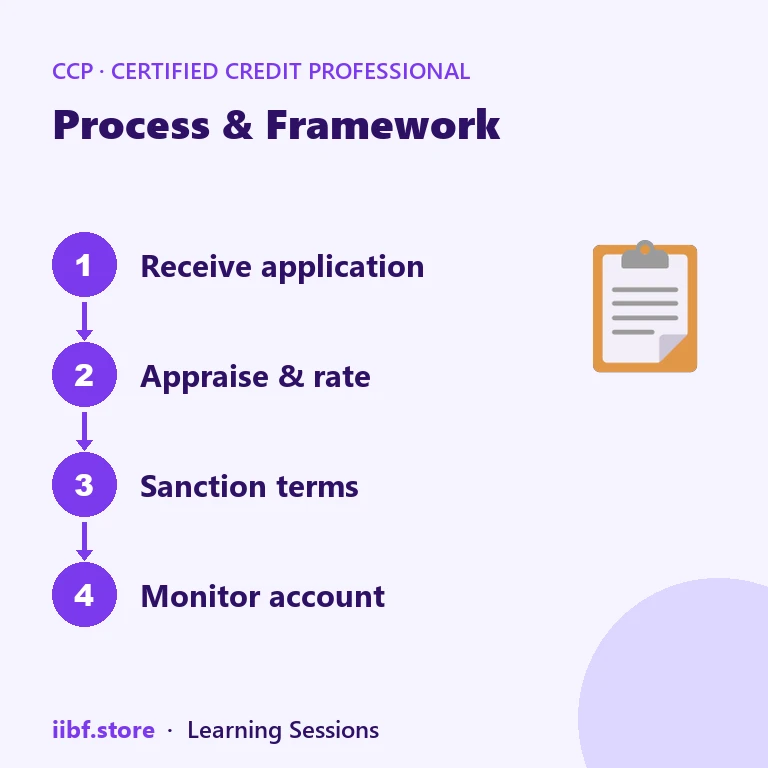
Appraisal of a builder project starts well before disbursement. Banks check the developer's track record, past project delivery timelines, and financial strength. They verify statutory approvals: land title, building plan sanction, environmental clearance where applicable, and RERA registration for the project.
Cash-flow-based appraisal is central here. Banks model the project's expected sales velocity, collection schedule from buyers, and construction cost curve, then size the loan and repayment schedule around that. Disbursement is typically staged and linked to physical construction milestones, not released as one lump sum. This protects the bank if a project stalls midway.
The Real Estate (Regulation and Development) Act, RERA, requires promoters to keep a defined share of amounts collected from allottees in a separate project-specific escrow account. Withdrawals from that escrow account are certified in proportion to the percentage of construction completed, and are typically certified by an engineer, an architect, and a chartered accountant together. This escrow discipline directly supports a bank's credit monitoring, because it limits fund diversion away from the project.
Banks structure their own disbursement and monitoring around this same construction-linked logic, tracking the DCCO (date of commencement of commercial operations) and flagging cost or time overruns early. Your Credit Policy chapter and the Credit Delivery chapter both cover how disbursement staging and covenant tracking work in practice.
💡 Exam Tip: If a question asks why banks prefer RERA-registered projects, the escrow mechanism is usually the expected answer, not just "legal compliance."

🎯 Sectoral Caps and Monitoring in Practice
Beyond individual loan appraisal, banks set board-approved internal ceilings on total CRE exposure as a share of overall advances or capital funds. These are internal prudential limits, layered on top of RBI's regulatory framework, not replacements for it. Many banks also carve out a separate sub-limit for CRE-RH within the broader CRE cap, since the risk profile differs.
Concentration risk is the real worry here. A bank overexposed to commercial real estate in one city or one developer group can face a sharp capital hit if that local market turns. Credit committees track CRE exposure through dashboards segmented by geography, builder group, and project stage, alongside periodic stress testing of the portfolio.
Monitoring does not stop at sanction. Relationship and credit teams track construction progress against the appraised timeline, sales velocity against projections, and any escrow-withdrawal anomalies flagged by the project's certifying professionals. A project running behind schedule with slow sales is an early warning signal, well before it becomes an NPA.
This sits close to your Principles of Lending chapter, where safety and liquidity of the underlying advance are core lending principles. CRE lending is really a live application of those same principles under sector-specific stress.
For related credit-monitoring ground, see how credit monitoring and supervision of advances works across the wider loan book, and how stock audit and unit inspection in banks flags red flags in working-capital accounts. The margin discipline behind promoter contribution and margin norms applies to CRE term loans too. If you want to see how banks model uncertain demand and capacity elsewhere, the CAIIB note on simulation and queuing models in banking is a useful cross-subject read on quantitative decision tools.
| Feature | CRE (General) | CRE-RH |
|---|---|---|
| Typical assets financed | Office, retail, hotel, mixed-use property | Qualifying residential housing projects |
| Repayment source | Rental income / commercial sale proceeds | Sale of residential units to individual buyers |
| Relative risk weight | Higher within the CRE bucket | Comparatively lower, per current RBI norms |
| Relative standard-asset provisioning | Higher than CRE-RH | Lower than general CRE |
| RERA escrow relevance | Applicable where project is RERA-registered | Applicable where project is RERA-registered |
| Internal sub-limit typically carved out | ❌ Usually the parent cap | ✅ Common practice at many banks |
✅ Conclusion: Lock This Down Before Exam Day
Commercial real estate exposure norms reward candidates who understand the classification logic, not just isolated numbers. Know why CRE-RH sits apart from general CRE, why the risk-weight and provisioning treatment differs qualitatively, and how escrow and RERA discipline supports bank monitoring. Pair that conceptual clarity with the appraisal and internal-cap picture covered above.
Explore more chapters in the Certified Credit Professional tag hub, and revise your Credit Rating chapter alongside this one, since rating inputs feed into CRE risk assessment. When you are ready to test yourself under real exam pressure, start a free practice test and see where you stand.
🧠 Practice MCQs: Commercial Real Estate Exposure Norms
Q1. Under RBI's exposure framework, CRE-RH is best described as: (a) A separate asset class unrelated to CRE (b) A sub-category within CRE for qualifying residential housing projects (c) Only applicable to individual home loans (d) A category used solely for NPA accounts
Answer: (b) — CRE-RH is carved out of the broader CRE category for residential housing projects meeting RBI's specified conditions.
Q2. Compared to general CRE, standard-asset provisioning for CRE-RH is typically: (a) Higher, reflecting construction risk (b) Zero, since housing loans are risk-free (c) Lower, reflecting comparatively lower historical default risk (d) Identical in every RBI circular
Answer: (c) — CRE-RH generally attracts a lower standard-asset provisioning rate than general CRE, though the exact figure must be checked in the current circular.
Q3. Under RERA, amounts collected from allottees for a project must be: (a) Transferred fully to the promoter's operating account (b) Kept partly in a separate project escrow account for construction and land cost (c) Deposited only with the lending bank's fixed deposit scheme (d) Exempt from any segregation requirement
Answer: (b) — RERA mandates that a defined portion of collections be held in a project-specific escrow account, withdrawn against certified construction progress.
Q4. Escrow withdrawals under RERA are typically certified in proportion to: (a) The promoter's self-declaration alone (b) Percentage of construction completed, certified by an engineer, architect and CA (c) The bank's internal sectoral cap (d) The buyer's loan sanction date
Answer: (b) — Withdrawals are released against certified construction progress, protecting funds from diversion.
Q5. Internal sectoral caps on CRE exposure are best described as: (a) A replacement for RBI's regulatory exposure norms (b) Board-approved limits layered on top of RBI's framework to manage concentration risk (c) Applicable only to CRE-RH and never to general CRE (d) Mandatory only for cooperative banks
Answer: (b) — Banks set their own board-approved ceilings on CRE exposure, in addition to RBI's regulatory norms, to control concentration risk.
Want chapter-wise mock tests with 100+ MCQs? Start practising free →
❓ Frequently Asked Questions
What is the core difference between CRE and CRE-RH?
CRE-RH is a sub-category of CRE reserved for residential housing projects meeting RBI-specified conditions, while general CRE covers other commercial property like offices, malls and hotels.
Does CRE-RH classification remove the need for standard-asset provisioning?
No. CRE-RH still requires standard-asset provisioning; it is simply lower than the provisioning applied to general CRE, reflecting comparatively lower historical default risk.
Why does RERA's escrow mechanism matter to a lending bank?
It restricts the promoter from diverting buyer collections away from the project, since withdrawals are certified against actual construction progress, which supports the bank's own credit monitoring.
Are internal sectoral caps on CRE exposure mandated by RBI directly?
Internal caps are board-approved limits set by each bank to manage concentration risk. They sit on top of RBI's regulatory exposure norms rather than being a specific number RBI prescribes for every bank.
For the latest exposure norms and master circulars, refer to RBI's official website before finalising any sanction note or exam answer.
Quick quiz on this topic
5 exam-style questions from our free test bank — check yourself before you move on.
Practice this topic
Take a free mock test, download chapter PDFs, or watch a video class — all included on iibf.store.
Keep reading