Committee of Creditors in IBC: CAIIB 2026 Guide
The committee of creditors sits at the heart of every corporate insolvency case decided under the Insolvency. Bankruptcy Code. 2016.
And for CAIIB candidates in 2026 it is one of the highest-yield topics in the Insolvency. Bankruptcy Code subject. Once a corporate debtor is admitted into the corporate insolvency resolution process (CIRP).
It is this body of financial creditors — not the promoters. Not the courts — that steers the outcome. Understanding how it is formed.
How it votes. Where its commercial wisdom ends. Judicial review begins will help you answer both conceptual.
Case-based questions with confidence.
What the committee of creditors is and why it matters
The committee of creditors (CoC) is the central decision-making forum constituted by the interim resolution professional after a company is admitted into CIRP. It is composed exclusively of financial creditors — banks. NBFCs.
Debenture holders and others to whom a financial debt is owed. Because they have a direct stake in maximising recovery. Are best placed to take hard commercial calls.
- Composition: only financial creditors with admitted claims hold voting rights. Operational creditors (suppliers. Employees. Statutory dues) do not vote. May attend if their dues cross a threshold.
- Related parties: a financial creditor that is a related party of the corporate debtor is barred from the CoC to prevent the promoter from controlling its own resolution.
- Voting share: each member's voting weight is proportionate to the value of the financial debt owed to it. Not one-member-one-vote.
The CoC's overarching mandate is value maximisation of the corporate debtor as a going concern, with liquidation as a last resort. This "commercial wisdom" principle is why the Supreme Court has repeatedly held that the CoC's business decisions are largely beyond judicial second-guessing. If you are building your CAIIB foundation, the structured modules in the CAIIB course on iibf.store walk through these provisions section by section.
How the CoC is formed during CIRP
The journey to a constituted committee of creditors begins the moment the National Company Law Tribunal (NCLT) admits an application under Sections 7. 9 or 10 of the Code. An interim resolution professional (IRP) is appointed. A public announcement is made. And creditors are invited to submit proof of their claims.
Claim collation and constitution
- The IRP collates all claims. Determines the financial position of each financial creditor.
- Based on verified financial debt. The IRP constitutes the CoC and files a report with the NCLT.
- The first CoC meeting must be held within seven days of constitution. Where members may confirm the IRP as the resolution professional (RP) or replace him.
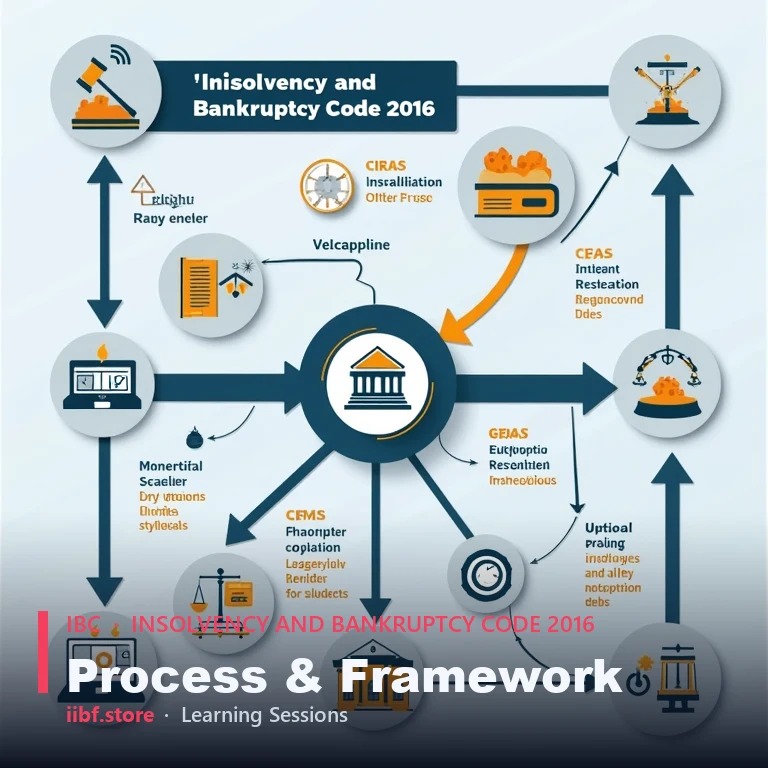
The trigger sections matter for exam scenarios: Section 7 covers applications by financial creditors, Section 9 by operational creditors, and Section 10 by the corporate debtor itself. Knowing which section feeds which application changes who initially controls the timeline. The flowchart below maps these triggers — study it alongside the practice items on our CAIIB mock tests so the pathways stick.

Voting thresholds and the powers of the committee of creditors
Decisions of the committee of creditors are taken by voting share. And the Code prescribes different thresholds for different actions. Getting these percentages right is essential. Because examiners love testing the precise majority needed for each decision.
- 66% voting share is required for major decisions: approving a resolution plan. Extending the CIRP timeline. Raising interim finance and deciding to liquidate the corporate debtor.
- 51% voting share suffices for routine matters such as appointing or replacing the resolution professional. Most ordinary business of the CoC.
- The CoC approves the RP's expenses. The CIRP cost. The eligibility of prospective resolution applicants under Section 29A.
The Section 29A eligibility filter
Section 29A disqualifies wilful defaulters, undischarged insolvents and connected promoters from submitting a resolution plan — a guardrail the CoC must enforce so that the very persons who ran the company into the ground cannot buy it back cheaply. Keep your awareness of such evolving provisions current through the IIBF news and updates page, and reinforce terminology with the quick-recall drills on the match-the-terms game.
From resolution plan to liquidation: the CoC's final call
Once resolution applicants submit plans. The committee of creditors evaluates them on feasibility. Viability and the value offered to stakeholders. The RP confirms each plan meets the mandatory contents prescribed by the Code. But the commercial decision to accept or reject rests squarely with the creditors.
- If a plan secures 66% of voting share. It goes to the NCLT for approval and. Once approved, binds all stakeholders including dissenting creditors and government authorities.
- The CIRP must ordinarily conclude within 330 days including litigation. Failing which the corporate debtor heads toward liquidation.
- If no plan is approved or the CoC decides (with 66%) to liquidate. The company enters the liquidation process. Assets are distributed under the Section 53 waterfall.
The liquidation waterfall determines who gets paid first — CIRP costs and liquidation costs rank highest, followed by workmen's dues and secured creditors, then employees, unsecured creditors, government dues and finally equity. Dissenting financial creditors are entitled to receive at least the liquidation value of their claims, a protection examiners frequently test. The figure below visualises both the 330-day clock and the Section 53 priority ladder; you can deepen this with current rate references on the RBI rates resource page.
Commercial wisdom and the limits of judicial review
A recurring theme in CAIIB questions is the doctrine of "commercial wisdom" of the committee of creditors. Courts have consistently held that the CoC's collective business judgement on the viability. Feasibility of a resolution plan is not open to judicial review on merits.
- The NCLT. NCLAT confine themselves to checking that the plan complies with the law. They do not substitute their own commercial view for that of the creditors.
- This deference exists. Financial creditors bear the economic consequences of their decisions. Are presumed to act rationally to maximise recovery.
- However. The CoC must still act fairly: it cannot discriminate arbitrarily between similarly placed creditors. And its decisions must be reasoned.
For exam preparation, remember the balance: maximum commercial freedom for the CoC, minimum judicial interference, but a baseline of fairness and legality. Reading landmark judgments alongside the Code text sharpens this nuance — track curated explainers on the iibf.store banking blog to see how recent rulings refine the principle.
For authoritative guidance, refer to the official resources of the Reserve Bank of India and the Indian Institute of Banking & Finance.
Frequently Asked Questions
Who can be a member of the committee of creditors?
Only financial creditors with admitted claims against the corporate debtor are members of the committee of creditors. Operational creditors do not get voting rights. And any financial creditor that is a related party of the corporate debtor is excluded to prevent promoter control over the resolution process.
What voting share is needed to approve a resolution plan?
A resolution plan must be approved by financial creditors holding at least 66% of the voting share in the committee of creditors. The same 66% threshold applies to other major decisions such as extending the CIRP timeline or deciding to liquidate the corporate debtor.
Can courts overrule the decisions of the committee of creditors?
Generally no. The Supreme Court has held that the commercial wisdom of the committee of creditors on the feasibility. Viability of a resolution plan is not subject to judicial review on merits. The NCLT. NCLAT only verify that the plan complies with the requirements of the Code.
What happens if the CoC cannot approve any resolution plan?
If no resolution plan is approved within the CIRP timeline of 330 days. Or the committee of creditors resolves with a 66% vote to liquidate. The corporate debtor enters liquidation. Its assets are then distributed among stakeholders according to the priority order set out in the Section 53 waterfall.
Conclusion: Master the CoC for CAIIB success
The committee of creditors ties together every moving part of the Insolvency and Bankruptcy Code — from CIRP triggers and voting thresholds to commercial wisdom and the liquidation waterfall — making it indispensable knowledge for your 2026 exam. Cement these concepts by attempting full-length practice papers on our CAIIB mock tests and by working through the structured lessons in the CAIIB course on iibf.store. Study the provisions, drill the percentages, and walk into the exam hall ready to score.
Quick quiz on this topic
5 exam-style questions from our free test bank — check yourself before you move on.
Practice this topic
Take a free mock test, download chapter PDFs, or watch a video class — all included on iibf.store.