Is the IT Security Printed Book Right for You? An Honest Guide
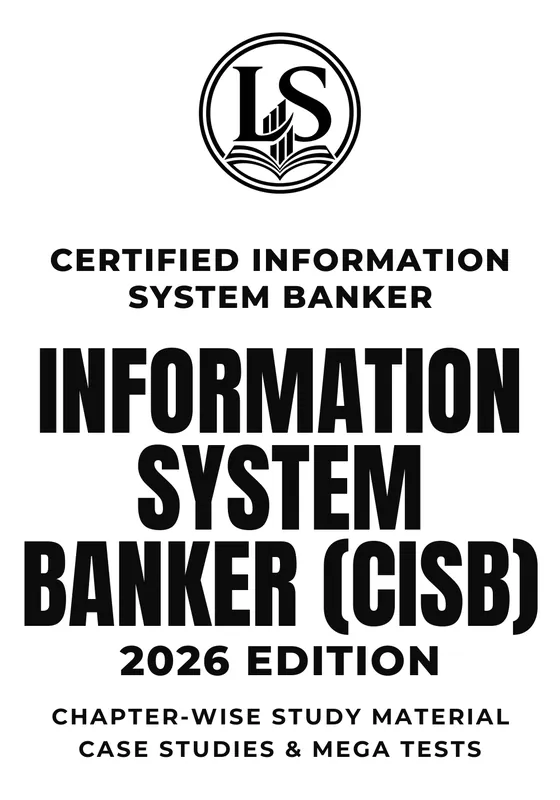
It is 9:40 pm. You reached home late, the branch had a system issue at closing, and tomorrow you have to be back at 9:30. Somewhere in your bag is a syllabus that talks about risk, controls, threats, audits and regulations, and you are wondering where to even begin. If that is you, this guide is for you. We will look at the IT Security printed book honestly: who it suits, how to use it, and where it will not be enough on its own.
We are not going to tell you this book will make you pass. No single book can. What we can do is tell you what is inside, which kind of reader gets the most from it, and what to pair it with. Even if you never buy it, the planning method below will help you with any IT Security material you pick.
Why IT Security feels harder than it is
Most bankers do not struggle with IT Security because the ideas are difficult. They struggle because the subject is wide. One page talks about physical access to a server room, the next about malware, the next about an audit checklist. Nothing connects, and a tired mind does not hold disconnected facts for long.
The fix is structure. Instead of reading the subject as one long list, read it as four questions:
- What are we protecting, and how is security organised? (overview, governance, standards)
- What do we put in place to protect it? (controls on assets, software, networks, development)
- What can go wrong, and how do we recover? (threats, malware, incidents, continuity)
- How is it checked and regulated? (audit and regulatory mechanism in Indian banks)
Once you see these four questions, each chapter has a home. You stop memorising and start placing. This is exactly how the IT Security printed book is organised, which is one reason it suits busy readers: the order of the modules already follows this logic.
The three-minute test
Before spending money on any material, open a chapter and read one page. Can you follow the language without rereading each sentence? Are the headings clear enough that you could revise from them a week later? If yes, the style suits you. This is why a free sample matters, and the book page lets you read one before you decide.
What is inside the book
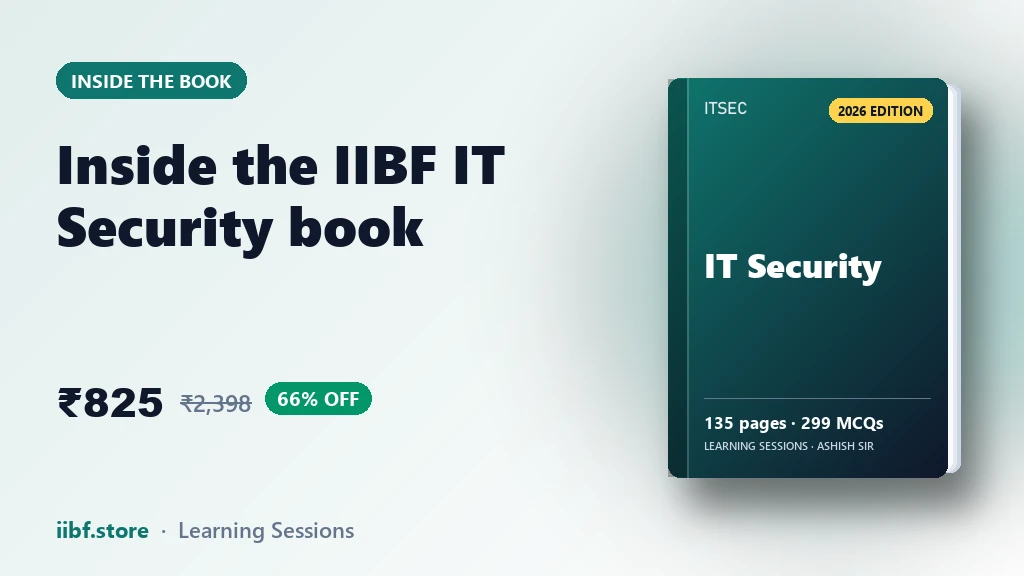
Here are the facts, without decoration. The 2026 edition runs to 141 pages across 20 chapters, grouped into four modules. It carries 299 questions, and alongside the chapters come 40 case studies (160 questions) and 5 mega tests (500 questions).
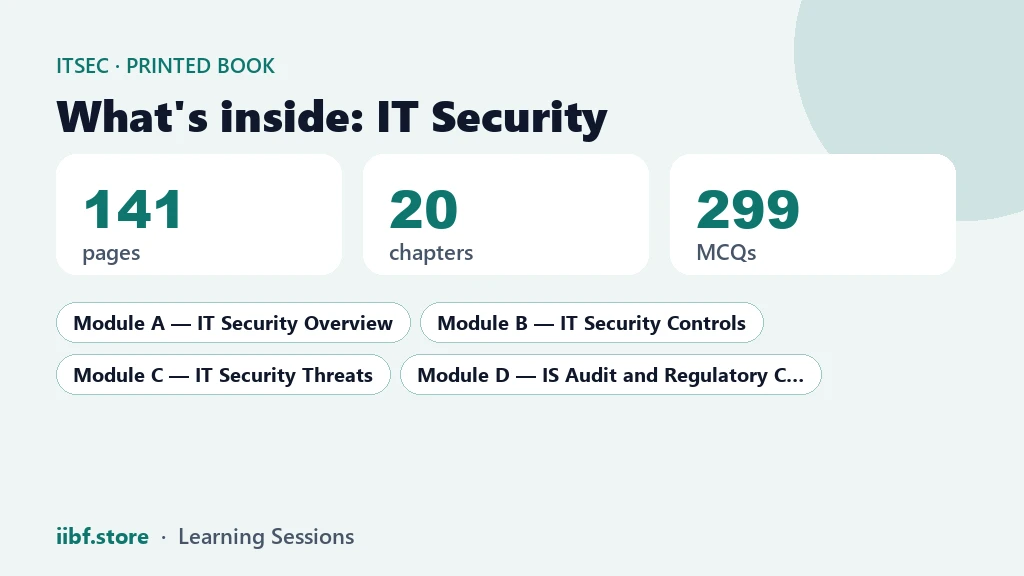
The four modules are:
- Module A, IT Security Overview: eight chapters, from introduction to information security and corporate IT security through governance, physical and hardware security, to standards and best practices.
- Module B, IT Security Controls: five chapters on asset classification, physical and software controls, network controls, and controls in software development and maintenance.
- Module C, IT Security Threats: five chapters on threats, viruses and malware, incident management, fault tolerant systems, and business continuity and disaster recovery.
- Module D, IS Audit and Regulatory Compliance: two chapters, on information systems audit and the regulatory mechanism in Indian banks.
At 141 pages, it is a compact book. That is a strength if your problem is time and a weakness if you want exhaustive depth on every topic. Be clear about which problem you have.
Reader profile 1: you are attempting for the first time
Your risk is not ignorance, it is wasted effort. First-timers often start with the chapters they find interesting, then run out of weeks before reaching audit and regulation.
How to use the book: go module by module, in order. Read a chapter once, close the book, and write three lines from memory. Then attempt the chapter questions. Do not skip Module D because it is short. Audit and regulatory topics are often where candidates lose easy marks.
When it is not enough: a first attempt also needs timed practice. Reading a chapter and answering questions at your own pace is not the same as sitting through a full paper. Use the free mock tests at iibf.store/tests once you finish each module, so exam-style questions do not surprise you.
Reader profile 2: you have attempted before
If you did not clear it last time, please do not start from page one again. You already know roughly what the subject looks like. Your problem is usually specific: weak recall of one module, or careless errors under time pressure.
How to use the book: start from the end. Attempt the questions first, note which chapters produce your wrong answers, and go back only to those. Keep a one-page list of what you keep getting wrong, and read that list every morning. The IT Security printed book works well here because a short book is easy to revisit selectively.
When it is not enough: if you failed by a few marks, the issue may be exam technique rather than content. Do the mega tests under a timer, and review every wrong option, not just the answer key. The book gives you the material; the discipline of timed review is yours to add.
A note on repeat attempts
Check the official attempt and eligibility rules at the IIBF website before planning your calendar. Rules and schedules for the upcoming exam cycle change, and only the official source is reliable.
Reader profile 3: you are very short on time
Maybe you have six weeks, maybe less. Be realistic: you cannot read everything twice. A compact book helps, but only if you are strict about where the hours go.
How to use the book: put your weekday time into short reading sessions of thirty to forty minutes and keep weekends for questions and case studies. Use the 40 case studies as practice for applying ideas, because scenario-style questions reward understanding more than memorisation. If a chapter feels familiar from your daily work, such as physical security or network controls, read it faster and spend the saved time on threats and audit.
When it is not enough: if you have less than two weeks, no book will rescue a subject you have not touched. In that case, prioritise the chapter questions and the mega tests, and read the book only where those expose a gap. Our free material library is a useful supplement for quick revision notes.
Reader profile 4: you prefer paper over screens
After a full day on CBS screens, many bankers simply cannot read a PDF at night. If that is you, paper is not a luxury, it is what keeps you studying at all.
How to use the book: a printed copy lets you underline, flag pages and write in margins. Use that. Mark every term you could not define aloud, and review only the marked pages in the last week. Keep it where you will see it: on the bedside table, not in a cupboard.
When it is not enough: paper cannot time you or score you. Mock tests are online, so keep one evening each week for a screen-based test, even if you prefer paper for reading. Exam practice should look like the exam.
A four-step method that works with any IT Security material
Whichever profile you match, this plan fits a working schedule. It is also how we would use the IT Security printed book ourselves.
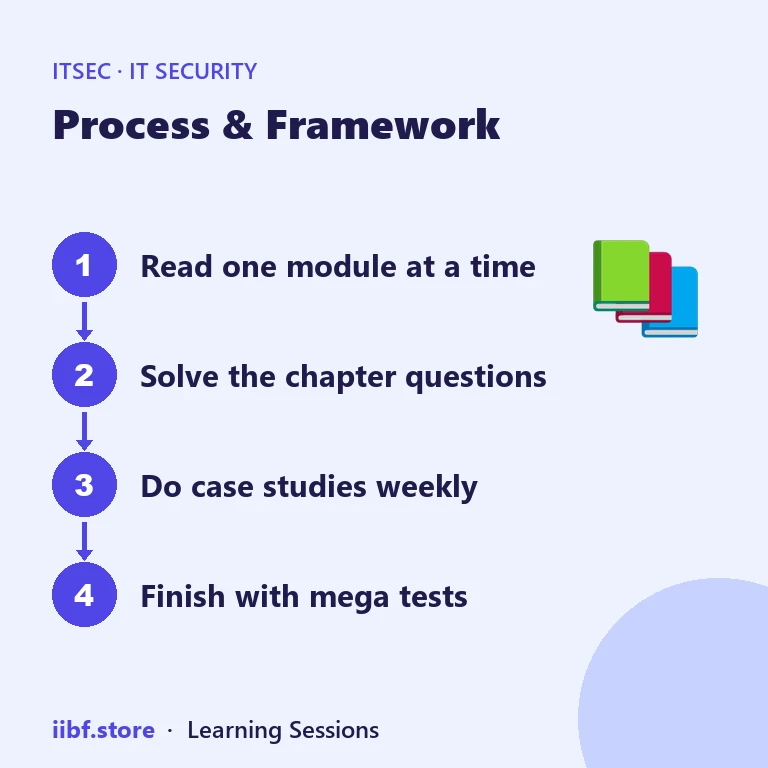
- Read one module at a time. Finish A before B. Resist jumping around.
- Solve the chapter questions the same week. Recall fades quickly; questions lock it in.
- Do case studies weekly. One or two a week keeps application skills warm.
- Finish with the mega tests. Treat them as a rehearsal, with a timer and no pausing.
If you also want a structured course around it, the books section and the blog carry more guides like this one.
Quick comparison: which profile are you?
| Reader | Best way to use the book | Add alongside |
|---|---|---|
| First attempt | Module by module, in order | Free mock tests after each module |
| Repeat attempt | Questions first, then weak chapters only | Timed mega tests and error log |
| Short on time | Short weekday reads, weekend questions | Case studies and quick revision notes |
| Prefers paper | Underline and flag, review marked pages | One online mock a week |
Price and what to expect
The book is listed at ₹700 against an MRP of ₹2,398, which is 71 percent off. Prices can change, so the book page always shows the current price. The page also has a free sample, and you should read it before ordering. If the style does not suit you, you will know before spending anything.
The honest bottom line
The IT Security printed book suits readers who want a compact, module-wise path through the subject, with practice questions, case studies and mega tests included. It suits you less if you want a very deep reference on every topic, or if you will not do any timed practice. A book alone does not give you exam-hall speed; the mocks do that.
Pick your profile, follow the four steps, and keep a little time every day. For official dates, eligibility and syllabus updates, always rely on the IIBF website. And if the IT Security printed book fits how you study, it can make those tired evenings count for more.
Frequently asked questions
How many pages and chapters does the book have?
The 2026 edition has 141 pages and 20 chapters, grouped into four modules: IT Security Overview, IT Security Controls, IT Security Threats, and IS Audit and Regulatory Compliance.
Is the book enough on its own?
It gives you the content, 299 questions, 40 case studies and 5 mega tests. Still, we suggest adding free mock tests so you practise under timed, exam-like conditions.
Can I check the style before buying?
Yes. The book page offers a free sample. Read it first and see whether the language and layout work for you.
Where do I find exam dates and rules?
Only on the official IIBF website. We do not list dates or fees here because they change from one exam cycle to the next.
Prefer revising from a printed book?
Chapter-wise books with MCQs after every chapter — minimal pages, complete coverage, delivered anywhere in India. Every book has a free sample to read first.













Practice this topic
Take a free mock test, download chapter PDFs, or watch a video class — all included on iibf.store.
Keep reading