ISO 27001 ISMS Framework: A Guide for Bank IT Security
The ISO 27001 ISMS framework is the global gold standard for managing information security, and it sits at the heart of the IIBF Certificate in IT Security. For banks and financial institutions that handle vast volumes of sensitive customer data, adopting a structured Information Security Management System (ISMS) is no longer optional — it is a regulatory and reputational necessity. Understanding the ISO 27001 ISMS framework helps banking professionals design controls, manage risk systematically, and demonstrate compliance to regulators, auditors, and customers alike.
This guide explains the structure, the risk-based approach, the control domains, and the certification lifecycle of ISO 27001 so you can confidently tackle both conceptual and applied questions in your examination.
What the ISO 27001 ISMS Framework Is
ISO/IEC 27001 is an internationally recognised standard that specifies the requirements for establishing, implementing, maintaining, and continually improving an Information Security Management System. The ISO 27001 ISMS framework takes a management-system approach: instead of prescribing a fixed list of technologies, it asks an organisation to identify its information assets, assess the risks to their confidentiality, integrity, and availability — the classic CIA triad — and then select proportionate controls to treat those risks.
The standard follows the Plan-Do-Check-Act (PDCA) cycle, embedding continual improvement into the security programme. A bank implementing ISO 27001 must define the scope of its ISMS, secure leadership commitment, document a security policy, and maintain a Statement of Applicability that justifies which controls are in or out. For banking candidates, this complements the operational-risk concepts covered in the CAIIB course, where information-security governance is increasingly examined.

The Risk-Based Approach at the Core
What distinguishes the ISO 27001 ISMS framework from a simple checklist is its insistence on risk assessment and risk treatment. Organisations must establish a repeatable risk-assessment methodology, identify threats and vulnerabilities to each asset, evaluate the likelihood and impact, and decide how to treat each risk. The four standard treatment options are:
- Mitigate — apply controls to reduce the risk to an acceptable level.
- Transfer — shift the risk through insurance or outsourcing.
- Avoid — stop the activity that creates the risk.
- Accept — formally acknowledge and retain a residual risk within appetite.
This risk-based thinking aligns neatly with the Reserve Bank of India's cyber-security framework for banks, which mandates board-approved security policies and risk assessments. Candidates should be able to map ISO 27001 risk treatment to RBI expectations. Reinforce your grasp of risk fundamentals with targeted practice tests, and keep up with the latest supervisory circulars through IIBF news updates.
Annex A Controls and the Statement of Applicability
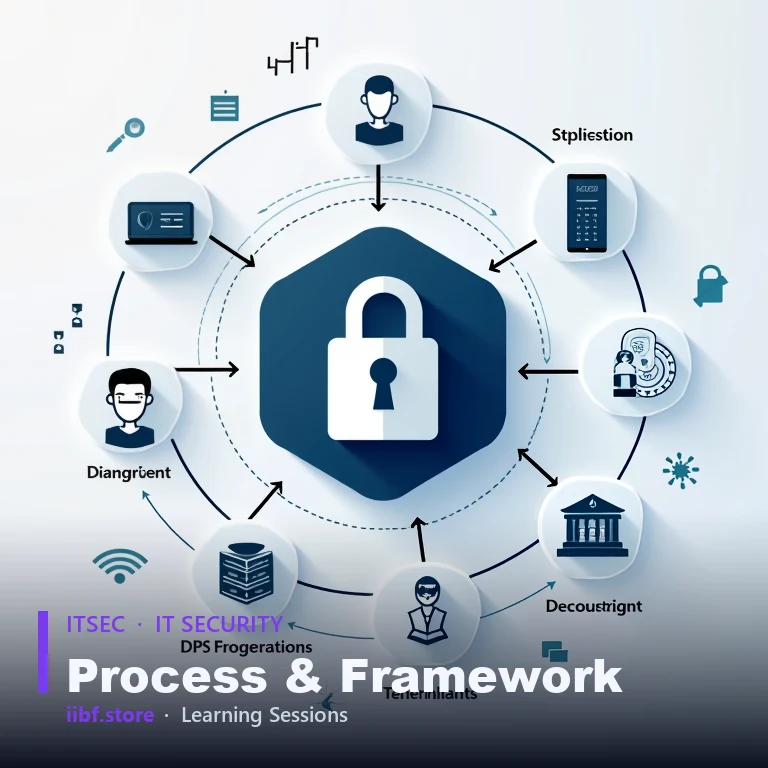
The ISO 27001 ISMS framework is supported by Annex A, a reference set of information-security controls organised into themes such as organisational, people, physical, and technological controls. The current revision groups controls into four broad categories, covering areas like access control, cryptography, supplier relationships, incident management, business continuity, and compliance. Importantly, an organisation does not have to implement every control — it must justify inclusions and exclusions in the Statement of Applicability based on its risk assessment.
For a bank, key control domains include identity and access management, secure software development, vulnerability and patch management, logging and monitoring, and data encryption both at rest and in transit. These technical controls work alongside administrative ones such as security-awareness training and clear segregation of duties. Professionals building foundational knowledge through the JAIIB course will find that these governance themes underpin much of modern banking operations. For the definitive standard text and updates, refer to the International Organization for Standardization.
The Certification Lifecycle and Continual Improvement
Achieving certification under the ISO 27001 ISMS framework follows a defined lifecycle. After implementing the ISMS, an organisation undergoes a two-stage external audit by an accredited certification body: Stage 1 reviews documentation and readiness, while Stage 2 tests whether controls operate effectively in practice. A successful audit results in a certificate valid for three years, subject to annual surveillance audits and a recertification audit at the end of the cycle.
Crucially, certification is not a one-time event. Internal audits, management reviews, corrective actions for non-conformities, and ongoing monitoring keep the ISMS alive and responsive to new threats. This continual-improvement mindset is exactly what regulators expect from banks operating in a fast-evolving threat landscape. To make revision engaging, try the concept-pairing exercises in the match game, which help cement control categories and audit-stage terminology before your exam.
Frequently Asked Questions
What is the main purpose of the ISO 27001 ISMS framework?
Its main purpose is to provide a systematic, risk-based approach to managing the security of information assets. It helps organisations protect the confidentiality, integrity, and availability of data through a documented management system that is continually monitored, audited, and improved rather than relying on ad-hoc security measures.
Is ISO 27001 certification mandatory for banks in India?
ISO 27001 itself is voluntary, but the RBI's cyber-security framework requires banks to adopt board-approved security policies and structured risk management. Many banks pursue ISO 27001 certification to demonstrate compliance, satisfy customers and partners, and provide independent assurance that their information-security controls are effective.
What is a Statement of Applicability?
The Statement of Applicability is a key ISO 27001 document that lists all the Annex A controls and records whether each is applicable, implemented, or excluded — along with the justification. It links the organisation's risk-assessment results to the specific controls chosen, forming a central reference for auditors.
How long is an ISO 27001 certificate valid?
An ISO 27001 certificate is typically valid for three years. During that period, the certification body conducts annual surveillance audits to confirm the ISMS continues to operate effectively. At the end of the three-year cycle, a full recertification audit is required to renew the certificate.
Conclusion and Next Steps
A solid command of the ISO 27001 ISMS framework — its risk-based core, Annex A controls, and certification lifecycle — will serve you well in the IIBF IT Security examination and in safeguarding your institution's information assets. Focus on understanding why each requirement exists, not just memorising clauses. Put your knowledge to the test with our IT-security-focused mock tests, and deepen your study with the structured modules in the CAIIB course to be fully exam-ready.
Practice this topic
Take a free mock test, download chapter PDFs, or watch a video class — all included on iibf.store.