LAF Corridor Explained: CAIIB Central Banking Guide 2026

In the CAIIB Central Banking paper for 2026. The LAF corridor is the framework that explains how the Reserve Bank of India actually controls short-term interest rates. The LAF corridor is the band formed by the Liquidity Adjustment Facility.
With the repo rate at the centre. The Standing Deposit Facility (SDF) as the floor. The Marginal Standing Facility (MSF) as the ceiling.
Master how these three rates pin the overnight call money rate. You will handle both theory. Current-affairs questions on monetary policy with confidence.
This guide explains each rail and how RBI steers the call rate.
What the LAF Corridor Is
The Liquidity Adjustment Facility is RBI's main tool for managing day-to-day liquidity in the banking system. Banks borrow from or park funds with RBI overnight. And the rates at.
They do so form a corridor that contains the market's overnight rate. The corridor therefore sets the operational target band for the weighted average call rate (WACR). Which RBI keeps close to the policy repo rate.
- Repo rate: the centre of the corridor. The rate at which banks borrow against eligible securities.
- SDF rate: the floor. The rate at which banks park surplus funds with RBI without collateral.
- MSF rate: the ceiling. The penal rate at. Banks borrow beyond their normal limits against securities.
By placing borrowing and lending rates symmetrically around the repo, RBI keeps the call rate from drifting too far in either direction. Anchor your study with the CAIIB course hub and reinforce it on mock tests.
Repo at the Centre, SDF as Floor, MSF as Ceiling
The repo rate sits at the heart of the corridor. Is the signalling rate the Monetary Policy Committee announces. When the system is short of liquidity.
Banks borrow at the repo rate. This is the price of marginal funds. The corridor's floor is the SDF.
Introduced in 2022. Which lets banks deposit surplus liquidity with RBI on an uncollateralised basis. Because banks will not lend in the market below the rate RBI offers them risk-free.
The SDF effectively caps how low the call rate can fall.
The ceiling is the MSF, set above the repo rate. Banks tap the MSF when they need funds beyond their normal LAF access, so no bank will borrow in the market above this rate. The SDF and MSF are positioned symmetrically around the repo, typically a quarter of a percentage point on either side, giving a narrow, well-defined corridor. Track the live values through the RBI rates resource so your 2026 figures are current.

How RBI Steers the Call Rate
RBI's operating objective is to keep the weighted average call rate aligned with the repo rate. It does this by managing liquidity. The call rate stays inside the corridor.
When liquidity is in surplus. The call rate drifts toward the SDF floor. When it is in deficit.
It rises toward the repo and beyond. Through variable rate repo and reverse repo auctions of differing tenors. RBI injects or absorbs liquidity to nudge the call rate back to the repo.
This is the difference between the policy stance and daily operations. The MPC decides the repo rate, but the RBI's financial markets operations department fine-tunes liquidity every day to defend the corridor. A narrow corridor reduces volatility in the call rate and strengthens the transmission of policy to lending and deposit rates. Test your grasp of which rate moves the call rate which way using the match game.
Quantitative vs Qualitative Tools and 2026 Relevance
The LAF corridor is one part of RBI's wider toolkit. Which splits into quantitative and qualitative tools. Quantitative tools influence the overall volume of credit.
Money: the repo rate. The cash reserve ratio (CRR). The statutory liquidity ratio (SLR), and open market operations.
Qualitative or selective tools direct credit toward or away from particular sectors. Including margin requirements, moral suasion, direct action and consumer-credit regulation.
In 2026, with inflation management and orderly liquidity remaining priorities, the corridor stays central to how policy signals reach the real economy. Candidates should connect the corridor to transmission: a repo change only bites if the call rate, and then bank lending rates, follow. Stay current on stance changes and liquidity measures through IIBF news, which often flags the exact corridor values examiners reference.
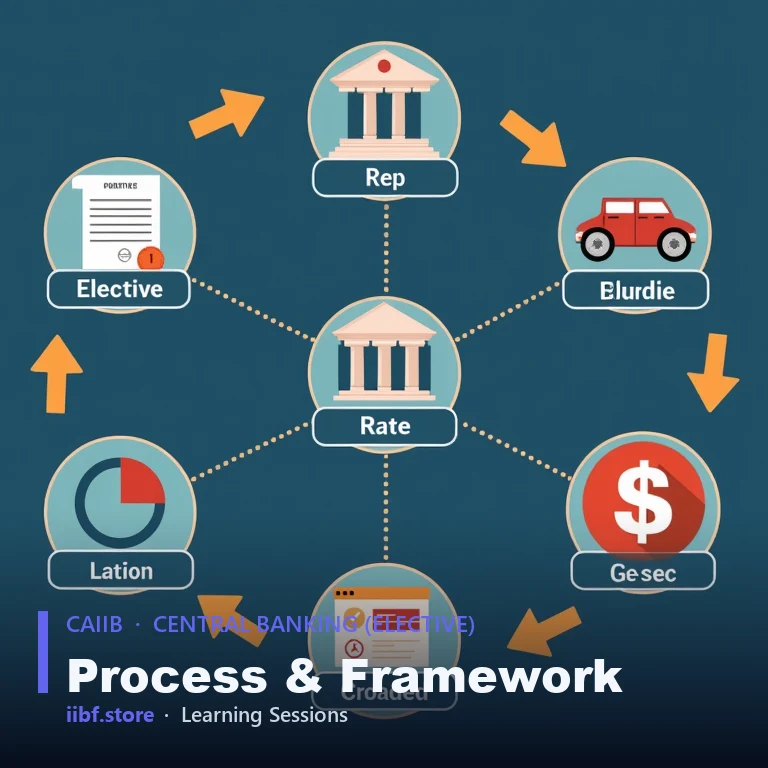
Why This Matters for the CAIIB Central Banking Paper
Central Banking questions on the LAF corridor test whether you can name the three rails correctly, identify which is the floor and which the ceiling, and explain how RBI keeps the call rate near the repo. Examiners also pair the corridor with a quantitative-versus-qualitative tools question. Memorise that SDF is the uncollateralised floor introduced in 2022, MSF is the penal ceiling, and repo is the centre. Read widely on monetary policy through the blog to handle current-affairs framing.
For authoritative reference, study monetary policy statements from the Reserve Bank of India and the certification syllabus from the Indian Institute of Banking & Finance.
Frequently Asked Questions
What forms the floor of the LAF corridor?
The Standing Deposit Facility. Or SDF, forms the floor of the LAF corridor. Introduced in 2022.
It lets banks park surplus liquidity with RBI on an uncollateralised basis at a rate below the repo. Because banks can earn this risk-free rate. They will not lend in the market for less.
So the SDF caps how low the overnight call rate can fall.
What is the difference between repo and MSF?
The repo rate is the centre of the corridor. The rate at which banks borrow against securities under normal LAF operations. The Marginal Standing Facility rate is the ceiling.
Set above the repo. At which banks borrow beyond their usual limits in emergencies. Because MSF is penal.
No bank borrows in the market above it. So it caps the upper bound of the call rate.
How does RBI keep the call rate near the repo?
RBI manages system liquidity through variable rate repo and reverse repo auctions. Injecting funds when liquidity is in deficit. Absorbing it when in surplus.
By keeping the call rate inside the corridor. Close to the repo. RBI strengthens monetary transmission.
So changes in the policy rate flow through to bank lending. Deposit rates.
What is the difference between quantitative and qualitative tools?
Quantitative tools. Such as the repo rate. CRR.
SLR and open market operations. Control the overall volume of money and credit in the economy. Qualitative or selective tools.
Including margin requirements. Moral suasion and consumer-credit regulation. Steer credit toward or away from specific sectors without changing the aggregate quantity of money.
Conclusion: Lock In the Corridor Before Exam Day
The LAF corridor rewards candidates who can name the three rails, place the floor and ceiling correctly, and link the corridor to monetary transmission and the wider toolkit. Treat repo, SDF and MSF as one connected system. Build speed on CAIIB mock tests and deepen your understanding through the CAIIB Central Banking course so you ace every policy question in 2026.
Quick quiz on this topic
5 exam-style questions from our free test bank — check yourself before you move on.
Practice this topic
Take a free mock test, download chapter PDFs, or watch a video class — all included on iibf.store.
Keep reading