Long Form Audit Report (LFAR) for Bank Branch Audits: CAAP Guide 2026
The Long Form Audit Report is one of the most examined — and most misunderstood — deliverables in the CAAP syllabus. When a statutory branch auditor signs off on a bank branch, the short audit report gives the "true and fair" opinion, but the real detail regulators look for sits inside the Long Form Audit Report (LFAR). It is a structured questionnaire, prescribed by the Reserve Bank of India, that forces the auditor to comment on systems, controls, advances quality and housekeeping at the branch. For anyone sitting the Certified Accounting and Audit Professional paper, understanding how the LFAR is built, what it covers and how it differs from the main report is worth several sure marks. This guide walks through the framework, the revised RBI format, the advances section that carries the most weight, and how branch reports roll up to the Statutory Central Auditor.
📋 What the Long Form Audit Report Actually Is
The LFAR is a supplementary report that statutory auditors of banks — both branch auditors and Statutory Central Auditors (SCAs) — must submit in addition to their main audit report. Its purpose is qualitative: while the main report expresses an opinion on whether the financial statements show a true and fair view, the LFAR digs into how the branch is actually run. It is issued as a structured questionnaire that the auditor answers point by point, giving specific comments rather than a bare "yes" or "no".
RBI notified a revised LFAR format applicable from the financial year 2020-21 onwards, modernising a format that had stood largely unchanged for years. The revision sharpened the focus on credit monitoring, information technology, and the early identification of stress. The auditor is expected to base answers on evidence gathered during the audit — the same working papers that support the balance-sheet opinion also feed the LFAR. Because the report travels up to the SCA and ultimately informs RBI's supervisory view, careless or vague answers can attract regulatory attention. Solid grounding in how a bank's books are closed, covered in preparation of final accounts of banks, is the foundation an examiner assumes you already have before you tackle the LFAR itself.
💡 Exam Tip: The LFAR is a supplement to — never a substitute for — the main audit report. A question that says "the LFAR replaces the auditor's opinion" is always wrong.
🏦 LFAR vs the Main Audit Report
Candidates lose marks by blurring the two documents. The main audit report is a short statutory opinion under the Banking Regulation Act and Companies Act framework; the LFAR is a detailed diagnostic questionnaire. One is an opinion, the other is a systems review. The table below sets them side by side so the distinction stays fixed in memory.
| Feature | Main Audit Report | Long Form Audit Report (LFAR) |
|---|---|---|
| Expresses a true and fair opinion | Yes ✔ | No ✘ |
| Questionnaire / structured format | No ✘ | Yes ✔ |
| Focus on systems, controls, advances quality | Limited ✘ | Detailed ✔ |
| Prescribed by RBI | Format under statute ✔ | Yes, RBI format ✔ |
| Consolidated by the Statutory Central Auditor | Yes ✔ | Yes ✔ |
| Can be qualified / carry adverse remarks | Yes ✔ | Yes ✔ |
Note the overlap in the last two rows: both documents flow to the SCA, and both can carry adverse comment. The key exam distinction is the first row — only the main report carries the formal opinion. When the LFAR throws up material adverse findings on advances or income, those often also require a Memorandum of Changes, linking the questionnaire back to the numbers. If you want the wider context on how bank statements are audited line by line, revisit the audit aspects of a bank's asset side before drilling into the LFAR.
🗂️ Structure of the Branch LFAR
The branch-level LFAR is organised into broad heads that mirror the balance sheet and then a general section. In sequence, the auditor comments on: assets (cash, balances with RBI and other banks, money at call and short notice, investments held at the branch, and advances); liabilities (deposits, other liabilities, bills payable, contingent liabilities and inter-branch adjustments); the profit and loss account (verification of income and expenditure, divergences, and any test-checked leakages); and a general head covering books and records, reconciliation of control and subsidiary accounts, inter-branch accounts, suspense and sundry entries, and frauds.
Each head asks pointed questions. Under deposits, for instance, the auditor confirms whether inoperative accounts are properly segregated and whether interest is correctly applied. Under other liabilities and provisions — the same ground covered in other liabilities and provisions — the auditor checks that provisions are neither short nor inflated. The general section also probes the IT environment, which now demands real comfort with system-generated data; the topic overlaps heavily with audit in a computerised environment. For the exam, memorise the four broad heads — assets, liabilities, P&L, general — because "identify the head under which X is reported" is a recurring question pattern.
📌 Remember: Contingent liabilities and inter-branch entries sit under the branch LFAR's general and liabilities heads — not under the advances section. Misplacing them is a classic trap.
💳 The Advances Section: Where Marks Are Won
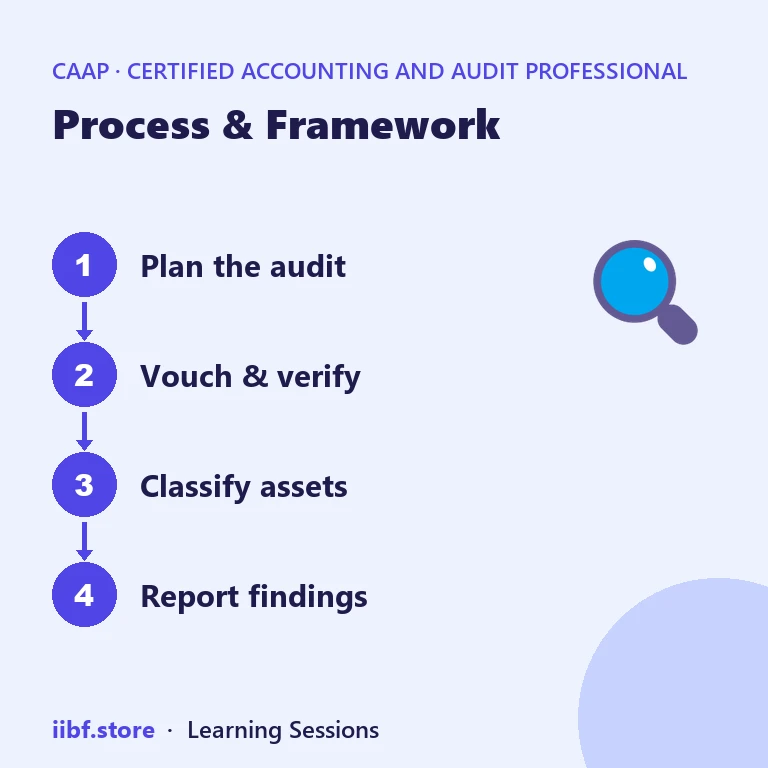
Advances form the heart of both the audit and the LFAR, and this section attracts the largest share of questions. The auditor comments across the credit lifecycle: appraisal, sanction, disbursement, documentation, review and monitoring, and recovery. For large or critical advances — commonly those above 5% of the branch's aggregate advances or a specified rupee threshold, whichever is lower — the auditor gives account-specific comments rather than generic remarks. Points examined include whether sanction terms were complied with, whether stock and receivable statements and drawing power calculations are current, whether insurance and charges are in place, and whether the account shows signs of stress warranting downgrade.
Critically, the advances section is where LFAR intersects with income recognition and asset classification. If the auditor finds an account that should have slipped to non-performing but was not classified, that observation feeds a Memorandum of Changes and can alter provisioning. This is exactly why examiners like to combine LFAR with provisioning concepts. Reinforce the classification rules alongside the broader treatment of provisions in the syllabus, and read our companion piece on audit sampling in bank branch audits to see how auditors decide which advances to test in the first place. A disciplined sampling plan is what makes the advances comments defensible.
⚠️ Common Mistake: Students write that the LFAR "classifies advances as NPA". The auditor does not classify accounts — the bank does. The LFAR comments on whether the bank's classification is correct.
🕵️ Frauds, MOC and the Roll-Up to the SCA
The general section requires the auditor to report frauds noticed or reported during the year, along with the branch's response and whether they were promptly escalated. Where audit findings change the reported figures — an under-provision, an unclassified NPA, or unrecognised income leakage — the auditor prepares a Memorandum of Changes (MOC), quantifying each adjustment. The MOC is the bridge between qualitative LFAR observations and the hard numbers in the accounts.
Branch LFARs do not stop at the branch. Each report flows to the Statutory Central Auditor, who consolidates observations across branches, filters what is material at the bank level, and prepares the bank-wide LFAR for the board and RBI. This consolidation is why consistency matters: an SCA reading dozens of branch reports needs comparable, specific answers. Auditor independence and eligibility feed directly into the credibility of this chain, which is why the paper also tests statutory auditor appointment in banks. The revised LFAR's tighter focus on income recognition also connects to how banks classify their earnings, so review bank income and expenditure classification and the accounting backbone in accounting standards for banks under Ind AS to see the full picture the SCA assembles.

✍️ How to Draft Effective LFAR Comments
The revised format expects specific, evidence-backed answers. A comment such as "documentation is in order" is worthless; "in 3 of 12 large advances tested, the latest stock statements were over 90 days old, resulting in overstated drawing power" is exactly what RBI wants. Frame every answer with the observation, the sample or basis, the impact, and — where relevant — the amount. Where a point does not apply to the branch, say "not applicable" with a one-line reason rather than leaving it blank.
For exam answers, structure matters as much as content. If asked to list the heads of the branch LFAR, present them in balance-sheet order. If asked to distinguish LFAR from the main report, lead with "opinion versus systems review". Practise writing two-line specimen comments for advances, deposits and frauds, because application questions reward candidates who show they know what a real comment looks like. Pair your reading with a set of graded mock questions — the fastest way to convert this theory into marks is repetition under timed conditions on the practice test bank, and you can browse every related topic through the CAAP topic hub.
🧠 Practice MCQs: Long Form Audit Report
Q1. The Long Form Audit Report submitted by a bank branch auditor is best described as: (a) the statutory audit opinion (b) a replacement for the main audit report (c) a supplementary questionnaire on systems and controls (d) an internal audit memo
Answer: (c) — The LFAR is a supplementary, questionnaire-based report on systems, controls and advances, submitted alongside the main audit report.
Q2. The revised RBI LFAR format is applicable from which financial year onwards? (a) FY 2016-17 (b) FY 2018-19 (c) FY 2020-21 (d) FY 2022-23
Answer: (c) — RBI notified the revised LFAR format applicable from the financial year 2020-21.
Q3. Under the branch LFAR, which section carries the most detailed account-specific commentary? (a) Deposits (b) Advances (c) Contingent liabilities (d) Cash
Answer: (b) — Large or critical advances require account-specific comments across the credit lifecycle, making advances the most detailed section.
Q4. When audit findings change the reported figures, the auditor quantifies the adjustments through a: (a) Memorandum of Changes (b) Concurrent audit note (c) Management letter (d) Going-concern paragraph
Answer: (a) — The Memorandum of Changes (MOC) quantifies adjustments arising from audit observations.
Q5. Branch LFARs are ultimately consolidated by the: (a) concurrent auditor (b) internal auditor (c) Statutory Central Auditor (d) RBI inspector
Answer: (c) — The Statutory Central Auditor consolidates branch LFARs into the bank-wide report for the board and RBI.
Want chapter-wise mock tests with 100+ MCQs? Start practising free
❓ Frequently Asked Questions
Authoritative reference: see the latest guidelines on the Reserve Bank of India website and the IIBF syllabus portal.
Is the LFAR mandatory for every bank branch audit?
The LFAR is required for statutory branch audits as prescribed by RBI. Branch auditors submit it alongside the main audit report, and the Statutory Central Auditor consolidates them at the bank level.
Does the LFAR replace the main audit report?
No. The LFAR supplements the main report. The main report carries the true and fair opinion; the LFAR is a detailed questionnaire on systems, controls and advances quality.
Who consolidates branch LFARs?
The Statutory Central Auditor collects branch LFARs, filters what is material at the bank level, and prepares the bank-wide LFAR for the board and the Reserve Bank of India.
How is the LFAR linked to a Memorandum of Changes?
When LFAR observations — such as an unclassified NPA or short provision — alter the reported figures, the auditor records the quantified adjustment in a Memorandum of Changes, connecting the questionnaire to the accounts.
Master the Long Form Audit Report and you lock in one of the most reliable scoring areas of the CAAP paper. Turn this theory into exam-ready recall with graded, chapter-wise questions on our CAAP mock test series — practise a few sets and the LFAR heads will come back to you automatically in the hall.
Prefer revising from a printed book?
Chapter-wise books with MCQs after every chapter — minimal pages, complete coverage, delivered anywhere in India. Every book has a free sample to read first.



















Practice this topic
Take a free mock test, download chapter PDFs, or watch a video class — all included on iibf.store.