National Pension System Tier 1 and Tier 2 for Retail Customers: Tier I vs Tier II Explained
Ask any JAIIB aspirant to explain the difference between the two pension accounts a customer can open under PFRDA's flagship scheme, and most will hesitate. Yet the National Pension System Tier 1 and Tier 2 accounts sit right at the heart of the Retail Banking and Wealth Management syllabus, because front-line staff are expected to counsel retail customers on retirement planning every single day. This guide walks through what separates the two accounts, how they are taxed, and the exact points examiners like to twist into tricky questions.
🏛️ What Is the National Pension System and Why Two Tiers?
The National Pension System (NPS) is a defined-contribution retirement scheme regulated by the Pension Fund Regulatory and Development Authority (PFRDA) under the PFRDA Act, 2013. It was opened to all Indian citizens on a voluntary basis in 2009, having earlier been mandatory only for central government employees who joined service after January 2004. Every subscriber is issued a Permanent Retirement Account Number (PRAN), which stays with them across employers and locations, making NPS fully portable — a feature retail banking staff frequently highlight when a customer switches jobs or cities.
PFRDA structured the scheme into two linked accounts precisely so that long-term retirement discipline and short-term liquidity needs do not collide. Tier I is the actual pension account: it earns tax breaks in exchange for staying locked until retirement. Tier II sits alongside it purely as an optional, flexible investment account for subscribers who want the same low-cost fund management without giving up access to their money. As covered in our chapter on the introduction of retail banking, this bundling of a core product with an optional add-on is a pattern retail bankers see repeatedly, from savings accounts with sweep-in FDs to loan accounts with add-on insurance covers.
💡 Exam Tip: If a question describes an account that "cannot be opened independently," it is almost always testing Tier II, since PFRDA mandates an active Tier I account as a precondition.
🔒 Tier I: The Mandatory Retirement Account
Tier I is the non-negotiable core of NPS. A subscriber needs a minimum initial contribution of Rs 500 to open it, and PFRDA requires at least Rs 1,000 to be contributed in a financial year to keep the account active; falling short freezes the account until the shortfall plus a small penalty is cleared. The defining feature examiners love to test is the lock-in: money in Tier I is broadly inaccessible until the subscriber turns 60, barring a few tightly defined exceptions such as partial withdrawal for specified purposes (higher education, marriage, home purchase, or critical illness) after three years of subscription, capped at a limited number of times and a percentage of the subscriber's own contributions.
On exit at 60, the subscriber cannot simply pocket the entire corpus. PFRDA rules require a minimum share of the accumulated corpus to be used to purchase an annuity from an empanelled insurer, which then pays a monthly pension for life; the remainder can be withdrawn as a lump sum, with full lump-sum withdrawal permitted only when the total corpus falls below a small threshold. This annuitisation requirement is exactly what makes Tier I a genuine retirement product rather than a plain savings account, a distinction well explained in our chapter on retail banking concepts. The exact withdrawal and exit conditions are periodically updated by the regulator — subscribers and bank staff should always cross-check the current rules on the PFRDA official website before advising a customer.
Tax treatment is where Tier I becomes attractive: contributions qualify for deduction under Section 80CCD(1) within the overall Section 80C ceiling, with an additional exclusive deduction of up to Rs 50,000 available under Section 80CCD(1B) — over and above the 80C limit. Employer contributions, where applicable, get a separate deduction under Section 80CCD(2).
💰 Tier II: The Voluntary Savings Add-On
Tier II works like a regular, open-ended investment account riding on the same fund management infrastructure as Tier I, but stripped of the lock-in. A subscriber can deposit and withdraw funds any number of times, with no exit load and no minimum balance requirement enforced as strictly as Tier I once the account is active. This makes Tier II conceptually closer to a flexible, recurring investment habit — not unlike a systematic investment plan for retail customers — than to a pension product, even though it invests through the very same pension fund managers and asset-allocation choices (equity, corporate bonds, government securities, and alternative assets).
Two conditions matter most for the exam. First, Tier II cannot exist on its own — a subscriber must already hold an active Tier I account before opening it. Second, the tax treatment diverges sharply by employment category. For government employees, contributions to Tier II can qualify for a Section 80C deduction provided the amount stays locked in for three years — a variant sometimes referred to informally as the "Tier II tax-saver scheme." Private-sector and self-employed subscribers get no upfront deduction on Tier II contributions at all, and withdrawals are taxed as per their applicable income-tax slab, since there is no special capital-gains or exemption treatment carved out for this account.
⚠️ Common Mistake: Candidates often assume Tier II is tax-free because it sits under the NPS umbrella. It is not — for the vast majority of private-sector subscribers, Tier II withdrawals are fully taxable at slab rates.
📊 Tier I vs Tier II: Side-by-Side Comparison
Retail banking staff are frequently asked to compare the two accounts on the spot for a walk-in customer, and JAIIB examiners test the same comparison in tabular or matching-type questions. The table below captures the distinctions that come up most often — mandatory status, lock-in, withdrawal freedom, and tax treatment — in the exact shape an examiner is likely to frame them.
| Feature | Tier I | Tier II |
|---|---|---|
| Nature of account | Mandatory (primary) pension account | Voluntary savings add-on |
| Can be opened independently | ✔ Yes | ✘ No — needs active Tier I |
| Lock-in until retirement (60) | ✔ Yes, with limited partial-withdrawal exceptions | ✘ No lock-in for most subscribers |
| Withdrawal frequency | Restricted | Anytime, any number of times |
| Section 80CCD(1B) extra deduction | ✔ Up to Rs 50,000 | ✘ Not available |
| Mandatory annuity purchase on exit | ✔ Yes, minimum share of corpus | ✘ Not applicable |
| Tax on withdrawal (private-sector subscriber) | Partly exempt as per exit rules | Taxed at applicable slab rate |
🎯 Why This Matters for Retail Banking Staff and Customers
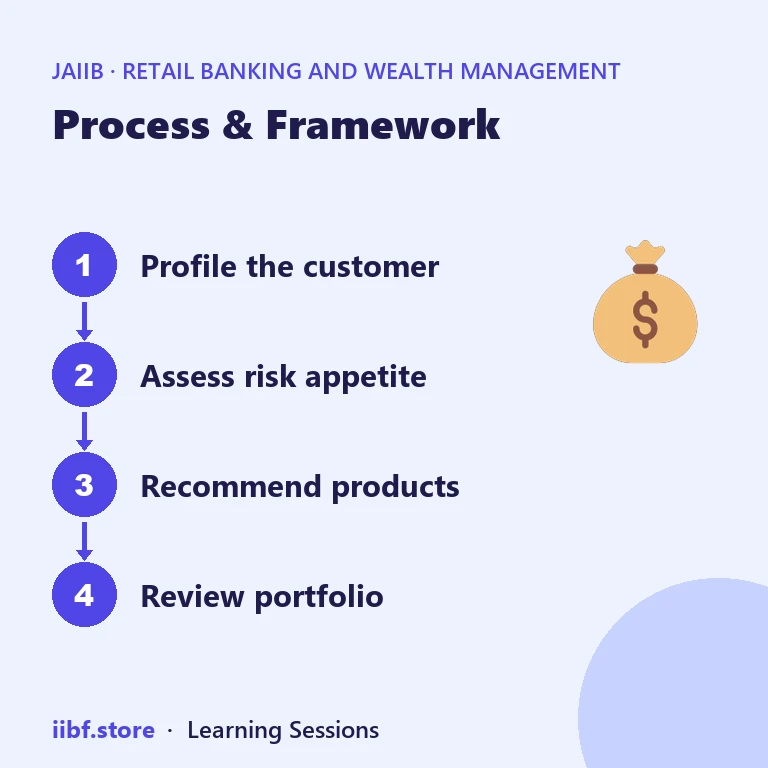
For a bank's retail desk, NPS is a cross-sell and financial-wellness product rolled into one. A customer opening a savings account is a natural candidate for a Tier I pitch around tax-saving season, while a customer who already has surplus liquidity after building an emergency fund is a better fit for Tier II, provided they understand it carries market-linked risk rather than the safety of a term deposit. This segmentation logic mirrors the broader retail-banking role discussed in our chapter on retail banking's role within bank operations, where staff are trained to match products to a customer's life stage and liquidity need rather than pushing a one-size-fits-all recommendation.
It is also worth distinguishing NPS from other government-backed retirement products that appear alongside it in the RBWM syllabus, such as the Atal Pension Yojana, which targets the unorganised sector with guaranteed pension slabs rather than market-linked returns — a comparison we cover in detail separately. Similarly, because NPS investments flow into the same capital-market instruments regulated outside the banking system, it helps to revisit the role of SEBI in the Indian financial system to understand who regulates the underlying securities versus who regulates the pension wrapper itself.
📌 Remember: PFRDA regulates the NPS structure and fund managers; SEBI regulates the underlying securities markets where NPS money is ultimately invested.
🧠 Practice MCQs: National Pension System for Retail Customers
Q1. Which NPS account is mandatory for a subscriber and carries withdrawal restrictions until retirement? (a) Tier I (b) Tier II (c) Both Tier I and Tier II equally (d) Neither, both are fully liquid
Answer: (a) — Tier I is the core, mandatory pension account with a lock-in until age 60.
Q2. What is a mandatory precondition to opening an NPS Tier II account? (a) The subscriber must be above 40 years of age (b) The subscriber must already hold an active Tier I account (c) The subscriber must be a government employee (d) The subscriber must maintain a minimum balance of Rs 1 lakh
Answer: (b) — Tier II cannot be opened as a standalone account; an active Tier I account is compulsory first.
Q3. Under which section can an NPS Tier I subscriber claim an additional deduction of up to Rs 50,000, over and above the Section 80C limit? (a) Section 80CCD(1) (b) Section 80CCD(1B) (c) Section 80CCD(2) (d) Section 80D
Answer: (b) — Section 80CCD(1B) provides an exclusive additional deduction of up to Rs 50,000 for Tier I contributions.
Q4. Which regulator is responsible for overseeing the National Pension System? (a) Reserve Bank of India (b) Securities and Exchange Board of India (c) Pension Fund Regulatory and Development Authority (d) Insurance Regulatory and Development Authority of India
Answer: (c) — PFRDA, established under the PFRDA Act 2013, regulates and administers NPS.
Q5. For a private-sector subscriber, withdrawals from an NPS Tier II account are generally: (a) Completely tax-free (b) Taxed as per the subscriber's applicable income-tax slab (c) Taxed at a flat 10% regardless of income (d) Exempt automatically after three years
Answer: (b) — Private-sector Tier II withdrawals carry no special exemption and are taxed at the subscriber's slab rate.
Want chapter-wise mock tests with 100+ MCQs? Start practising free →
❓ Frequently Asked Questions
What is the minimum contribution to keep an NPS Tier I account active?
PFRDA requires an initial contribution of Rs 500 to open Tier I and a minimum contribution of Rs 1,000 in each financial year to keep the account active; falling short freezes it until the shortfall and a small penalty are paid.
Can I withdraw money from my NPS Tier II account anytime?
Yes, for most subscribers Tier II has no lock-in and funds can be withdrawn any number of times. The only exception is government employees using the Tier II tax-saver option, where a three-year lock-in applies to claim the Section 80C deduction.
Is opening an NPS Tier II account compulsory?
No, Tier II is entirely voluntary. A subscriber can hold only a Tier I account and never open Tier II, but Tier II can never be opened without an existing active Tier I account.
What happens to my Tier I NPS corpus when I turn 60?
A minimum share of the accumulated corpus must be used to buy an annuity that pays a regular pension, while the balance can generally be withdrawn as a lump sum. Full lump-sum withdrawal is allowed only when the total corpus is below the small threshold PFRDA prescribes for this exemption.
For a retail banking professional, being able to explain the National Pension System Tier 1 and Tier 2 distinction in one clear sentence — mandatory versus voluntary, locked versus liquid, tax-favoured versus fully taxable — is exactly the kind of applied knowledge JAIIB rewards. Revisit the broader Retail Banking and Wealth Management article hub for related topics like the Atal Pension Yojana full form, eligibility and pension slabs and portfolio management services in wealth management, or head straight to iibf.store's JAIIB course to keep building your RBWM score with structured, chapter-wise practice.
Quick quiz on this topic
5 exam-style questions from our free test bank — check yourself before you move on.
Practice this topic
Take a free mock test, download chapter PDFs, or watch a video class — all included on iibf.store.
Keep reading