
Performance Appraisal for CAIIB HRM 2026: A Complete Guide
Performance appraisal is a cornerstone topic of the CAIIB Human Resources Management (HRM) paper. And a clear understanding of it can secure steady marks in 2026. It is the systematic process by.
An organisation evaluates an employee's job performance. Sets goals. Gives feedback and links results to rewards, training and career growth.
In banks. Where service quality and compliance depend on people. A fair and structured appraisal system is essential.
This guide walks CAIIB aspirants through the appraisal cycle. 360-degree feedback. MBO.
KPIs, common rating errors, and the connection to training and succession planning.
What Is Performance Appraisal?
Performance appraisal is the formal. Periodic assessment of how well an employee has performed against agreed expectations over a defined period. Usually a year.
It is far more than a rating exercise — done well. It aligns individual effort with organisational strategy. Identifies development needs, and informs decisions on promotion, increments and posting.
In the banking context. It also reinforces accountability for targets, risk discipline and customer service.
A sound appraisal system serves several purposes at once:
- Evaluative: measuring achievement against goals for reward and promotion decisions.
- Developmental: spotting skill gaps and feeding the training plan.
- Communicative: opening a structured dialogue between manager and employee.
- Strategic: cascading organisational objectives down to each role.
Because appraisal underpins so many HR decisions, the HRM paper treats it as a foundational concept. You can find connected HR explainers on the iibf.store blog to round out your understanding of the wider syllabus.
The Appraisal Cycle: Goal-Setting, Review and Rating
The performance appraisal process is best understood as a continuous cycle rather than a one-off event. It begins with goal-setting at the start of the year. Where the manager and employee agree on objectives.
Key result areas and measurable targets. Midway through the year comes the mid-cycle review. An interim check-in to assess progress.
Recalibrate targets if circumstances change, and provide coaching. Finally. The final rating at year-end evaluates actual achievement against the agreed goals.
Assigns a performance score.
This cyclical design ensures appraisal is forward-looking and developmental, not merely a backward-looking judgement. The mid-cycle conversation, in particular, prevents end-of-year surprises and gives employees time to course-correct. To lock in the sequence and its terminology, try our match game, which pairs each stage with its purpose. The full cycle is illustrated below.

360-Degree Feedback, MBO and KPIs
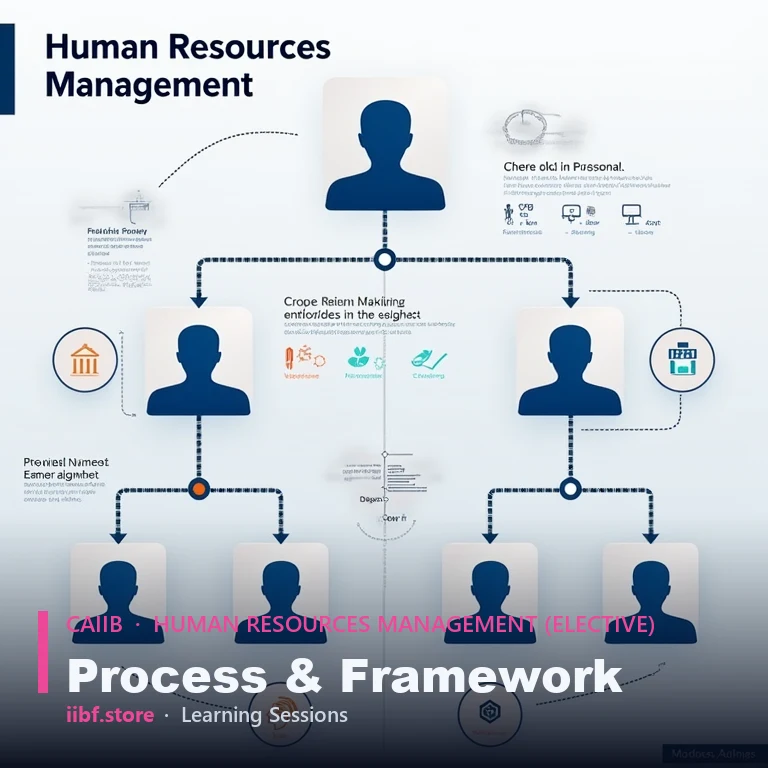
Modern appraisal methods go beyond a single supervisor's opinion. 360-degree feedback gathers performance inputs from multiple sources — the manager. Peers.
Subordinates and the employee's own self-assessment — to build a rounded, multi-perspective view. It reduces individual bias. Is especially useful for assessing leadership and teamwork behaviours.
Though it works best for development rather than purely for ratings.
Two other techniques feature heavily in the syllabus. Management by Objectives (MBO), popularised by Peter Drucker, sets specific, jointly agreed, measurable objectives and evaluates the employee against their achievement. Key Performance Indicators (KPIs) are the quantifiable metrics — such as deposit growth, recovery rate or customer satisfaction — that translate strategy into measurable targets. Together, MBO and KPIs make appraisal objective and results-oriented. Practise these distinctions in our CAIIB test series to be exam-ready. The 360-degree model is shown below.
Appraisal Errors and Links to Training and Succession
Even a well-designed appraisal can be undermined by rater bias. And the HRM paper regularly tests these appraisal errors. The most common include the halo effect (one strong trait colouring the whole rating).
The horn effect (one weakness dominating). Central tendency (rating everyone as average). Leniency or strictness bias, and the recency effect (over-weighting recent events).
Awareness of these errors. Plus rater training and clear rating scales, is the standard remedy.
Crucially, appraisal does not end with a score. Its outputs feed directly into training and development — identified skill gaps shape the learning plan — and into succession planning, where high-potential employees are mapped to future leadership roles. This linkage is exactly why appraisal is treated as a strategic HR process and not mere paperwork. In a bank, a well-run appraisal cycle also feeds promotion panels, posting decisions and incentive payouts, making its fairness directly visible to staff. When employees trust that ratings are objective and tied to genuine development, both engagement and long-term retention tend to improve in a clear and measurable way over time. For the latest HR and banking-sector context to enrich your answers, follow our IIBF news page, and revise the macro backdrop on our RBI rates resource.
Why This Matters for the CAIIB HRM Paper
The HRM paper consistently rewards candidates who can describe the appraisal cycle, distinguish 360-degree feedback from MBO, and list the common rating errors with their remedies. Questions appear in both multiple-choice and descriptive form, and case studies may ask you to diagnose a flawed appraisal system. The link from appraisal to training and succession is a frequent connector question, so prepare it as a chain. Build this knowledge systematically through our CAIIB course, which sequences the HRM module clearly.
For authoritative reference and the official syllabus, rely on the institutions. Consult the Indian Institute of Banking & Finance for the CAIIB HRM courseware, and the Reserve Bank of India for HR and governance guidance relevant to banks.
Frequently Asked Questions
What are the stages of the appraisal cycle?
The appraisal cycle has three core stages: goal-setting at the start of the year. Where objectives and targets are agreed. A mid-cycle review to track progress and provide coaching. And a final rating at year-end that evaluates actual achievement against the agreed goals. This cyclical design keeps appraisal developmental, not merely backward-looking.
What is 360-degree feedback?
360-degree feedback is an appraisal method that collects performance inputs from multiple sources. The manager. Peers, subordinates and the employee's own self-assessment.
By combining perspectives. It reduces individual bias and gives a rounded view of behaviour. It is most effective for development.
For assessing leadership and teamwork competencies.
What is the difference between MBO and KPIs?
Management by Objectives (MBO) is a method where manager. Employee jointly set specific. Measurable objectives and assess performance against them.
KPIs are the quantifiable metrics. Such as deposit growth or recovery rate — used to measure those objectives. MBO is the framework; KPIs are the measurable indicators within it.
What are common appraisal errors?
Common errors include the halo effect. Where one strong trait inflates the whole rating; the horn effect. Where one weakness dominates; central tendency.
Rating everyone as average; leniency or strictness bias; and the recency effect. Over-weighting recent events. Rater training, clear scales and multi-source feedback help reduce these biases.
Conclusion: Score Reliably on Performance Appraisal
Performance appraisal is a high-yield, predictable topic for CAIIB HRM 2026 because its cycle, methods and errors are well-defined and frequently examined. Master the three-stage cycle, the 360-degree and MBO methods, the KPI concept and the common rating errors, then validate your recall on our CAIIB mock tests and complete the module through our CAIIB course. Consistent practice on this topic translates directly into marks.
Quick quiz on this topic
5 exam-style questions from our free test bank — check yourself before you move on.
Practice this topic
Take a free mock test, download chapter PDFs, or watch a video class — all included on iibf.store.


