Payment Systems Oversight in India: RBI's CAIIB Central Banking Guide

Every UPI transfer, RTGS payment, and cheque clearance in India runs through a system that the Reserve Bank of India watches closely. Payment systems oversight in India is a core CAIIB Central Banking Elective topic, testing how RBI regulates, supervises, and safeguards the payment and settlement infrastructure that banks depend on every single day. This article breaks down the legal basis, the systems involved, and the tools RBI uses to keep money moving safely across the economy.
🏦 What Payment Systems Oversight Means
Payment systems oversight is the function through which a central bank ensures that money and securities move between banks safely, efficiently, and without systemic risk. In India, this authority flows from the Payment and Settlement Systems Act, 2007 (PSS Act), which designates RBI as the sole regulator and supervisor of all payment and settlement systems in the country.
Under the Act, no entity can operate a payment system without RBI's authorisation. This single provision gives RBI control over everything from card networks to wallet operators to the newest fintech rails. The rationale is simple: a payment failure at one bank can ripple through the entire financial system within minutes, so the regulator must see and control the plumbing, not just the banks sitting on top of it. The full text of the Act and RBI's payment system circulars are published on the Reserve Bank of India's official website, the primary source candidates should cite for any current figure.
This oversight role sits alongside RBI's broader mandate covered in the Functions Of Central Banks chapter, where currency issuance, banker-to-banks, and regulatory functions are studied together. Payment oversight is best understood as the operational arm of financial stability — it protects the mechanics of transactions rather than the solvency of individual institutions.
RBI's approach rests on three pillars: authorisation of new systems, ongoing regulation through directions and standards, and continuous supervision of live operations. Each pillar reduces a different kind of risk — entry risk, design risk, and operational risk — and CAIIB candidates should be able to distinguish between them when a question describes a specific RBI action.
🔗 Key Payment Systems RBI Oversees
India runs several payment systems side by side, each built for a different transaction profile. RTGS (Real Time Gross Settlement) handles high-value, time-critical transfers, settling each transaction individually and immediately rather than in batches. NEFT (National Electronic Funds Transfer) moved to a 24x7 model in December 2019 but still settles in half-hourly batches, making it a net settlement system rather than a true real-time one.
UPI (Unified Payments Interface), built by NPCI under RBI's regulatory umbrella, has become the dominant retail rail, processing small-value transactions instantly around the clock. IMPS (Immediate Payment Service) preceded UPI and still serves as a real-time interbank transfer option. CTS (Cheque Truncation System) digitises physical cheque images for faster, deferred net settlement instead of physical cheque movement.
These systems form part of the wider institutional landscape covered under Constituents Of Indian Financial System Structure, where payment infrastructure sits alongside banks, NBFCs, and market intermediaries as a distinct pillar of the financial system.
NPCI itself operates as an RBI-authorised entity, not an independent regulator. This distinction matters for exams: NPCI builds and runs UPI, IMPS, and RuPay, but RBI retains supervisory authority over all of them under the PSS Act framework.
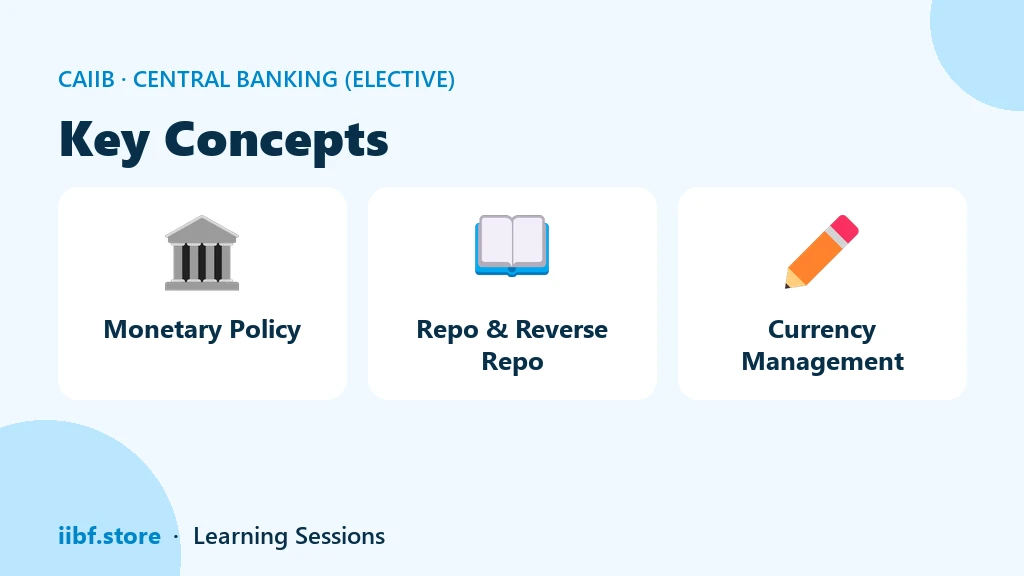
🛡️ Tools of Oversight: Authorisation, Regulation and Supervision
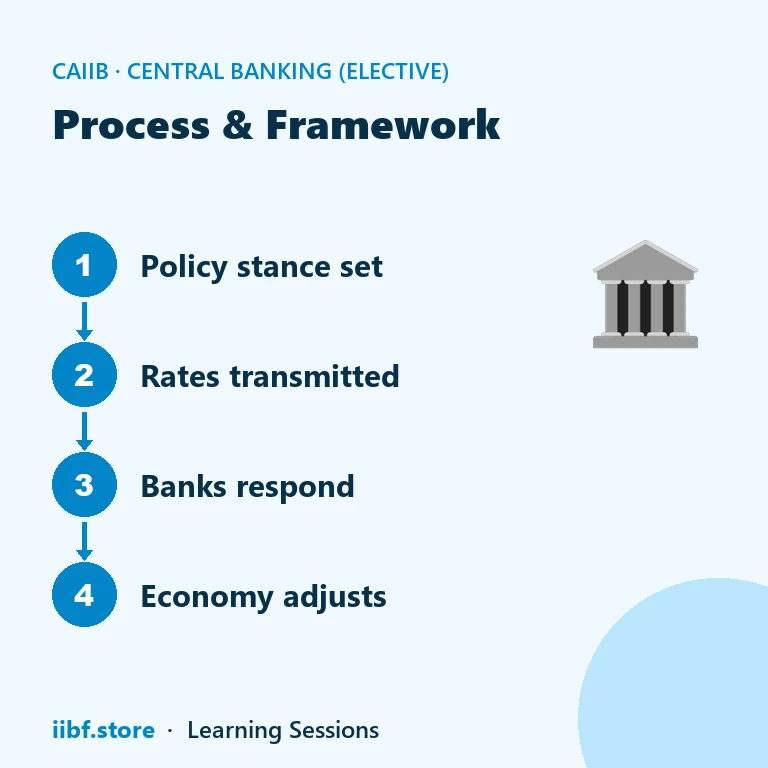
RBI's oversight toolkit works in layers. Authorisation is the entry gate — any company wanting to run a payment system, from a card network to a prepaid wallet issuer, must obtain RBI approval and meet capital, governance, and technology standards first.
Regulation follows through directions and master circulars that set operating rules: settlement finality, netting arrangements, data localisation, and customer grievance redress. RBI periodically updates these standards as new risks emerge, particularly around cyber threats and third-party technology vendors.
Supervision is the ongoing monitoring layer — RBI reviews system performance, downtime incidents, fraud patterns, and business continuity readiness through both on-site inspections and off-site reporting. A system that repeatedly fails uptime benchmarks can face directions, penalties, or in serious cases suspension of authorisation.
⚠️ Common Mistake: Students often assume NPCI is a regulator like RBI. NPCI is an authorised operator; RBI alone holds regulatory and supervisory power under the PSS Act.
This layered model mirrors how bank regulation itself evolved, a theme explored in the Evolution Of Regulation And Supervision chapter. Just as deposit safety is protected through a dedicated mechanism — the deposit insurance and DICGC in India framework — payment integrity is protected through this authorisation-regulation-supervision chain rather than any single rulebook.
💡 Exam Tip: If a question asks who can shut down a non-compliant payment operator, the answer is always RBI, acting under its PSS Act powers, not NPCI or any industry body.
🌐 Payments Vision, Financial Stability and Fintech
RBI periodically publishes a "Payments Vision" document setting multi-year goals for the ecosystem — themes like universal digital access, robust fraud prevention, and cross-border payment linkages. These visions guide policy priorities rather than binding rules, but they signal where regulation is headed next.
Cross-border payment integration is a growing focus area. UPI has been progressively linked with payment systems in other countries, letting Indian users transact abroad and vice versa, which raises new oversight questions around foreign exchange rules and cross-jurisdiction settlement risk.
Payment system stability also feeds directly into India's broader financial stability architecture, an area studied alongside the Financial Stability and Development Council, which coordinates macro-prudential oversight across regulators. A payment system outage large enough to disrupt daily banking would be a systemic risk event of exactly the kind that body tracks.
Fintech innovation adds further complexity. New payment models are often tested first through the RBI regulatory sandbox framework before being cleared for full-scale authorisation, letting the regulator observe real-world performance before granting a wider licence. This staged approach balances innovation with the safety mandate at the heart of payment oversight.
📌 Remember: Vision documents set direction; the PSS Act and RBI's binding directions are what actually create enforceable obligations on payment system operators.
📈 Why This Matters for CAIIB Candidates
Payment systems oversight questions in the Central Banking Elective typically test three things: the legal basis (PSS Act, 2007), the distinction between regulator and operator, and the specific tools RBI uses at each stage of a system's life cycle. Examiners like to mix in scenario questions — for example, describing a new fintech payment app and asking which RBI mechanism applies first.
This topic connects naturally to the broader debate on Contemporary Issues In Central Banking, since payment innovation, CBDC pilots, and fintech regulation are among the most actively evolving areas central banks currently manage. Candidates should track RBI's periodic circulars and vision documents as living exam material, not static facts from a textbook edition.
It also helps to remember that CAIIB electives are not silos. Just as payment oversight protects transaction integrity in Central Banking, other electives examine parallel safeguards elsewhere in banking — for instance, Advanced Bank Management studies how the Nayak Committee working capital rule protects lending discipline for small borrowers. Seeing these threads across subjects makes revision faster and answers sharper.
Building a clear mental map — authorisation, regulation, supervision, and the systems each rule applies to — is the fastest way to convert this topic from a memorisation exercise into a scoring one.
Quick Recap
- PSS Act, 2007 is the legal foundation for RBI's payment oversight
- RBI authorises, regulates, and supervises; NPCI operates specific systems under that umbrella
- RTGS is gross and real-time; NEFT is net and batch-based; UPI and IMPS settle in real time
- Payments Vision documents set direction; binding rules come through PSS Act directions
| Payment System | Settlement Type | Real-Time | Primary Operator |
|---|---|---|---|
| RTGS | Gross settlement | ✅ | RBI |
| NEFT | Net settlement (half-hourly batches) | ❌ | RBI |
| UPI | Real-time net settlement | ✅ | NPCI (RBI-authorised) |
| IMPS | Real-time gross settlement | ✅ | NPCI (RBI-authorised) |
| CTS (Cheques) | Deferred net settlement | ❌ | RBI |
🧠 Practice MCQs: Payment Systems Oversight
Q1. Which Act gives RBI the legal authority to regulate payment systems in India? (a) Banking Regulation Act, 1949 (b) Payment and Settlement Systems Act, 2007 (c) RBI Act, 1934 (d) Information Technology Act, 2000
Answer: (b) — The PSS Act, 2007 is the specific legislation empowering RBI to authorise, regulate, and supervise payment systems.
Q2. NPCI's role in India's payment ecosystem is best described as: (a) An independent regulator alongside RBI (b) A system operator authorised by RBI (c) A government ministry department (d) A private unregulated fintech
Answer: (b) — NPCI operates UPI, IMPS, and RuPay under RBI's authorisation; it does not hold independent regulatory power.
Q3. Which of these payment systems settles transactions individually and in real time, rather than in batches? (a) NEFT (b) CTS (c) RTGS (d) None of the above
Answer: (c) — RTGS settles each transaction on a gross, real-time basis, unlike NEFT's batch settlement.
Q4. Before a new payment system can begin operating in India, it must first obtain: (a) A trademark registration (b) RBI authorisation under the PSS Act (c) SEBI clearance (d) A banking licence
Answer: (b) — Operating a payment system without RBI authorisation is not permitted under the PSS Act, 2007.
Q5. RBI's "Payments Vision" documents primarily serve to: (a) Create legally binding settlement rules (b) Set multi-year strategic direction for the payments ecosystem (c) Replace the PSS Act (d) Authorise individual payment operators
Answer: (b) — Vision documents are strategic and directional; binding obligations come from PSS Act directions and circulars, not the vision document itself.
Want chapter-wise mock tests with 100+ MCQs? Start practising free →
❓ Frequently Asked Questions
What law governs payment system regulation in India?
The Payment and Settlement Systems Act, 2007 gives RBI the authority to authorise, regulate, and supervise all payment and settlement systems in India.
Is NPCI a regulator like RBI?
No. NPCI is an entity authorised by RBI to operate specific systems such as UPI, IMPS, and RuPay. Regulatory and supervisory authority remains with RBI alone.
What is the difference between RTGS and NEFT settlement?
RTGS settles each transaction individually in real time on a gross basis. NEFT settles transactions in half-hourly batches on a net basis, even though it now operates 24x7.
Why does payment system oversight matter for financial stability?
A large-scale payment system failure can disrupt banking activity across the entire economy within minutes, which is why RBI treats oversight of these systems as core to financial stability, not just consumer convenience.
Payment systems oversight ties together central banking theory with the everyday mechanics every bank employee sees on screen — RTGS, NEFT, UPI, and beyond. For a structured, chapter-wise run-through of this and related Central Banking Elective topics, explore the full CAIIB course and put these concepts to the test with a free mock.
Quick quiz on this topic
5 exam-style questions from our free test bank — check yourself before you move on.
Practice this topic
Take a free mock test, download chapter PDFs, or watch a video class — all included on iibf.store.
Keep reading