Stock Exchanges and Depositories in India: NSDL, CDSL and Trading (JAIIB IEIFS)
Every share you buy or sell in India moves through a tightly regulated pipeline of exchanges and depositories, and understanding stock exchanges and depositories in India is a recurring theme in the JAIIB Indian Economy and Indian Financial System (IEIFS) paper. Candidates are routinely tested on how NSE and BSE run the trading side, how NSDL and CDSL hold your shares electronically, how dematerialisation replaced paper certificates, and how the T+1 settlement cycle moves money and securities between buyers and sellers. This guide walks through each layer with the exam angle in mind, so you can answer both conceptual and applied questions confidently.
🏛️ NSE and BSE: The Exchange Backbone
The Bombay Stock Exchange (BSE), founded in 1875 on Dalal Street, is Asia's oldest stock exchange and started as an informal gathering of brokers under a banyan tree. The National Stock Exchange (NSE), incorporated in 1992 and operational from 1994, introduced fully electronic, screen-based trading to India and quickly overtook BSE in trading volumes. Both exchanges are recognised stock exchanges under the Securities Contracts (Regulation) Act, 1956, and both are regulated by the Securities and Exchange Board of India (SEBI).
NSE's benchmark index is the Nifty 50, tracking 50 large-cap companies, while BSE's is the Sensex, tracking 30 companies. Exchanges perform two core jobs: they provide the primary market platform where companies list through an IPO, and the secondary market platform where existing shares are bought and sold continuously. Demutualisation and corporatisation of exchanges, separating ownership from trading membership, was one of the reforms that followed India's broader liberalisation drive; if you want the full policy backdrop, the Economic Reforms chapter covers how capital market modernisation fits into the post-1991 story, and the An Overview of Indian Economy chapter places the equity market within India's overall financial architecture.
For exam purposes, remember that exchanges do not hold your shares — that job belongs to depositories, which is where NSDL and CDSL enter the picture.
📇 NSDL and CDSL: The Depository System Explained
A depository is an institution that holds securities — shares, bonds, mutual fund units — in electronic (dematerialised) form on behalf of investors, much like a bank holds money. The Depositories Act, 1996 created the legal framework for this system in India, ending the era of risky paper share certificates prone to forgery, loss, and delayed transfer.
India has exactly two depositories. National Securities Depository Limited (NSDL) was the first, promoted by NSE along with IDBI and UTI, and began operations in 1996. Central Depository Services Limited (CDSL) followed in 1999, promoted by BSE along with several banks. Both are registered with and regulated by SEBI, and both interface with investors only through intermediaries called Depository Participants (DPs) — typically banks, brokers, and other SEBI-registered entities — since neither depository deals with retail investors directly. Every security held in dematerialised form carries a unique International Securities Identification Number (ISIN) for tracking.
A structural difference worth noting: CDSL has been a publicly listed company since 2017, while NSDL remained wholly owned by institutional promoters for nearly three decades before its own shares were listed on the exchanges through an IPO. Despite this difference, both depositories offer functionally identical services to investors, and which one you use depends entirely on which DP account you open.
| Parameter | NSDL | CDSL |
|---|---|---|
| Year established | 1996 | 1999 |
| Key promoters | NSE, IDBI, UTI | BSE, banks |
| Primary linked exchange | NSE | BSE |
| SEBI registered depository | Yes | Yes |
| Direct retail investor access | ❌ No (via DPs only) | ❌ No (via DPs only) |
| Publicly listed entity | ✅ Yes (listed later) | ✅ Yes (listed since 2017) |
🔄 Dematerialisation and the Demat Account Process
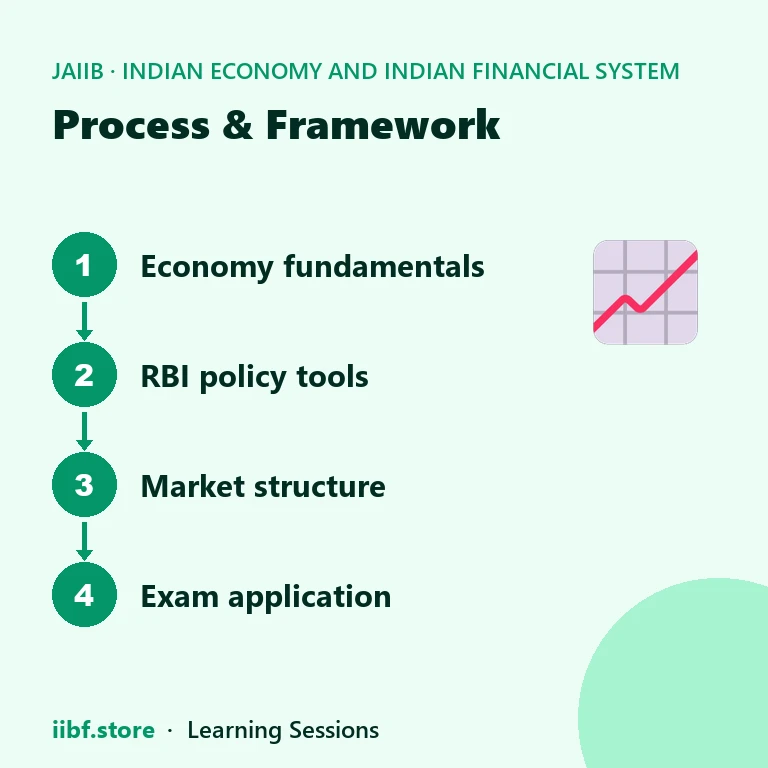
Dematerialisation is the process of converting physical share certificates into electronic entries held in a demat account. To trade, an investor first opens a demat account (to hold securities) and a linked trading account (to place buy/sell orders) with a SEBI-registered DP, after completing KYC formalities including PAN, address proof, and bank account linkage.
If an investor still holds old physical certificates, they submit a Dematerialisation Request Form (DRF) along with the certificates to the DP, which forwards the request to the company's Registrar and Transfer Agent for verification before the shares are credited electronically to the demat account. Rematerialisation, converting electronic holdings back into paper certificates, is the reverse process but is now rarely used. SEBI has progressively barred transfer of physical shares for listed companies except in limited situations such as transmission (on death of a holder) or transposition of names, effectively making demat mandatory for anyone who wants to transfer listed equity.
SEBI has also made nomination a compulsory part of every demat and trading account, requiring investors to either nominate someone or formally opt out in writing. This mirrors how banks build in special safeguards for vulnerable account holders, similar in spirit to the KYC and guardian rules that apply to accounts of minors and illiterate persons under banking regulations.
💡 Exam Tip: Dematerialisation converts physical certificates to electronic form; rematerialisation is the reverse. Do not confuse the two in objective questions — examiners often flip the definitions in distractor options.
⏱️ T+1 Settlement Cycle and Trade Clearing
Settlement is the actual exchange of securities for funds after a trade is executed. India's settlement cycle has steadily shortened over the years: from T+5 in the early 2000s to T+3, then T+2 from 2003, and finally to T+1 on a phased, stock-by-stock basis starting late 2021, with the full market moving to T+1 by January 2023. Under T+1, a trade executed on day T is settled — securities credited to the buyer and funds credited to the seller — on the very next trading day.
Clearing Corporations, such as NSE Clearing Limited and the Indian Clearing Corporation for BSE, sit between buyers and sellers as the central counterparty. Through a process called novation, the clearing corporation becomes the buyer to every seller and the seller to every buyer, guaranteeing settlement even if one original party defaults. This is followed by a pay-in (funds and securities collected from members) and pay-out (funds and securities released to the counterparties) on the settlement day. SEBI has since gone further, piloting an optional same-day (T+0) settlement track for select stocks in phases, alongside the standard T+1 cycle.
For JAIIB candidates, the key numbers to remember are the shift from T+2 to T+1 and the role of the clearing corporation as guarantor of settlement — both are frequently tested facts.
⚠️ Common Mistake: T+1 does not mean "one day" in the everyday sense — it means settlement happens on the next trading day, so weekends and market holidays push the actual settlement date further out.
🛡️ Investor Protection Mechanisms
SEBI, as the apex regulator, oversees exchanges, depositories, DPs, brokers, and clearing corporations under the SEBI Act, 1992 and the Depositories Act, 1996. Each exchange also maintains an Investor Protection Fund (IPF) that compensates investors, up to specified limits, if a registered trading member defaults and cannot meet client obligations.
Separately, the Investor Education and Protection Fund (IEPF), set up under the Companies Act, 2013, receives unclaimed dividends, matured deposits, and shares that remain unclaimed for extended periods, and allows rightful owners to reclaim them through a defined process. For grievances against listed companies or market intermediaries, SEBI runs the SCORES portal, now integrated with the SMART online dispute resolution mechanism, giving investors a formal escalation path. Depositories also require DPs to issue periodic account statements, including the Consolidated Account Statement (CAS) jointly issued covering both depository holdings and mutual fund folios, so investors can independently verify their holdings.
You can read SEBI's own investor guidance and regulatory circulars directly at sebi.gov.in for the latest framework updates. These protections exist precisely because dematerialised holdings and rapid settlement cycles increase the need for robust custody and grievance redress — a theme that also connects to how fiscal policy and the Union Budget in India influence market confidence, how development financial institutions in India channel long-term project capital outside the exchange system, and how capital account convertibility in India shapes the pace of foreign portfolio investment into these very markets.
📌 Remember: IPF protects you against broker default; IEPF recovers unclaimed dividends and shares; SCORES is where you file a complaint. Three different safety nets, three different purposes.
🧠 Practice MCQs: Stock Exchanges and Depositories in India
Q1. Which Act provides the legal framework for depositories in India? (a) SEBI Act, 1992 (b) Depositories Act, 1996 (c) Companies Act, 2013 (d) Securities Contracts (Regulation) Act, 1956
Answer: (b) — The Depositories Act, 1996 established the legal basis for the dematerialised holding and transfer of securities in India.
Q2. NSDL is primarily linked to which stock exchange as a promoter? (a) BSE (b) NSE (c) MCX (d) MSEI
Answer: (b) — NSDL was promoted with NSE, IDBI, and UTI among its key sponsors, while CDSL was promoted with BSE.
Q3. Under the current settlement cycle for Indian equities, a trade executed on day T is settled on: (a) The same day (b) The next trading day (T+1) (c) Two trading days later (T+2) (d) Five trading days later (T+5)
Answer: (b) — India moved to a T+1 settlement cycle for all listed securities, completing the transition by January 2023.
Q4. What is the role of a Depository Participant (DP)? (a) It sets circuit limits on exchanges (b) It acts as the intermediary between investors and the depository (c) It regulates listed companies (d) It fixes the benchmark index
Answer: (b) — Investors cannot open accounts directly with NSDL or CDSL; they must go through a SEBI-registered DP such as a bank or broker.
Q5. The Investor Protection Fund (IPF) at a stock exchange primarily compensates investors when: (a) A listed company delays its dividend (b) A registered trading member defaults on client obligations (c) The Sensex falls sharply (d) A demat account is dormant for a year
Answer: (b) — The IPF is designed to compensate investors for losses arising from broker/trading member default, subject to prescribed limits.
Want chapter-wise mock tests with 100+ MCQs? Start practising free →
What is the difference between NSDL and CDSL?
NSDL and CDSL are India's only two depositories, both regulated by SEBI. NSDL was promoted along with NSE, IDBI, and UTI and began in 1996; CDSL was promoted along with BSE and began in 1999. Functionally they offer identical services to investors, accessed through Depository Participants.
Why did India move to T+1 settlement?
SEBI shortened the settlement cycle from T+2 to T+1 in phases, completing the transition for all listed securities by January 2023, to reduce settlement risk, free up capital faster, and align India's markets with the goal of quicker, safer trade completion.
Can I still hold physical share certificates in India?
You can continue to hold existing physical certificates, but SEBI has barred the transfer of physical shares for listed companies except in specific cases like transmission or transposition, so buying or selling listed equity effectively requires a demat account.
What happens if my broker defaults on my trades?
If a SEBI-registered trading member defaults, investors can claim compensation, subject to prescribed limits, from the Investor Protection Fund maintained by the relevant stock exchange, in addition to pursuing grievance redress through SEBI's SCORES portal.
✅ Conclusion: Get Exam-Ready on Market Infrastructure
For JAIIB IEIFS, the topic of stock exchanges and depositories in India rewards candidates who can connect the dots: exchanges like NSE and BSE run trading, depositories like NSDL and CDSL hold securities electronically, dematerialisation eliminated paper-certificate risk, T+1 settlement compresses the time between trade and transfer, and a layered set of investor protection mechanisms backstops the whole system. Revisit the related chapters on our Indian Economy and Indian Financial System blog hub, then test yourself with a full JAIIB course mock to lock these concepts in before exam day.
Quick quiz on this topic
5 exam-style questions from our free test bank — check yourself before you move on.
Practice this topic
Take a free mock test, download chapter PDFs, or watch a video class — all included on iibf.store.
Keep reading