UPI Ecosystem Explained for Digital Banking Exams
The UPI ecosystem is the single most important topic in any Digital Banking paper, and understanding the UPI ecosystem end to end is what separates a confident candidate from one who merely memorises acronyms. The Unified Payments Interface, built and operated by the National Payments Corporation of India (NPCI), turned a fragmented set of bank apps into one interoperable real-time rail. This article walks through the architecture, the players, the risk controls and the exam-relevant nuances of the UPI ecosystem so you can answer both conceptual and scenario questions with ease.
What the UPI ecosystem actually is
At its heart, UPI is a layer that sits on top of the Immediate Payment Service (IMPS) and lets a customer link one or more bank accounts to a single mobile application and transact using a Virtual Payment Address (VPA), a mobile number, or an account-and-IFSC combination. The genius of the design is the virtual address: the payer never has to reveal actual account numbers, which reduces data leakage and fraud surface. A single UPI ID such as name@bank can pull or push money in seconds, around the clock, on any day of the year. Because settlement rides on existing bank rails and NPCI acts as the central switch, the system inherits the safety of regulated banks while adding a smooth customer experience on top. For an exam, remember that UPI is not a bank or a wallet; it is a real-time interoperable messaging and routing standard. The customer's money always stays in a bank account held with a regulated entity, and the app is only a front end. This distinction matters when questions probe where deposit insurance applies or who is legally the account provider. Grasping this foundation makes every downstream feature — mandates, autopay, UPI Lite, credit-line-on-UPI — far easier to reason about, because they are all variations layered on the same core switch.
The four-party model and its participants
Every UPI transaction involves four roles, and examiners love to test whether you can map an app or bank to the correct role. First is the remitter (payer) bank, which holds the sender's account and debits it. Second is the beneficiary (payee) bank, which credits the receiver. Third is the Payment Service Provider (PSP), the bank that offers the UPI handle and, through a Third-Party App Provider (TPAP) such as a popular payments app, the actual user interface. Fourth is NPCI, the central switch that routes and settles. A single app you use daily may itself be a TPAP riding on a sponsor PSP bank, which is why your VPA often ends in a bank's handle even inside a third-party app. The regulatory framework requires the underlying account and the settlement to sit with a bank, keeping the Reserve Bank of India's supervisory reach intact. You can strengthen this topic by practising scenario questions on our mock test series and by revising related concepts through the CAIIB course, where payment systems recur across subjects.
Security, mandates and newer layers of the UPI ecosystem
Security in UPI rests on a two-factor construct that is elegant and exam-friendly: possession of the registered mobile device (verified by a bank-bound SMS during registration) plus knowledge of the UPI PIN, which is set through the card details or Aadhaar route and never leaves the secure element. No money can move without the PIN entered on the payer's own device, which is why UPI collect requests can be declined and why users are warned never to enter a PIN to receive money — a receipt never needs a PIN. On top of the base rail, NPCI has layered UPI AutoPay for recurring mandates, UPI Lite for small-value on-device balances that reduce load on core systems, and the linking of RuPay credit cards and pre-sanctioned credit lines to UPI, extending the rail from deposits into credit. Each layer keeps the same PIN-based authorisation, so the security model scales cleanly. For authoritative circulars and the official framework, always cross-check primary sources such as the Reserve Bank of India and the operator's own rules published by NPCI, rather than relying on secondary summaries that may be outdated.
Why the UPI ecosystem dominates Digital Banking exams
UPI dominates the Digital Banking syllabus because it ties together payment systems, risk, customer protection and financial inclusion in one topic. A well-set paper will ask you to identify the settlement entity, distinguish push from pull transactions, explain grievance redress under the framework, or compare UPI with NEFT, RTGS and IMPS on speed, ceiling and availability. Financial-inclusion angles appear too: UPU-style interoperability lowers the cost of accepting digital payments for the smallest merchants, and UPU on feature phones (through the IVR and offline variants) extends reach to users without smartphones. Keeping current matters, so bookmark our RBI rates and reference page and follow the latest IIBF news for framework changes. To lock the concepts into memory, alternate between reading and active recall — play a quick round on our matching game to test whether you can pair each UPI participant with its role under time pressure, the way a real exam demands.
Is UPI a bank or a wallet?
Neither. UPI is a real-time interoperable routing standard operated by NPCI. Your money always stays in a regulated bank account, and the app is only a front end that talks to that account.
Do I need a UPI PIN to receive money?
No. A PIN is required only to authorise a debit from your account. If any app or person asks you to enter your UPI PIN to receive money, it is a fraud attempt and you should refuse.
What is a TPAP in the UPI ecosystem?
A Third-Party App Provider is the app you interact with. It rides on a sponsor bank (the PSP) which supplies the UPI handle and settlement link, keeping a regulated bank inside every transaction.
How does UPI differ from IMPS and NEFT?
UPI is built on IMPS but adds virtual addresses and a single-app experience. It is instant and available 24x7 like IMPS and RTGS, whereas NEFT settles in near-real-time batches. Ceilings and use cases differ by product.
Conclusion: master the UPI ecosystem and score
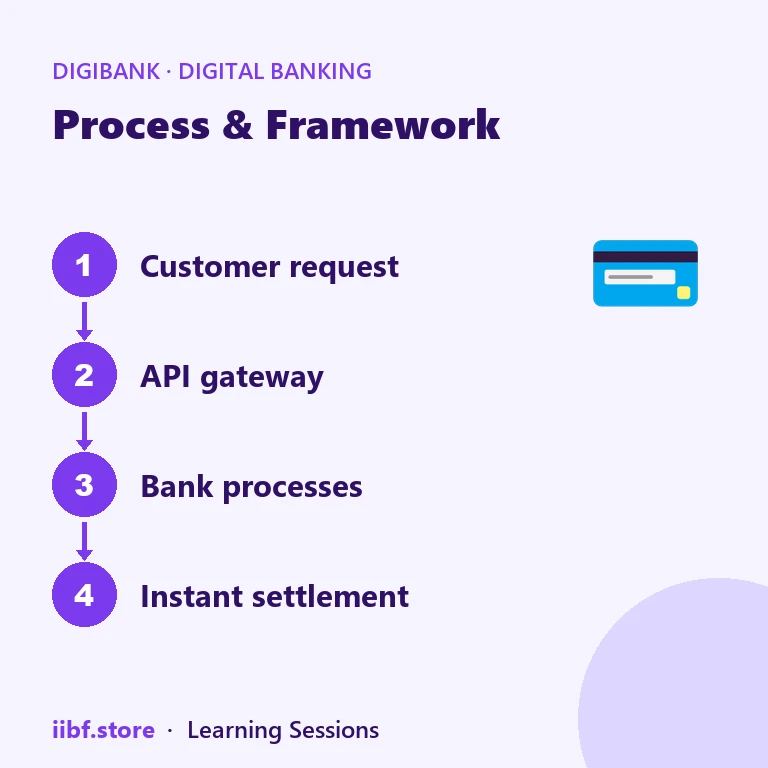
The UPI ecosystem rewards candidates who understand the flow of a rupee from payer to payee and the role each party plays in between. Nail the four-party model, the two-factor security design and the newer credit and mandate layers, and you will confidently handle both direct-recall and scenario questions. Turn this reading into marks by attempting a timed set on our Digital Banking mock tests, and reinforce the wider syllabus through the structured JAIIB course. Consistent revision plus authentic primary-source checking is the surest path to a strong Digital Banking score.
Quick quiz on this topic
5 exam-style questions from our free test bank — check yourself before you move on.
Practice this topic
Take a free mock test, download chapter PDFs, or watch a video class — all included on iibf.store.
Keep reading