Corporate Governance in Banks: Ethics in Banking 2026 Guide
Corporate governance in banks is a defining theme of the IIBF Ethics in Banking certification. And a solid grasp of it is essential to clear the exam in 2026. It refers to the system of rules.
Structures and processes by which a bank is directed and controlled. Balancing the interests of shareholders, depositors, regulators and society. Because banks deal in public money and carry systemic importance.
Their governance standards are held higher than those of ordinary companies. This guide explains the board of directors. Board committees.
The three lines of defence. Codes of conduct, whistle-blower policy and the rising role of ESG.
What Is Corporate Governance in Banks?
Corporate governance in banks is the framework that ensures a bank is run with accountability. Fairness, transparency and responsibility toward all its stakeholders. Unlike a typical firm where shareholders dominate.
A bank must also protect depositors and uphold financial stability. Giving its governance a public-interest dimension. Sound governance reduces the risk of fraud.
Mismanagement and failure, and it underpins public trust in the banking system.
The pillars of good governance are widely summarised as:
- Accountability — clear responsibility for decisions and outcomes.
- Transparency — honest, timely disclosure to stakeholders and regulators.
- Fairness — equitable treatment of all stakeholders.
- Responsibility — ethical conduct and compliance with law.
The RBI, through its governance directions and fit-and-proper criteria, reinforces these standards for Indian banks. You can follow related developments on our IIBF news page and read connected explainers on the iibf.store blog.
The Board of Directors and Its Role
At the apex of corporate governance in banks sits the board of directors. Which sets strategy. Approves policies and oversees management without involving itself in day-to-day operations.
The board defines the bank's risk appetite. Approves the business plan. Ensures regulatory compliance, and holds the executive team accountable.
A well-balanced board combines executive. Non-executive and independent directors, with independent directors providing objective challenge.
RBI guidelines emphasise a separation between the roles of the chairman and the managing director, fit-and-proper screening of directors, and adequate representation of relevant skills such as accountancy, agriculture, law and IT. The board's effectiveness depends on its independence, the quality of information it receives, and the rigour of its committees. To lock in these roles and structures, try our match game, and reinforce them on our test series. The board's oversight role is illustrated below.
Board Committees and the Three Lines of Defence
The board discharges much of its oversight through specialised board committees. Each examined in the certification. The Audit Committee oversees financial reporting.
Internal controls and the work of internal and statutory auditors. The Risk Management Committee sets. Monitors the bank's risk framework across credit.
Market and operational risk. The Nomination. Remuneration Committee handles fit-and-proper assessment of directors and executive compensation.
Ensuring incentives do not encourage excessive risk-taking. Other committees handle customer service, stakeholder relations and fraud monitoring.
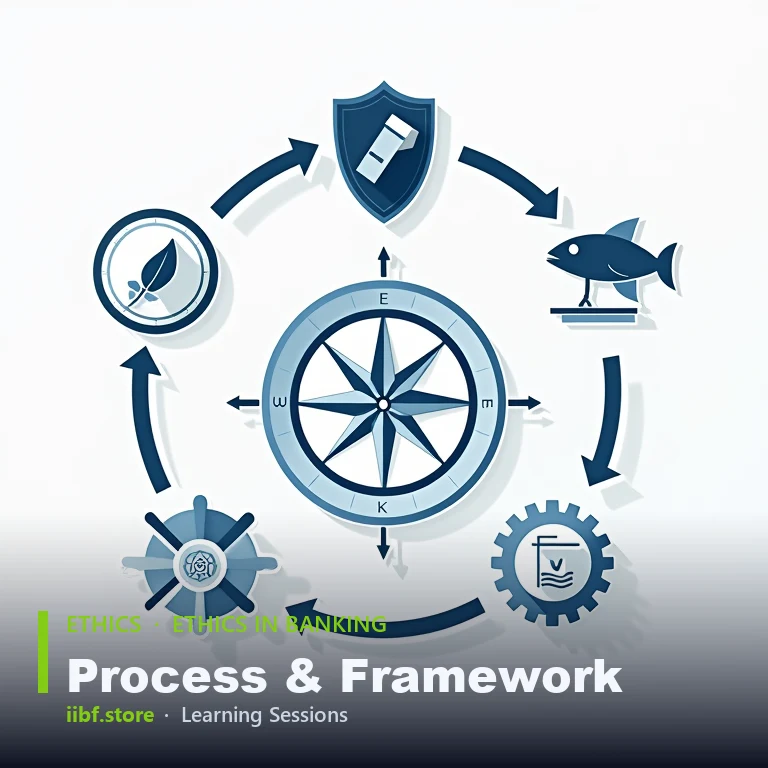
Supporting this is the three lines of defence model. The first line is the business and operational management that owns and manages risk daily. The second line is the risk-management and compliance functions that set policy and monitor adherence. The third line is internal audit, which provides independent assurance to the board on the effectiveness of the first two. This structure ensures risk is managed at every level, not just at the top. Keep current on the regulatory backdrop via our RBI rates resource. The committee structure and three lines of defence are shown below.
Code of Conduct, Whistle-Blower Policy and ESG in 2026
Governance is reinforced by a clear code of conduct that sets ethical standards for directors. Management and staff. Covering conflicts of interest, confidentiality, insider trading and fair dealing with customers.
Equally important is the whistle-blower policy. Which gives employees a protected channel to report fraud. Unethical conduct or breaches without fear of retaliation.
A functioning whistle-blower mechanism is often the earliest warning system against misconduct.
In 2026, the governance agenda has expanded to embrace ESG — Environmental, Social and Governance factors. Banks are increasingly expected to assess climate and environmental risk in lending, promote social responsibility and financial inclusion, and demonstrate strong governance to investors and regulators. ESG considerations are now woven into board responsibilities and disclosure norms, making them part of modern corporate governance in banks. Track these themes through our IIBF news page and practise applied questions on our test series.
Why This Matters for the Ethics in Banking Exam
The Ethics in Banking certification places governance and ethics at its core, so questions on corporate governance in banks are frequent and high-value. Examiners test the role of the board, the functions of the audit, risk and nomination committees, the three lines of defence, and the purpose of whistle-blower and code-of-conduct policies. Case studies may ask you to identify a governance failure or recommend a control. Preparing this topic thoroughly delivers dependable marks. Supplement your study with guides on the iibf.store blog and repeated practice on our mock tests.
For authoritative reference, rely on the regulators and standard-setters. Consult the Reserve Bank of India for governance directions and fit-and-proper norms, and the Indian Institute of Banking & Finance for the official Ethics in Banking syllabus and study material.
Frequently Asked Questions
What is corporate governance in banks?
Corporate governance in banks is the system of rules. Structures and processes by which a bank is directed and controlled. Balancing the interests of shareholders, depositors, regulators and society.
Because banks handle public money and carry systemic importance. Their governance standards — accountability. Transparency, fairness and responsibility — are held higher than those of ordinary companies.
What are the key board committees?
The main board committees are the Audit Committee. Overseeing financial reporting and controls; the Risk Management Committee. Monitoring credit.
Market and operational risk; and the Nomination and Remuneration Committee. Handling fit-and-proper assessment and compensation. Other committees cover customer service.
Stakeholder relations and fraud monitoring, each strengthening the board's oversight.
What is the three lines of defence model?
The three lines of defence model structures risk management across an organisation. The first line is operational management that owns and manages risk daily. The second line is risk-management.
Compliance functions that set policy and monitor adherence. The third line is internal audit. Providing the board with independent assurance on the effectiveness of the first two lines.
How does ESG relate to bank governance?
ESG — Environmental. Social and Governance factors — has become part of modern bank governance. Banks are expected to assess climate and environmental risk in lending.
Promote social responsibility and financial inclusion, and demonstrate strong governance through disclosure. In 2026. ESG considerations are woven into board responsibilities and regulatory expectations.
Extending traditional corporate governance.
Conclusion: Master Governance for Ethics in Banking 2026
Corporate governance in banks is a high-yield, frequently tested topic for the Ethics in Banking certification in 2026. Learn the board's role, the key committees, the three lines of defence, and the code-of-conduct, whistle-blower and ESG dimensions until you can apply them to any case. Then sharpen your readiness on our mock tests and deepen your understanding with guides on the iibf.store blog. Steady, applied practice is the surest path to a confident pass.
Quick summary in plain words
In short: keep it simple.
Read each point slow.
Take notes as you go.
Use the free tests to check what you know.
Watch the video if a part feels hard.
Quick quiz on this topic
5 exam-style questions from our free test bank — check yourself before you move on.
Practice this topic
Take a free mock test, download chapter PDFs, or watch a video class — all included on iibf.store.