Credit Delivery Mechanisms in Banking: A CCP Exam Guide (2026)
Every credit officer eventually asks the same question: the proposal is sanctioned, so how does the money actually reach the borrower in a safe, recoverable form? That is exactly what credit delivery mechanisms in banking are about — the modes, documents, and controls a bank uses to disburse and monitor a sanctioned limit. For CCP candidates, this topic bridges appraisal and monitoring, and it shows up almost every attempt in a mix of direct and case-based questions.
This guide walks through the common credit delivery mechanisms in banking used across working capital, term, and trade finance accounts, the charge and documentation steps behind each, and the RBI-driven discipline that keeps disbursement linked to actual need. We will also flag the mistakes examiners love to test.
🏦 What Credit Delivery Mechanisms in Banking Actually Cover
Credit delivery is not a single product — it is the set of channels through which a sanctioned limit becomes usable cash for the borrower. A bank does not simply hand over the full sanctioned amount on day one. Instead, it chooses a delivery mode that matches the borrower's cash flow cycle and the purpose of the loan.
The choice matters because each mode carries a different risk profile. A revolving cash credit account behaves very differently from a one-time term loan disbursement, both in how interest accrues and in how a branch monitors end-use. Students preparing for CCP should study the principles of lending chapter alongside this topic, because delivery decisions must always trace back to safety, liquidity, and profitability of the advance.
Correct delivery also protects the bank's asset quality. Poorly matched delivery — say, a term-loan structure funding a working capital gap — is a classic early trigger for stress, long before the account is classified as a non-performing asset.
📋 Key Modes of Credit Delivery for Working Capital
Cash credit remains the most widely used mode for working capital in India. The borrower is sanctioned a limit against stock and receivables, and can draw up to that limit repeatedly, repaying as collections come in. It is revolving, flexible, and easy for the borrower to operate — but harder for the bank to monitor closely.
Overdraft works similarly but is typically extended against a current account balance or other collateral, often for shorter, more liquid needs. Term loans, by contrast, are delivered as a lump sum or in tranches tied to project milestones, with a fixed repayment schedule — the natural mode for capital expenditure.
Bill discounting and purchase of receivables are a fourth mode: the bank advances against genuine trade bills, recovering the amount when the bill matures. This mode self-liquidates and gives the bank a shorter, more transparent exposure window than an open cash credit line.
Banks increasingly combine these modes within one relationship — a manufacturer might hold a cash credit account for raw material purchase and a separate term loan for machinery, both delivered under one overall sanction.
💡 Exam Tip: If a CCP question describes a revolving, self-replenishing limit against stock and book debts, the answer is almost always cash credit, not overdraft or term loan.
🔐 Charge Creation and Documentation Before Disbursement
No credit delivery mechanism releases funds without two things falling into place first: a valid charge over security and complete documentation. The types of charges chapter explains how a bank secures its interest — hypothecation of stock, pledge of goods, mortgage of property, or assignment of receivables, depending on the asset and the delivery mode chosen.
Documentation is the legal backbone that makes the charge enforceable. A missing signature, an unstamped agreement, or a lapsed limitation period can turn a fully secured account into a legally weak one overnight. The documentation chapter in your CCP syllabus covers the loan agreement, hypothecation deed, guarantee forms, and the registration requirements that follow charge creation.
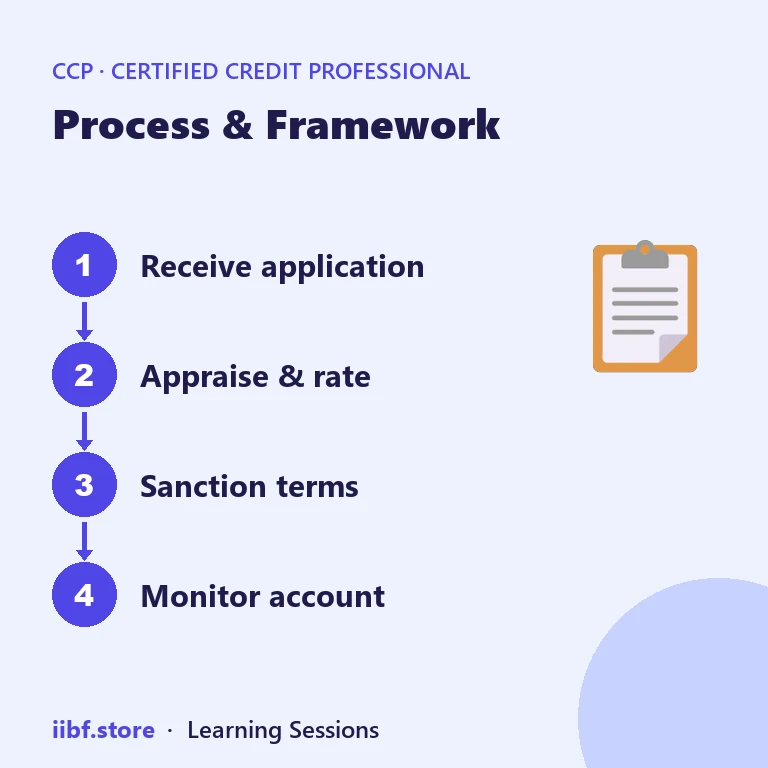
In practice, this only works smoothly when appraisal, charge creation, and documentation are sequenced correctly — sanction first, then security perfection, then disbursement. Skipping the order, even under branch-level pressure to disburse quickly, is one of the most common audit findings in Indian banks.
🌍 Delivery for Retail Loans and Export Credit
Retail lending uses simpler credit delivery mechanisms because exposures are smaller and more standardised. A home loan or vehicle loan is usually disbursed as a single payment directly to the seller or builder, against a mortgage or hypothecation of the asset financed. The retail loans chapter covers the underwriting checks that precede this one-time delivery.
Export credit is delivery with a currency and timing twist. Pre-shipment credit funds the exporter before goods leave India, while post-shipment credit bridges the gap between shipment and payment realisation — often through bill discounting in foreign currency. The export finance chapter is essential reading, since CCP papers frequently test the difference between packing credit and post-shipment finance.
Project finance sits at the other extreme: large sums delivered in tranches tied to physical progress, verified by an independent engineer before each disbursement. This staged delivery protects the lender from funding a project faster than it is actually being built.
⚠️ Common Mistake: Candidates often confuse pre-shipment and post-shipment credit. Remember — pre-shipment funds procurement and production, post-shipment bridges the receivable after goods are shipped.
⚖️ RBI Discipline Behind Credit Delivery
The Reserve Bank of India does not prescribe every delivery mode in rigid detail, but it sets the guardrails: prudential exposure norms, end-use monitoring expectations, and reporting requirements that every bank's credit delivery mechanisms must respect. Banks are expected to verify that disbursed funds are used for the sanctioned purpose, not diverted to unrelated ends.
This is why credit delivery mechanisms in banking are never purely operational — they carry a supervisory dimension too. Diversion of funds, over-financing beyond genuine need, or delivery without adequate margin are all flagged in RBI inspections and can attract higher provisioning even before an account turns delinquent. For the current guidance on exposure and prudential norms, refer directly to the Reserve Bank of India website rather than relying on a remembered figure, since thresholds are revised periodically.
A well-run credit delivery process also feeds into a bank's broader risk posture. Consistent, disciplined delivery practices are one of the inputs that shape a bank's overall risk appetite framework, which in turn sets the boundaries within which fresh credit delivery decisions are made.
🧾 Table: Comparing Common Credit Delivery Modes
The table below summarises how these delivery modes differ on purpose, security, and structure — a useful quick-revision aid before the CCP exam.
| Delivery Mode | Typical Purpose | Usual Security | Revolving? |
|---|---|---|---|
| Cash Credit | Working capital (stock and receivables) | Hypothecation of stock/book debts | ✅ |
| Overdraft | Short-term liquidity needs | Current account balance/collateral | ✅ |
| Term Loan | Capital expenditure, project cost | Mortgage/hypothecation of asset financed | ❌ |
| Bill Discounting | Funding against genuine trade bills | Assignment of bill/receivable | ❌ |
| Pre-shipment Export Credit | Procurement and production for export | Hypothecation of raw material/stock | ✅ (cyclical) |
📌 Remember: A revolving mode suits ongoing operating cycles; a one-time or tranche-based mode suits capital assets and projects. Matching the two wrong is where credit delivery mechanisms in banking most often go astray.
Working capital assessment itself often starts with a simple projection exercise — if you have not revised it yet, the cash budget method is a good companion topic, since it feeds directly into how much a bank is willing to deliver through a cash credit or overdraft limit.
All of this circles back to the same starting discipline candidates must internalise: sound delivery follows sound appraisal. Revisiting principles of sound lending alongside this topic makes both easier to recall in the exam hall, and a lapse in either area is frequently the root cause behind the patterns covered in NPA recovery mechanisms in Indian banking.
🧠 Practice MCQs: Credit Delivery Mechanisms
Q1. Which credit delivery mechanism is best suited to a borrower with a continuously revolving requirement against stock and book debts? (a) Term loan (b) Cash credit (c) Bill discounting (d) Bank guarantee
Answer: (b) — Cash credit is a revolving limit drawn against hypothecated stock and receivables, matching an ongoing operating cycle.
Q2. Pre-shipment export credit is primarily meant to finance which stage of an export transaction? (a) Payment realisation after shipment (b) Procurement and production before shipment (c) Insurance of goods in transit (d) Repayment of an existing term loan
Answer: (b) — Pre-shipment (packing) credit funds procurement, processing, and manufacture before the goods are shipped.
Q3. Before any credit delivery mechanism can release funds, which two steps must be completed first? (a) Insurance renewal and audit (b) Charge creation and documentation (c) Board approval and rating (d) Provisioning and write-off
Answer: (b) — Valid charge creation over security and complete documentation are prerequisites for disbursement under every delivery mode.
Q4. In project finance, why are funds typically delivered in tranches rather than as a lump sum? (a) To reduce paperwork (b) To match disbursement with verified physical progress (c) To avoid RBI reporting (d) To increase the interest rate
Answer: (b) — Tranche-based delivery, verified by an independent engineer, ensures the bank does not fund the project faster than it is actually built.
Q5. A bank discovers that funds disbursed under a term loan were diverted to an unrelated purpose. This is primarily a failure of which discipline? (a) Interest calculation (b) End-use monitoring (c) Bill discounting (d) Rating migration
Answer: (b) — End-use monitoring ensures disbursed funds are applied to the sanctioned purpose; diversion is a red flag under RBI supervisory norms.
Want chapter-wise mock tests with 100+ MCQs? Start practising free →
❓ Frequently Asked Questions
What is the difference between cash credit and overdraft as modes of credit delivery?
Cash credit is drawn against hypothecated stock and book debts and is meant for regular working capital cycles, while an overdraft is usually linked to a current account or other collateral for short-term liquidity needs.
Why are term loans disbursed as a lump sum or in tranches instead of as a revolving limit?
Term loans finance fixed assets or projects with a defined cost and repayment schedule, so delivery is tied to invoice stages or project milestones rather than an ongoing operating cycle.
How does documentation affect credit delivery in a CCP exam context?
Incomplete or improperly executed documentation weakens the bank's legal right to recover dues even when a charge exists, so CCP questions often test whether disbursement can proceed if documentation is pending.
What role does the Reserve Bank of India play in credit delivery?
The RBI does not dictate every operational detail but sets exposure norms, end-use monitoring expectations, and reporting standards that banks must follow across all delivery modes.
Getting credit delivery mechanisms in banking right is what separates a well-run credit portfolio from one that drifts into stress. For CCP candidates, the topic rewards a structured revision: know the modes, know the charge and documentation sequence behind each, and know where RBI discipline steps in. Browse more CCP exam guides on the blog, or head over to the chapter-wise test series to put this topic into practice before your next attempt.
Prefer revising from a printed book?
Chapter-wise books with MCQs after every chapter — minimal pages, complete coverage, delivered anywhere in India. Every book has a free sample to read first.







Quick quiz on this topic
5 exam-style questions from our free test bank — check yourself before you move on.
Practice this topic
Take a free mock test, download chapter PDFs, or watch a video class — all included on iibf.store.