Fit and Proper Criteria for Bank Directors: RBI Norms (BCP)
Every private and foreign bank operating in India must apply the fit and proper criteria for bank directors before a single name reaches the boardroom — and then keep re-applying it for as long as that person holds office. For a Banking Compliance Professional candidate, this is not a side topic. It sits at the intersection of the Banking Regulation Act, 1949 and RBI's corporate governance expectations, and it shows up repeatedly in exam scenarios involving board composition, director disqualification, and the Nomination and Remuneration Committee.
This article walks through the statutory basis, the actual screening criteria, the documentation trail — declarations, undertakings, and the deed of covenant — and the continuous compliance obligations that follow every appointment. Treat it as your working reference for this part of the BCP syllabus.
📜 Section 10A and Section 16: The Legal Foundation
The fit and proper framework for bank directors is not an RBI invention sitting outside the law — it is anchored directly in the Banking Regulation Act, 1949. Section 10A, inserted by amendment, requires every banking company to ensure that not less than 51% of its total directors have special knowledge or practical experience in fields such as accountancy, agriculture, banking, co-operation, economics, finance, law, small-scale industry, or other areas the Reserve Bank considers useful to the bank. At least two directors must have specialised knowledge or experience in agriculture and rural economy, co-operation, or small-scale industry.
Section 10A(2)(a) gives RBI real teeth: if a director does not fulfil these requirements, or is otherwise not a fit and proper person to hold office, the Reserve Bank may direct the bank to elect or co-opt another person, or in some circumstances require removal. Section 16 adds a separate restriction — no person can be a director of more than one banking company at the same time, subject to narrow exceptions such as directorships arising from a banking company's own subsidiaries. Together, Sections 10A and 16 form the statutory backbone; RBI's circulars build the operating procedure on top of it. Note the coverage nuance: Section 10A applies primarily to private sector and foreign banks, while public sector banks follow a parallel fit and proper framework RBI issued for elected directors on nationalised bank boards.
💡 Exam Tip: If a question asks which section empowers RBI to direct removal of an unfit director, the answer is Section 10A(2)(a) — not Section 16, which only bars simultaneous directorships across banks.
🔍 What "Fit and Proper" Actually Covers
"Fit and proper" is a composite test, not a single yes/no box. Banks assess a prospective director against a mix of positive qualification criteria and negative disqualification criteria. On the positive side: age within the limit prescribed by the bank's articles, relevant academic qualification or practical experience in one of the specified fields under Section 10A, and a track record that shows sound judgement and financial prudence.
On the negative side, a person is generally treated as unfit if they have been convicted of an offence involving moral turpitude, adjudicated insolvent, declared of unsound mind by a competent court, or found to have acted in a manner prejudicial to the interest of depositors. A person under adverse regulatory notice — from RBI, SEBI, IRDAI, or another financial regulator — is also flagged. Directors who feature on a wilful defaulter or non-cooperative borrower list are automatically disqualified; this ties directly into the disqualification grounds you study under IRAC norms and wilful defaulters, since a borrower classified as wilful defaulter cannot simultaneously sit on a bank's board.
Financial integrity matters too — an applicant should not have defaulted on repayment obligations to any financial institution, and should not have been associated with a company whose registration or licence was cancelled by a regulator. None of these criteria is applied once and forgotten; the same tests are re-run whenever circumstances change, which is the theme of the continuous compliance section below.
📝 Declaration, Deed of Covenant, and the Nomination and Remuneration Committee
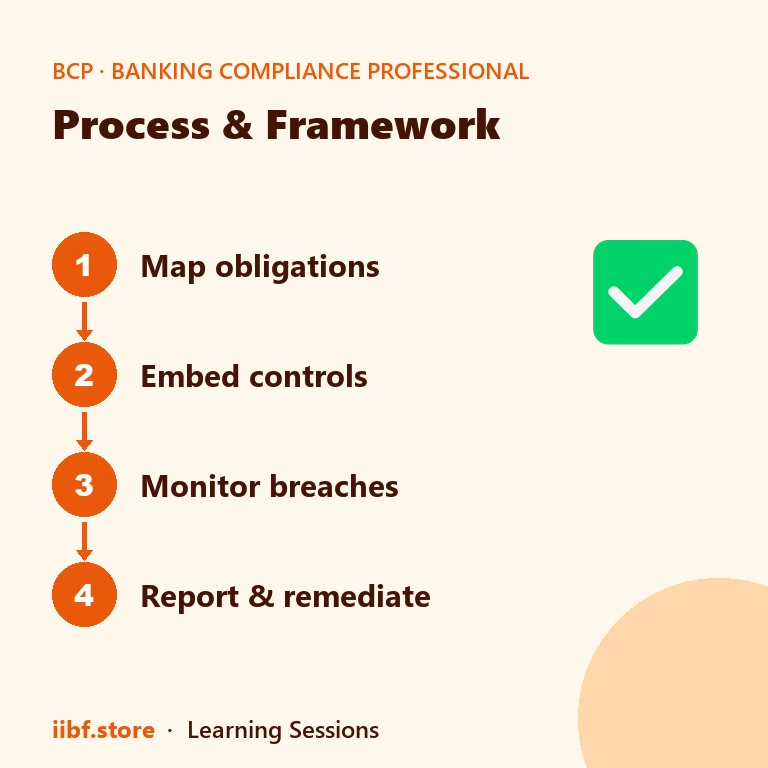
The screening process runs through the Nomination and Remuneration Committee (NRC), a mandatory board sub-committee under RBI's corporate governance framework. Before appointment, every candidate submits a signed declaration and undertaking disclosing educational qualifications, professional experience, other directorships held, pending litigation, tax status, and any past association with entities that faced regulatory action. The NRC scrutinises this declaration, cross-checks it against available adverse-information records, and forms an independent view on whether the candidate satisfies the fit and proper criteria for bank directors before recommending appointment to the full board.
Once the NRC is satisfied, the bank obtains a deed of covenant signed by the director — a formal commitment to specific standards of conduct, confidentiality, and cooperation with the board and regulator. This is distinct from the declaration: the declaration establishes eligibility, the deed of covenant binds conduct after appointment. Directors overseeing credit decisions are also expected to understand the regulatory guardrails on lending covered under loans and advances regulatory restrictions, since board-level oversight of credit discipline is one of the practical reasons this screening exists in the first place.
Sound board composition and this screening discipline are two sides of the same coin — a board only functions as an effective oversight body when its members are individually fit and collectively accountable, a link explored further in our piece on compliance culture in banks.
⚠️ Common Mistake: Candidates confuse the declaration and undertaking with the deed of covenant. The former proves eligibility at entry; the latter governs conduct throughout the tenure — they are not interchangeable documents.
🔄 Continuous Compliance: It Doesn't End at Appointment
Fit and proper status is not a one-time gate — it is monitored for as long as the person remains a director. Banks require directors to submit a fresh declaration at least annually, and immediately whenever a material change occurs: a new directorship, fresh litigation, an adverse order from a regulator, or a change in financial standing. The NRC is expected to review these declarations on an ongoing basis and maintain a database that supports periodic reassessment of every director's continuing eligibility.
If a director conceals adverse information or a lapse surfaces later, it becomes a governance failure that banks are expected to escalate and investigate — the same discipline you see in compliance breach reporting and root cause analysis. Where the bank fails to act, RBI can and does step in directly; its supervisory record includes several instances of RBI enforcement action on banks tied to weak director due diligence and governance lapses.
| Fit and Proper Requirement | Governing Provision | Status |
|---|---|---|
| Board composition — at least 51% directors with specialised knowledge | Section 10A(1), Banking Regulation Act, 1949 | ✅ Mandatory |
| No person to be director of more than one banking company | Section 16, Banking Regulation Act, 1949 | Mandatory |
| Declaration, undertaking, and deed of covenant from every director | RBI corporate governance circular (April 2021) | ✅ Mandatory |
| NRC due diligence at appointment and on a continuing basis | RBI corporate governance circular (April 2021) | Mandatory |
| RBI power to direct removal of a director found unfit | Section 10A(2)(a), Banking Regulation Act, 1949 | ⚠️ Regulatory backstop |
📌 Remember: Continuous compliance means the fit and proper test is re-applied — not just re-confirmed on paper — every time a director's circumstances materially change, not only at the annual review date.
For the full statutory text and RBI's current governance expectations for bank boards, refer to the Reserve Bank of India's official site at rbi.org.in.
Conclusion: Why This Matters Beyond the Exam
The fit and proper criteria for bank directors exist because board-level integrity is the first line of defence against governance failure — a director who fails this test can compromise everything from credit discipline to disclosure quality. For BCP candidates, expect exam questions that test the distinction between Section 10A and Section 16, the sequence of declaration → NRC review → deed of covenant, and the ongoing nature of the compliance obligation. It also connects to broader board accountability themes, including how boards discharge duties like corporate social responsibility in banks once they are properly constituted.
Strengthen your grasp of the surrounding compliance modules — including large exposures and exposure norms — and browse more subject coverage at the Banking Compliance Professional tag hub. When you are ready to test yourself, work through the practice questions below.
🧠 Practice MCQs: Fit and Proper Criteria for Bank Directors
Q1. Under the Banking Regulation Act, 1949, which section requires at least 51% of a banking company's directors to have specialised knowledge or experience in specified fields? (a) Section 16 (b) Section 10A (c) Section 36AB (d) Section 21A
Answer: (b) — Section 10A(1) prescribes the minimum board composition of directors with specialised knowledge or practical experience.
Q2. Which section of the Banking Regulation Act, 1949 bars a person from being a director of more than one banking company at the same time? (a) Section 10A (b) Section 16 (c) Section 12 (d) Section 22
Answer: (b) — Section 16 restricts common directorships across banking companies, subject to limited exceptions.
Q3. A candidate for directorship who is on RBI's wilful defaulter or non-cooperative borrower list is: (a) Eligible after a declaration (b) Automatically disqualified (c) Eligible only for a non-executive role (d) Subject to shareholder vote
Answer: (b) — Wilful defaulter or non-cooperative borrower status is a standard disqualifying ground under the fit and proper framework.
Q4. What document formally binds a bank director to specific standards of conduct after appointment, distinct from the initial eligibility declaration? (a) Deed of covenant (b) Board resolution (c) Annual report (d) Shareholder agreement
Answer: (a) — The deed of covenant is signed after the declaration establishes eligibility and governs conduct through the director's tenure.
Q5. Under Section 10A(2)(a) of the Banking Regulation Act, 1949, RBI's power in respect of a director found not fit and proper is to: (a) Fine the bank (b) Direct the bank to elect or co-opt another person, or seek removal (c) Cancel the bank's licence (d) Take no action, as it lacks jurisdiction
Answer: (b) — RBI can direct the banking company to remedy the board composition or address the unfit director directly.
Want chapter-wise mock tests with 100+ MCQs? Start practising free →
What are the fit and proper criteria for bank directors under Indian law?
They are a combination of positive qualification requirements — age, relevant experience in specified fields — and negative disqualification grounds such as conviction for an offence involving moral turpitude, insolvency, or wilful defaulter status, applied under Section 10A of the Banking Regulation Act, 1949 and RBI's corporate governance framework.
Who conducts due diligence on prospective bank directors?
The bank's Nomination and Remuneration Committee (NRC) scrutinises each candidate's declaration and undertaking before recommending appointment, and continues to monitor fit and proper status through periodic review after appointment.
What is a deed of covenant in the context of bank directors?
It is a formal document signed by a director committing to defined standards of conduct, confidentiality, and cooperation with the board and the regulator, distinct from the eligibility declaration submitted before appointment.
Can RBI remove a bank director who is found not fit and proper?
Yes. Under Section 10A(2)(a) of the Banking Regulation Act, 1949, RBI can direct a banking company to elect or co-opt another person in place of a director who does not meet the fit and proper requirements.
Practice this topic
Take a free mock test, download chapter PDFs, or watch a video class — all included on iibf.store.
Keep reading