Green Finance in Banking: A CCP Exam Guide (2026)

Climate risk has quietly become a credit risk, and that is exactly why green finance in banking now features in the Certified Credit Professional syllabus. A loan to a coal-heavy borrower can turn into a stranded asset overnight when policy shifts; a green deposit that is not ring-fenced can invite an accusation of "greenwashing." For a credit professional, green finance is not a corporate-social gesture — it is a fresh appraisal discipline with its own RBI framework, eligible-sector list, disclosure norms and default risks. This guide breaks down what green finance in banking means, how the RBI's Green Deposits Framework works, where it intersects with priority sector lending, and how you should appraise a green credit proposal for the CCP exam.
🌱 What Green Finance in Banking Actually Means
Green finance is the channelling of funds towards economic activities that reduce environmental damage — renewable energy, energy efficiency, clean transport, sustainable water management, pollution control and climate adaptation. It sits under the wider umbrella of "sustainable finance," which also covers social and governance goals (the ESG triad). For a lender, green finance operates on both sides of the balance sheet: on the liability side through green deposits and green bonds that raise dedicated funds, and on the asset side through green loans whose proceeds are earmarked for eligible projects.
The credit angle is what the CCP exam tests. A green loan is still a loan — it must clear the same principles of lending on safety, liquidity and purpose. What changes is the use-of-proceeds discipline: the money raised as a green deposit can only fund a pre-defined list of green activities, and the bank must be able to prove it. This traceability requirement is the single biggest operational difference between a green loan and an ordinary term loan, and it is where most examiners set their traps.
💡 Exam Tip: Green finance is defined by the use of proceeds, not by the type of borrower. A large corporate can still access green funds — provided the specific project qualifies as green and the allocation is verifiable.
📜 RBI's Framework for Acceptance of Green Deposits
The cornerstone document for the CCP exam is the RBI's Framework for Acceptance of Green Deposits, issued on 11 April 2023 and effective from 1 June 2023. It applies to scheduled commercial banks (excluding regional rural banks, local area banks and payments banks) and to deposit-taking NBFCs. Green deposits are interest-bearing deposits, denominated in rupees, whose proceeds are allocated only to eligible green activities and projects.
Every regulated entity that wants to raise green deposits must first put in place a Board-approved Financing Framework (FF) that spells out the eligible use of proceeds, the allocation process and the reporting mechanism. The allocation of funds raised in a financial year must undergo third-party verification/assurance, and the entity must publish an annual Impact Assessment Report describing the environmental benefits achieved. Funds cannot be parked indefinitely — unallocated proceeds may be temporarily invested only in specified liquid instruments.
Crucially, the framework carries an exclusion list. Activities such as fossil-fuel extraction, nuclear power, direct waste incineration, alcohol, weapons, tobacco, gambling, palm oil and large hydropower plants above 25 MW are barred from green-deposit financing. This mirrors the discipline you would apply in non-financial risk analysis — assessing a proposal not just on numbers but on its environmental and reputational footprint.
⚠️ Common Mistake: Candidates assume "renewable" always qualifies. Hydropower above 25 MW and biomass sourced from protected areas are excluded — read the eligible-activity list carefully.
🏦 Green Instruments and Their PSL Linkages
Green finance in banking is delivered through several instruments, each with a different regulator and a different exam relevance. The table below compares the ones a credit professional is most likely to face, with a tick where the instrument is directly examinable under the RBI green-deposit ecosystem.
| Instrument | Primary Regulator / Issuer | Key Feature | Counts under Green Deposits Framework? |
|---|---|---|---|
| Green Deposit | RBI (banks & NBFCs) | Ring-fenced retail/wholesale deposit | ✓ |
| Sovereign Green Bond (SGrB) | RBI on behalf of Government of India | Dated security; first issued FY 2022-23 | ✗ (separate scheme) |
| Corporate Green Bond | SEBI | Use-of-proceeds debt security | ✗ |
| Renewable Energy Loan (PSL) | RBI (PSL guidelines) | Up to ₹35 crore per borrower qualifies as priority sector | ✗ (but green-eligible) |
| Green Deposit-funded Project Loan | RBI | Proceeds must match eligible activity list | ✓ |
Notice the overlap with priority sector lending: bank loans up to ₹35 crore for solar, wind, biomass and micro-hydel projects, and up to ₹10 lakh for individual household renewable systems, count as priority sector. A well-structured green loan can therefore help a bank hit both its PSL target and its sustainability commitments — a double benefit examiners love to highlight. For a broader treasury perspective on how banks deploy such funds, see our guide on treasury operations in banks.
🔍 Appraising a Green Credit Proposal
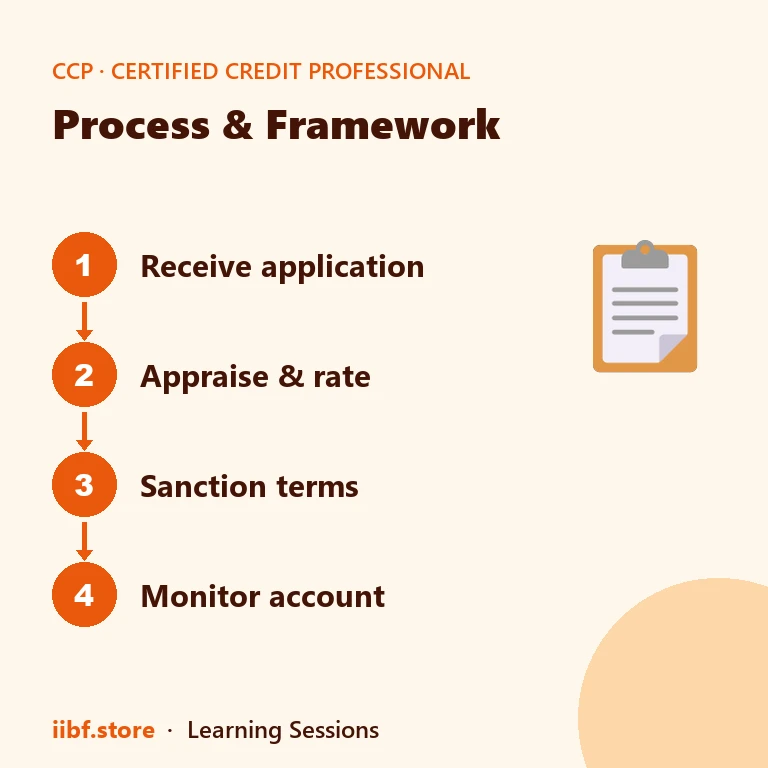
When a green loan proposal lands on your desk, the appraisal layers a "green due-diligence" on top of the usual credit checks. First, confirm that the project falls within an eligible category and not the exclusion list. Second, verify the use of proceeds is traceable — vague statements like "for general sustainability" will not survive third-party assurance. Third, assess transition risk: will future carbon pricing or emission norms erode the borrower's cash flows? Fourth, watch for greenwashing, where a borrower overstates environmental benefit to access cheaper or reputation-enhancing finance.
Green loans also demand sharper monitoring. Because proceeds are earmarked, diversion is both a credit event and a compliance breach. Robust early warning signals in credit monitoring — deviation in end-use, delay in project commissioning, or adverse environmental clearance news — must trigger review. The credit rating assigned should incorporate an ESG overlay, and where the bank uses internal models, an environmental-risk weight can adjust the score. This is simply an extension of the principles of sound lending into a climate-aware world.
📌 Remember: Diversion of green-deposit proceeds is a double failure — it breaches both the credit sanction terms and the RBI Financing Framework, exposing the bank to regulatory and reputational penalties.
📊 The Wider Regulatory Push You Must Know
Green finance in banking does not exist in isolation; a lattice of disclosure and market rules surrounds it. SEBI's Business Responsibility and Sustainability Reporting (BRSR) is mandatory for the top 1,000 listed companies by market capitalisation, forcing large borrowers to disclose their environmental footprint — data a lender can mine during appraisal. On the funding side, the Government of India, through the RBI, has issued Sovereign Green Bonds since 2022-23 to finance public green projects, deepening the domestic green-bond market.
The RBI itself joined the Network for Greening the Financial System (NGFS) in April 2021 and has since moved towards a Disclosure Framework on Climate-related Financial Risks, nudging banks to measure, manage and report climate exposures. Its Report on Currency and Finance devoted an edition to climate change, signalling that climate stress will eventually feed into supervisory expectations. For the credit professional, the takeaway is directional: environmental data will increasingly become mandatory appraisal input, not optional colour.
Understanding this ecosystem lets you connect the dots in a case-study question — from a borrower's BRSR disclosure, to the bank's green deposit funding, to the RBI's exclusion list, to the eventual impact-assessment report. Practise linking these threads and revise alongside the full CCP green finance chapter and the wider Certified Credit Professional resource hub to lock the concepts in.

🧠 Practice MCQs: Green Finance in Banking
Q1. From which date is the RBI's Framework for Acceptance of Green Deposits effective? (a) 1 April 2023 (b) 1 June 2023 (c) 1 January 2023 (d) 1 April 2024
Answer: (b) — The framework was issued on 11 April 2023 and came into effect on 1 June 2023.
Q2. Which of the following is EXCLUDED from green-deposit financing? (a) Solar rooftop project (b) Nuclear power project (c) Wind energy farm (d) Energy-efficiency retrofit
Answer: (b) — Nuclear power, along with fossil fuels and large hydropower, is on the exclusion list.
Q3. Before raising green deposits, a bank must first put in place a Board-approved: (a) Impact Assessment Report (b) Priority Sector Plan (c) Financing Framework (d) Credit Monitoring Policy
Answer: (c) — A Board-approved Financing Framework (FF) defining eligible use of proceeds is a precondition.
Q4. The BRSR disclosure requirement applies to the top how many listed companies by market capitalisation? (a) 100 (b) 500 (c) 1,000 (d) 2,000
Answer: (c) — SEBI's Business Responsibility and Sustainability Reporting is mandatory for the top 1,000 listed companies.
Q5. Hydropower plants are excluded from green-deposit financing when their capacity exceeds: (a) 10 MW (b) 15 MW (c) 25 MW (d) 50 MW
Answer: (c) — Large hydropower plants above 25 MW fall outside the eligible green-activity list.
Want chapter-wise mock tests with 100+ MCQs? Start practising free
❓ Frequently Asked Questions
Authoritative reference: see the latest guidelines on the Reserve Bank of India website and the IIBF syllabus portal.
Is green finance a separate paper in the CCP exam?
No. Green finance is a topic within the Certified Credit Professional syllabus, typically in the module covering emerging and specialised credit areas, and appears as objective and case-study questions rather than a standalone paper.
What is the difference between a green deposit and a regular fixed deposit?
A green deposit is an ordinary interest-bearing rupee deposit, but its proceeds are ring-fenced for eligible green activities under a Board-approved Financing Framework, with mandatory third-party verification and annual impact assessment. A regular deposit has no such use-of-proceeds restriction.
Do renewable-energy loans automatically qualify as priority sector lending?
Bank loans up to ₹35 crore per borrower for renewable projects such as solar and wind, and up to ₹10 lakh for individual household systems, qualify as priority sector lending, subject to the RBI's PSL guidelines and end-use conditions.
What is greenwashing and why should a credit professional care?
Greenwashing is the overstatement or misrepresentation of a project's environmental benefit to access green finance. It exposes a bank to regulatory action, reputational damage and misallocation of ring-fenced funds, so verifying genuine use of proceeds is a core appraisal duty.
Green finance is fast becoming a standard appraisal skill rather than a niche one, and mastering the RBI framework now will pay off across the CCP and CAIIB papers alike. Ready to test yourself? Explore our CAIIB course or jump straight into a free mock test and turn this chapter into guaranteed marks.
Prefer revising from a printed book?
Chapter-wise books with MCQs after every chapter — minimal pages, complete coverage, delivered anywhere in India. Every book has a free sample to read first.















Quick quiz on this topic
5 exam-style questions from our free test bank — check yourself before you move on.
Practice this topic
Take a free mock test, download chapter PDFs, or watch a video class — all included on iibf.store.