CAIIB BFM रिस्क मैनेजमेंट — Duration Gap और VaR आसान भाषा में
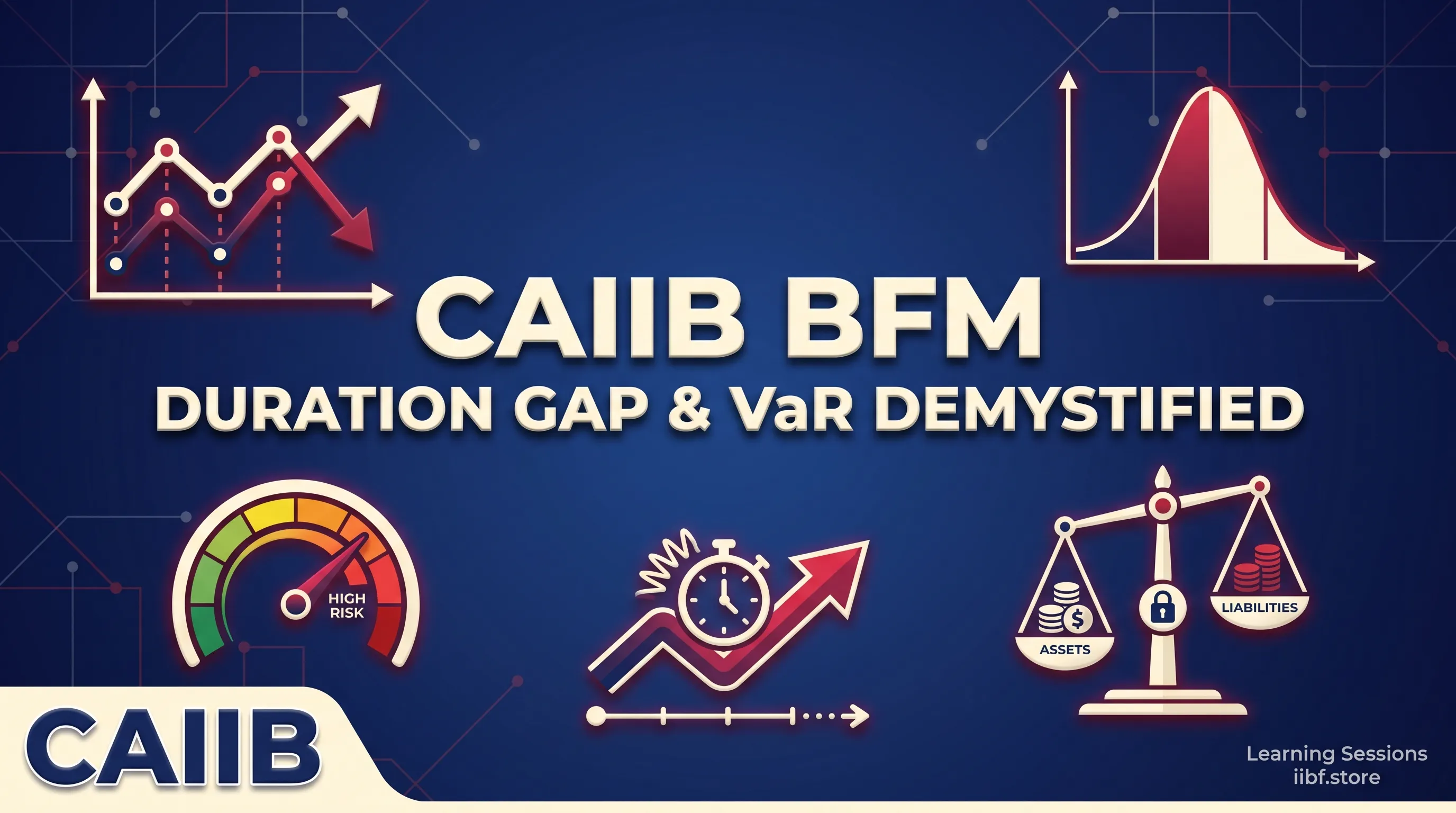
CAIIB का BFM पेपर — और उसमें भी Module B (Risk Management) — वो जगह है जहाँ ज़्यादातर working bankers अटक जाते हैं। वजह साफ़ है: ब्रांच में रोज़ KYC, NPA, recovery का काम होता है, लेकिन Duration Gap और VaR जैसे शब्द treasury और risk department के बाहर कम सुनाई देते हैं। आज इन्हीं चार concepts को ऐसे समझते हैं जैसे एक senior colleague आपको चाय पर समझा रहा हो।
1. Duration Gap — Interest Rate Risk का असली पैमाना
सोचिए आपके बैंक के assets (मुख्यतः loans और investments) की average duration 5 साल है, और liabilities (deposits) की duration 2 साल। मतलब assets ज़्यादा देर तक fixed rate पर लॉक हैं, जबकि deposits जल्दी-जल्दी repriced होते हैं। यही mismatch Duration Gap कहलाता है।
फॉर्मूला सीधा है:
Duration Gap = DAssets − (L/A) × DLiabilities
जहाँ L/A का मतलब है total liabilities to total assets ratio। अगर gap positive है और बाज़ार में interest rates बढ़ रहे हैं, तो bank की equity (net worth) घटेगी — क्योंकि assets की value liabilities से ज़्यादा तेज़ी से गिरेगी। यही 2008 के crisis में कई US banks के साथ हुआ था।
परीक्षा का ट्रिक: positive gap + rising rates = equity erosion। उल्टा scenario (negative gap + falling rates) भी loss देता है। RBI इसीलिए banks से Interest Rate Sensitivity statements माँगती है।
2. VaR (Value at Risk) — कितना नुकसान, कितनी confidence पर
VaR एक single number में बताता है — "अगले 1 दिन में, 99% confidence के साथ, मेरा maximum loss ₹X करोड़ से ज़्यादा नहीं होगा।" Treasury और trading desk का यही core metric है। इसे निकालने के तीन तरीके हैं:
- Historical Simulation — पिछले 250-500 दिनों के actual returns को sort कीजिए और bottom percentile पर VaR मिल जाएगा। फायदा: कोई assumption नहीं। नुक्सान: future, past जैसा होगा यह मानना पड़ता है।
- Variance-Covariance (Parametric) — मानता है कि returns normal distribution follow करते हैं। यहीं पर Z-scores आते हैं: 99% confidence के लिए 2.33, और 95% के लिए 1.65। फॉर्मूला: VaR = Portfolio Value × σ × Z × √t।
- Monte Carlo Simulation — हज़ारों random scenarios generate करके distribution बनाई जाती है। सबसे flexible, सबसे computational-heavy।
याद रखने का तरीक़ा: 2.33 → 99%, 1.65 → 95%। ये numbers exam में direct पूछे जाते हैं।
3. RWA और Capital Adequacy Ratio (CAR)
हर loan एक जैसा risky नहीं होता। एक home loan का risk एक unsecured personal loan जितना नहीं है। इसीलिए RBI हर asset को एक risk weight देती है — sovereign पर 0%, AAA-rated corporate पर 20%, retail पर 75%, residential mortgage पर 35-50%, और ज़्यादा-risk वाले exposures पर 100% या 150% तक। इन सब का sum-product ही Risk Weighted Assets (RWA) है।
अब Capital Adequacy:
CAR = (Tier 1 + Tier 2 Capital) / RWA × 100
Indian banks के लिए RBI ने minimum CAR 9% रखी है — यानी Basel III के global 8% से एक percentage point ऊपर। इसके अंदर भी CET1 ≥ 5.5%, और CCB (Capital Conservation Buffer) मिलाकर effective requirement और बढ़ जाती है। जो bank ये नहीं रखता, RBI उसकी lending growth, dividend payment, और bonus तक रोक सकती है — Basel III और CAR का detailed breakdown इस article में देख सकते हैं।
4. Basel III के तीन Pillars
Basel Committee on Banking Supervision (BCBS) ने 2008 के crisis के बाद Basel III लाया। इसकी पूरी संरचना तीन pillars पर खड़ी है:
- Pillar 1 — Minimum Capital Requirements: Credit risk, market risk और operational risk — तीनों के लिए quantitative capital। यही वो हिस्सा है जहाँ RWA और CAR का खेल होता है।
- Pillar 2 — Supervisory Review Process (SREP): RBI जैसी supervisor यह जाँचती है कि bank का internal capital assessment (ICAAP) पर्याप्त है या नहीं। यहाँ stress testing, concentration risk, और interest rate risk in banking book (IRRBB) देखे जाते हैं।
- Pillar 3 — Market Discipline: Banks को अपनी risk exposures और capital position publicly disclose करनी होती है, ताकि depositors, investors और analysts खुद judge कर सकें। यही reason है कि हर bank की annual report में "Pillar 3 Disclosures" का अलग section होता है।
याद रखने का तरीक़ा: Capital → Supervisor → Market। तीनों एक-दूसरे के बिना अधूरे हैं।
परीक्षा की तैयारी कैसे करें
BFM में numerical questions सीधे फॉर्मूले से आते हैं — Duration Gap calculate करना, given σ पर VaR निकालना, या CAR की minimum requirement पूछना। केवल theory रट लेने से काम नहीं चलेगा; practice ज़रूरी है। iibf.store/tests पर CAIIB BFM Module B के chapter-wise mock tests उपलब्ध हैं, और structured तैयारी के लिए पूरा CAIIB course यहाँ देखें।
Q1. Duration Gap positive होना bank के लिए हमेशा बुरा है?
Q2. 99% VaR का Z-score 2.33 क्यों है, 2.58 क्यों नहीं?
Q3. Indian banks की CAR 9% है पर Basel III में 8% — फ़र्क़ क्यों?
Q4. Pillar 3 disclosures कहाँ मिलती हैं?
Prefer revising from a printed book?
Chapter-wise books with MCQs after every chapter — minimal pages, complete coverage, delivered anywhere in India. Every book has a free sample to read first.
148 pages · 478 MCQs
Learning Sessions · Ashish Sir
151 pages · 465 MCQs
Learning Sessions · Ashish Sir
148 pages · 375 MCQs
Learning Sessions · Ashish Sir
216 pages · 895 MCQs
Learning Sessions · Ashish Sir
109 pages · 300 MCQs
Learning Sessions · Ashish Sir
104 pages · 360 MCQs
Learning Sessions · Ashish Sir
82 pages · 297 MCQs
Learning Sessions · Ashish Sir
151 pages · 600 MCQs
Learning Sessions · Ashish Sir
98 pages · 282 MCQs
Learning Sessions · Ashish Sir
131 pages · 672 MCQs
Learning Sessions · Ashish Sir
221 pages · 831 MCQs
Learning Sessions · Ashish Sir
128 pages · 524 MCQs
Learning Sessions · Ashish Sir
107 pages · 445 MCQs
Learning Sessions · Ashish Sir
132 pages · 225 MCQs
Learning Sessions · Ashish Sir
188 pages · 435 MCQs
Learning Sessions · Ashish Sir
117 pages · 236 MCQs
Learning Sessions · Ashish Sir
Learning Sessions · Ashish Sir
118 pages · 299 MCQs
Learning Sessions · Ashish Sir
Learning Sessions · Ashish Sir
Learning Sessions · Ashish Sir
Learning Sessions · Ashish Sir
115 pages · 255 MCQs
Learning Sessions · Ashish Sir
Learning Sessions · Ashish Sir
334 pages · 936 MCQs
Learning Sessions · Ashish Sir
Learning Sessions · Ashish Sir
115 pages · 344 MCQs
Learning Sessions · Ashish Sir
107 pages · 240 MCQs
Learning Sessions · Ashish Sir
90 pages · 150 MCQs
Learning Sessions · Ashish Sir
Learning Sessions · Ashish Sir
Quick quiz on this topic
5 exam-style questions from our free test bank — check yourself before you move on.
Practice this topic
मुफ़्त मॉक टेस्ट दें, चैप्टर PDF डाउनलोड करें या वीडियो क्लास देखें — सब iibf.store पर मुफ़्त है।