Money Mule Account Detection: IIBF KYC-AML Guide 2026
Money mule account detection has moved from a niche fraud-desk concern to a core KYC-AML competency that IIBF examiners now test directly. A money mule is a person who allows their bank account to be used to receive and forward the proceeds of crime — often for a small commission, and often without fully understanding that they are laundering money. For a compliance officer, the mule account is where the layering stage of money laundering becomes visible inside your own core banking system, which is exactly why the regulator expects banks to catch it early.
This guide walks through how mule networks are built, the red flags your transaction monitoring system should be tuned to, the reporting obligations that follow, and the exam-style questions likely to appear in the IIBF KYC, AML and CFT paper. If you are still building your base, start with the chapter on money laundering methods before going further.
🕵️ What Exactly Is a Money Mule Account?
A money mule account is a genuine, KYC-compliant bank account whose real controller is someone other than the account holder on record. The account holder opens the account legitimately — full CDD, valid Officially Valid Documents, working mobile number — and then hands over the debit card, PIN, net-banking credentials or SIM to a third party. Because the account passes every static KYC check, the only way to detect it is through behaviour.
Mules fall into three broad categories that examiners like to distinguish. Unwitting mules are recruited through fake "work from home" job offers, romance scams or online marketplace payments, and genuinely believe they are processing legitimate payments. Witting mules suspect something is wrong but continue because of the commission — typically a small percentage of each transfer. Complicit mules knowingly open accounts specifically to launder proceeds, sometimes opening dozens of accounts across different banks using the same address cluster or the same introducer.
The recruitment pool is predictable: students, first-time job seekers, gig workers, migrant labourers and rural customers with low financial literacy. This is why accounts opened with minimal balances, small accounts, and freshly-onboarded video-KYC customers deserve tighter behavioural thresholds in their first six months. The link between the mule account and the predicate offence — cyber fraud, investment scams, illegal betting, drug proceeds — is what converts a fraud problem into a Prevention of Money Laundering Act problem.
💡 Exam Tip: A mule account is not a KYC failure in the documentation sense. Documents are usually perfect. It is a failure of ongoing due diligence and transaction monitoring — remember that distinction when a question asks "which control failed?"
🚩 Red Flags: Behavioural Indicators to Monitor
Effective money mule account detection depends on rules that look at velocity, pass-through behaviour and network linkage rather than at single large transactions. The classic mule signature is a rapid, near-complete pass-through: funds arrive in multiple small credits from unrelated remitters and are withdrawn or transferred out within minutes or hours, leaving a near-zero closing balance.
Key indicators your monitoring system should score:
- Turnover inconsistent with the declared profile — a student account declaring ₹10,000 monthly income cycling several lakh a month.
- Dormancy followed by sudden activity — an account inactive for a year that suddenly receives dozens of UPI or IMPS credits.
- Many-to-one credit patterns — numerous small credits from payers with no discernible relationship to the customer.
- Immediate onward transfer or ATM withdrawal — funds retained for minutes, not days.
- Shared digital identifiers — the same device ID, IP address, mobile number, email domain or beneficiary account appearing across multiple unrelated customers.
- Geographic mismatch — an account opened in one state consistently operated from another, or logins from outside India on a domestic retail account.
- Cluster onboarding — several accounts opened on the same day, at the same branch, with sequential documents or a common introducer.
No single flag proves anything. The discipline is correlation: a dormant account, reactivated, receiving many-to-one credits, emptied instantly, sharing a device fingerprint with four other accounts is a mule with very high probability. This is where risk-based tiering matters — see how customer risk categorisation in KYC feeds directly into alert thresholds.
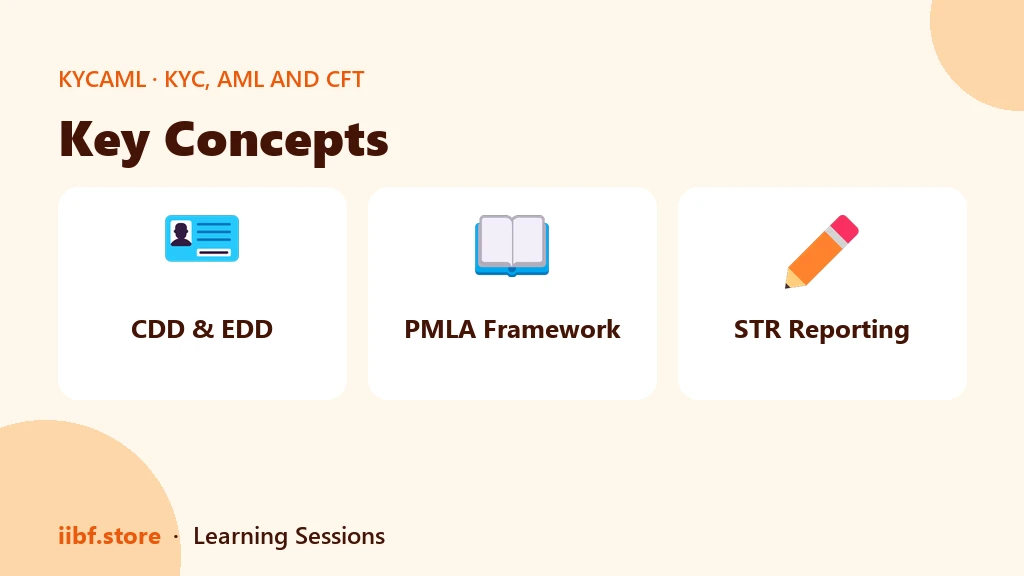
📊 Mule Account vs Genuine High-Velocity Account
False positives destroy an AML function's credibility. Small traders, e-commerce sellers and tuition-fee collectors also show high credit counts. The table below is the comparison examiners expect you to be able to reproduce.
| Parameter | Money Mule Account | Genuine High-Volume Account | Alert Worthy? |
|---|---|---|---|
| Closing balance after credits | Near zero, swept out same day | Balance builds and is used for business expenses | ✅ |
| Remitter relationship | Unrelated, non-repeating payers | Repeat customers, identifiable counterparties | ✅ |
| Declared occupation vs turnover | Sharp mismatch | Consistent with declared business | ✅ |
| Supporting documents on request | Customer cannot explain source | Invoices, GST returns, ledgers available | ❌ |
| Device and login pattern | Shared across many accounts | Own device, stable location | ✅ |
| Account age at peak activity | Very new or freshly reactivated | Steady growth over time | ❌ |
| Response to bank contact | Evasive, unreachable, or scripted | Cooperative, provides records | ✅ |
⚠️ Common Mistake: Freezing an account on a single velocity alert without attempting customer contact or source-of-funds enquiry. Ongoing due diligence requires enquiry first; blanket debit freezes on genuine customers invite grievance-redressal action against the bank.
🏛️ Regulatory Framework and Reporting Obligations
Money mule accounts sit at the intersection of two obligations. Under the RBI Master Direction on Know Your Customer, banks must carry out ongoing due diligence, keep customer profiles updated through periodic KYC updation, and ensure that transactions are consistent with the customer's known profile and source of funds. Under the Prevention of Money Laundering Act, 2002 and the PML Rules, the bank is a reporting entity that must file prescribed reports with the Financial Intelligence Unit – India.
The report that matters most here is the Suspicious Transaction Report (STR). Once the Principal Officer forms a suspicion — and suspicion, not proof, is the threshold — an STR must be filed with FIU-IND within the prescribed period after the internal conclusion is reached. Attempted transactions are reportable even if they never completed, and there is no monetary floor for an STR. Alongside, Cash Transaction Reports capture cash aggregations above the prescribed threshold, and records must be preserved for the statutory retention period under Section 12 of the PMLA.
Critically, tipping off is prohibited. The customer must never be told that an STR has been filed. Bank staff may make normal source-of-funds enquiries, but disclosing the report itself is an offence. Beyond FIU-IND, cyber-fraud-linked mule accounts also route into the national cybercrime reporting ecosystem, and inter-bank information sharing on suspected mule accounts has become a supervisory expectation. For the institutional map, read the chapter on organisation structure in India, and see how these gaps get graded in the FATF mutual evaluation of India.
🛡️ Building a Practical Mule Detection Programme
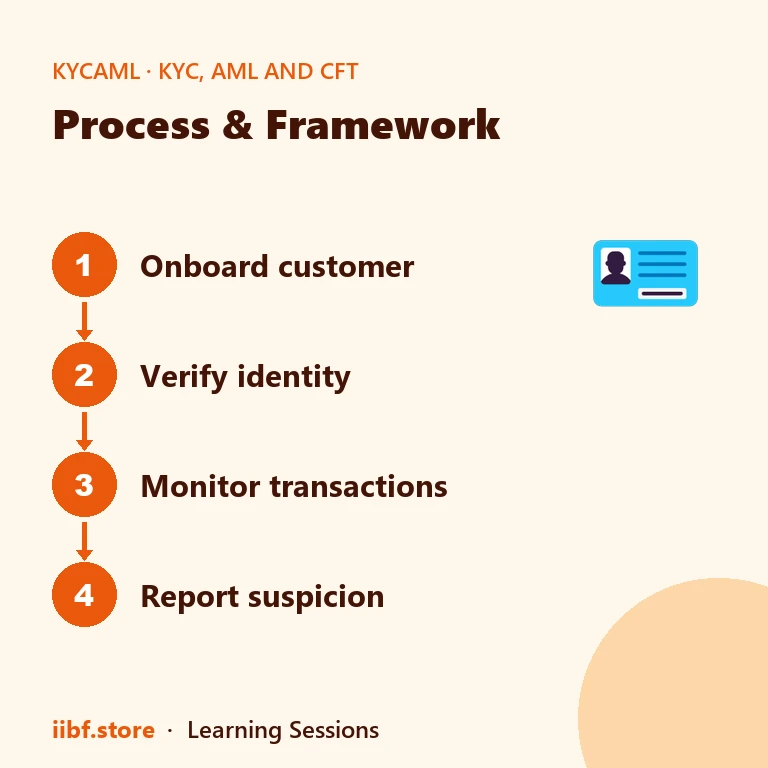
A defensible programme has four layers. At onboarding, screen for cluster indicators — repeat addresses, repeat mobile numbers, sequential document series, common introducers — and apply device fingerprinting to video-KYC and digital account opening. Post-onboarding, apply a tighter monitoring window on new accounts, where mule behaviour typically emerges within weeks.
In monitoring, move beyond static amount thresholds to scenario-based rules: pass-through ratio, credit concentration, dormancy reactivation, and network linkage across shared identifiers. Tune thresholds quarterly against actual alert outcomes; a rule generating 98% false positives is worse than no rule because it trains analysts to dismiss alerts. Regulated entities are increasingly deploying analytics and machine-learning models to score mule probability across account networks rather than reviewing accounts one at a time.
In response, define a clear playbook: enhanced monitoring, source-of-funds enquiry, debit restriction where justified, escalation to the Principal Officer, STR filing, and relationship exit where the risk cannot be mitigated. Document every step — supervisors assess your process, not your hit rate. Staff training closes the loop, since branch officials are usually the first to sense that a customer's explanation does not add up. The escalation logic mirrors what you will study in enhanced due diligence for high-risk customers, and overlaps heavily with fraud management in banking.
📌 Remember: The mule is both an offender and, frequently, a victim. Regulatory expectations require proportionate action — investigate and report, but do not treat every flagged account holder as a criminal without enquiry.
For the theoretical underpinning of why layering needs mules at all, revisit money laundering and terrorism financing. More revision material is collected on the KYC, AML and CFT topic hub.
🧠 Practice MCQs: Money Mule Account Detection
Q1. A money mule account most directly represents a failure of which control? (a) Document verification at onboarding (b) Ongoing due diligence and transaction monitoring (c) Nomination registration (d) Cheque truncation
Answer: (b) — Mule accounts usually have flawless documents; the breakdown is in monitoring behaviour against the customer profile.
Q2. Which pattern is the strongest single indicator of mule activity? (a) A large one-time credit retained in the account (b) Regular monthly salary credits (c) Multiple small credits from unrelated payers, withdrawn immediately (d) Quarterly interest credits
Answer: (c) — Many-to-one credits with near-instant pass-through and a near-zero closing balance is the classic mule signature.
Q3. What is the threshold for filing a Suspicious Transaction Report? (a) Proof of a predicate offence (b) A court order (c) Reasonable grounds for suspicion (d) Customer confession
Answer: (c) — Suspicion, not proof, triggers an STR; attempted transactions are also reportable and no minimum amount applies.
Q4. Informing a customer that an STR has been filed on their account is: (a) Good customer service (b) Prohibited as tipping off (c) Mandatory disclosure (d) Optional at branch discretion
Answer: (b) — Tipping off is an offence; normal source-of-funds enquiries are permitted, disclosure of the report is not.
Q5. Which mule type genuinely believes the transfers are legitimate? (a) Complicit mule (b) Witting mule (c) Unwitting mule (d) Professional mule
Answer: (c) — Unwitting mules are typically recruited via fake job offers or romance scams and do not realise they are laundering funds.
Want chapter-wise mock tests with 100+ MCQs? Start practising free →
❓ Frequently Asked Questions
Is a money mule legally liable even if unaware of the fraud?
Yes. Lending an account to move criminal proceeds can attract liability under the PMLA and criminal law, and the account holder faces account freezing, credit-history damage and prosecution. Lack of awareness may mitigate but does not automatically absolve.
How is a mule account different from a benami account?
A benami account is held in one person's name while the beneficial ownership lies with another, usually to conceal wealth. A mule account is used transiently to move criminal proceeds during the layering stage. Beneficial ownership concealment can feature in both.
Should the bank file an STR before or after freezing the account?
The two are independent. File the STR as soon as the Principal Officer forms a suspicion, within the prescribed timeline. Any debit restriction is a separate risk decision that must follow the bank's documented policy and due process.
How much weight does this topic carry in the IIBF KYC-AML exam?
Mule accounts appear within the money laundering methods and transaction monitoring modules. Expect scenario-based questions on identifying red flags, choosing the correct report type, and applying the tipping-off prohibition.
✅ Conclusion
Money mule account detection rewards pattern thinking over checklist thinking. Documents will look clean, the customer will be reachable, and the balance will be small — yet crores can flow through in a month. Learn the behavioural signature, understand why suspicion alone triggers an STR, and remember that tipping off is prohibited. Those three points cover most of what the examiner will ask, and all of what a compliance officer actually needs on day one.
Ready to test yourself under exam conditions? Take a free chapter-wise mock test on iibf.store → and turn these red flags into marks.
Prefer revising from a printed book?
Chapter-wise books with MCQs after every chapter — minimal pages, complete coverage, delivered anywhere in India. Every book has a free sample to read first.
117 pages · 236 MCQs
Learning Sessions · Ashish Sir
132 pages · 225 MCQs
Learning Sessions · Ashish Sir
188 pages · 435 MCQs
Learning Sessions · Ashish Sir
Learning Sessions · Ashish Sir
118 pages · 299 MCQs
Learning Sessions · Ashish Sir
Learning Sessions · Ashish Sir
Learning Sessions · Ashish Sir
Learning Sessions · Ashish Sir
115 pages · 255 MCQs
Learning Sessions · Ashish Sir
Learning Sessions · Ashish Sir
334 pages · 936 MCQs
Learning Sessions · Ashish Sir
Learning Sessions · Ashish Sir
115 pages · 344 MCQs
Learning Sessions · Ashish Sir
107 pages · 240 MCQs
Learning Sessions · Ashish Sir
90 pages · 150 MCQs
Learning Sessions · Ashish Sir
Learning Sessions · Ashish Sir
131 pages · 672 MCQs
Learning Sessions · Ashish Sir
221 pages · 831 MCQs
Learning Sessions · Ashish Sir
128 pages · 524 MCQs
Learning Sessions · Ashish Sir
107 pages · 445 MCQs
Learning Sessions · Ashish Sir
148 pages · 478 MCQs
Learning Sessions · Ashish Sir
151 pages · 465 MCQs
Learning Sessions · Ashish Sir
148 pages · 375 MCQs
Learning Sessions · Ashish Sir
216 pages · 895 MCQs
Learning Sessions · Ashish Sir
109 pages · 300 MCQs
Learning Sessions · Ashish Sir
104 pages · 360 MCQs
Learning Sessions · Ashish Sir
82 pages · 297 MCQs
Learning Sessions · Ashish Sir
151 pages · 600 MCQs
Learning Sessions · Ashish Sir
98 pages · 282 MCQs
Learning Sessions · Ashish Sir
Quick quiz on this topic
5 exam-style questions from our free test bank — check yourself before you move on.
Practice this topic
Take a free mock test, download chapter PDFs, or watch a video class — all included on iibf.store.