Inside the DIBF Study Book: Papers, Modules and MCQs Explained
It is 9:40 pm. You have closed the branch, cleared the last cash-book difference and reached home with a head full of other people's problems. The Diploma in International Banking and Finance syllabus is open on your phone, and it looks endless: Basel norms, letters of credit, syndicated loans, FEMA, bond markets, maritime frauds. A good DIBF study book should answer that.
That feeling is the real enemy, more than the content itself. When you cannot see the shape of a syllabus, every evening begins with a decision, and decisions are exhausting. So before anything else, this article walks you through exactly how a good DIBF study book can be organised, using the facts of one printed edition, so that you can picture a normal study evening with it. Even if you never buy it, the method below works with any material.
Why a DIBF study book should be a map first
The DIBF is spread over three papers, and each paper is cut into modules. If you read it as one long subject, you will quit by the second week. If you read it as 32 small modules, each with a clear beginning and end, you can finish one on a Tuesday night and feel progress.
This is the first thing to check in any DIBF study book: does it break the syllabus the way the exam does? A book that mirrors the paper and module structure lets you tick off territory. A book that reshuffles topics into its own order forces you to keep cross-checking against the syllabus, and that is wasted energy you do not have after a ten-hour shift.
The official IIBF syllabus and exam schedule always take priority, so keep the IIBF website bookmarked and check it for the upcoming exam cycle. Use any book as a companion to that syllabus, never a replacement for it.
How the book is laid out: three volumes, 32 modules
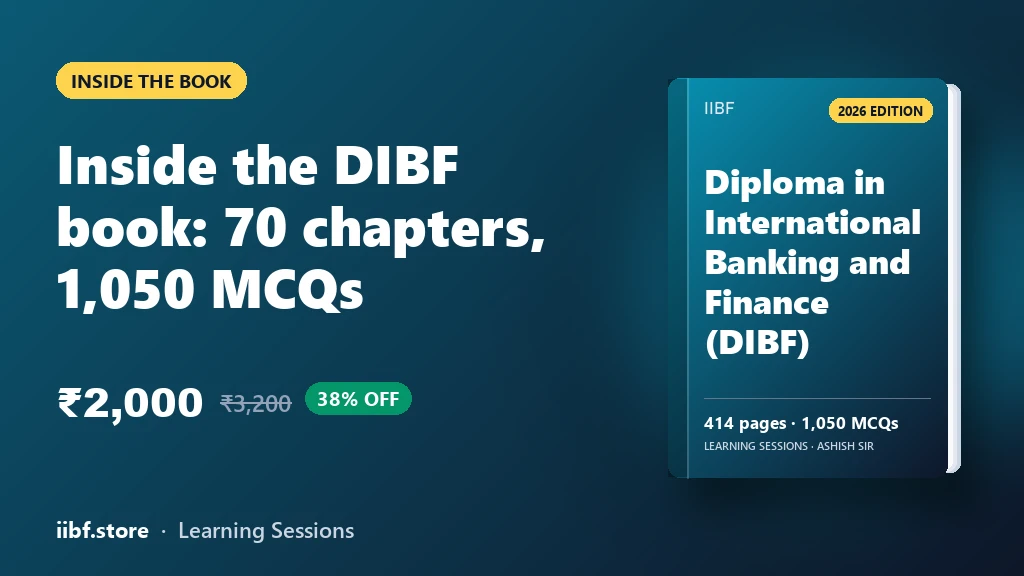
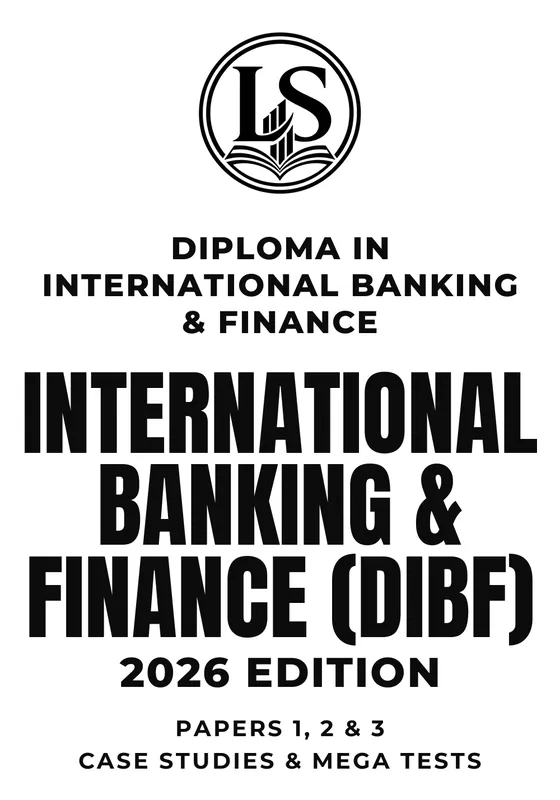
The Diploma in International Banking and Finance (DIBF) printed book is a 2026 edition of 414 pages, split into three volumes, one per paper. Across them there are 70 chapters. The module count per paper is not equal, and that matters for planning your weeks.
- Paper 1: 11 modules and 25 chapters, covering global trends, wholesale and retail banking, offshore centres, asset liability management, investment banking, correspondent banking, international institutions, treasury, FEMA and trade finance.
- Paper 2: 11 modules and 22 chapters, covering regulation and Basel norms, international law, loan agreements and covenants, country risk, debt management, anti-money laundering, maritime frauds, competitiveness, accounting standards and arbitration.
- Paper 3: 10 modules and 23 chapters, covering lending to MNCs, rating agencies, ECBs and FCNR(B), bond markets, RUF and NIF, syndicated loans, project finance, corporate treasury, derivatives and foreign investment.
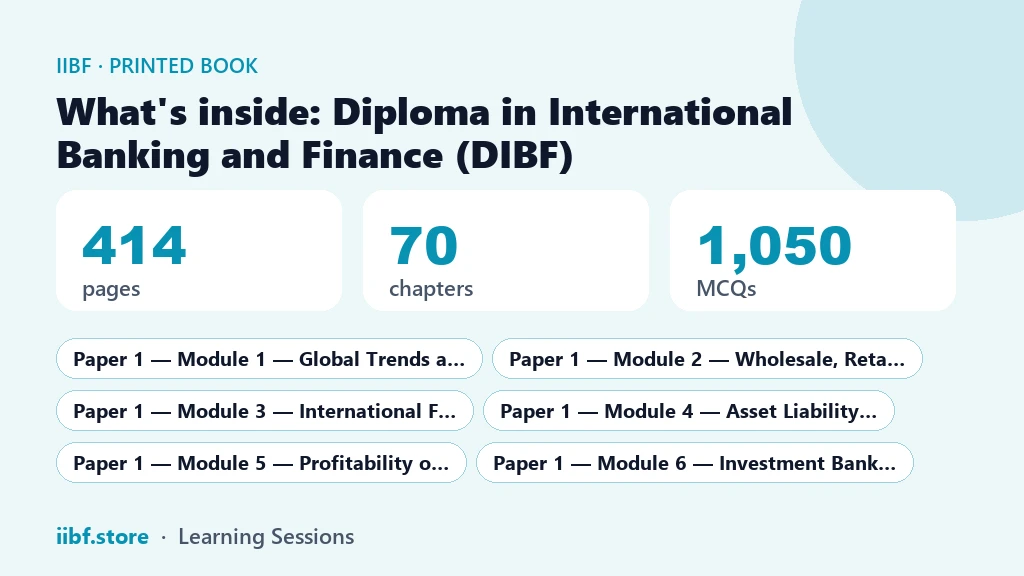
Notice how uneven the weight is. Module 11 of Paper 1 (letters of credit, ICC rules and trade finance) alone has seven chapters: Letters of Credit parties and lifecycle, LC documents and discrepancies, UCP 600, documentary collections and URC 522, bank reimbursements and URR 725, buyers' and suppliers' credit, and bilateral trade with countertrade. If trade finance is new to you, that single module deserves several evenings. Most modules, by contrast, have one or two chapters and can be finished in a sitting.
What one chapter looks like
Every chapter in this book follows the same rhythm: concise notes, then key points, then MCQs. The sameness is a feature. After the first two chapters you stop wondering how to approach a page and just read.
Concise notes
With 414 pages covering 70 chapters, the notes are meant to be compact rather than encyclopaedic. That is a trade-off. You will not find every footnote of every international convention, but you will get the explanation you need to answer a question, in a length you can finish while tired.
Key points
The key points are what you revise on the metro, on a lunch break or the night before the paper. Treat them as your second-pass material. First read the notes slowly once, then return only to the key points for later revision rounds.
MCQs at the end of the chapter
The book carries 1,050 questions in all. Spread over 70 chapters, that works out to about 15 per chapter on average. Attempting them straight after reading is the cheapest test of whether the notes really stayed with you. If you miss a question, mark the page and go back to that key point. Do not just read the answer and move on.
The three extras beyond the chapters
The listing for the book describes three extras on top of the chapter content:
- Three volumes for Papers 1, 2 and 3, so you carry only the paper you are working on.
- 130 case studies, carrying 520 questions. Case-style questions train you to read a situation and apply a concept, which is different from recalling a definition.
- 15 mega tests, carrying 1,500 questions. These are your full-length practice once the chapters are done.
Add it up: 1,050 chapter MCQs, 520 case-study questions and 1,500 mega-test questions. That is a large practice pool, and it is where most of your marks will be made, so do not leave it for the last three days.
A four-step evening routine for the DIBF study book
Here is a routine you can run in 60 to 90 minutes after work. It works for any module, with any material.
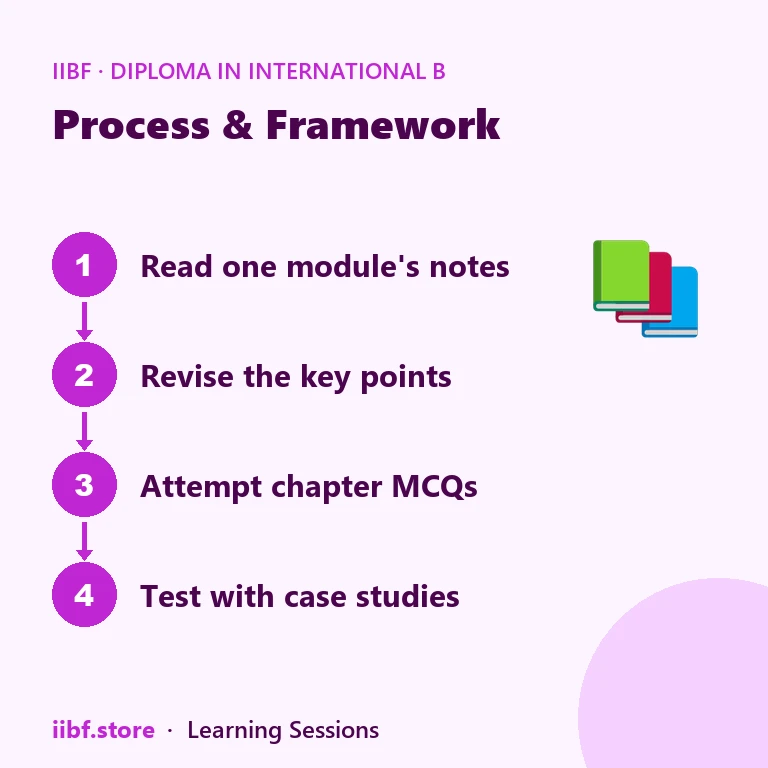
- Read one module's notes. One module, not one paper. If it has a single chapter, finish the chapter. If it has seven, split across nights.
- Revise the key points. Close the notes and say the key points aloud or write them on paper. Gaps show up immediately.
- Attempt the chapter MCQs. Time yourself loosely. Note wrong answers in a small notebook with the reason for your mistake.
- Test with case studies. Once you have finished a whole paper, pick a few case studies and apply what you read.
On weekends, add one mega test and spend as much time reviewing it as you spent attempting it. The review is where the learning happens.
A paper-wise planning table
Use the numbers below to size your weeks. The chapter counts come straight from the book's contents; the pace is your call.
| Paper | Modules | Chapters | Heaviest module |
|---|---|---|---|
| Paper 1 | 11 | 25 | Module 11: Letters of Credit, ICC Rules and Trade Finance (7 chapters) |
| Paper 2 | 11 | 22 | Module 1: Regulatory Framework and Basel Norms (5 chapters) |
| Paper 3 | 10 | 23 | Module 1: Lending to MNCs, Documentation and Monitoring (4 chapters) |
Table: how the DIBF study book divides its 70 chapters across the three papers.
If you only have time for a few chapters a week, put your first hours into the heavy modules, because they hold more of the paper and teach vocabulary that later modules reuse. For example, Basel and liquidity standards in Paper 2 help you understand treasury and capital questions elsewhere.
Pair the book with free practice
No printed book alone gives you exam-hall speed. Speed comes from solving many questions under time pressure, and a book can only supply so many. Use the free mock tests on iibf.store/tests to practise on screen, and browse the free study material for supplementary PDFs. If you want to see how the notes read before spending anything, there is a free sample on the book page. Prices can change, so treat the book page as the current source: at the time of writing the book is listed at ₹2,000 against an MRP of ₹3,200, a 38% saving.
You can also look at the rest of the printed range at iibf.store/books if you are comparing options for other certificates.
Who gets the most out of this DIBF study book
This book suits you if:
- You work full time and need a fixed, repeatable routine rather than a big reading project.
- You like paper in your hands at night, away from phone notifications.
- You want questions to be abundant: more than a thousand chapter MCQs plus case studies and mega tests.
- You are new to international banking and need a module-by-module map before anything else.
It will help you less if you already work daily in a forex or trade-finance desk and only need a quick refresher on one topic, or if you prefer reading long-form reference texts with every exception spelled out. Be honest about which reader you are before you order.
Whatever you choose, remember the point of this article: a syllabus shrinks when you can see its shape. Start with Module 1 of Paper 1, finish it, test yourself, and let the next evening be easier than the last.
Frequently asked questions
How many chapters and questions does the book have?
The 2026 printed edition has 414 pages, 70 chapters and 1,050 chapter-end questions, plus 130 case studies with 520 questions and 15 mega tests with 1,500 questions.
Is the book split by paper?
Yes. It comes in three volumes, one each for Paper 1, Paper 2 and Paper 3, so you can carry and study one paper at a time.
Is there a sample before I order?
Yes, the book page offers a free sample. Open it, read one chapter and judge for yourself whether the notes, key points and MCQs suit how you study.
Will this book alone be enough to pass?
No book can promise that. Use it for notes and practice, add timed mock tests, and check the official IIBF site for the syllabus and the upcoming exam cycle.
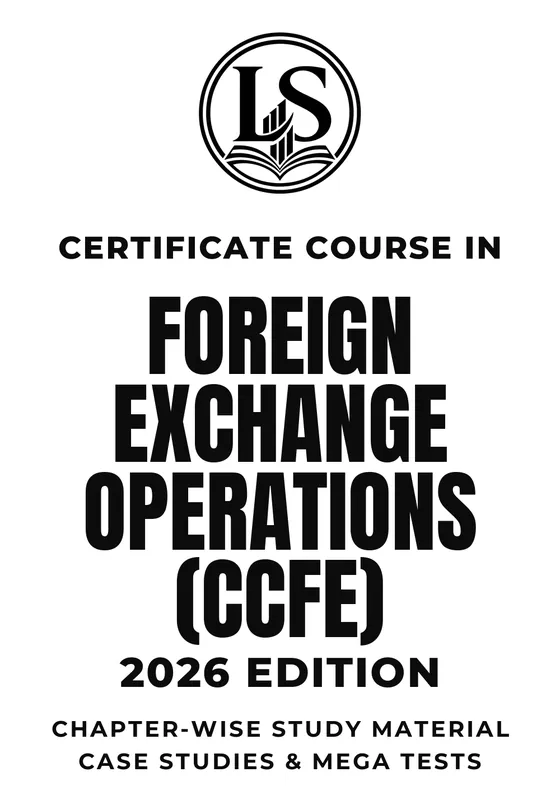
Prefer revising from a printed book?
Chapter-wise books with MCQs after every chapter — minimal pages, complete coverage, delivered anywhere in India. Every book has a free sample to read first.




















Practice this topic
Take a free mock test, download chapter PDFs, or watch a video class — all included on iibf.store.