National Cyber Crime Reporting Portal: A Banker's IIBF Guide
Every banker preparing for the Prevention of Cyber Crime paper eventually meets a question on the national cyber crime reporting portal — the single-window facility that lets an Indian citizen, and by extension a bank's fraud team, register a cyber offence without walking into a police station. Understanding how this portal works, who runs it, and how it links to a bank's own fraud-response desk is now core exam territory. This article walks through the mechanism end to end, with the numbers and workflow you need for the test.
📱 What the Portal Is and Who Runs It
The portal, accessible at cybercrime.gov.in, is operated by the Indian Cyber Crime Coordination Centre (I4C), a scheme of the Ministry of Home Affairs created to give India's fragmented state-wise cyber policing a unified backbone. Before this system existed, a victim in one state whose money moved through banks in three other states had almost no practical way to get fast, coordinated action — each jurisdiction's police had to be approached separately, and by the time paperwork moved the money was long gone.
The portal fixes this by acting as a common intake layer that pushes complaints to the correct police station based on the nature and location of the offence, while simultaneously making certain complaint categories visible to banks and payment intermediaries in near real time. For candidates studying Introduction To Cyber Crimes, this is the practical face of the theory — the institutional response layer that sits behind every definition of a cybercrime.
💡 Exam Tip: Remember the sponsoring ministry is Home Affairs, not RBI or MeitY — RBI's role begins only after a complaint touches a regulated bank or NBFC.
💰 The 1930 Helpline and the Golden Hour
The portal's most exam-relevant feature is its financial-fraud arm, built around the toll-free helpline 1930. A victim who calls within minutes of an unauthorised debit — a fraudulent UPI transfer, a fake investment app withdrawal, or a phishing-linked net-banking transaction — triggers what the system calls the golden hour: the narrow window in which funds are still sitting in the beneficiary account and can be technically frozen before the fraudster moves or withdraws them.
The call feeds directly into the Citizen Financial Cyber Fraud Reporting and Management System (CFCFRMS), a back-end layer that alerts the beneficiary bank, wallet, or payment gateway to place an immediate hold on the disputed funds pending investigation. Speed is everything here — a complaint lodged the same day has a materially higher recovery probability than one filed a week later, once the money has moved through two or three hop accounts.
⚠️ Common Mistake: Students often assume 1930 files an FIR instantly. It does not — it triggers a fund-freeze request; the formal First Information Report follows separately once the police station takes up the case.
🏦 How Banks Interface with the Reporting Ecosystem
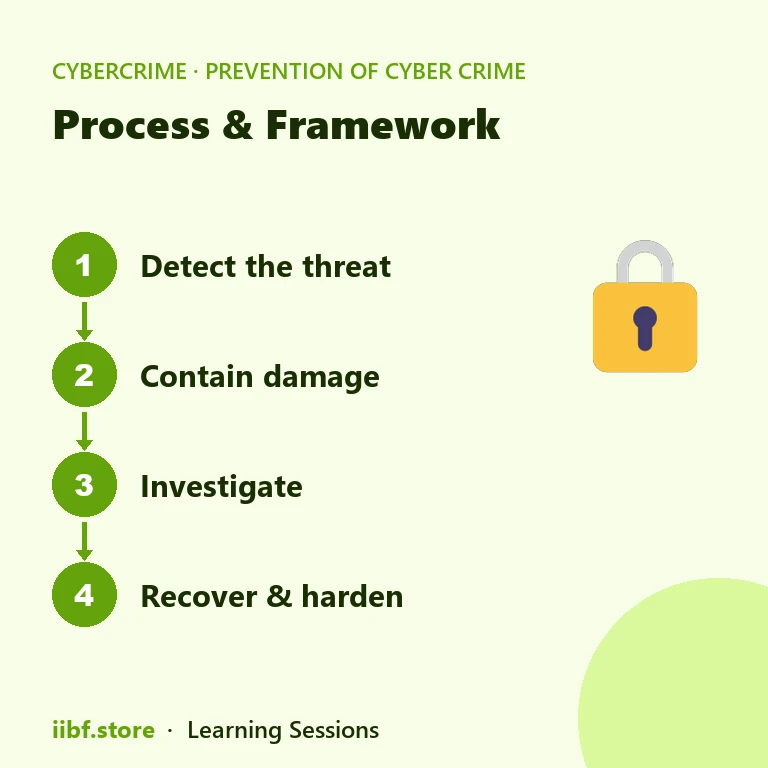
For a bank, the portal is not a spectator system — it is an operational partner. Every scheduled commercial bank, payments bank, and most NBFCs are onboarded as reporting entities on CFCFRMS, with a designated nodal officer authorised to act on freeze alerts flowing in from the 1930 desk or the web portal. When an alert lands, the bank's fraud-risk-management unit must verify the flagged account, place a lien or hold within its own core banking system, and respond back into the platform confirming the action taken.
This loop is the practical extension of what candidates cover under Regulatory Compliance — a bank that fails to act on a validated freeze request within a reasonable window exposes itself to both regulatory scrutiny and reputational damage, quite apart from the harm to the customer. Just as a treasury desk continuously measures rate-sensitivity through gap analysis in banks, a fraud-risk unit must continuously measure how fast alerts convert into holds — the metric that ultimately decides whether golden-hour freezes actually protect customer money.
📋 Complaint Categories and the Filing Procedure
The portal splits complaints into three broad streams: financial fraud (routed through the 1930/CFCFRMS pathway), women and child related crime (which permits anonymous reporting and can be filed without full identity disclosure), and a general other cyber crimes category covering hacking, data theft, identity fraud, and similar offences. Anonymous filing is deliberately restricted for financial-fraud complaints, because recovering funds requires transaction references, account details, and a traceable complainant.
A complainant supplies the incident description, supporting evidence such as screenshots or transaction IDs, and — for financial cases — the specific bank account, UPI handle, or card details involved. The system generates an acknowledgement number that the complainant can use to track status, and larger or high-value cases are escalated to a state cyber cell for detailed investigation. This filing discipline mirrors what candidates study under Channels Of Cyber Crimes, where the medium of the attack determines the evidence trail a victim must preserve.
| Feature | Financial Fraud Path (1930 / CFCFRMS) | General Cyber Crime Path |
|---|---|---|
| Entry point | 1930 helpline or portal | Portal only |
| Anonymous filing | ❌ Not permitted | ✅ Permitted (except women/child cases needing follow-up) |
| Bank alerted automatically | Yes, in near real time | No, unless separately escalated |
| Golden-hour fund freeze | Core feature | Not applicable |
| Typical escalation | Beneficiary bank + state cyber cell | Jurisdictional police station |
⚖️ Legal Backbone and Bank Obligations
The portal does not create new offences — it is a reporting and coordination mechanism layered over existing law, chiefly the Information Technology Act and the criminal statutes that govern fraud and theft. Its value for IIBF candidates lies in seeing how procedural law and banking operations meet: the portal is where a customer's cyber complaint becomes a bank's compliance obligation. This intersection is exactly what the Cyber Laws In India chapter builds toward — statutes on one side, operational response on the other.
Banks are also expected to maintain their own internal escalation matrix so that a customer complaint reaching a branch, a call centre, or the nodal officer is logged and pushed into the CFCFRMS loop without delay, rather than waiting for the customer to separately dial 1930. Delay at this stage is the single biggest reason recoverable frauds become unrecoverable, since fraudulent funds typically move through multiple mule accounts within hours.
📌 Remember: The portal complements, it does not replace, a bank's own fraud desk — both channels should be triggered together for the fastest possible freeze.
🧠 Practice MCQs: National Cyber Crime Reporting Portal
Q1. Which body operates the National Cyber Crime Reporting Portal? (a) Reserve Bank of India (b) Indian Cyber Crime Coordination Centre (c) Securities and Exchange Board of India (d) National Payments Corporation of India
Answer: (b) — I4C, under the Ministry of Home Affairs, operates cybercrime.gov.in.
Q2. The toll-free helpline number for reporting financial cyber fraud is: (a) 1800 (b) 1930 (c) 155260 alone with no successor (d) 100
Answer: (b) — 1930 is the current dedicated financial-fraud helpline feeding into CFCFRMS.
Q3. The "golden hour" in cyber fraud reporting refers to: (a) the RBI's daily settlement window (b) the short period in which fraudulent funds can still be frozen before withdrawal (c) banking hours during which branches accept complaints (d) the 24-hour period to file an FIR
Answer: (b) — Quick reporting lets the beneficiary bank place a hold before funds are moved or withdrawn.
Q4. Anonymous complaint filing on the portal is restricted for: (a) hacking complaints (b) women and child related crime (c) financial fraud complaints (d) data theft complaints
Answer: (c) — Financial-fraud cases need traceable account and transaction details to enable a fund freeze, so anonymous filing is not allowed.
Q5. On CFCFRMS, a bank's primary operational responsibility on receiving a freeze alert is to: (a) close the customer's account (b) verify the flagged account and place a hold, then confirm action on the platform (c) ignore it until police visit the branch (d) inform only the RBI ombudsman
Answer: (b) — The designated nodal officer must act on the alert promptly and confirm the hold back into the system.
Want chapter-wise mock tests with 100+ MCQs? Start practising free →
❓ Frequently Asked Questions
Is the National Cyber Crime Reporting Portal only for financial fraud?
No. It also covers women and child related crime and a general category for hacking, data theft, and other cyber offences, though only the financial-fraud stream is linked to the 1930 golden-hour freeze mechanism.
Can a bank customer call 1930 directly, or must they go through the branch?
A customer can call 1930 directly the moment fraud is noticed. Banks also encourage customers to simultaneously alert the branch or bank helpline so the internal fraud desk can act in parallel.
Does filing a complaint on the portal guarantee recovery of funds?
No. It significantly improves the chance of a freeze if reported within the golden hour, but recovery still depends on how quickly funds moved and whether the beneficiary account still holds a traceable balance.
Which ministry oversees the portal and the I4C?
The Ministry of Home Affairs oversees the Indian Cyber Crime Coordination Centre, which runs the portal, coordinates with state police, and interfaces with banks and payment intermediaries through CFCFRMS.
Stay ahead on cyber-crime prevention topics
The reporting ecosystem around cybercrime.gov.in is a recurring theme across IIBF's Prevention of Cyber Crime curriculum, and it connects naturally to related areas such as Cyber Crime under BNS 2023, customer liability in unauthorised transactions, and types of hackers in cyber security. For the official complaint interface and current advisories, refer to cybercrime.gov.in. Keep building your exam edge with more updates at IIBF news and updates.
Prefer revising from a printed book?
Chapter-wise books with MCQs after every chapter — minimal pages, complete coverage, delivered anywhere in India. Every book has a free sample to read first.
132 pages · 225 MCQs
Learning Sessions · Ashish Sir
188 pages · 435 MCQs
Learning Sessions · Ashish Sir
117 pages · 236 MCQs
Learning Sessions · Ashish Sir
Learning Sessions · Ashish Sir
118 pages · 299 MCQs
Learning Sessions · Ashish Sir
Learning Sessions · Ashish Sir
Learning Sessions · Ashish Sir
Learning Sessions · Ashish Sir
115 pages · 255 MCQs
Learning Sessions · Ashish Sir
Learning Sessions · Ashish Sir
334 pages · 936 MCQs
Learning Sessions · Ashish Sir
Learning Sessions · Ashish Sir
115 pages · 344 MCQs
Learning Sessions · Ashish Sir
107 pages · 240 MCQs
Learning Sessions · Ashish Sir
90 pages · 150 MCQs
Learning Sessions · Ashish Sir
Learning Sessions · Ashish Sir
131 pages · 672 MCQs
Learning Sessions · Ashish Sir
221 pages · 831 MCQs
Learning Sessions · Ashish Sir
128 pages · 524 MCQs
Learning Sessions · Ashish Sir
107 pages · 445 MCQs
Learning Sessions · Ashish Sir
148 pages · 478 MCQs
Learning Sessions · Ashish Sir
151 pages · 465 MCQs
Learning Sessions · Ashish Sir
148 pages · 375 MCQs
Learning Sessions · Ashish Sir
216 pages · 895 MCQs
Learning Sessions · Ashish Sir
109 pages · 300 MCQs
Learning Sessions · Ashish Sir
104 pages · 360 MCQs
Learning Sessions · Ashish Sir
82 pages · 297 MCQs
Learning Sessions · Ashish Sir
151 pages · 600 MCQs
Learning Sessions · Ashish Sir
98 pages · 282 MCQs
Learning Sessions · Ashish Sir
Practice this topic
Take a free mock test, download chapter PDFs, or watch a video class — all included on iibf.store.