Open Banking in India: A Complete Guide for the IIBF Digital Banking Exam
Open banking in India is one of the most testable themes in the IIBF Digital Banking course, because it ties together technology, regulation and customer consent into a single ecosystem that candidates must understand end to end. In simple terms, open banking is a framework in which banks and financial institutions securely share customer financial data with regulated third parties, but only with the customer's explicit, revocable consent. For the exam you should be able to explain what open banking is, how it differs from traditional closed banking, and which regulatory rails make it work in India. This article walks through the concept, the enabling infrastructure, the risks, and the way examiners frame questions on the topic.
What open banking means in the Indian context
Traditional banking kept customer data locked inside each bank's own systems. A borrower who wanted a loan from a new lender had to physically collect statements, get them stamped, and hand them over. Open banking replaces that friction with secure, consent-driven, machine-readable data sharing through Application Programming Interfaces (APIs). An API is simply a standardised way for one system to request data or a service from another. When a customer permits it, a fintech app can call a bank's API to read account balances or transaction history, or to initiate a payment, without ever seeing the customer's login password.
In India the model is often described as consent-led rather than mandate-led. Unlike some jurisdictions where regulators forced banks to open APIs, India built its version around customer consent and a purpose-built intermediary layer. This is a favourite distinction in the Digital Banking paper: candidates are expected to know that Indian open banking rests on the twin pillars of the Unified Payments Interface for payments and the Account Aggregator ecosystem for data. For a broader grounding in how these digital rails fit together, review the Overview of Digital Banking class notes, which set out the ecosystem before drilling into each channel. Understanding this consent-first design is the single most important framing for scoring on this topic.
The infrastructure that powers open banking
Open banking in India does not run on one system; it runs on a stack of interoperable public digital infrastructure. At the base sits Aadhaar-enabled identity and e-KYC, which lets a bank verify a customer digitally. Above that sit the payment rails, chiefly UPI, operated under the umbrella of the National Payments Corporation of India (NPCI). On top of the data layer sit Account Aggregators (AAs), which are RBI-licensed Non-Banking Financial Companies that act purely as consent managers and data pipes. Crucially, an AA cannot read or store the data it moves; it only carries encrypted information from a data provider to a data consumer once the customer has approved a specific, time-bound consent.
This separation of roles is what makes the framework safe and examinable. The bank or insurer that holds the data is the Financial Information Provider (FIP); the lender or advisor that wants it is the Financial Information User (FIU); the AA is the neutral middle. Payment initiation, meanwhile, flows through channels such as UPI and cards, which candidates should connect to the wider self-service estate covered in the POS (Point of Sale) and ATMs chapters. The official architecture and licensing conditions are set out by the regulator, and you can confirm the current framework directly on the RBI website. Knowing which entity plays which role is exactly the kind of one-mark discriminator IIBF likes to use.
Roles, rails and how they compare
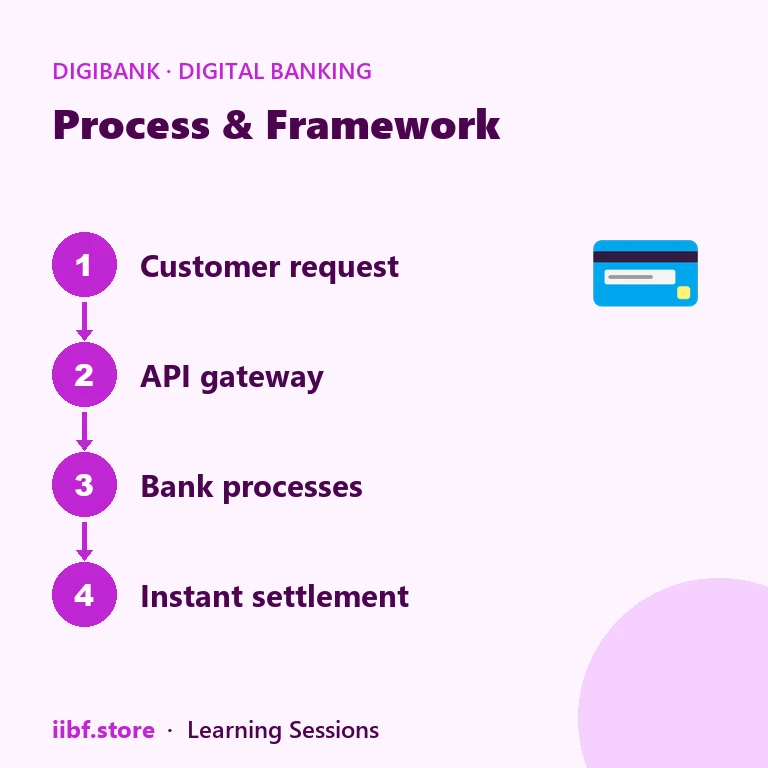
To answer scenario questions quickly, it helps to hold a clear mental map of the players and the rails they sit on. Examiners frequently give a short situation, such as a lending app pulling six months of bank statements, and ask you to name the intermediary or the licence involved. The table below summarises the core building blocks of open banking in India, what each does, and who regulates or operates it. Memorising this grid turns a slow reasoning question into a fast recall question.
| Building block | What it does | Regulator / operator |
|---|---|---|
| UPI | Real-time payment initiation and transfers via APIs | NPCI (under RBI) |
| Account Aggregator (AA) | Consent-based sharing of financial data; cannot read the data | RBI-licensed NBFC-AA |
| Financial Information Provider (FIP) | Holds and shares customer data (bank, insurer, etc.) | Respective sectoral regulator |
| Financial Information User (FIU) | Consumes shared data to offer a product (e.g. a lender) | Respective sectoral regulator |
| e-KYC / Aadhaar identity | Digital customer verification underpinning onboarding | UIDAI / RBI KYC norms |
Notice that open banking is not a single regulator's product; it is a cooperative arrangement across the RBI, SEBI, IRDAI and PFRDA, each supervising the FIPs and FIUs in its own sector while the RBI licenses the AA layer. This multi-regulator design is worth a line in any descriptive answer, because it explains why interoperability standards matter so much. You can test your recall of these roles in a timed setting on the IIBF practice tests.
Benefits, risks and exam-relevant safeguards
The benefits of open banking in India are usually framed around three outcomes: faster credit, deeper financial inclusion, and better-tailored products. Because a lender can pull verified bank statements in seconds, digital lending decisions that once took days can happen in minutes, which directly supports the Financial Inclusion goals the syllabus emphasises. Small businesses and thin-file borrowers gain access to formal credit because their transaction data becomes a substitute for collateral. These are strong points to list in any essay-style answer.
But the exam also expects a balanced view of the risks. Data privacy is the headline concern: more data flowing between institutions widens the attack surface, so consent must be granular, purpose-limited and time-bound. Cyber fraud, phishing and consent fatigue are recurring themes, and candidates should know that the AA design deliberately blinds the intermediary to the data to reduce misuse. Compliance with the RBI's data-localisation and outsourcing guidelines is mandatory for every participant. Keep an eye on evolving rules through the IIBF news and updates page, and consolidate the wider chapter context using the Digital Banking article hub. A good answer always pairs each benefit with its corresponding safeguard.
Frequently asked questions
What is open banking in India in simple terms?
It is a consent-driven framework where banks and financial institutions share customer financial data or payment access with regulated third parties through secure APIs, but only after the customer gives explicit, revocable permission. It rests mainly on UPI for payments and the Account Aggregator ecosystem for data sharing.
What is the role of an Account Aggregator in open banking?
An Account Aggregator is an RBI-licensed NBFC that acts as a neutral consent manager and data pipe between a Financial Information Provider and a Financial Information User. It moves encrypted data only after customer consent and cannot itself read or store that data.
Which regulators are involved in India's open banking framework?
It is a multi-regulator arrangement. The RBI licenses the Account Aggregators and oversees banking and payments, while SEBI, IRDAI and PFRDA supervise data providers and users in the securities, insurance and pension sectors respectively.
How does open banking help digital lending and financial inclusion?
By letting a lender pull verified bank-statement data in seconds with the borrower's consent, it cuts loan-approval time from days to minutes and lets thin-file borrowers use transaction history as a substitute for collateral, widening access to formal credit.
Conclusion and next step
Open banking in India is best understood as a consent-first ecosystem built on public digital infrastructure, where UPI carries payments, Account Aggregators carry data, and a web of regulators keeps the whole thing interoperable and safe. For the IIBF Digital Banking exam, focus on the roles (FIP, FIU, AA), the consent principles, and the benefit-versus-risk balance. To cement these concepts and see how they are actually questioned, take a timed mock on the IIBF Digital Banking practice tests and revise alongside the Retail Banking - Digital Banking Class 12 notes. Practise a few full sets today and open banking questions will become quick, confident marks.
Quick quiz on this topic
5 exam-style questions from our free test bank — check yourself before you move on.
Practice this topic
Take a free mock test, download chapter PDFs, or watch a video class — all included on iibf.store.
Keep reading