Operational Risk Management: RCSA, KRIs and RAROC for IIBF
Operational risk is the risk of loss arising from inadequate or failed internal processes. People and systems, or from external events. For candidates pursuing the IIBF certification in Risk Management.
Mastering operational risk is essential. Because it sits alongside credit. Market risk as one of the three pillars a bank must measure.
Monitor and capitalise.
Unlike credit risk. Which lives in the loan book. Operational risk hides everywhere — in a fraudulent transaction.
A mis-keyed payment. A cyber breach, a flooded branch or a botched product launch. This guide walks through the core toolkit: risk and control self-assessment.
Key risk indicators. Loss event data. The Basel approaches to capital, and RAROC for risk-based pricing.
Risk and Control Self-Assessment (RCSA)
Risk and control self-assessment, or RCSA, is the cornerstone of any operational risk framework. It is a structured, bottom-up exercise in which each business unit identifies the operational risk events it faces, scores their likelihood and impact, evaluates the controls already in place, and then judges the residual risk that survives those controls. The output is typically a heat map that ranks inherent risk, control effectiveness and residual risk on a colour-coded grid, making it easy for management to see where attention is needed. RCSA is forward-looking and qualitative, which makes it the perfect complement to the backward-looking, quantitative loss data discussed later. A well-run RCSA cycle does three things: it forces business owners — not just the risk department — to take responsibility for their own risks, it surfaces control gaps before they turn into losses, and it builds a documented risk register that feeds capital planning and audit. Workshops, questionnaires and facilitated scoring sessions are the usual delivery methods. The danger to guard against is "tick-box" assessment, where units understate risks to look good; strong challenge from an independent operational risk function keeps the exercise honest. For exam purposes, remember that RCSA measures residual risk after controls, and that it is a self-assessment owned by the first line of defence. You can test your recall on these concepts with our mock tests.
Key Risk Indicators and Loss Event Data
If RCSA tells you what could go wrong, key risk indicators (KRIs) and loss event data tell you what is going wrong and what already has. KRIs are forward-looking metrics that act as early-warning signals — staff attrition in a critical team, the number of failed settlements, system downtime, the volume of customer complaints, or overdue reconciliations. Each KRI is given thresholds (green, amber, red) so that a breach triggers escalation before a loss crystallises. Effective KRIs are measurable, predictive and linked to a specific operational risk, not vanity numbers collected for their own sake. Loss event data, by contrast, is the historical record of operational risk losses actually suffered, captured in an internal loss database and classified by Basel event type — internal fraud, external fraud, employment practices, clients and products, damage to physical assets, business disruption, and execution and delivery failures. Banks also subscribe to external loss consortia to learn from events at peer institutions, covering tail risks they may never have experienced themselves. Together, KRIs and loss data close the feedback loop: losses reveal which controls failed, RCSA reassesses the risk, and KRIs are tuned to catch the next occurrence earlier. Strengthen this topic with structured study on the CAIIB risk course and reinforce the Basel event taxonomy through our match-the-terms game.
Basel Approaches to Operational Risk Capital
Banks must hold regulatory capital against operational risk, and the Basel framework historically offered a menu of approaches of rising sophistication. Under the Basic Indicator Approach (BIA), capital is a flat percentage (alpha, set at 15%) of average positive gross income over three years — simple but blunt. The Standardised Approach (TSA) refines this by splitting the bank into eight business lines, each with its own beta factor, recognising that corporate finance carries different operational risk from retail banking. The Advanced Measurement Approach (AMA) allowed sophisticated banks to model their own capital using internal loss data, external data, scenario analysis and business-environment factors. Recognising that AMA produced inconsistent, hard-to-compare results, the Basel Committee replaced this menu with a single Standardised Approach for operational risk under the Basel III finalisation. The new method combines a Business Indicator Component, derived from income and expense items, with an Internal Loss Multiplier that scales capital up for banks with a poor loss history — explicitly rewarding good operational risk management with lower capital. Indian banks follow the timelines and approaches notified by the Reserve Bank of India, so candidates should always cite RBI guidelines for the local position. You can review the global standards on the Bank for International Settlements website and track domestic policy on our RBI rates and policy tracker.

RAROC and Risk-Based Pricing
Measuring operational risk is only half the job; the other half is pricing it. Risk-Adjusted Return on Capital (RAROC) is the metric that links risk back to profitability, defined broadly as risk-adjusted net income divided by the economic capital allocated to an activity. Economic capital here includes a buffer for unexpected operational risk losses alongside credit and market risk. By comparing the RAROC of a product, customer or business line against the bank's hurdle rate — its cost of capital — management can decide whether an activity creates or destroys shareholder value. A high-volume payments business with thin margins but heavy operational risk capital may look unattractive once RAROC is applied, while a well-controlled line that consumes little capital may justify expansion. This makes RAROC a powerful tool for risk-based pricing: loans and services that carry more operational risk, and therefore more capital, must be priced to earn an adequate return on that capital. It also guides capital allocation, performance measurement and incentive design, ensuring that managers are not rewarded for chasing income while ignoring the risk it generates. For the IIBF Risk Management exam, be ready to explain how RAROC differs from a simple ROA, why economic capital rather than accounting capital sits in the denominator, and how it operationalises the risk-return trade-off. Stay current with regulatory developments through our IIBF news feed.
Frequently Asked Questions
What is operational risk in banking?
Operational risk is the risk of loss from inadequate or failed internal processes. People and systems, or from external events. It includes fraud.
System failures. Human error. Legal exposure and disasters.
But excludes strategic. Reputational risk under the Basel definition used by most banks.
How does RCSA differ from loss event data?
RCSA is a forward-looking. Qualitative self-assessment of residual risk after controls, owned by business units. Loss event data is a backward-looking, quantitative record of losses already incurred.
Used together. They give a complete picture of both potential. Realised operational risk exposure.
What are the Basel approaches to operational risk capital?
Historically the Basic Indicator, Standardised and Advanced Measurement Approaches. Basel III finalisation replaced these with a single Standardised Approach combining a Business Indicator Component. An Internal Loss Multiplier. Rewarding banks that maintain a strong loss history with lower capital requirements.
Why is RAROC important for risk-based pricing?
RAROC measures return relative to the economic capital an activity consumes. Including a buffer for operational risk. Comparing it to the hurdle rate shows whether a product creates value. So banks price riskier. More capital-intensive services higher to earn an adequate, risk-adjusted return.
Conclusion
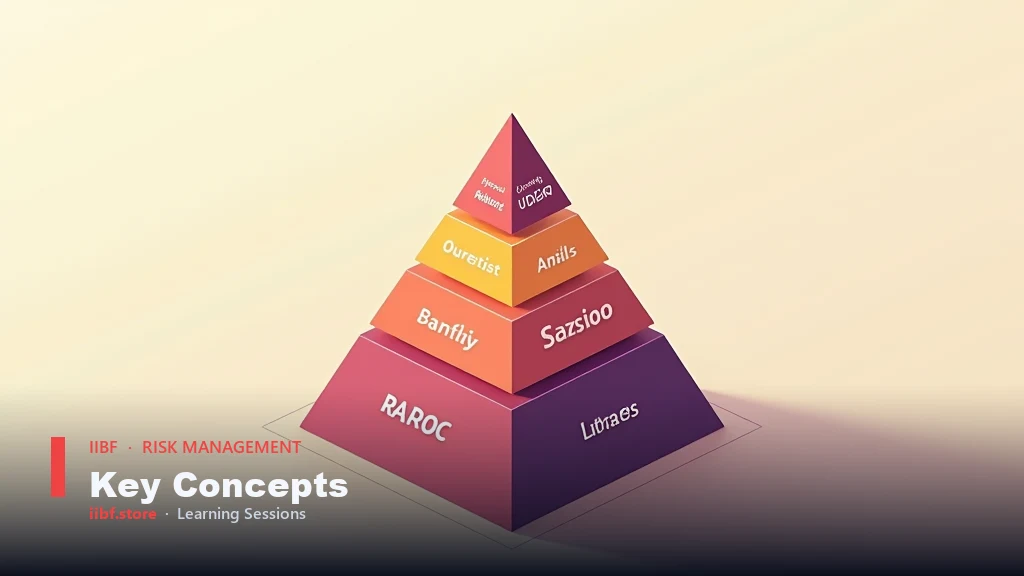
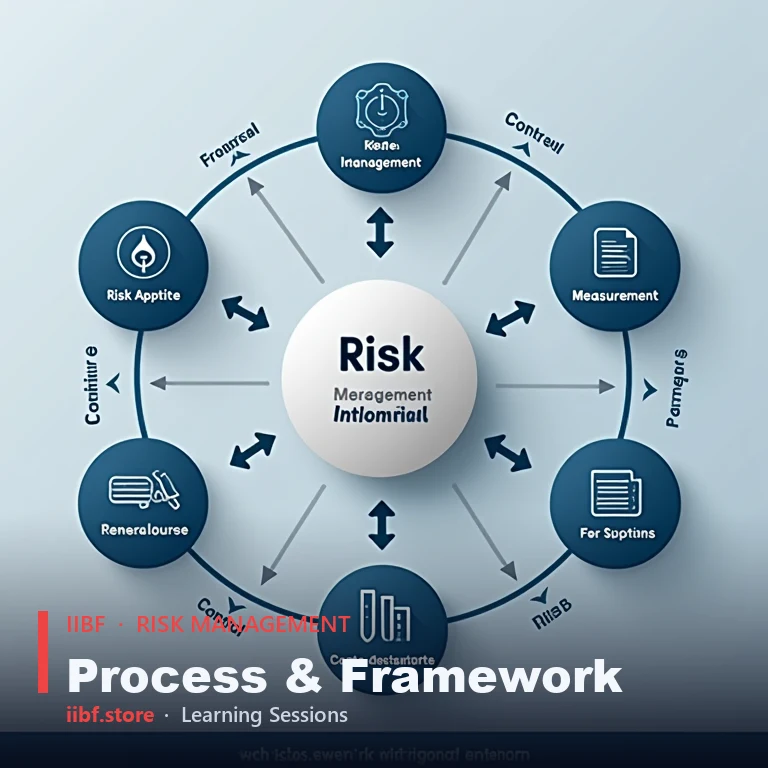
Operational risk management is best understood as a connected cycle: RCSA identifies and scores risks, KRIs warn of building pressure, loss event data records what actually happened, the Basel approaches translate all of this into regulatory capital, and RAROC prices that capital back into products. Anchor every new concept to this cycle and the IIBF Risk Management syllabus becomes far easier to revise. Ready to convert understanding into marks? Attempt a full-length Risk Management mock test and keep building depth with more guides on our banking exam blog.
Quick summary in plain words
In short: keep it simple.
Read each point slow.
Take notes as you go.
Use the free tests to check what you know.
Watch the video if a part feels hard.
Do a bit each day.
Ask us on WhatsApp if you get stuck.
You can pass this exam.
Stay calm and trust your prep.
Come back to this guide often.
Small steps add up fast.
Skim the box below first.
Quick summary in plain words
In short: keep it simple.
Read each point slow.
Take notes as you go.
Watch the video if a part feels hard.
Do a bit each day.
Ask us on WhatsApp if you get stuck.
You can pass this exam.
Stay calm and trust your prep.
Come back to this guide often.
Small steps add up fast.
Skim the box below first.
Quick summary in plain words
In short: keep it simple.
Read each point slow.
Take notes as you go.
Watch the video if a part feels hard.
Do a bit each day.
Ask us on WhatsApp if you get stuck.
You can pass this exam.
Stay calm and trust your prep.
Come back to this guide often.
Small steps add up fast.
Skim the box below first.
Quick summary in plain words
In short: keep it simple.
Read each point slow.
Take notes as you go.
Watch the video if a part feels hard.
Do a bit each day.
Ask us on WhatsApp if you get stuck.
You can pass this exam.
Stay calm and trust your prep.
Come back to this guide often.
Small steps add up fast.
Skim the box below first.
Practice this topic
Take a free mock test, download chapter PDFs, or watch a video class — all included on iibf.store.
Keep reading