RAROC Based Loan Pricing: How Banks Price Risk-Adjusted Rates
Not every loan that clears the credit committee is actually worth booking. A bank can price two loans at the same headline rate and still destroy value on one of them, because interest income alone never tells the full risk story. RAROC based loan pricing is the tool banks use to fix exactly this problem — it forces every lending decision to answer one question: does the return justify the capital this exposure ties up? For CAIIB Risk Management candidates, this is one of the most practical, numerically testable topics in the syllabus, and it connects directly to capital allocation, hurdle rates, and portfolio-level profitability.
📊 What RAROC Based Loan Pricing Actually Means
RAROC (Risk-Adjusted Return on Capital) reframes loan profitability around one central idea: a plain interest margin is meaningless unless it is measured against the capital consumed by the risk of that exposure. Two borrowers paying the identical 10% rate can generate very different economic value if one carries a much higher probability of default than the other.
Traditional pricing models start from cost of funds, add an operating margin, and stop there. RAROC based loan pricing goes further by charging each loan for the expected loss it is likely to generate and for the economic capital it consumes as a cushion against unexpected loss. The output is a risk-adjusted return figure that is comparable across products, tenors, and borrower segments — something a flat spread can never deliver.
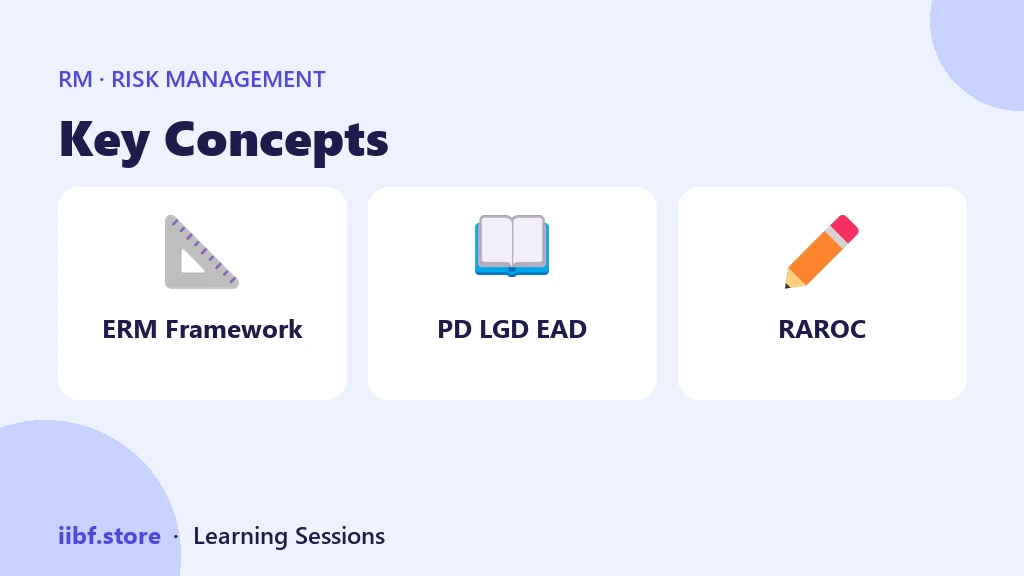
This is why RAROC sits inside the risk-based pricing toolkit alongside credit risk models: it takes PD, LGD and EAD style risk parameters as inputs and converts them into a single, capital-linked profitability number that senior management and the ALCO can act on.
💰 The RAROC Formula and Its Building Blocks
The standard construction is: RAROC = (Revenue − Cost of Funds − Operating Expenses − Expected Loss) ÷ Economic Capital. Each term matters for exam purposes and for real pricing decisions.
- Revenue: interest income plus fee income on the facility.
- Cost of funds: the bank's marginal or transfer-priced cost of raising the money lent out.
- Expected loss: the statistically anticipated loss, essentially PD × LGD × EAD, which is treated as a cost rather than a surprise.
- Economic capital: the capital buffer set aside for unexpected loss at a chosen confidence level, distinct from regulatory capital though influenced by it.
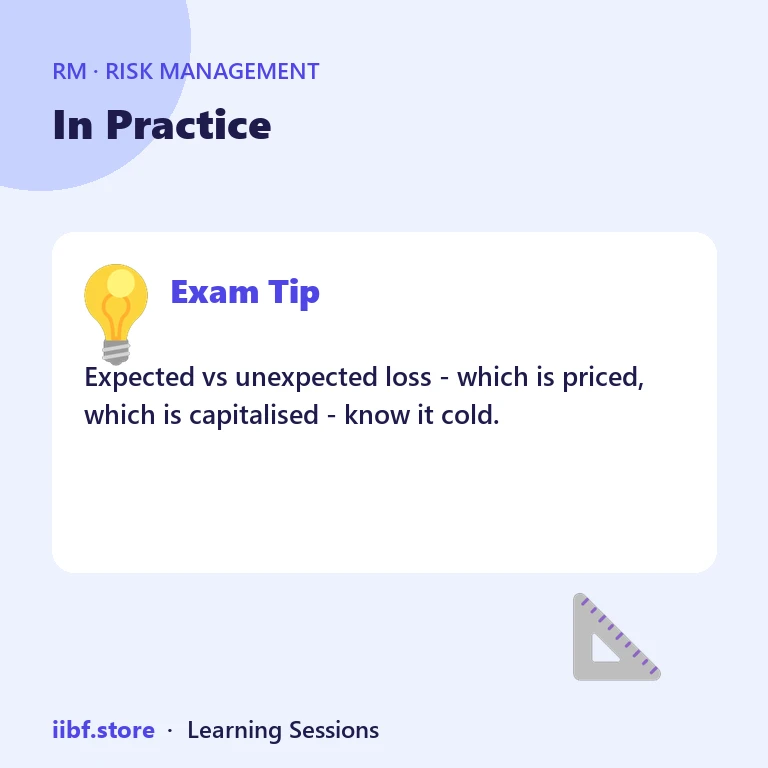
💡 Exam Tip: Expected loss is priced INTO the loan through the spread; economic capital is what absorbs UNEXPECTED loss and sits in the RAROC denominator. Mixing these two up is the most common numerical error candidates make.
Because economic capital is the denominator, a loan that is cheap in nominal terms but consumes a large capital allocation can still show a poor RAROC — which is exactly the signal the bank wants before it prices the facility. Economic capital models are built around the same capital-adequacy thinking that underlies the Reserve Bank of India's Basel III capital regulations, even though economic capital itself is an internal, not regulatory, number.
🏦 How Banks Apply RAROC in Loan Pricing Decisions
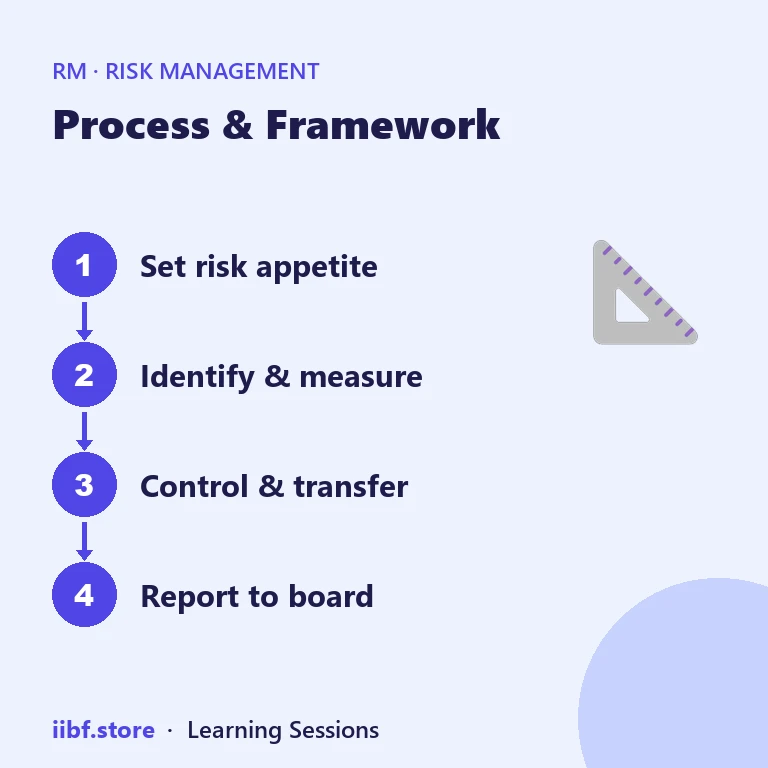
In practice, credit and treasury teams use RAROC based loan pricing at the point of sanction, not after disbursement. A relationship manager feeds the borrower's risk grade, tenor and collateral into the pricing model, which pulls PD/LGD/EAD estimates from the internal rating system to calculate implied economic capital.
The model then works backward from the bank's required RAROC to arrive at the minimum acceptable interest rate — effectively solving for the price rather than checking a price after the fact. If a borrower's risk profile demands a rate the market will not bear, the deal gets restructured (more collateral, shorter tenor, covenants) or declined rather than mispriced.
The same framework extends to portfolio management: banks rank existing exposures by RAROC to decide where to grow, hold, or exit, making it a live tool for both origination and ongoing book management.
⚖️ Hurdle Rates and Capital Allocation Across the Portfolio
A RAROC number is only useful when compared against a benchmark, and that benchmark is the hurdle rate — the minimum return on economic capital the bank's board expects, usually anchored to the bank's own cost of equity. A loan clears the bar only if RAROC ≥ hurdle rate.
This is also how RAROC becomes a capital allocation tool at the portfolio level. Business heads competing for a limited pool of economic capital are ranked by the RAROC their proposed growth generates, and capital flows toward the segments producing the highest risk-adjusted return rather than simply the highest nominal volume.
📌 Remember: RAROC compares against a hurdle rate tied to the cost of equity — it is a capital allocation discipline, not just a loan-pricing formula.
The same discipline underpins wider interest rate and balance sheet decisions covered under Asset Liability Management And Interest Rate Risk, where capital efficiency and pricing discipline are judged together rather than in isolation.
🚧 Limitations Every Candidate Should Know
RAROC based loan pricing is only as reliable as the risk parameters feeding it. If PD, LGD or EAD estimates are stale, poorly calibrated, or based on thin historical data — common for new products or SME segments — the resulting RAROC figure can mislead rather than inform.
The model can also encourage short-term thinking: chasing a favourable quarterly RAROC may push a business head away from genuinely strategic relationships that build franchise value over time. Correlation risk is another blind spot — RAROC is usually computed at the facility level and does not automatically capture concentration building up across many similar exposures.
⚠️ Common Mistake: Treating a single loan's RAROC in isolation and ignoring how it changes the portfolio's overall risk concentration is a frequent examiner trap — always read RAROC alongside portfolio-level exposure limits.
These limitations are precisely why RAROC frameworks evolved out of the post-crisis push for better capital discipline, a lineage candidates can trace back through Global Financial Crisis And Basel III, which reshaped how banks think about capital, not just credit, as a scarce resource.
| Feature | Traditional Margin Pricing | RAROC Based Loan Pricing |
|---|---|---|
| Adjusts for borrower risk grade | ❌ Rarely | ✅ Always |
| Links price to economic capital | ❌ No | ✅ Yes |
| Comparable across products/segments | ❌ Limited | ✅ Yes |
| Supports portfolio capital allocation | ❌ No | ✅ Yes |
| Depends on model/data quality | ✅ Less sensitive | ❌ Highly sensitive |
🧠 Practice MCQs: RAROC Based Loan Pricing
Q1. What does RAROC stand for? (a) Risk Adjusted Rate of Credit (b) Risk-Adjusted Return on Capital (c) Regulatory Asset and Risk Oversight Calculation (d) Return Adjusted for Risk on Credit
Answer: (b) — RAROC is Risk-Adjusted Return on Capital, the standard measure banks use to compare profitability across exposures of differing risk.
Q2. In the RAROC formula, the denominator typically represents: (a) Risk-free rate (b) Regulatory capital only (c) Economic capital allocated to the exposure (d) Total loan outstanding
Answer: (c) — RAROC divides risk-adjusted net income by the economic capital set aside to absorb unexpected loss on that exposure.
Q3. A bank compares two loans of equal size. Loan X has a much higher expected loss than Loan Y. Under RAROC based loan pricing, Loan X should generally carry: (a) A lower interest rate (b) The same interest rate irrespective of risk (c) A higher risk premium built into the rate (d) Waived processing fees
Answer: (c) — Higher expected loss must be recovered through the pricing spread, so Loan X needs a higher risk premium to protect RAROC.
Q4. The "hurdle rate" in a RAROC framework refers to: (a) The minimum capital adequacy ratio (b) The bank's target/minimum required return on economic capital (c) The maximum permissible NPA ratio (d) The repo rate set by RBI
Answer: (b) — The hurdle rate is the board-approved minimum return on economic capital, usually anchored to the bank's cost of equity, against which every RAROC figure is tested.
Q5. Which of the following is a recognised limitation of RAROC based loan pricing? (a) It ignores the time value of money (b) It cannot be used for retail loans (c) It depends heavily on the accuracy of underlying PD/LGD/EAD estimates (d) It is not permitted under Basel III
Answer: (c) — RAROC's reliability is only as good as the credit risk parameters feeding it; poorly calibrated PD/LGD/EAD estimates produce misleading RAROC figures.
Want chapter-wise mock tests with 100+ MCQs? Start practising free →
❓ Frequently Asked Questions
How is RAROC different from a simple return on capital (ROC) measure?
Plain ROC divides income by capital employed without adjusting the numerator for expected loss. RAROC explicitly deducts expected loss before dividing by economic capital, so it reflects risk twice over — once in the income adjustment and once in the capital denominator.
Is economic capital the same as regulatory capital under Basel norms?
No. Regulatory capital is the minimum a bank must hold under Basel/RBI capital adequacy rules. Economic capital is the bank's own internal estimate of capital needed to cover unexpected loss at a chosen confidence level, and the two figures can differ meaningfully.
Can RAROC based loan pricing be applied to retail loans, or only corporate credit?
It applies to both, though retail portfolios usually use pooled PD/LGD estimates by product and score band rather than facility-by-facility underwriting, since individual retail loans are too small to model separately.
How does RAROC relate to RORWA (return on risk-weighted assets)?
Both are risk-adjusted profitability measures, but RORWA uses regulatory risk-weighted assets as the denominator while RAROC uses internally modelled economic capital, which is usually more granular and risk-sensitive than the standardised regulatory weights.
RAROC based loan pricing turns risk management from a compliance checkbox into a pricing discipline that protects capital. CAIIB Risk Management candidates should be comfortable deriving the formula and explaining why a low-margin, low-risk loan can beat a high-margin, high-risk one on a risk-adjusted basis. See how governance oversees such decisions under Corporate Governance, and how tail-risk inputs feed such models in our guides on Value at Risk calculation methods, credit conversion factor in Basel norms, and expected shortfall risk measure. Treasury desks face a parallel pricing discipline in our forward rate agreement guide for CAIIB BFM. Explore more Risk Management articles before exam day.
Prefer revising from a printed book?
Chapter-wise books with MCQs after every chapter — minimal pages, complete coverage, delivered anywhere in India. Every book has a free sample to read first.
Learning Sessions · Ashish Sir
132 pages · 225 MCQs
Learning Sessions · Ashish Sir
188 pages · 435 MCQs
Learning Sessions · Ashish Sir
117 pages · 236 MCQs
Learning Sessions · Ashish Sir
Learning Sessions · Ashish Sir
118 pages · 299 MCQs
Learning Sessions · Ashish Sir
Learning Sessions · Ashish Sir
Learning Sessions · Ashish Sir
Learning Sessions · Ashish Sir
115 pages · 255 MCQs
Learning Sessions · Ashish Sir
Learning Sessions · Ashish Sir
334 pages · 936 MCQs
Learning Sessions · Ashish Sir
115 pages · 344 MCQs
Learning Sessions · Ashish Sir
107 pages · 240 MCQs
Learning Sessions · Ashish Sir
90 pages · 150 MCQs
Learning Sessions · Ashish Sir
Learning Sessions · Ashish Sir
131 pages · 672 MCQs
Learning Sessions · Ashish Sir
221 pages · 831 MCQs
Learning Sessions · Ashish Sir
128 pages · 524 MCQs
Learning Sessions · Ashish Sir
107 pages · 445 MCQs
Learning Sessions · Ashish Sir
148 pages · 478 MCQs
Learning Sessions · Ashish Sir
151 pages · 465 MCQs
Learning Sessions · Ashish Sir
148 pages · 375 MCQs
Learning Sessions · Ashish Sir
216 pages · 895 MCQs
Learning Sessions · Ashish Sir
109 pages · 300 MCQs
Learning Sessions · Ashish Sir
104 pages · 360 MCQs
Learning Sessions · Ashish Sir
82 pages · 297 MCQs
Learning Sessions · Ashish Sir
151 pages · 600 MCQs
Learning Sessions · Ashish Sir
98 pages · 282 MCQs
Learning Sessions · Ashish Sir
Practice this topic
Take a free mock test, download chapter PDFs, or watch a video class — all included on iibf.store.
Keep reading