Pension Fund Risk Management: NPS, Annuities and Longevity Risk (IIBF RFS)

Pension fund risk management sits at the intersection of actuarial science, investment management and regulation, and IIBF's Risk in Financial Services (RFS) paper tests it in real depth. If you distribute National Pension System (NPS) products or advise retail customers on retirement planning, understanding how risk is split between the scheme, the fund manager and the subscriber is not academic — it decides how you explain returns, exits and annuity choices at the counter. This article walks through defined benefit versus defined contribution risk sharing, longevity and investment risk under the NPS structure, the annuity decision at exit, and the regulatory role of PFRDA in asset-liability matching for pension liabilities.
📊 Defined Benefit vs Defined Contribution: Who Carries the Risk
The old defined benefit (DB) pension promised a fixed monthly amount linked to last-drawn salary and years of service, regardless of how the underlying corpus performed. The employer, as scheme sponsor, absorbed investment risk, longevity risk and reinvestment risk. If markets fell or retirees lived longer than the actuary assumed, the sponsor made up the shortfall.
NPS flips this. It is a defined contribution (DC) scheme: the subscriber and employer pay a fixed contribution, but the eventual corpus — and therefore the pension — depends entirely on investment performance. The subscriber now bears investment risk, reinvestment risk and pre-retirement longevity risk directly. This single design shift is the reason pension fund risk management has become a subscriber-facing topic rather than a purely actuarial back-office exercise.
The table below summarises who owns each major risk category under the two structures — a distinction examiners test frequently, often as a direct match-the-following question.
| Risk | Defined Benefit Scheme | NPS (Defined Contribution) |
|---|---|---|
| Investment risk (accumulation phase) | ❌ Borne by employer/sponsor | ✅ Borne by subscriber |
| Reinvestment risk | Borne by sponsor | Borne by subscriber |
| Longevity risk (pre-annuitisation) | Borne by sponsor | Borne by subscriber until exit |
| Longevity risk (post-annuitisation) | Borne by sponsor | Transferred to the annuity service provider |
| Benefit predictability | ✅ Fixed, formula-driven | ❌ Market-linked, variable at retirement |
💡 Exam Tip: If a question asks who bears investment risk under NPS, the answer is always the subscriber — this is the single most repeated concept in this chapter.
⏳ Longevity, Mortality and Investment Risk Inside NPS
Three risks dominate the accumulation phase of an NPS account. Investment risk is the possibility that equity, corporate bond or government securities allocations underperform, shrinking the corpus available at exit. Because NPS offers subscriber-directed asset allocation (Active Choice) or a life-cycle glide path (Auto Choice), the subscriber effectively chooses their own risk exposure within PFRDA-set equity caps.
Reinvestment risk shows up whenever maturing government securities or bonds inside the pension fund manager's portfolio must be reinvested at a lower prevailing yield — a risk that behaves much like the duration and yield-curve exposure covered under Market Risk for a bank's own investment book.
Longevity risk is different in nature: it is the risk that a subscriber, or the pool of annuitants collectively, lives longer than the mortality tables assumed when the annuity was priced. Under NPS, this risk stays with the subscriber right up to the annuity purchase; once the annuity is bought, it transfers to the life insurer offering that annuity product. Mortality risk, closely related, is the risk that actual death rates in a cohort diverge from the assumed table — insurers manage this through pooling across large numbers of annuitants, the same diversification logic examined under Portfolio Credit Risk for loan concentration.
⚠️ Common Mistake: Candidates often say longevity risk "disappears" after annuitisation. It does not disappear — it is transferred from the subscriber to the annuity service provider, who then manages it through pooling and reinsurance.
🧾 The Annuity Purchase Decision at Exit
At normal retirement, an NPS subscriber must use at least 40 percent of the accumulated corpus to buy an annuity from a PFRDA-empanelled Annuity Service Provider (ASP); the remaining portion can be withdrawn as a lump sum, subject to the scheme's exit rules. This mandatory annuitisation is the mechanism by which NPS converts an accumulated, market-linked corpus back into a guaranteed income stream — effectively re-transferring longevity risk away from the individual at the point they are least able to bear it.
The subscriber chooses among annuity variants: life annuity with no return of purchase price, life annuity with return of purchase price to the nominee, joint-life annuity covering a spouse, and annuities with annual increases. Each variant reprices the same longevity and reinvestment risk differently — a higher guaranteed monthly payout usually means the ASP retains the purchase price on death, while return-of-corpus variants pay less per month but preserve the principal for the nominee.
For a bank distributing NPS, this is the moment risk communication matters most: the annuity decision is irreversible, and customers frequently misjudge the trade-off between monthly income and capital preservation. Explaining this trade-off clearly is itself a form of applied pension fund risk management at the point of sale.

🏛️ PFRDA's Role and Asset-Liability Matching
The Pension Fund Regulatory and Development Authority (PFRDA), established under the PFRDA Act, 2013, regulates pension fund managers, points of presence, custodians, the Central Recordkeeping Agency and annuity service providers operating under NPS and the Atal Pension Yojana. PFRDA prescribes investment guidelines and equity caps for each scheme category, sets exposure norms across asset classes (E, C, G and alternative investment funds), and licenses pension fund managers who must operate within these limits.
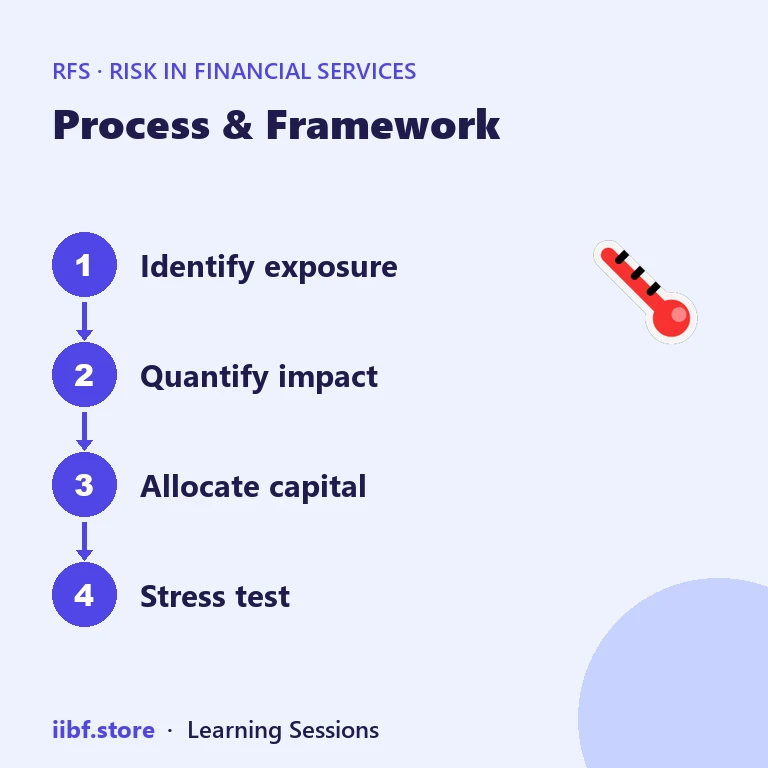
Asset-liability matching (ALM) in a pension context means aligning the duration and cash-flow profile of investments with the expected timing of benefit payouts. For a DB-style corpus or an annuity provider's book, this means holding long-duration government securities and bonds that mature roughly when annuity payments fall due, limiting reinvestment risk. PFRDA's oversight of pension fund managers' investment guidelines, and IRDAI's parallel oversight of annuity providers' solvency, both function within the wider enterprise risk management framework that regulated financial entities must maintain end to end.
This regulatory design connects directly to the same principles examined under Credit Risk Management Framework, where exposure limits and portfolio guidelines similarly bound how much risk an institution may run against its capital base. Candidates should also note how this sits alongside the broader lens of systemic risk and macroprudential policy, since a large, poorly matched pension system can itself become a source of system-wide stress. For authoritative detail on scheme structure and regulations, refer to the PFRDA website directly. Note the division of labour: PFRDA regulates pension fund managers and annuity service providers as intermediaries, while IRDAI separately regulates the insurers that actually underwrite the annuity contracts subscribers buy at NPS exit.
🏦 What a Bank Distributing Pension Products Must Understand
Banks acting as Points of Presence (PoPs) for NPS are not merely selling a tax-saving product — they are the first line of risk communication for a customer's retirement income. Front-line staff must be able to explain, in plain terms, that returns are not guaranteed, that the subscriber bears investment and reinvestment risk throughout accumulation, and that the annuity choice at exit is largely irreversible.
Distributors should also understand how NPS risk concentration differs from, but rhymes with, familiar banking risk concepts. Just as concentration risk in bank lending is controlled through exposure limits to a single borrower or sector, PFRDA's asset-class caps limit how much of a subscriber's corpus can sit in equity versus government securities, capping the subscriber's exposure to any single risk factor. Staff advising customers on Active Choice allocation should be conversant with the same logic used in Obligor And Borrower Risk assessment when they explain diversification benefits to a customer.
Suitability matters too: a subscriber close to retirement carrying a high equity allocation is running investment risk into a shrinking time horizon, similar in spirit to how market risk measurement in banks tightens limits as a position approaches maturity. A well-trained PoP officer flags this mismatch well before the customer reaches the mandatory annuitisation stage, rather than leaving it to be discovered at exit.
Conclusion: Turn This Into Exam-Ready Recall
Pension fund risk management for IIBF's RFS paper comes down to four linked ideas: NPS shifts investment, reinvestment and pre-exit longevity risk onto the subscriber; longevity risk transfers to the annuity provider only at annuitisation; PFRDA governs pension fund managers and investment norms while IRDAI governs the annuity underwriters; and asset-liability matching is the tool that keeps both sides solvent against long-dated payout obligations. Revisit the comparison table above until the DB-versus-DC risk allocation is automatic recall, then work through the practice MCQs below.
Explore more chapter-linked reading from the Risk in Financial Services tag hub, or strengthen your CAIIB preparation with structured coverage at iibf.store/course/caiib.
🧠 Practice MCQs: Pension Fund Risk Management
Q1. Under the National Pension System, who primarily bears investment risk during the accumulation phase? (a) The Central Recordkeeping Agency (b) The employer only (c) The subscriber (d) PFRDA
Answer: (c) — NPS is a defined contribution scheme, so market performance risk during accumulation sits with the subscriber, not the employer or the regulator.
Q2. At NPS exit, what minimum percentage of the accumulated corpus must generally be used to purchase an annuity? (a) 20 percent (b) 40 percent (c) 60 percent (d) 100 percent
Answer: (b) — At least 40 percent of the corpus must be annuitised at normal retirement exit; the remainder can typically be withdrawn as a lump sum subject to scheme rules.
Q3. Once an NPS subscriber purchases an annuity, longevity risk is transferred to whom? (a) The subscriber's nominee (b) The Pension Fund Manager (c) The Annuity Service Provider (d) PFRDA
Answer: (c) — Longevity risk moves from the subscriber to the annuity service provider, which manages it through mortality pooling across annuitants.
Q4. Which regulator is primarily responsible for governing pension fund managers and investment guidelines under NPS? (a) SEBI (b) IRDAI (c) RBI (d) PFRDA
Answer: (d) — PFRDA, established under the PFRDA Act 2013, regulates pension fund managers, points of presence and annuity service providers operating under NPS.
Q5. Asset-liability matching in a pension context primarily aims to align what? (a) Branch staffing with customer footfall (b) Investment duration and cash flows with expected benefit payout timing (c) Marketing spend with new account openings (d) Equity allocation with stock market indices only
Answer: (b) — ALM aligns the maturity and cash-flow profile of pension investments with when benefit or annuity payments actually fall due, limiting reinvestment risk.
Want chapter-wise mock tests with 100+ MCQs? Start practising free →
What is the main difference between defined benefit and defined contribution pension risk?
In a defined benefit scheme the employer bears investment, reinvestment and longevity risk to deliver a fixed pension; in a defined contribution scheme like NPS, the subscriber bears these risks and the eventual pension depends on investment performance.
Does longevity risk disappear once an NPS subscriber buys an annuity?
No, it does not disappear — it transfers from the subscriber to the annuity service provider, which manages the pooled risk across many annuitants using mortality tables and reinsurance.
Who regulates pension fund managers under NPS?
The Pension Fund Regulatory and Development Authority (PFRDA) regulates pension fund managers, points of presence, the Central Recordkeeping Agency and annuity service providers operating under NPS.
Why is asset-liability matching important for pension liabilities?
It aligns the duration and cash flows of a fund's investments with when benefit or annuity payouts are due, reducing reinvestment risk and helping the fund or annuity provider remain solvent against long-dated obligations.
Practice this topic
Take a free mock test, download chapter PDFs, or watch a video class — all included on iibf.store.
Keep reading