PM SVANidhi 2026: Rs 50,000 Loan and Rs 30,000 RuPay Credit Card
A vegetable seller who took a ₹10,000 loan in 2021 and repaid it on time can now walk up to the same counter and ask for ₹50,000 plus a credit card. That is the practical shape of PM SVANidhi 2026 after the Government restructured and extended the scheme — bigger tranches, a UPI-linked RuPay credit card of up to ₹30,000, and a lending window that now runs to March 2030. Ashish Jain breaks the update down in the session below, and this is the written version with the numbers you will be tested on.
₹50,000 loan and a ₹30,000 RuPay credit card: the PM SVANidhi 2026 update · Watch on YouTube
What the scheme was built to fix
PM SVANidhi — Prime Minister Street Vendor's AtmaNirbhar Nidhi — launched in June 2020, in the thick of the pandemic, as the first dedicated micro-credit scheme for street vendors. It is a Central Sector Scheme run jointly by the Ministry of Housing and Urban Affairs and the Department of Financial Services. The problem it targeted was simple and enormous: vendors are a large slice of the informal workforce, they have no collateral, no formal credit history, and therefore no bank willing to lend to them. Left to the moneylender, they were paying rates that made the business barely viable.
Five years in, the scale is real. More than 75.5 lakh street vendors have availed over 112 lakh loans, and more than ₹17,800 crore has been disbursed. Independent studies in 2023 and 2025 found roughly 95 per cent of beneficiaries accessed formal institutional credit for the first time through the scheme, about 30 per cent went on to access additional credit beyond it, and beneficiary incomes rose by an average of nearly 20 per cent a year. Around 46 per cent of beneficiaries are women and roughly 70 per cent come from marginalised communities.
What changed in PM SVANidhi 2026
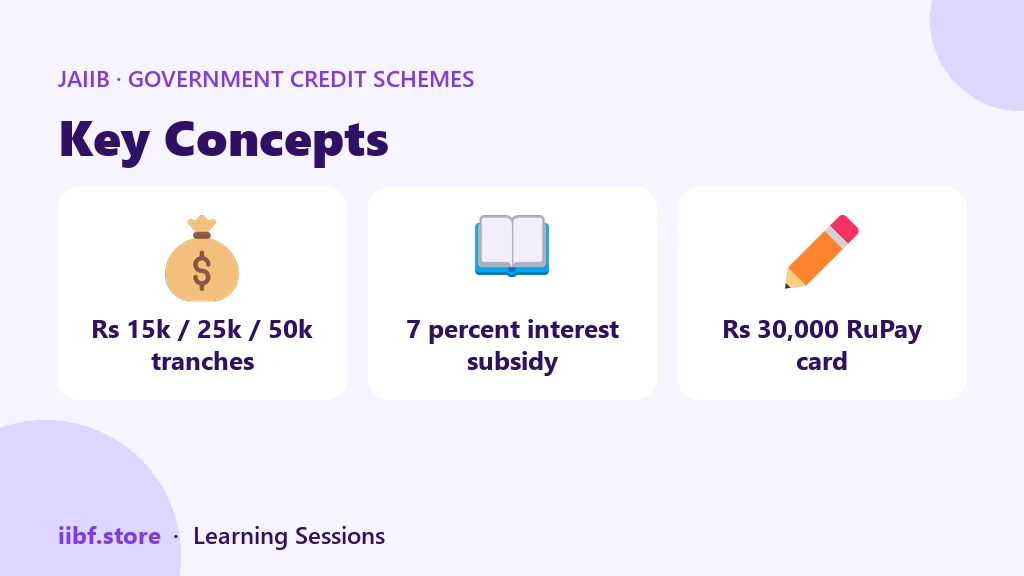
The restructuring extends the lending period to March 2030 and raises the first two tranches. Collateral-free working capital loans now run in progressive steps of ₹15,000, ₹25,000 and ₹50,000. The Union Cabinet cleared the package with an outlay of ₹7,332 crore and a target of 1.15 crore beneficiaries, including 50 lakh new street vendors.
| Tranche | Original limit | Restructured limit | How you unlock it |
|---|---|---|---|
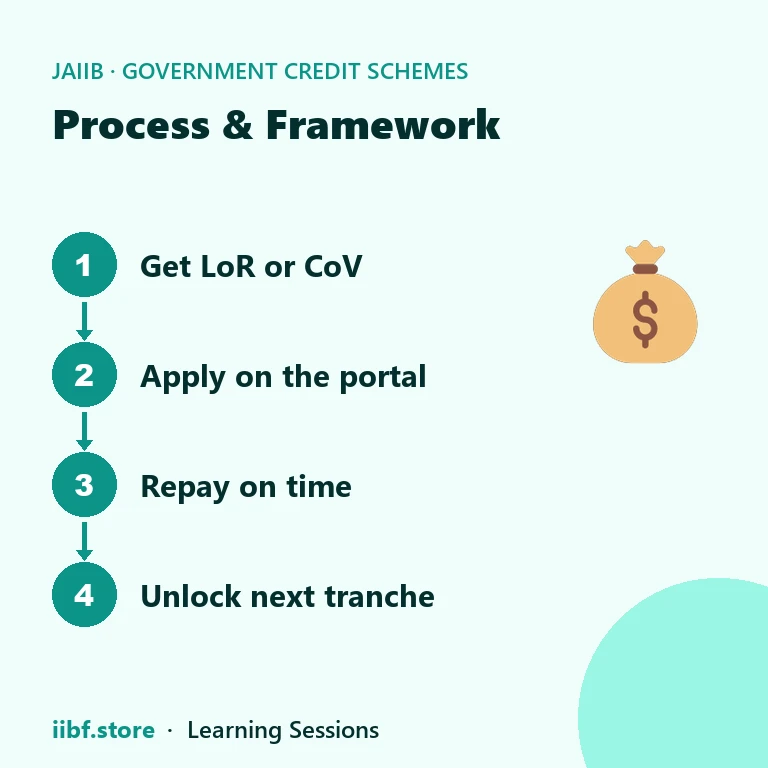
| First | ₹10,000 | ₹15,000 | Valid Letter of Recommendation or Certificate of Vending |
| Second | ₹20,000 | ₹25,000 | Timely repayment of the first tranche |
| Third | ₹50,000 | ₹50,000 (unchanged) | Timely repayment of the second tranche |
| UPI-linked RuPay credit card | — | Up to ₹30,000 | Eligible vendors, on the strength of a repayment record |
The credit ladder is the whole design
Notice what the scheme is really doing. It is not handing out ₹50,000. It is running a graduated credit test. A vendor with no record borrows a small amount, repays it, and that repayment behaviour becomes the credit history a bank could never otherwise price. Only then does the next tranche open. Then the card.
This is why the incentive structure matters so much. The scheme encourages timely and early repayment with an interest subsidy of 7 per cent per annum. Repay on schedule and you are not merely cheaper — you become eligible for a higher loan tranche in the next cycle. Delay, and both the subsidy and the ladder stall. For a JAIIB candidate this is the cleanest live example of behavioural credit assessment in a financial-inclusion product, and it explains why the loans work for banks without any collateral: credit guarantee support sits behind the exposure.
Processing is genuinely fast for a government scheme. The end-to-end digital platform brings the average loan from application to approval in about 23 days, subject to verification and completion of formalities. A vendor holding a valid Letter of Recommendation or Certificate of Vending applies through the scheme portal, the mobile app, or with the assistance of the Urban Local Body.
Digital adoption, cashback and SVANidhi se Samriddhi
The second engine is digital. Vendors who accept digital payments earn cashback incentives of up to ₹1,600. It has worked at a scale that surprises people: more than 55 lakh vendors have completed over 841 crore digital transactions worth nearly ₹8.96 lakh crore. Between interest subsidy and digital cashback, beneficiaries have received close to ₹800 crore on top of the loans themselves.
Then there is SVANidhi se Samriddhi, the social-protection arm. It profiles beneficiary families and links them to eight selected Central Government welfare schemes — more than 50 lakh families profiled and over 1.52 crore welfare benefits sanctioned. Add capacity building on top: training in financial literacy, digital literacy and, in collaboration with FSSAI, food safety, with around 6 lakh street food vendors trained on hygiene standards. The examinable point is that PM SVANidhi 2026 is not a loan scheme with add-ons; it is a credit, digital-payments and welfare-linkage bundle, and questions frequently test exactly that framing.
📖 Also read: systematic investment plan for retail customers — Systematic Investment Plan for Retail Customers: JAIIB RBWM Guide
What to memorise for the exam
Government scheme questions in JAIIB Retail Banking and Wealth Management, and in Principles and Practices of Banking, are almost always numeric. For PM SVANidhi 2026, lock down this set: launched June 2020; run by MoHUA with the Department of Financial Services; tranches of ₹15,000, ₹25,000 and ₹50,000; collateral-free; interest subsidy of 7 per cent per annum; UPI-linked RuPay credit card up to ₹30,000; digital cashback up to ₹1,600; lending period extended to March 2030; outlay ₹7,332 crore; target 1.15 crore beneficiaries including 50 lakh new ones.
The trap is the old figures. Anything written before the restructuring says ₹10,000 and ₹20,000 for the first two tranches, and plenty of coaching PDFs still do. Practise the current numbers in context with our JAIIB mock tests, keep the scheme notes open in the JAIIB course, and sanity-check every government figure against the official PM SVANidhi portal before you commit it to memory. More scheme and policy explainers are on the blog, and the study planner will fit them into your revision weeks.
What are the loan amounts under the restructured PM SVANidhi scheme?
Collateral-free working capital loans are given in progressive tranches of ₹15,000, ₹25,000 and ₹50,000. The first two were raised from ₹10,000 and ₹20,000; the third tranche stays at ₹50,000.
What is the RuPay credit card limit under PM SVANidhi?
Eligible vendors get a UPI-linked RuPay Credit Card of up to ₹30,000. It is meant for unforeseen personal and business expenses and is earned on the strength of a clean repayment record.
How much interest subsidy does a street vendor get?
An interest subsidy of 7 per cent per annum is provided to encourage timely and early repayment. Vendors who repay on time also become eligible for a higher loan tranche in the next cycle.
Until when is PM SVANidhi lending available?
The lending period has been extended until March 2030, with a total outlay of ₹7,332 crore and a target of 1.15 crore beneficiaries including 50 lakh new street vendors.
Quick quiz on this topic
5 exam-style questions from our free test bank — check yourself before you move on.
Practice this topic
Take a free mock test, download chapter PDFs, or watch a video class — all included on iibf.store.
Keep reading