Revenue Audit in Banks: Income Leakage and Recovery (IIBF CAAP)
A branch undercharges interest. It waives a fee it should collect. It skips a penal charge. The loss rarely gets caught by chance. A structured revenue audit in banks is what plugs this gap. It is a focused review of interest, commission, fee and exchange income. Auditors check what was actually recovered against what the bank was entitled to charge. For CAAP candidates, this topic sits between accounting knowledge and audit technique. You need to know where banks earn money. You also need to know where core banking system parameters let that money slip away. This article covers the objective, the high-risk leakage pockets, the sampling method, and how findings turn into a fix.
📊 The Objective of Revenue Audit in Banks
The objective is simple to state. Catch every rupee of interest, commission, fee and exchange due to the bank that was undercharged, not charged, or wrongly waived. This is not a statutory financial audit. It is a targeted, income-side review of individual accounts and transaction types.
The scope also covers the mirror case. Sometimes a branch recovers more than it should. An extra processing charge. A double-billed inspection fee. A locker rent debited after closure. This kind of audit flags these too. Excess recovery must be refunded to the customer, not kept as a windfall.
This dual objective — recover what is owed, refund what is excess — is why examiners pair this topic with the classification of income and expenditure. You cannot test for leakage in a head of income you cannot first classify. Auditors map each income line to its rate card. They then check postings against that card, account by account.
💰 High-Risk Areas Where Income Slips Through
Some pockets fail more often than others. CAAP exams lean heavily on this list. Interest rate feeding in the core banking system is the biggest source of leakage. A wrong rate code, an unrevised spread, or a manual override that never gets reversed can cost lakhs across a large loan book.
Repriced advances are another weak spot. When the benchmark resets — repo-linked or MCLR-linked — the system must reprice automatically. Auditors check whether the correct benchmark and spread were actually applied on the reset date, not just marked as done.
Penal charges get missed often. This happens on overdue instalments. It also happens on non-submission of stock statements for working capital accounts. Processing, documentation, inspection and commitment charges on term loans and cash credit limits are also waived without proper authority at times.
Non-fund business adds its own risk. Commission on guarantees and letters of credit must be recovered in full. Any amendment that extends the amount or tenor should trigger proportionate extra recovery. Branches often skip this step. Exchange and swap margins on forex deals, plus locker rent and folio charges, complete the high-risk list.
⚠️ Common Mistake: Candidates assume this audit only checks interest income. The syllabus also covers non-fund commission, forex margins, and service charges. Miss these and you miss a third of the leakage universe.
| Leakage Area | Typical Trigger | Usually Recoverable |
|---|---|---|
| Interest rate feeding in CBS | Wrong rate code or stale manual override | ✅ Yes |
| Benchmark/spread on repriced advances | Reset date not applied in system | ✅ Yes |
| Penal charges on overdue instalments | Auto-debit rule not triggered | ✅ Yes |
| LC/BG commission on amendment | Proportionate recovery skipped | ✅ Yes |
| Locker rent collected twice | Manual double posting | ❌ No — refund due |
🔍 Sampling and Data-Analytics Approach
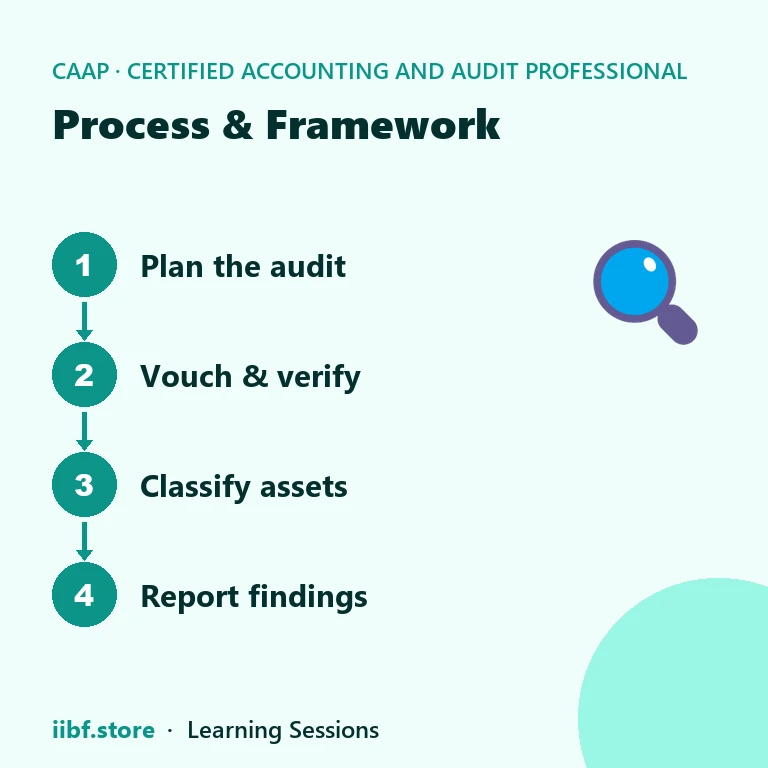
Manual, account-by-account checking cannot cover a full branch book. So auditors lean on risk-based sampling backed by data analytics. They pull system-wide queries instead of sampling blind. Accounts where the recovered rate does not match the sanctioned card rate. LC renewals with zero commission booked. Lockers with no rent debit for over a year.
This is where the accounting process chapter becomes directly relevant. You need to trace a transaction from the general ledger entry back to the underlying loan or deposit record. This confirms whether a charge was actually applied. Analytics narrows the population. Sampling then picks a defensible subset for detailed checking.
High-value and high-risk accounts get full coverage. Everything else is sampled using stratified or random methods. This mirrors how a concurrent audit in banks prioritises coverage. The output is a list of exceptions. Each one is tagged with the account, the income head, and the estimated shortfall or excess.
Good practice also checks tax treatment on fee income. GST on certain bank charges follows its own rules. That detail is covered separately under JAIIB AFM GST updates, for candidates who want that adjacent context.

📋 Classifying Findings and Reporting to the Audit Committee
Once exceptions are confirmed, each one gets sorted into three buckets: recoverable, recovered, and system issue. Recoverable means the shortfall is confirmed, but the branch has not raised the debit yet. Recovered means the branch already actioned the recovery during the audit. Auditors should verify this with a fresh statement extract.
System issue is the bucket CAAP candidates should remember most. It flags leakage from a parameter or master-data error, not a one-off human lapse. A product code with the wrong penal rate hardcoded is a good example. It affects every account under that product, not just one file.
📌 Remember: A single recovered entry fixes one account. A system-issue tag on the same root cause protects every other account carrying that product code. Classification quality matters more than the rupee amount recovered.
The audit closes with a report to the audit committee. It summarises total leakage identified, amount recovered during the audit, amount pending, and amount refunded for excess charges. The report also compares against the prior audit cycle. This lets the committee track whether repeat findings are falling. For report formats, see the chapter on bank audit and various types of audits in banks. For the auditor's overall mandate, see the sibling guide on standards on auditing for bank audits.
🛠️ Systemic Fixes That Stop Repetition
Recovering a missed charge closes one file. It does not stop the same error next quarter. The most durable output of any income-leakage review is a systemic fix request. This is a correction to the product master, the rate parameter table, or the workflow rule in the core banking system.
Typical fixes include correcting a hardcoded penal rate at the product level. They also include adding a system alert for stock-statement non-submission, instead of relying on manual tracking. A third common fix is an automatic proportionate-recovery trigger whenever a guarantee or letter of credit is amended. Banks that treat findings as one-time recoveries, without pushing the parameter fix, tend to see the same leakage return next cycle.
This governance sits within the bank's internal audit and risk framework, which draws on guidance published by the Reserve Bank of India. Auditors should also be comfortable with the banking operations and accounting functions chapter. Most leakage traces back to how a transaction was processed before it hit the books. Where a correction touches provisioning-adjacent income, cross-check the sibling guide on provisioning norms for bank advances to keep classification consistent.
✅ Conclusion: Make Revenue Audit in Banks Exam-Ready
For the CAAP exam, remember the sequence. Identify the high-risk income heads. Sample using analytics, not guesswork. Classify each finding as recoverable, recovered, or system issue. Report clearly to the audit committee. Push the fix into the product master. Master this flow, and revenue audit in banks questions turn into easy scoring opportunities. Explore more chapters under the Certified Accounting and Audit Professional tag. When you are ready, test yourself at iibf.store/tests.
🧠 Practice MCQs: Revenue Audit in Banks
Q1. The primary objective of revenue audit in banks is to (a) verify loan sanction limits (b) detect income leakage in interest, commission, fee and exchange (c) reconcile the general ledger (d) confirm KYC compliance
Answer: (b) — the audit exists specifically to catch undercharged, not-charged or wrongly waived income.
Q2. On a repo-linked advance, the highest-risk item for a revenue auditor is (a) the customer's address on file (b) whether the correct benchmark and spread were applied on the reset date (c) the loan sanction date (d) the branch's staff strength
Answer: (b) — repricing errors on benchmark resets are a classic leakage source.
Q3. When a letter of credit is amended to increase its amount, the auditor should check for (a) a fresh KYC form (b) proportionate additional commission recovery (c) a new account number (d) branch manager's leave record
Answer: (b) — amendments that raise amount or tenor should trigger proportionate extra commission, often missed at branches.
Q4. A finding is tagged "system issue" instead of "recoverable" when (a) the branch has already recovered the amount (b) the error stems from a wrong parameter or master-data setting affecting multiple accounts (c) the customer disputes the charge (d) the amount is below materiality threshold
Answer: (b) — system issue points to a root-cause parameter error, not a single account lapse.
Q5. If a branch has wrongly recovered locker rent twice from a customer, the correct audit action is to (a) ignore it since the bank gained revenue (b) classify it as recoverable income (c) flag it for refund to the customer (d) report it as a system issue only
Answer: (c) — excess or wrongly recovered charges must be refunded, not booked as bank income.
Want chapter-wise mock tests with 100+ MCQs? Start practising free →
What is revenue audit in banks?
It is a focused review of a bank's interest, commission, fee and exchange income. It catches amounts that were undercharged, not charged, or wrongly waived, and flags any excess recovery that needs a refund.
Which areas carry the highest risk of income leakage in banks?
Interest rate feeding in the core banking system and benchmark or spread errors on repriced advances are common. So are penal charges on overdue instalments and non-fund commission on guarantees and letters of credit.
How are revenue audit findings classified?
Findings are classified as recoverable, recovered, or system issue. This depends on whether the amount is still pending, has already been actioned, or stems from a parameter-level error affecting multiple accounts.
Who does the revenue audit report get submitted to?
The consolidated findings, along with recovery status and systemic fix recommendations, are reported to the audit committee of the bank.
Practice this topic
Take a free mock test, download chapter PDFs, or watch a video class — all included on iibf.store.