New Startup Definition 2026: 10 Years, Rs 200 Crore Turnover
Ask a room of CAIIB candidates for the current startup definition and most will still say "ten years and one hundred crore turnover". Half of that answer is right. The money half has been wrong since 4 February 2026, when the government rewrote the rule and raised the ceiling.
The clip below settles it in under a minute. Read the breakdown underneath it, because BFM almost never asks this on its own. It hides the startup definition inside a case about bank finance, external commercial borrowings or how a young company should be classified.
CAIIB BFM: the latest startup definition · Watch on YouTube
What changed on 4 February 2026
DPIIT is the Department for Promotion of Industry and Internal Trade. It is the body that decides who counts as a startup in India. On 4 February 2026 it issued notification G.S.R. 108(E), which replaced the framework that had run since February 2019.
Two things moved. The turnover ceiling doubled, and an entirely new category appeared for deep tech companies. The age limit for an ordinary startup did not move at all.
| Parameter | Old rule (2019) | Current rule (from 4 Feb 2026) |
|---|---|---|
| Age from incorporation | Up to 10 years | Up to 10 years |
| Turnover ceiling | Up to Rs 100 crore | Below Rs 200 crore |
| Deep tech age limit | No such category | Up to 20 years |
| Deep tech turnover | No such category | Below Rs 300 crore |
Notice the direction. Nothing became stricter. The gate got wider, and it stayed open for longer. That is the single sentence worth carrying into the exam hall.
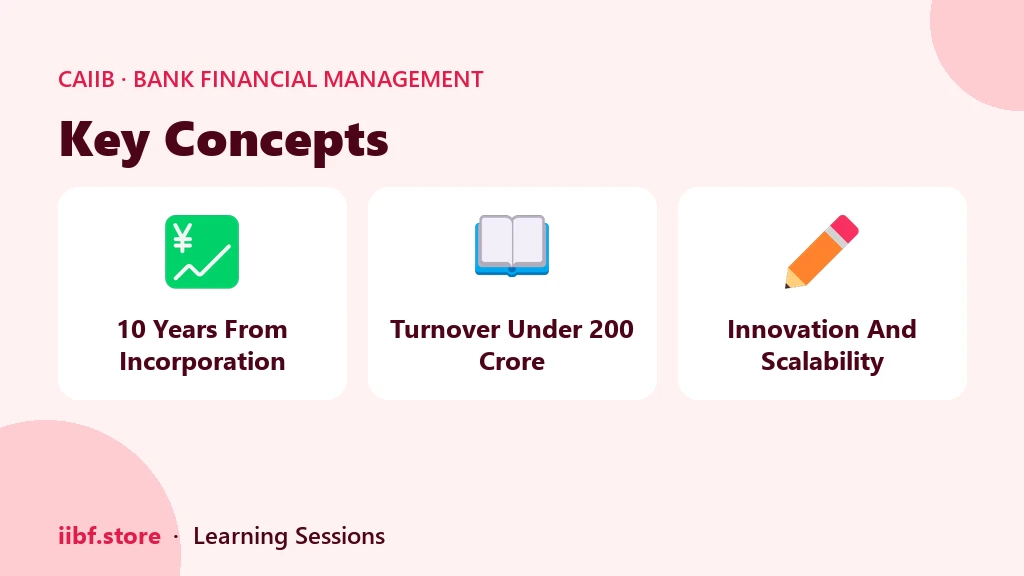
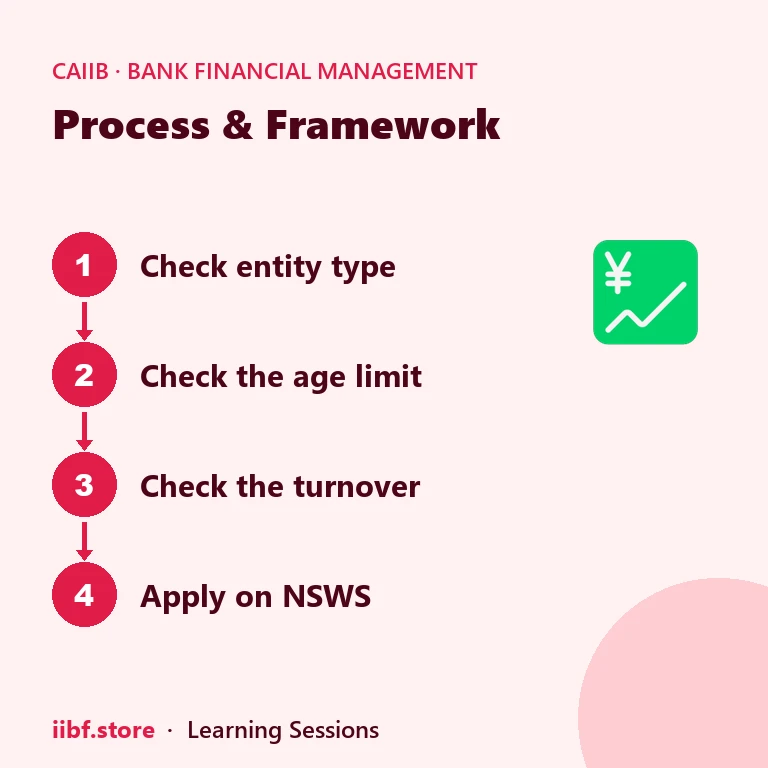
The four tests an entity has to clear
Recognition is not a single condition. An entity has to clear four separate tests, and failing any one of them is enough to keep it out.
One, the legal form. The entity must be incorporated as a private limited company, or registered as a partnership firm, a limited liability partnership or a co-operative society. A proprietorship does not qualify. A public limited company does not qualify either.
Two, the age. Ten years from the date of incorporation for an ordinary startup. Twenty years if it qualifies as deep tech. The clock runs from incorporation, not from when the business actually started trading.
Three, the turnover. Turnover must be below Rs 200 crore in any of the previous financial years. Read that carefully. It is not the latest year alone. If turnover crossed the ceiling in an earlier year, recognition is gone.
Four, the purpose. The entity must be working towards innovation, or towards improvement of existing products, services and processes, and it must have the potential to generate employment or create wealth. This is the qualitative test. It is also the one candidates forget to mention when a question asks for the full startup definition.
Deep tech: the category that did not exist before
This is the genuinely new part of the 2026 notification, and the part most likely to appear as a fresh question.
Deep tech covers companies built on hard science and engineering rather than on a clever business model. Think artificial intelligence, semiconductors, biotechnology, robotics and advanced engineering. These businesses take far longer to reach revenue, so a ten year window was squeezing them out just as they became commercially useful.
So the notification gave them a longer runway. Twenty years from incorporation, and a turnover ceiling of Rs 300 crore instead of Rs 200 crore. Everything else applies exactly as before, including the legal form and the innovation test.
Why a BFM candidate should care
Bank Financial Management is not a company law paper. So why does this sit in the syllabus at all?
Because recognition is the switch that turns on a set of concessions a bank has to work around. A recognised startup gets access to a defined set of government schemes and relaxations, and it walks into a branch with a different risk profile from a mature borrower. When a case study describes a four year old company with Rs 150 crore turnover working on semiconductor design, the examiner is checking whether you can place it correctly before you say anything about its funding.
Recognition is now applied for through the National Single Window System at nsws.gov.in rather than the old portal route. That is a procedural detail, but procedural details are exactly what one mark questions are made of. You can cross check the current criteria on the government's own Startup India recognition page.
How this gets asked in the exam
Here is a worked example in the shape the paper usually takes.
A company was incorporated in March 2019. Its turnover was Rs 180 crore in 2024-25 and Rs 240 crore in 2025-26. It develops battery chemistry for grid storage. Is it a startup?
Work the tests. Age: incorporated in 2019, so it sits inside the ten year window, and comfortably inside twenty years if the battery chemistry work qualifies as deep tech. Turnover: Rs 240 crore breaches the Rs 200 crore ordinary ceiling, but sits below the Rs 300 crore deep tech ceiling. So the answer turns entirely on the deep tech classification. Under the ordinary test it is out. Under the deep tech test it is in.
That is the whole trick of the new startup definition. The examiner hands you a number between Rs 200 crore and Rs 300 crore, then waits to see whether you noticed the second category exists.
To drill this alongside the rest of the paper, the CAIIB course keeps the BFM updates in one place, and the practice tests mix recall questions in with the numericals. For quick number revision before the exam, the current RBI rates page is worth a look, and more short revisions like this one sit on the blog.
Frequently asked questions
Is the startup turnover limit Rs 100 crore or Rs 200 crore?
Rs 200 crore. The Rs 100 crore figure came from the 2019 notification and was replaced by DPIIT notification G.S.R. 108(E) dated 4 February 2026. Deep tech startups get a higher ceiling of Rs 300 crore.
Can a proprietorship firm be recognised as a startup?
No. Only a private limited company, a registered partnership firm, a limited liability partnership or a co-operative society qualifies. Sole proprietorships and public limited companies are outside it.
Does the ten year period run from incorporation or from first revenue?
From the date of incorporation. Trading history, first sale and funding dates do not affect the age test.
What counts as a deep tech startup?
Companies built on advanced science and engineering. Artificial intelligence, semiconductors, biotechnology, robotics and advanced engineering are the domains named in the 2026 framework. They get twenty years from incorporation and a Rs 300 crore turnover ceiling.
Prefer revising from a printed book?
Chapter-wise books with MCQs after every chapter — minimal pages, complete coverage, delivered anywhere in India. Every book has a free sample to read first.
151 pages · 465 MCQs
Learning Sessions · Ashish Sir
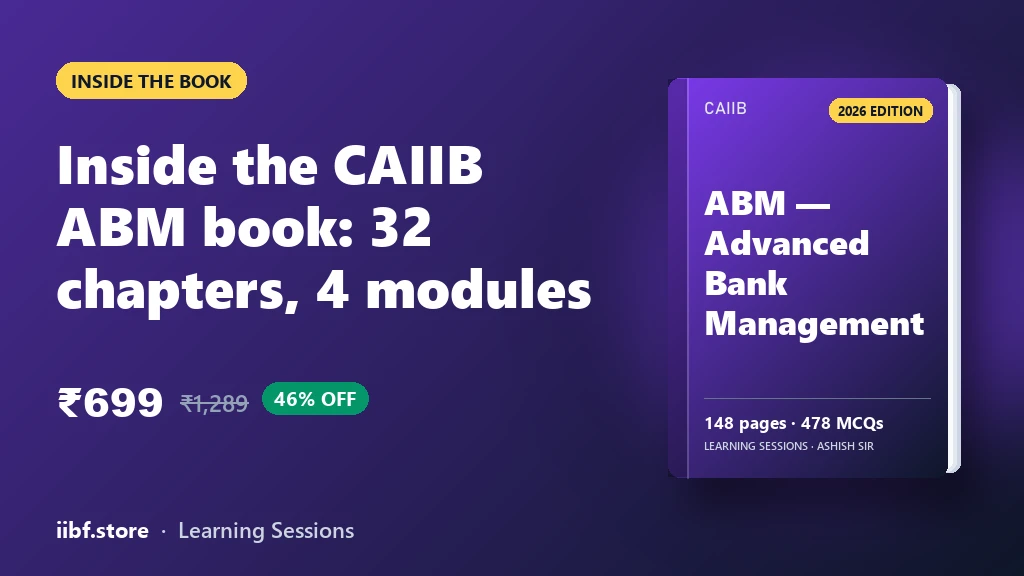
148 pages · 478 MCQs
Learning Sessions · Ashish Sir
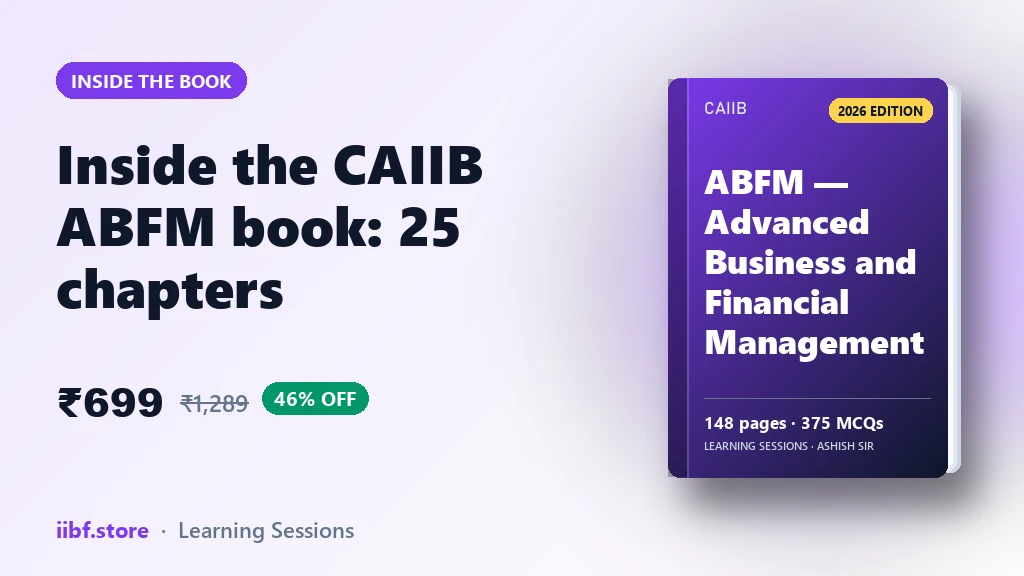
148 pages · 375 MCQs
Learning Sessions · Ashish Sir
216 pages · 895 MCQs
Learning Sessions · Ashish Sir
109 pages · 300 MCQs
Learning Sessions · Ashish Sir
104 pages · 360 MCQs
Learning Sessions · Ashish Sir
82 pages · 297 MCQs
Learning Sessions · Ashish Sir
151 pages · 600 MCQs
Learning Sessions · Ashish Sir
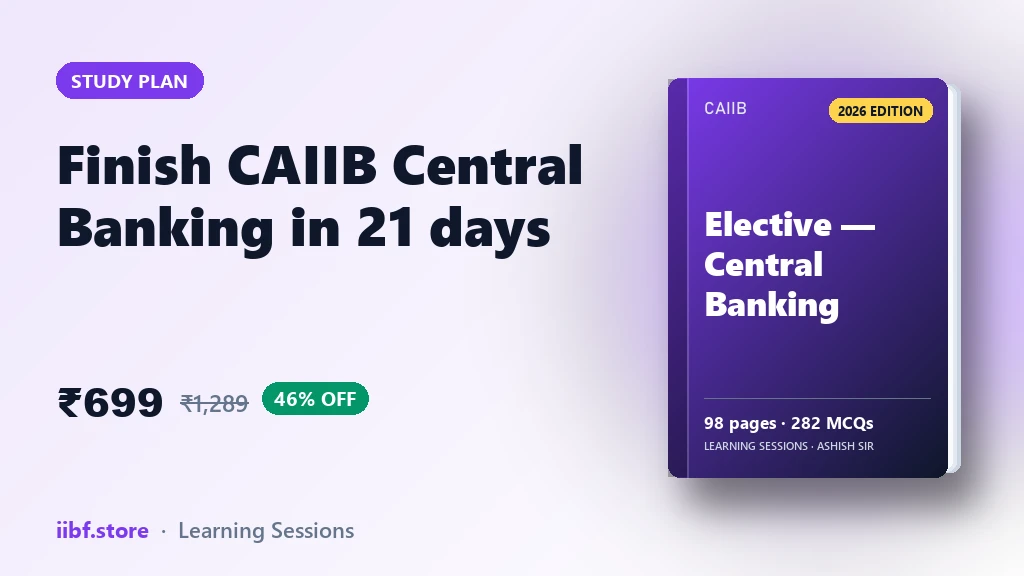
98 pages · 282 MCQs
Learning Sessions · Ashish Sir
131 pages · 672 MCQs
Learning Sessions · Ashish Sir
221 pages · 831 MCQs
Learning Sessions · Ashish Sir
128 pages · 524 MCQs
Learning Sessions · Ashish Sir
107 pages · 445 MCQs
Learning Sessions · Ashish Sir
132 pages · 225 MCQs
Learning Sessions · Ashish Sir
188 pages · 435 MCQs
Learning Sessions · Ashish Sir
117 pages · 236 MCQs
Learning Sessions · Ashish Sir
Learning Sessions · Ashish Sir
118 pages · 299 MCQs
Learning Sessions · Ashish Sir
Learning Sessions · Ashish Sir
Learning Sessions · Ashish Sir
Learning Sessions · Ashish Sir
115 pages · 255 MCQs
Learning Sessions · Ashish Sir
Learning Sessions · Ashish Sir
334 pages · 936 MCQs
Learning Sessions · Ashish Sir
Learning Sessions · Ashish Sir
115 pages · 344 MCQs
Learning Sessions · Ashish Sir
107 pages · 240 MCQs
Learning Sessions · Ashish Sir
90 pages · 150 MCQs
Learning Sessions · Ashish Sir
Learning Sessions · Ashish Sir
Quick quiz on this topic
5 exam-style questions from our free test bank — check yourself before you move on.
Practice this topic
Take a free mock test, download chapter PDFs, or watch a video class — all included on iibf.store.