Techno Economic Viability Study in Project Finance (CCP)

Every term loan for a greenfield or brownfield project rests on one document more than any other: the appraisal note built around the techno economic viability study in project finance. Before a bank commits crores to a plant that does not yet exist, it needs an independent, professionally rigorous answer to a simple question — will this project generate enough cash, reliably enough, to service the debt? For CCP candidates, this topic sits at the intersection of credit appraisal, project finance and risk assessment, and examiners test it precisely because promoters routinely overstate viability in their own reports.
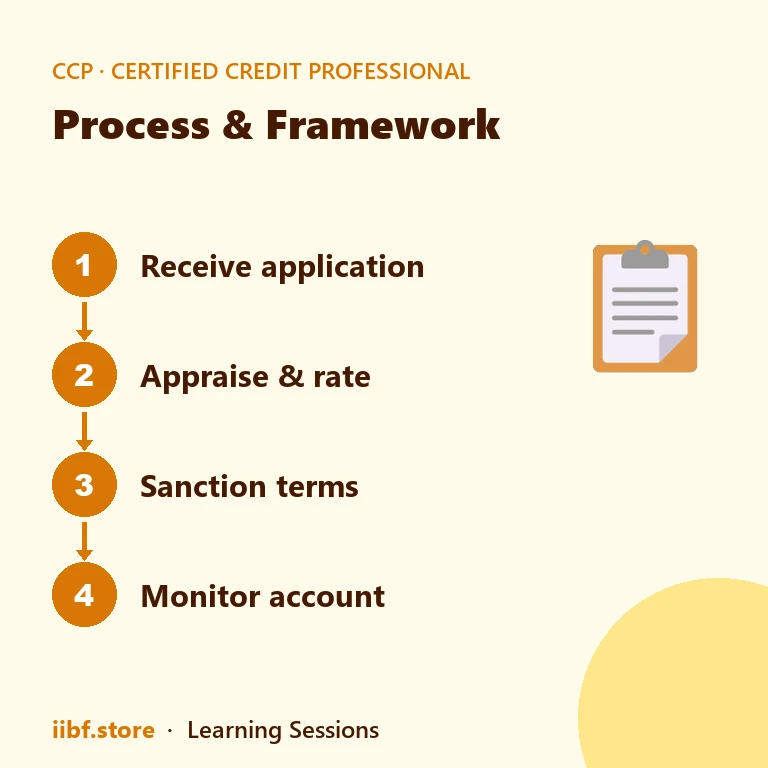
A techno economic viability (TEV) study is a structured, third-party assessment of a proposed or ongoing project's technical soundness, market prospects and financial strength. Banks and financial institutions insist on this study being commissioned independently — not merely accepted from the promoter's detailed project report (DPR) — because a DPR is prepared to secure sanction, while a TEV study is prepared to test whether sanction is justified. This single distinction is the most frequently examined idea around the topic, and it is worth internalising before anything else. You can revisit the foundations of appraisal discipline in Credit Appraisal before working through this study format in detail.
📊 Why the Lender Commissions an Independent Study
The promoter's DPR is an advocacy document. It is built to demonstrate that the project deserves funding, and every assumption inside it — capacity utilisation, selling price, input cost, project cost — tends to lean optimistic. A bank cannot underwrite a term loan on an advocacy document alone. This is exactly why the techno economic viability study in project finance exists as a separate exercise, commissioned by the lender (or jointly by a consortium) from an empanelled TEV consultant who has no stake in the project's approval.
The independence requirement runs deeper than just "a different author". A credible TEV study cross-checks every material assumption in the DPR against independent sources: published industry data for demand and pricing, actual quotations for plant and machinery rather than promoter estimates, site inspection reports rather than promoter photographs, and regulatory correspondence rather than promoter assurances on clearances. Where the TEV consultant's findings diverge from the DPR — a lower achievable capacity utilisation, a higher realistic project cost, a tighter margin — those divergences, not the DPR's own numbers, drive the credit committee's view of viability. Sound credit decisioning always traces back to the Principles of Lending, and independent verification is simply that principle applied to project appraisal.
🏭 Technical Appraisal: Technology, Capacity, Site and Clearances
The technical appraisal segment of the study answers whether the project can physically be built and run as proposed. It examines the technology choice — is the process proven at commercial scale, or is it new and unproven for this scale and this promoter's experience? Unproven technology raises implementation risk sharply and should trigger a higher risk weighting in the credit note, not a footnote.
Plant capacity and capacity utilisation assumptions get particular scrutiny. Promoters often project capacity utilisation ramping to 85-90% within the second year of commercial operation; the TEV consultant benchmarks this against actual ramp-up experience of comparable plants in the sector, which is frequently slower. The study also verifies the site — land title, connectivity, availability of water and power at the assumed cost, and proximity to raw material sources — along with utilities sizing and the raw material linkage, meaning whether long-term supply agreements or captive sourcing arrangements actually exist or are merely assumed. Environmental clearances and other statutory approvals (consent to establish, consent to operate, pollution control board clearances) are verified as obtained, applied for, or not yet initiated, since a missing clearance can stall a fully-funded project indefinitely.
📈 Market Appraisal: Demand, Competition, Pricing and Offtake
A technically perfect plant that cannot sell its output is not viable. The market appraisal component of the techno economic viability study in project finance tests the demand-supply gap the project is meant to fill, the competitive intensity it will face, and the realism of the pricing assumed in the projections. A TEV consultant typically triangulates industry association data, government statistics and comparable listed-company disclosures rather than relying on the promoter's market study alone.
Offtake arrangements matter as much as demand estimates. A project backed by firm offtake contracts, long-term supply agreements, or a captive/group-company consumption arrangement carries materially lower market risk than one selling entirely into a spot market on optimistic price assumptions. Where the CCP syllabus overlaps with working capital themes, candidates should also revisit how appraisal extends beyond term loans — the CMA data in credit appraisal discipline applies the same "verify, don't accept" logic to ongoing operations that TEV applies to a new project. Similarly, once a project is commissioned and starts drawing working capital, appraisal shifts toward cash flow based lending discipline for ongoing monitoring.
💡 Exam Tip: If a question asks why a bank does not simply rely on the promoter's DPR, the expected answer is independence and verification — not "because the DPR might be wrong." Frame your answer around the lender's need for an unbiased, third-party check on assumptions.
💰 Financial Appraisal: Profitability, DSCR, Break-Even and IRR
The financial appraisal converts the technical and market findings into numbers. It builds a projected profitability statement over the loan tenor, incorporating the TEV consultant's own (usually more conservative) assumptions on capacity utilisation, price and cost rather than the promoter's. From this flow the three metrics every CCP candidate must be able to compute and interpret: the debt service coverage ratio, the break-even point, and the internal rate of return.
The average and minimum debt service coverage ratio tell the credit committee whether projected cash accruals comfortably cover principal and interest obligations across the repayment period, with particular attention to the weakest year rather than just the average. The break-even point, expressed as a percentage of installed capacity, shows how much cushion the project has before it starts losing money — a break-even level close to the assumed capacity utilisation is a red flag. The project IRR is then compared against the weighted average cost of capital; an IRR that barely clears the cost of funds leaves no margin for the inevitable slippage between projection and reality. For the full mechanics of coverage-ratio computation, see how the debt service coverage ratio feeds directly into term loan sanction decisions.
| Financial Metric | What It Measures | Typical Lender Concern | Independently Verified? |
|---|---|---|---|
| Average DSCR | Debt servicing capacity across tenor | Comfortable cushion above 1 | ✅ |
| Minimum DSCR (worst year) | Debt servicing in the weakest cash-flow year | No single year dangerously tight | ✅ |
| Break-even capacity utilisation | Cushion before losses begin | Should sit well below assumed utilisation | ✅ |
| Project IRR vs cost of capital | Return earned over funding cost | Adequate margin, not a bare pass | ✅ |
| Promoter's own DPR numbers taken at face value | Self-reported viability | Optimism bias, unverified sourcing | ❌ |
🎯 Sensitivity Analysis, Implementation Schedule and Means of Finance
No project projection survives contact with reality unchanged, which is why the study must run sensitivity and scenario analysis on the variables most likely to move: selling price, sales volume, input cost, and implementation delay. Each variable is flexed independently — say, a 5-10% adverse movement in price or a stretch in the implementation schedule — and the DSCR, break-even point and IRR are recomputed. A project whose viability collapses under a modest adverse shock is fragile even if its base case looks comfortable, and this is precisely the scenario a well-run TEV study is designed to expose before disbursement, not after.
The implementation schedule is checked for realism against comparable projects of similar scale, since optimistic construction timelines are one of the most common sources of cost and time overrun. The cost of project and the means of finance are verified line by line — land, building, plant and machinery, preliminary and pre-operative expenses, margin for working capital and contingency — against the funding mix of term loan, equity and promoter contribution. Adequate promoter contribution, infused upfront rather than back-ended, signals the promoter's own confidence and shares the downside risk with the lender; a thin or deferred contribution is a recurring weakness the study must flag explicitly.
⚠️ Common Mistake: Candidates often confuse sensitivity analysis with a simple best-case/worst-case narrative. In exam answers, be specific: sensitivity analysis flexes one variable at a time and recomputes DSCR, break-even and IRR — it is a quantitative recalculation, not a qualitative comment.
🔍 Consultant Independence, the Lender's Engineer and Common Weaknesses
The appointment of the TEV consultant matters as much as the content of the report. Empanelled, professionally qualified consultants with no financial relationship to the promoter or the project are engaged by the bank, and their fee is structured so it does not depend on the project being approved. During implementation, a separate role — the lender's independent engineer (LIE) — takes over: while the TEV consultant assesses viability before sanction, the LIE monitors physical progress, cost overruns and drawdown requests against the sanctioned implementation schedule after disbursement begins. Treating these as the same role, or the same person, is a frequent exam trap.
The common weaknesses that make a study unreliable recur across cases: capacity utilisation assumptions copied from the DPR rather than independently benchmarked; raw material linkage assumed rather than contractually verified; sensitivity analysis run cosmetically with negligible stress levels; environmental clearance status glossed over; and, most seriously, a TEV consultant whose independence is compromised by a prior advisory relationship with the promoter. A credit officer reviewing a TEV report should read it the way a rating exercise reads financials — sceptically and against source documents — a discipline covered further in Credit Rating. This same "verify independently" mindset appears in behavioural risk assessment too, as covered in transactional analysis in banking, where reading beyond the stated position is equally central to sound judgement.
📌 Remember: A techno economic viability study in project finance is only as reliable as the independence of its consultant and the rigour of its sensitivity analysis — both are recurring exam themes for CCP.
🧠 Practice MCQs: Techno Economic Viability Study in Project Finance
Q1. Why does a lender commission a techno economic viability study separately from the promoter's DPR? (a) To reduce processing fees (b) To obtain an independent, unbiased verification of project assumptions (c) Because DPRs are not permitted under RBI norms (d) To delay disbursement
Answer: (b) — A DPR is prepared to secure sanction; a TEV study independently verifies whether the project genuinely deserves it.
Q2. Which of the following is examined under the technical appraisal segment of a TEV study? (a) Competitor pricing strategy (b) Plant capacity and capacity utilisation assumptions (c) Promoter's personal net worth (d) Stock market sentiment
Answer: (b) — Technical appraisal covers technology choice, capacity, site, utilities, raw material linkage and environmental clearances.
Q3. A project's average DSCR looks comfortable, but the minimum DSCR in one year is very tight. What should the credit committee conclude? (a) Ignore the minimum figure and approve on the average (b) The weak year signals repayment risk that needs closer review (c) DSCR is irrelevant once IRR is adequate (d) Recompute DSCR using promoter figures only
Answer: (b) — Lenders focus on the minimum DSCR year, since a single weak year can trigger repayment stress despite a healthy average.
Q4. What is the key difference between the TEV consultant and the lender's independent engineer (LIE)? (a) They are always the same person (b) The TEV consultant assesses viability before sanction; the LIE monitors implementation after disbursement (c) The LIE assesses market demand only (d) The TEV consultant has no role in project finance
Answer: (b) — TEV assessment happens pre-sanction; the LIE's monitoring role begins once implementation and disbursement start.
Q5. Which of these is a common weakness that makes a techno economic viability study unreliable? (a) Independent verification of raw material contracts (b) Capacity utilisation figures copied from the DPR without benchmarking (c) A consultant with no prior relationship to the promoter (d) Rigorous multi-variable sensitivity analysis
Answer: (b) — Copying DPR assumptions without independent benchmarking defeats the entire purpose of commissioning a separate study.
Want chapter-wise mock tests with 100+ MCQs? Start practising free →
What is the difference between a DPR and a techno economic viability study?
A DPR (detailed project report) is prepared by or for the promoter to secure funding and tends to carry optimistic assumptions. A TEV study is commissioned independently by the lender to verify those assumptions against market, technical and financial evidence before sanction.
Who typically appoints the TEV consultant for a project loan?
The lending bank, or the lead bank in a consortium or syndicate, appoints an empanelled TEV consultant with no financial stake in the project's approval, ensuring the assessment stays independent of promoter influence.
How is the lender's independent engineer different from the TEV consultant?
The TEV consultant evaluates viability before sanction. The lender's independent engineer (LIE) is engaged separately to monitor physical implementation progress, cost overruns and drawdown requests once disbursement begins, continuing until the project is commissioned.
Why is sensitivity analysis a mandatory part of the study?
Sensitivity analysis flexes key variables such as price, volume, input cost and implementation delay one at a time and recomputes DSCR, break-even and IRR, exposing projects whose viability is fragile even when the base case looks comfortable.
✅ Master the Techno Economic Viability Study in Project Finance for CCP
For CCP candidates, the techno economic viability study in project finance is not a peripheral topic — it is where technical appraisal, market appraisal and financial appraisal converge into a single sanction decision. Know the independence rationale, the DSCR/break-even/IRR triad, the purpose of sensitivity analysis, and the distinction between the TEV consultant and the lender's independent engineer, and you cover the bulk of what examiners ask. Review your overall Credit Policy fundamentals alongside this topic, browse more posts on the Certified Credit Professional tag hub, and keep RBI's prudential lending framework at rbi.org.in bookmarked for reference. Then put your understanding to the test with a full CCP mock on iibf.store/tests.
Quick quiz on this topic
5 exam-style questions from our free test bank — check yourself before you move on.
Practice this topic
Take a free mock test, download chapter PDFs, or watch a video class — all included on iibf.store.
Keep reading