Treasury Investment Classification and Bond Valuation: 2026 Exam Guide

Every bank's treasury investment book is where surplus funds, statutory liquidity and trading appetite all meet the bond market. For the IIBF Certificate in Treasury Investment and Risk Management, you must know exactly how each security is bucketed, why the bucket matters for profit and loss, and how a plain-vanilla bond is valued. Get the classification wrong in the exam and you lose easy marks; get it wrong on the desk and you mis-state your bank's capital.
Since 2023 the Reserve Bank of India has completely rewritten the rulebook. The old HTM / AFS / HFT split has been replaced, with effect from 1 April 2024, by a framework aligned to global accounting standards: Held to Maturity (HTM), Available for Sale (AFS) and Fair Value through Profit and Loss (FVTPL), with Held for Trading (HFT) now sitting as a sub-category inside FVTPL. This article walks through each category, the valuation mechanics, and the risk metrics examiners love, with India-specific detail current to 2026.
The 2023 RBI Investment Classification Framework
The RBI's Master Direction on Classification, Valuation and Operation of Investment Portfolio of Commercial Banks (Directions), 2023 governs how a bank slots every rupee of its treasury investment portfolio. Classification is decided at initial recognition based on the bank's business model for managing the asset and the asset's contractual cash-flow characteristics (the SPPI test — solely payments of principal and interest).
- HTM (Held to Maturity): securities the bank intends to hold to collect contractual cash flows. There is no longer a regulatory ceiling on the HTM book, but transfers out are tightly controlled. SLR and non-SLR securities can both sit here if they pass the SPPI test.
- AFS (Available for Sale): a residual business model — held both to collect cash flows and to sell. Valuation changes flow through a separate reserve in equity (AFS-Reserve), not the income statement.
- FVTPL (Fair Value through Profit and Loss): everything else, including the trading book. HFT securities are now a sub-set of FVTPL. Every mark-to-market change hits the profit and loss account directly.
A crucial 2024 change: equity shares held in the banking book that are not held for trading are classified under FVTPL by default, because they fail the SPPI test. Reclassification between categories is permitted only on a genuine change in business model and is expected to be rare. If you are revising the broader syllabus, the CAIIB course covers the same investment accounting concepts in its Bank Financial Management module.
HTM, AFS and FVTPL: Valuation Rules That Decide Your P&L
The category a security sits in determines whether a price move touches your earnings, your reserves, or nothing at all until maturity. This is the single most exam-relevant idea in the whole treasury investment topic.
- HTM valuation: carried at amortised cost. The premium paid over face value is amortised over the residual life; a discount is generally not accreted. No mark-to-market, so day-to-day yield moves do not disturb the P&L — which is why banks park large SLR holdings here for earnings stability.
- AFS valuation: marked to market, but net unrealised gains and losses are routed to the AFS-Reserve within equity. On sale, the accumulated reserve is recycled to the P&L. This keeps reported profit smooth while still reflecting fair value on the balance sheet.
- FVTPL / HFT valuation: marked to market with every change — gain or loss — booked straight to the income statement. This is where trading profits and losses live, and where a sharp rise in the 10-year G-Sec yield can instantly dent quarterly earnings.
Valuation prices come from FBIL (Financial Benchmarks India Pvt Ltd) for government securities and from FIMMDA conventions for spreads on corporate bonds. Knowing the source of the price is a favourite one-mark question. Test yourself on these distinctions in our practice tests before exam day.

Bond Valuation: Discounting Cash Flows to Today
Bond valuation is the quantitative heart of the certificate. A bond's fair price is simply the present value of all its future cash flows — the periodic coupons plus the redemption of face value — discounted at the market yield (the Yield to Maturity, or YTM).
The formula is straightforward: Price = Σ [Coupon / (1+y)^t] + [Face Value / (1+y)^n], where y is the periodic yield and n the number of periods. Three relationships must be second nature for the exam:
- Price and yield move inversely. When market yields rise, the price of an existing fixed-coupon bond falls, and vice versa.
- Par, premium, discount: if the coupon rate equals the YTM the bond trades at par; if the coupon exceeds the YTM it trades at a premium; if the coupon is below the YTM it trades at a discount.
- Pull to par: as a bond approaches maturity, its price converges to face value regardless of where it started.
For an Indian G-Sec, coupons are semi-annual, so you halve the annual coupon and the annual yield and double the number of periods. Dirty price (which includes accrued interest) versus clean price (quoted price) is another classic distinction — settlement is on the dirty price. A solid grasp of present value also underpins the JAIIB accounting and finance papers, so the effort compounds across exams.
Interest-Rate Risk: Duration, PV01 and the Risk Metrics
Once a bond is valued, the desk must measure how violently that value will swing when yields move. This is interest-rate risk, and it sits at the centre of any treasury investment risk framework.
- Macaulay Duration: the weighted-average time, in years, to receive the bond's cash flows. A zero-coupon bond's duration equals its maturity; a coupon bond's duration is always shorter than its maturity.
- Modified Duration: Macaulay Duration / (1 + y). It estimates the percentage change in price for a 1% change in yield. A modified duration of 6 means a 1% yield rise cuts the price by roughly 6%.
- PV01 (Price Value of a Basis Point): the rupee change in a bond's value for a one-basis-point (0.01%) move in yield. Dealers use PV01 to size and hedge positions on the trading desk.
- Convexity: the curvature correction. Duration alone overstates losses and understates gains for large yield moves; convexity refines the estimate and is always positive for plain bonds.
Banks cap these exposures using internal limits and the regulatory Internal Capital Adequacy Assessment Process (ICAAP) under Basel III, while liquidity and rate signals are read off the latest policy actions. Keep an eye on the RBI policy rates tracker and the latest IIBF news to connect classroom theory with the live yield environment.
Putting It Together on the Desk
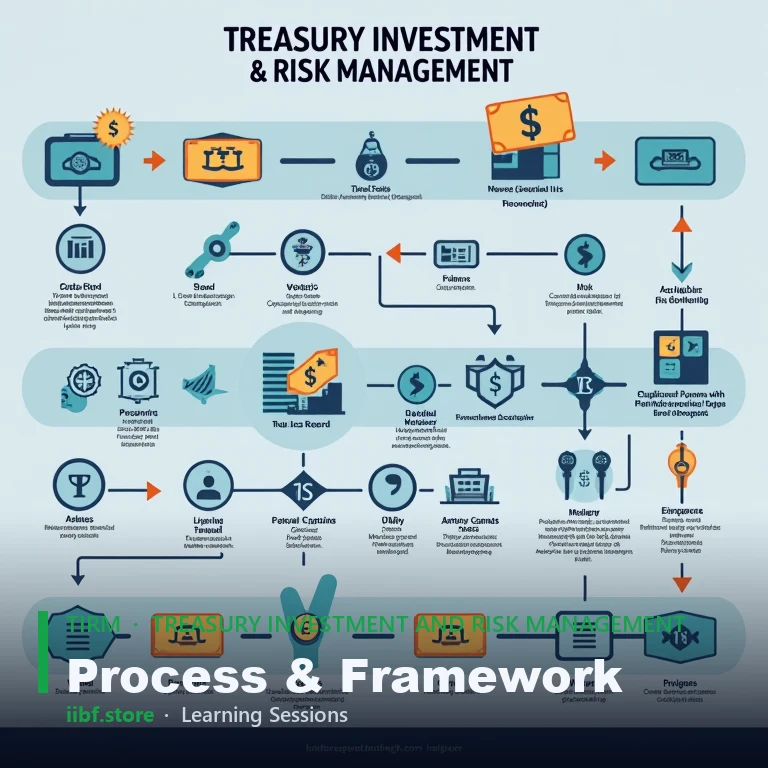
In practice a treasury manager balances three competing goals: SLR compliance, earnings stability and trading profit. SLR-eligible G-Secs are largely parked in HTM at amortised cost so that rate volatility does not bruise the P&L. The AFS book holds the bank's tactical, medium-term views, letting fair value show on the balance sheet through the AFS-Reserve without jolting reported profit. The FVTPL/HFT book is the active trading sleeve, where every tick is honestly marked to the income statement. Authoritative definitions and the full Master Direction text are available on the RBI website, which is worth bookmarking for last-mile revision.
Frequently Asked Questions
What replaced the old HTM/AFS/HFT classification in India?
From 1 April 2024, RBI's 2023 Master Direction replaced the old structure with three categories: Held to Maturity (HTM), Available for Sale (AFS) and Fair Value through Profit and Loss (FVTPL). Held for Trading (HFT) is now a sub-category within FVTPL, and classification follows the bank's business model and the SPPI cash-flow test.
How are HTM securities valued?
HTM securities are carried at amortised cost, not market value. Any premium paid over face value is amortised over the residual maturity, while a discount is generally not accreted. Because there is no mark-to-market, day-to-day yield movements do not affect the profit and loss account, which gives banks earnings stability on their core SLR holdings.
Why do bond prices fall when yields rise?
A bond pays fixed coupons. When market yields rise, new bonds offer higher returns, so the older, lower-coupon bond becomes less attractive and its price must fall until its effective yield matches the market. This inverse price-yield relationship is fundamental to bond valuation and to measuring interest-rate risk through duration and PV01.
What does PV01 measure in a treasury book?
PV01, the Price Value of a Basis Point, is the rupee change in a security's value for a one-basis-point (0.01%) move in yield. Dealers use it to size positions and hedge interest-rate risk across the portfolio. A higher PV01 means greater sensitivity, so it is a core daily risk metric on any bank's trading desk.
Final Takeaways
Master the 2023 classification logic, the three valuation routes, and the duration family of risk metrics and you will own this section of the certificate. The treasury investment portfolio is where accounting, markets and Basel III capital intersect, so the concepts repay study well beyond exam day. Ready to test yourself? Take a timed mock on our IIBF practice tests, sharpen recall with the match game, and read more on the iibf.store blog to lock in a confident pass.
Practice this topic
Take a free mock test, download chapter PDFs, or watch a video class — all included on iibf.store.