UPI International Payments: Cross-Border Acceptance and PayNow Linkage (Digital Banking)
UPI international payments have moved from a pilot idea to a working cross-border rail, and JAIIB/CAIIB Digital Banking papers now test the mechanics in detail. A merchant in Paris or Dubai can accept a UPI QR scan, an NRI in London can pay a vendor back home from a foreign SIM, and a worker in Singapore can send money to a family account in seconds through PayNow. This shift did not happen through one scheme — it is four separate rails stitched together by NPCI International Payments Limited (NIPL) and RBI's regulatory framework.
This article walks through merchant acceptance abroad, NRI access via international mobile numbers, the UPI-PayNow linkage, and the compliance rules — RBI, FEMA and the Liberalised Remittance Scheme (LRS) — that an exam question is most likely to probe.
📊 UPI Acceptance at Merchants Abroad
Merchant acceptance is the most visible piece of UPI international payments. NIPL, the wholly owned overseas arm of NPCI, has tied up with acquiring partners in the UAE, Singapore, Mauritius, Nepal, Bhutan and Sri Lanka so that local merchants display a UPI-linked QR code alongside their domestic payment options. An Indian traveller simply scans the code from a BHIM or bank UPI app and pays in rupees, while the merchant is settled in local currency by the partner acquirer.
France was a notable expansion: through a tie-up with the Lyra Network, UPI QR acceptance went live at tourist landmarks including the Eiffel Tower, letting Indian visitors pay without carrying euros or a forex card. The commercial logic is straightforward — high-traffic tourist and remittance corridors get UPI acceptance first, because transaction volume justifies the acquirer integration cost.
For exam purposes, remember that this is acceptance infrastructure, not a new payment instrument — the underlying rail is still UPI, routed internationally through NIPL's partnerships rather than the domestic NPCI switch alone. Candidates preparing the Overview of Digital Banking chapter should map each country back to whether the deployment is QR-based merchant acceptance or a person-to-person remittance corridor, since exam distractors often blur the two.
🌍 UPI for NRIs with International Mobile Numbers
The second strand of UPI international payments addresses NRIs directly. RBI permitted UPI to be linked to NRE and NRO accounts using an international mobile number, provided the number belongs to one of a defined set of countries with which India has established the necessary technical and regulatory arrangement — commonly cited examples include Singapore, Australia, Canada, the UAE, the UK, the US and several Gulf countries. Before this, an NRI needed an active Indian SIM to register for UPI, which was a persistent friction point.
The onboarding flow still runs through a participating bank or PSP app: the NRI links their NRE/NRO account, completes the standard UPI registration and OTP verification on the foreign number, and can then pay any Indian UPI QR or VPA exactly like a resident user. Chapter material under Mobile Banking covers the authentication layer this depends on, and candidates should also revisit mobile banking security features for how device binding and OTP checks apply when the registered number is outside India.
💡 Exam Tip: NRI UPI access via an international mobile number is an inward-facing convenience — it lets the NRI operate their own Indian account remotely. It is a different concept from merchant acceptance abroad or the UPI-PayNow remittance corridor. Keep the three strands distinct when eliminating options.
🔗 UPI-PayNow Linkage and the Cross-Border Remittance Flow
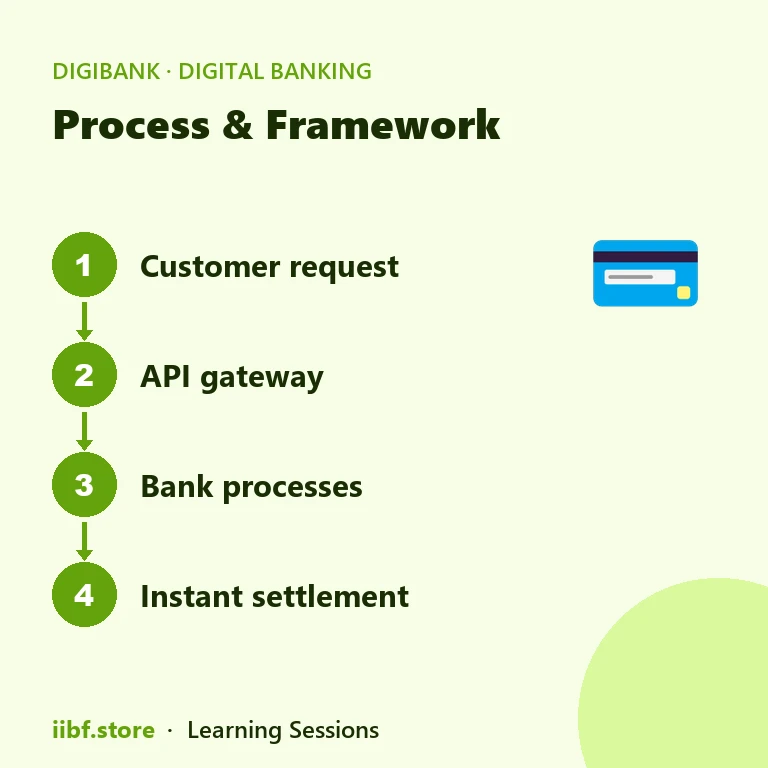
The UPI-PayNow linkage is the clearest cross-border remittance rail in the UPI international payments story. NIPL and Singapore's Banking Computer Services (BCS), operator of the PayNow real-time payment system, connected UPI and PayNow so that a person in either country can send money using just a mobile number or a UPI ID, without knowing the recipient's full bank account and IFSC/SWIFT details.
The settlement flow runs bank-to-bank in near real time: a sender in Singapore initiates through their bank's PayNow interface, BCS routes the request to NIPL, NIPL hands it to the UPI switch, and the receiving Indian bank credits the beneficiary's account directly — typically within seconds rather than the one-to-two working days a correspondent-banking SWIFT remittance would take. The reverse flow works the same way for someone in India sending to a PayNow-linked account in Singapore. This linkage sits alongside other NIPL-led rail exports; candidates comparing payment network strategy should also revisit RuPay and card payment networks, since both efforts push Indian payment infrastructure into markets that previously depended only on card networks or SWIFT.
⚠️ Common Mistake: Do not describe UPI-PayNow as "UPI going international" in the same sense as merchant QR acceptance. It is a dedicated, bilaterally negotiated linkage between two national fast-payment systems (UPI and PayNow), not a general extension of the UPI switch into Singapore.
📜 Compliance: LRS, FEMA and RBI Oversight
Every strand of UPI international payments sits inside India's foreign exchange law, not outside it. Outward remittances by resident individuals — including UPI-PayNow transfers from India to Singapore — are capped under the Liberalised Remittance Scheme (LRS), which currently permits remittances up to USD 2,50,000 per financial year for permitted current and capital account transactions, subject to FEMA and the remitting bank's own due diligence. A resident cannot simply route unlimited value through a UPI-linked remittance corridor to bypass LRS reporting.
Inward flows are treated differently. An NRI paying from their own NRE/NRO account through an international mobile number is not remitting fresh money into India in the LRS sense — it is a domestic-style debit to an existing NRE/NRO account, governed by the standard NRE/NRO operating rules rather than LRS limits. Banks must still apply KYC, AML screening and transaction monitoring consistent with FEMA and RBI's Master Directions on cross-border transactions.
On the infrastructure side, the API linkages between NIPL, foreign acquirers and partner banks like BCS carry their own operational-risk and data-security obligations, an area candidates should connect to network security in banking IT infrastructure when studying how cross-border payment APIs are secured. For the authoritative and current text of RBI's foreign exchange and payment system directions, refer to rbi.org.in rather than memorising a figure from a secondary source.
📌 Remember: LRS governs what a resident Indian can send out. It does not govern what an NRI does with their own NRE/NRO account balance through UPI.
| Channel | Who Uses It | Direction | LRS Applicable |
|---|---|---|---|
| Merchant QR acceptance abroad | Indian traveller paying a foreign merchant | India to overseas merchant | ✅ Yes (within LRS/travel limits) |
| NRI UPI via international mobile number | NRI operating own NRE/NRO account | Domestic debit from NRI account | ❌ No |
| UPI-PayNow linkage | Resident sending to Singapore, or vice versa | Bidirectional, India-Singapore | ✅ Yes (outward leg from India) |
It is worth contrasting these live corridors with domestic-only innovations you have already studied, such as UPI Lite and offline payments — those variants stay entirely within India's borders and carry no LRS or FEMA dimension at all, which is exactly why examiners like to pair them with cross-border UPI questions to test whether you can tell scope apart. For the fuller retail-banking backdrop to these digital rails, the Retail Banking - Digital Banking Class 12 and Class 11 chapters are worth a re-read alongside this topic, and the full Digital Banking tag archive collects related articles in one place.
🧠 Practice MCQs: UPI International Payments
Q1. Which entity leads UPI's overseas merchant-acceptance tie-ups such as those in the UAE, Singapore and France? (a) RBI directly (b) NPCI International Payments Limited (NIPL) (c) SWIFT (d) Reserve Bank Innovation Hub
Answer: (b) — NIPL, the wholly owned international subsidiary of NPCI, negotiates and operationalises UPI acceptance with overseas acquirers and merchants.
Q2. An NRI wants to use UPI while retaining their foreign mobile number. Which accounts can this UPI registration be linked to? (a) Only savings accounts held by residents (b) NRE and NRO accounts (c) Only fixed deposit accounts (d) Only PPF accounts
Answer: (b) — RBI permits UPI registration with an international mobile number for NRE and NRO account holders from eligible countries.
Q3. The UPI-PayNow linkage connects India's UPI with which country's fast-payment system? (a) UAE (b) Singapore (c) Nepal (d) United Kingdom
Answer: (b) — UPI is linked with PayNow, Singapore's real-time payment system operated via Banking Computer Services (BCS), enabling instant India-Singapore remittances.
Q4. A resident Indian sends money to Singapore through the UPI-PayNow corridor. Which regulatory ceiling governs this outward remittance? (a) No ceiling applies (b) The Liberalised Remittance Scheme (LRS) limit (c) A fixed per-transaction cap set by NIPL (d) The domestic UPI per-transaction limit only
Answer: (b) — Outward remittances by residents, including via UPI-PayNow, fall under FEMA and the LRS annual ceiling.
Q5. When an NRI debits their NRE account using UPI linked to an international mobile number, this transaction is best classified as: (a) An LRS outward remittance (b) A fresh inward foreign remittance (c) A domestic-style debit to an existing NRE account (d) A SWIFT wire transfer
Answer: (c) — It is treated as an operation on the NRI's own existing account under standard NRE/NRO rules, not as a new LRS remittance.
Want chapter-wise mock tests with 100+ MCQs? Start practising free →
Can any Indian bank account accept UPI payments from a merchant abroad?
No — the merchant must be onboarded by an acquiring partner tied up with NPCI International Payments Limited. Acceptance currently exists in select countries such as the UAE, Singapore, Mauritius, Nepal, Bhutan, Sri Lanka and parts of France, not universally overseas.
Does every NRI automatically qualify for UPI with a foreign mobile number?
No. The NRI must hold an NRE or NRO account, and their mobile number must belong to one of the countries RBI has enabled for this facility through participating banks and UPI apps.
Is the UPI-PayNow linkage limited to India and Singapore only?
Yes, as it stands the linkage is a bilateral arrangement between UPI and Singapore's PayNow system. It is a template NIPL may extend to other countries, but it is not a general multi-country network.
Does LRS apply to an NRI spending from their own NRE account via UPI?
No. LRS applies to outward remittances by resident Indians. An NRI operating their own NRE/NRO account through UPI is not making an LRS-governed remittance.
✅ Conclusion: Lock In the Four Strands Before Exam Day
UPI international payments cover four distinct mechanisms that examiners deliberately mix together: merchant acceptance abroad through NIPL tie-ups, NRI access via international mobile numbers on NRE/NRO accounts, the bilateral UPI-PayNow remittance corridor with Singapore, and the FEMA/LRS compliance layer that governs outward flows. Keep the direction of money movement and the regulatory basis clear for each one, since that distinction is where most exam traps sit.
Revise the Retail Banking - Digital Banking Class 10 chapter alongside this article, then test yourself with a timed set on iibf.store's CAIIB course to see how these cross-border rules show up in mixed-topic questions.
Quick quiz on this topic
5 exam-style questions from our free test bank — check yourself before you move on.
Practice this topic
Take a free mock test, download chapter PDFs, or watch a video class — all included on iibf.store.
Keep reading