UPI Lite and Offline Payments: Limits and Use Cases (IIBF Digital Banking)
UPI Lite and offline payments are one of the most exam-relevant developments in India's retail payment stack, and IIBF Digital Banking papers test them regularly. Unlike a standard UPI transaction that debits your bank account in real time over the internet, UPI Lite moves a small pre-loaded balance out of core banking for every single payment, and its NFC-based cousin, UPI Lite X, pushes that idea one step further into near-offline, tap-based transfers. For a candidate, the syllabus angle is simple: know what sits on the device, what still needs the bank, and where RBI and NPCI have drawn the design lines.
📱 What UPI Lite Actually Changes
A regular UPI payment is a real-time, account-to-account instruction: the payer's bank, the payee's bank, and NPCI's switch are all in the loop for every rupee that moves. That works well for most payments but is unnecessarily heavy for a ten-rupee tea stall purchase or a bus ticket, especially when network signal is weak or a core banking system is briefly busy.
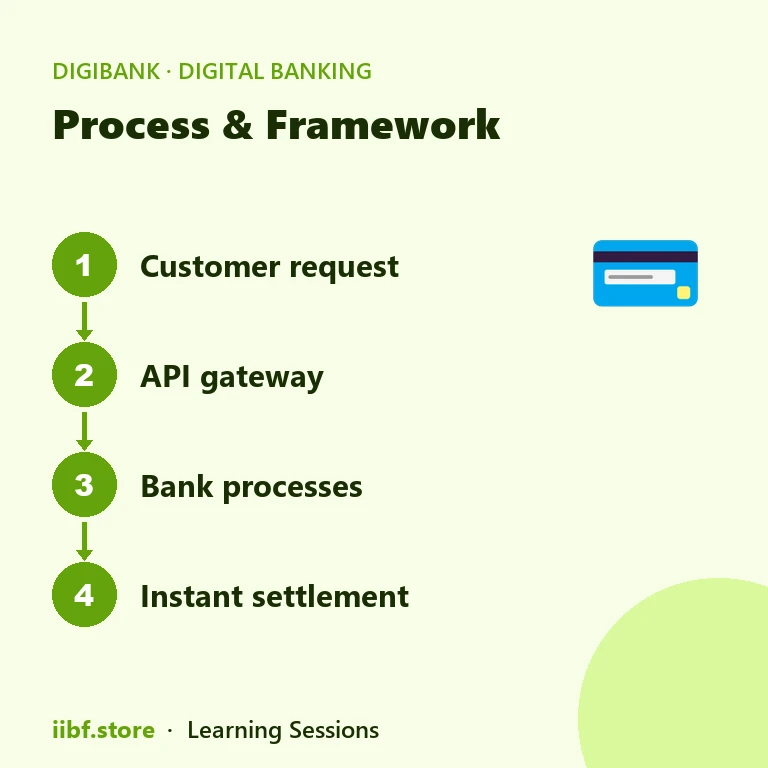
UPI Lite solves this by creating an on-device wallet inside the UPI-enabled app. You load the wallet once from your linked bank account — that loading step is a normal online, PIN-authenticated UPI transaction. After that, every small payment you make is debited straight from the on-device balance. The receiving side still gets credited to its bank account, but your side of the transaction does not touch core banking, and critically, it does not ask for a UPI PIN. That single design choice is what makes UPI Lite fast enough for queue-line retail and light enough to work on patchy mobile networks.
This also changes the settlement picture from a compliance standpoint. Because the debit leg is off the core banking rails at the moment of payment, banks reconcile UPI Lite wallet movements in batches rather than transaction-by-transaction, which is a distinction examiners like to probe.
💰 On-Device Wallet Design and Limits
The exam-safe way to describe UPI Lite's limits is by design principle rather than by a specific rupee figure, because NPCI and RBI have revised the per-transaction cap, the wallet ceiling, and the number of PIN-free transactions allowed more than once since launch. What has stayed constant is the architecture: a capped on-device balance, funded only from the customer's own linked bank account, used exclusively for low-value payments, with no ability to receive money into the Lite wallet itself — incoming funds always land in the regular bank account, never in the offline balance.
For your paper, remember the sequencing rather than the numbers: (1) load the wallet online with PIN authentication, (2) spend from the wallet PIN-free up to the prevailing per-transaction ceiling, (3) once the wallet or the transaction is bigger than the permitted threshold, the app automatically routes the payment back through the normal UPI PIN flow. Candidates who quote an exact rupee limit from an old note risk being wrong the moment RBI revises it again — describe the mechanism and you are always correct.
💡 Exam Tip: If a question asks "why no UPI PIN," the answer is the on-device balance itself acting as the risk ceiling — not an authentication gap.
This wallet-based design is also why UPI Lite features heavily in the Financial Inclusion chapter — low-value, PIN-free, offline-tolerant payments are aimed squarely at first-time and rural digital payment users who may not always have strong connectivity.
📶 UPI Lite X: Genuinely Offline, NFC-Based Transfers
UPI Lite solves patchy connectivity; UPI Lite X is built for no connectivity at all. It uses Near Field Communication (NFC) so that two UPI Lite X-enabled phones can exchange value directly, device to device, by tapping them together — no mobile data, no Wi-Fi, and no live bank connection required at the moment of the transaction.
The precondition is that both wallets must already be loaded while online, exactly like standard UPI Lite. Once loaded, the value transfer between the two devices happens locally over NFC, and the underlying bank-side reconciliation catches up later when either device reconnects to the network. This makes UPI Lite X relevant for basements, elevators, flights, remote terrain, and disaster-response scenarios where connectivity cannot be guaranteed but a payment still needs to go through.
For IIBF purposes, keep the distinction crisp: UPI Lite reduces load on core banking and works over a patchy but present network; UPI Lite X removes the network requirement altogether at the point of transaction, relying purely on device-to-device NFC. Both still depend on an online funding step, so neither is a substitute for cash in a fully disconnected, unfunded scenario.
⚠️ Common Mistake: Do not describe UPI Lite X as "internet-free banking." The wallet still needs an online top-up; only the tap-to-pay leg is offline.
🏦 Why This Matters for Bankers and Candidates
From a banker's chair, UPI Lite and offline payments reduce the transaction load on the bank's core banking system and NPCI's switch, since the vast majority of low-value, high-frequency payments are absorbed by the on-device wallet instead of hitting the ledger one debit at a time. That is a genuine infrastructure relief during peak retail hours, festival rushes, and high-footfall events.
For customers, the value proposition is speed and resilience: a PIN-free tap that clears in a weak-signal shop, or a payment that completes even when the app cannot reach the internet at all. Both reduce failed-transaction friction, which is a recurring RBI focus area in its digital payment security and customer-protection guidance published on rbi.org.in.
This chapter connects naturally with the broader Retail Banking syllabus. Study it alongside Mobile Banking and Overview of Digital Banking, since UPI Lite is essentially a specialised mode layered on top of the mobile banking app rather than a separate product. It is also worth cross-checking how device-level authentication is evolving elsewhere in digital banking, covered in the CAIIB ITDB note on biometric authentication in digital banking.
Practically, expect exam questions to test whether you can distinguish UPI Lite from full UPI, and UPI Lite from UPI Lite X, on three axes: authentication requirement, network dependency, and where the balance physically resides.
| Feature | Standard UPI | UPI Lite | UPI Lite X |
|---|---|---|---|
| Where balance sits | Bank account (core banking) | On-device wallet | On-device wallet |
| UPI PIN needed per payment | Yes | ❌ No (below threshold) | ❌ No |
| Needs live internet at payment time | Yes | ✅ Yes (light network) | ❌ No (NFC tap) |
| Core banking debit per transaction | Yes | ❌ No (batched later) | ❌ No (batched later) |
| Can receive money into the wallet | Yes | ❌ No | ❌ No |
📌 Remember: Both UPI Lite and UPI Lite X require an initial online, PIN-authenticated top-up — offline only applies to the spend leg, not the funding leg.
Also revisit the class notes on Retail Banking - Digital Banking Class 12 for how these payment rails sit inside the wider retail digital banking product suite, and compare the wallet-funding step against related instruments discussed in the Digital Banking Units note and the RuPay and card payment networks guide, since all three sit under the same RBI digital payments push. If CBDC comes up in the same paper, the CBDC e-Rupee digital currency article is the natural companion read — both e-Rupee and UPI Lite move value without a per-transaction core banking hop, though the underlying instrument is completely different.
🧠 Practice MCQs: UPI Lite and Offline Payments
Q1. What is debited when a customer makes a payment using UPI Lite? (a) The linked bank account directly (b) The on-device wallet balance (c) A prepaid instrument issued by NPCI (d) The payee's bank account
Answer: (b) — UPI Lite payments draw from the pre-loaded on-device wallet, not the bank account, for each individual transaction.
Q2. Why does UPI Lite not require a UPI PIN for eligible transactions? (a) The transaction is guaranteed by the payee's bank (b) The capped on-device wallet balance itself limits the exposure (c) NPCI waives authentication for all UPI apps (d) PIN entry is optional in all UPI transactions
Answer: (b) — The design relies on the wallet's own value ceiling as the risk control, allowing PIN-free, faster payments below the threshold.
Q3. How does UPI Lite X differ from standard UPI Lite? (a) It allows unlimited wallet balance (b) It enables device-to-device NFC transfers without a live network at the time of payment (c) It replaces the need for any bank account (d) It only works for merchant payments
Answer: (b) — UPI Lite X uses NFC so two loaded wallets can exchange value directly between devices even without internet connectivity at that moment.
Q4. Can money be received directly into a UPI Lite on-device wallet? (a) Yes, from any UPI user (b) No, incoming funds always credit the linked bank account (c) Yes, but only from another Lite wallet (d) Yes, up to the wallet ceiling
Answer: (b) — The Lite wallet is a one-way spending balance; all incoming credits land in the customer's regular bank account.
Q5. What must happen before a customer can use UPI Lite X for an NFC tap-to-pay transfer? (a) Nothing, it works with a completely empty wallet (b) The wallet must first be loaded online, PIN-authenticated, from the bank account (c) The receiving device must be a POS terminal (d) Both devices must be on the same bank's app
Answer: (b) — The offline NFC leg only moves already-loaded wallet balance; funding the wallet is always an online, authenticated step first.
Want chapter-wise mock tests with 100+ MCQs? Start practising free →
Is UPI Lite the same as a prepaid wallet?
It behaves similarly in that value sits on the device before spending, but UPI Lite is an NPCI-governed feature inside UPI apps funded only from the user's own linked bank account, not a separately licensed prepaid payment instrument.
Does UPI Lite work without any internet at all?
No. UPI Lite needs the app to periodically sync and needs an online step to load the wallet; it is designed for weak or intermittent connectivity, not a fully offline device. UPI Lite X's NFC tap is the genuinely offline leg.
What happens if a UPI Lite payment exceeds the wallet or per-transaction threshold?
The app falls back to the standard UPI flow, requiring the UPI PIN and a direct core banking debit for that transaction.
Who sets the UPI Lite limits?
NPCI, in consultation with RBI, sets the per-transaction and wallet ceilings, and these have been revised more than once, so candidates should track the current circular rather than memorise a fixed figure.
✅ Conclusion: Lock In the Design, Not Just the Numbers
UPI Lite and offline payments reward candidates who understand the mechanism — an on-device wallet, PIN-free small payments, batched settlement, and NFC-based device-to-device transfer under UPI Lite X — rather than candidates who memorise a rupee figure that RBI may have already revised. Tie this chapter to Mobile Banking, Financial Inclusion, and the wider digital payments set from the Digital Banking tag hub, and you will be able to answer both the direct definitional questions and the trickier "why no PIN" or "why is this different from UPI Lite X" comparison questions. Put it into practice with a full mock attempt on iibf.store's CAIIB course before exam day.
Quick quiz on this topic
5 exam-style questions from our free test bank — check yourself before you move on.
Practice this topic
Take a free mock test, download chapter PDFs, or watch a video class — all included on iibf.store.
Keep reading