UPI Payment System Explained for IIBF Digital Banking
The UPI Payment System is the single most important real-time payments innovation an IIBF Digital Banking candidate must understand. Built and operated by the National Payments Corporation of India (NPCI). The Unified Payments Interface lets a customer link multiple bank accounts to one mobile application and push or pull money instantly using a Virtual Payment Address (VPA). For the certification exam. You are expected to know not just what UPI does, but how the underlying rails, participants, settlement and risk controls fit together.
In this guide we break down the UPI Payment System end to end: its layered architecture. The role of NPCI and Payment Service Providers (PSPs), transaction limits, newer variants like UPI 123Pay and UPI Lite, and the security framework that protects every transaction. Whether you are preparing for JAIIB. CAIIB or the dedicated Digital Banking certification, mastering these fundamentals will help you handle both theory and case-study questions with confidence.

What Is the UPI Payment System and Who Runs It
The UPI Payment System is an instant, 24x7 real-time interbank payment platform that sits on top of the Immediate Payment Service (IMPS) infrastructure. It was launched by NPCI in 2016 under the regulatory umbrella of the Reserve Bank of India. NPCI is an umbrella organisation for retail payments in India. Promoted by banks and operating as a not-for-profit company under the Payment and Settlement Systems Act, 2007.
The key participants you must remember for the exam are:
- NPCI — operates the central UPI switch, routes messages and manages interbank settlement.
- Remitter (Payer) Bank — the bank holding the account from which money is debited.
- Beneficiary (Payee) Bank — the bank where funds are credited.
- Payment Service Providers (PSPs) — banks that offer UPI apps and onboard customers; they issue the VPA.
- Third-Party App Providers (TPAPs) — apps like those built on PSP-bank partnerships that provide the user interface.
A defining feature is the use of a Virtual Payment Address (for example. Name@bank), which masks sensitive account details such as account number and IFSC. The customer authenticates each transaction with a single-click two-factor authentication. Where the registered mobile device is the first factor and the UPI PIN is the second. This blend of simplicity and security is exactly why the platform scaled to billions of monthly transactions and why regulators continue to refine its governance.
UPI Architecture and Transaction Flow
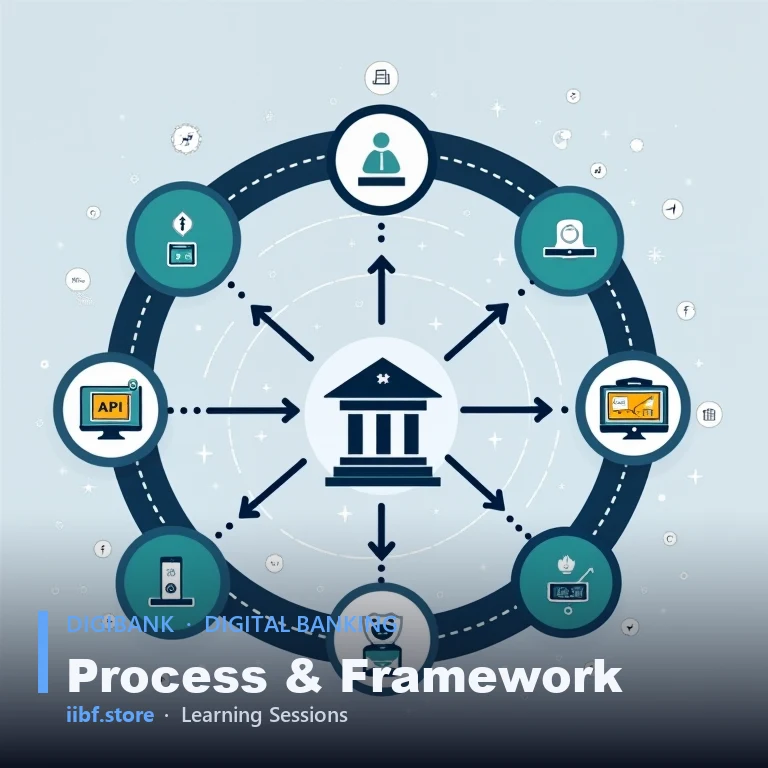
Understanding the four-layer flow of the UPI Payment System is critical for scenario questions. When a customer initiates a payment, the request moves through a tightly orchestrated sequence that completes in seconds.
- Initiation: The payer enters the payee VPA or scans a QR code, enters the amount, and authorises with the UPI PIN.
- Routing: The PSP app sends the request to the NPCI central switch, which identifies the remitter and beneficiary banks.
- Authorisation: NPCI forwards the debit request to the remitter bank and the credit instruction to the beneficiary bank.
- Settlement: Interbank settlement is handled by NPCI on a deferred net basis, while the customer experiences an instant credit.
UPI supports two core models: Pay (push), where the payer sends money, and Collect (pull), where the payee raises a request that the payer approves. Additional constructs include UPI AutoPay for recurring e-mandates, UPI Lite for small-value offline-style payments stored on-device, and UPI 123Pay for feature-phone users without internet. To test your grasp of these flows, try the practice sets on our mock test series and reinforce concepts with the interactive match-the-pairs game. The official platform statistics and circulars are published by NPCI, which is a reliable source for current participant lists and product features.
UPI Transaction Limits, Charges and Variants
Exam questions frequently test numerical limits and the cost structure of the UPI Payment System. While exact thresholds are revised by NPCI and RBI from time to time, candidates should know the broad framework rather than memorise volatile figures.
| Category | Indicative Per-Transaction Limit |
|---|---|
| Standard P2P / P2M | Up to Rs 1,00,000 |
| Capital markets, insurance, collections | Up to Rs 2,00,000 |
| Tax payments, hospitals, education (select cases) | Up to Rs 5,00,000 |
| UPI Lite (on-device wallet) | Small-value, low ceiling per transaction |
Key points to remember:
- No charges for customers: Person-to-person and most person-to-merchant UPI transactions remain free for end users.
- Interchange on PPI transactions: An interchange fee applies on certain prepaid-instrument (wallet-loaded) merchant payments above a threshold, borne by the merchant side, not the customer.
- UPI 123Pay: Enables feature-phone payments through IVR, missed-call, app-on-phone and proximity sound-based methods, advancing financial inclusion.
- UPI Lite and Lite X: Allow small offline payments without a bank-server round trip, reducing failure rates for low-value spends.
For a deeper dive into payment-system economics and regulatory direction, candidates should also study circulars from the Reserve Bank of India. Keep your numbers current by checking our regularly updated RBI rates and limits resource before the exam.
Security, Fraud Risks and Exam Strategy
The trust in the UPI Payment System rests on a multi-layered security model, and examiners love to test both the controls and the residual risks. Every transaction uses single-click two-factor authentication, end-to-end encryption, and a device-binding mechanism that ties the UPI registration to a specific SIM and handset.
- Two-factor authentication: Device fingerprint (something you have) plus UPI PIN (something you know).
- No sensitive data shared: The VPA hides account number and IFSC from the counterparty.
- UPI PIN: Set via debit-card details and OTP; never shared, and required even to receive in collect requests by design awareness.
- Risk controls: Transaction limits, daily caps, cooling periods for new beneficiaries, and velocity checks.
Despite strong controls, social-engineering frauds persist: fake collect requests, QR-code scams where victims are tricked into approving a debit, screen-sharing app misuse, and phishing for UPI PIN. A crucial exam fact is that you never need to enter a UPI PIN to receive money — PIN entry always means a debit from your account. Candidates should be able to advise customers on these red flags. To consolidate your preparation, pair this article with structured coursework in our JAIIB programme and CAIIB programme, both of which cover digital-banking modules in depth.

Frequently Asked Questions
Who operates the UPI Payment System in India?
The UPI Payment System is built and operated by the National Payments Corporation of India (NPCI), an umbrella body for retail payments promoted by banks. It functions under the regulatory supervision of the Reserve Bank of India and runs on top of the IMPS infrastructure for instant. Round-the-clock interbank fund transfers.
What is a Virtual Payment Address in UPI?
A Virtual Payment Address. Or VPA, is a unique identifier such as name@bank that lets users send and receive money without sharing their account number or IFSC code. It acts as a privacy-protecting alias, mapping to the underlying bank account and forming the backbone of UPI's simple, secure addressing system.
Do I need a UPI PIN to receive money?
No. You never enter your UPI PIN to receive funds. The UPI PIN is required only to authorise a debit from your own account. If anyone asks you to enter your PIN to receive a payment. It is a fraud attempt designed to trick you into approving a withdrawal from your account.
What is UPI 123Pay and who is it for?
UPI 123Pay is a feature-phone payment service that lets users transact without a smartphone or internet. It works through IVR calls, missed-call services, app-on-phone, and proximity sound-based payments. It was launched to drive financial inclusion among users who do not own internet-enabled smartphones, especially in rural areas.
Conclusion: Lock In Your UPI Marks
The UPI Payment System is a high-yield topic that rewards candidates who understand its architecture, participants, limits and security model as an integrated whole rather than isolated facts. Revise the four-layer transaction flow, the role of NPCI and PSPs, the key variants, and the never-share-your-PIN rule, and you will be ready for both objective and case-study questions. Now put your knowledge to the test — attempt a focused Digital Banking practice test on iibf.store today, and explore more explainers on our banking exam blog to stay exam-ready.
Quick quiz on this topic
5 exam-style questions from our free test bank — check yourself before you move on.
Practice this topic
Take a free mock test, download chapter PDFs, or watch a video class — all included on iibf.store.
Keep reading