UPI Transaction Dispute Resolution: RBI Rules for Bankers
A UPI payment that debits a customer's account but never reaches the beneficiary is one of the most common complaints a branch handles today, and it is also one of the most exam-relevant. UPI transaction dispute resolution is the structured process RBI and NPCI have built to fix exactly this problem — auto-reversal timelines, a shared dispute-tracking system between banks, and compensation if a bank sits on a failed payment too long. For a JAIIB or CAIIB candidate this is not abstract theory; it is the mechanism your own bank's ops team uses every day, and examiners like to test the exact timelines and who bears the compensation. This article walks through how UPI transaction dispute resolution actually works, the timelines involved, and where the responsibility sits between the remitter and beneficiary bank.
📱 Why UPI Transactions Fail in the First Place
Not every UPI failure is the same, and the resolution path depends on which kind of failure occurred. A transaction can fail at the remitter's bank before debit (insufficient balance, wrong PIN, timeout) — these never reach dispute resolution because no money has moved. The cases that matter for dispute resolution are the ones where the customer's account is debited but the payment does not land where it should.
Three situations dominate: the amount is debited but the beneficiary account is never credited (a "stuck" transaction pending reversal); the amount is debited and credited to the wrong beneficiary due to a technical error at NPCI's switch or a bank's core system; or the transaction is disputed by the customer as unauthorised. Each of these is captured in the Overview of Digital Banking chapter, which frames UPI as a message-based push payment system where the remitter bank, beneficiary bank, and NPCI's central switch must all reconcile independently.
Because three parties are involved in every transaction, a failure can originate at any leg — and the customer only sees one symptom: money left the account. That is why RBI mandated a common, time-bound resolution framework instead of leaving each bank to fix stuck payments at its own pace.
⏱️ RBI's Turn Around Time Framework and Auto-Reversal
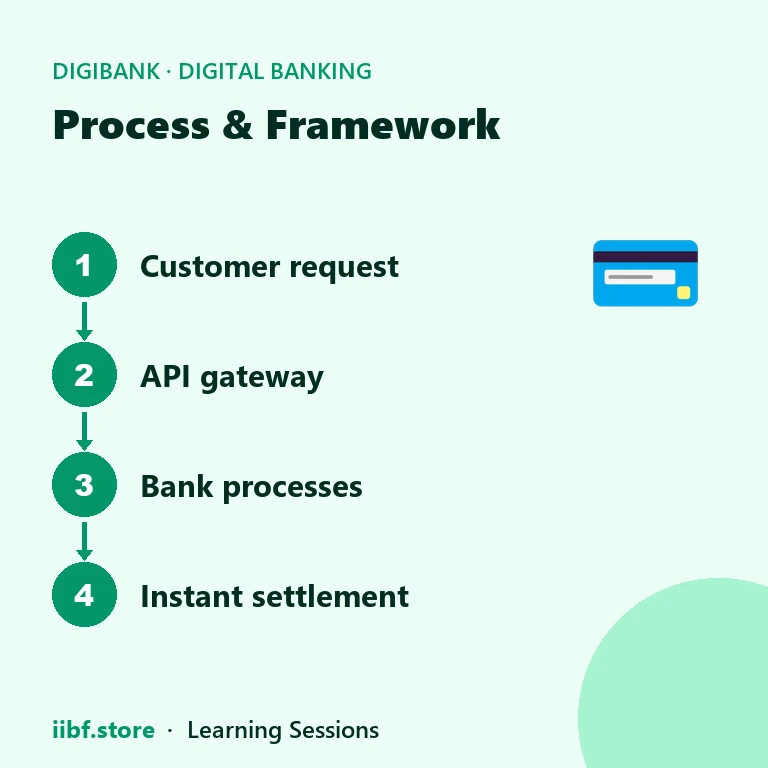
RBI's framework on Turn Around Time (TAT) for resolution of customer complaints and compensation for failed transactions applies across UPI, IMPS, AEPS, NACH, and card payments, and it sets a hard clock on how long a bank can hold a customer's money in limbo. For UPI, if the amount is debited from the remitter but not credited to the beneficiary, the transaction must be auto-reversed to the remitter's account within a defined turnaround window — the industry standard applied by banks is T+1 working day from the date of the failed transaction.
If the reversal is delayed beyond that window, the bank responsible for the delay must pay the customer a fixed daily compensation for every day of delay past the TAT, credited automatically without the customer having to file a separate claim. This compensation obligation is what forces banks to treat "stuck" UPI transactions as an operational priority rather than a low-priority reconciliation task. Bankers can read the underlying framework directly on RBI's official website, where circulars on Turn Around Time and compensation for failed digital payment transactions are published.
📌 Remember: the TAT clock for UPI auto-reversal is counted in working days from the date of the failed transaction, not the date the customer complains — a common point examiners test.
The same TAT logic underpins related payment-safety mechanisms bankers should recognise together, including the Positive Pay System in India, which reduces cheque-fraud disputes upstream the same way TAT rules reduce UPI reversal disputes downstream.
🔄 NPCI's Dispute Management System: How Banks Raise and Track Complaints
Individual banks do not resolve UPI disputes in isolation — NPCI operates a shared dispute management platform that both the remitter bank and the beneficiary bank access to raise, track, and close complaints against a specific transaction reference number. When a customer reports a failed or wrongly-credited UPI transaction, the bank's ops or grievance team raises a ticket on this platform tagged with a standard reason code — for example, "transaction pending," "beneficiary account credited but not confirmed," or "amount debited, transaction failed at beneficiary end."
The beneficiary bank must respond within its own TAT window, either confirming the credit (which closes the dispute) or accepting the reversal (which triggers the refund to the remitter). This bilateral, code-driven workflow is what allows lakhs of daily UPI disputes to be resolved without manual back-and-forth between bank branches or call centres.
This dispute layer sits alongside core UPI functionality covered under Mobile Banking in the syllabus, since most retail UPI disputes originate from a mobile app transaction rather than a merchant POS or QR failure.
💰 Compensation, Liability, and Who Pays
A frequent point of confusion — including in exam questions — is which bank actually pays the compensation when a UPI reversal is delayed. The liability sits with the bank that caused the delay in the payment chain, not automatically with the remitter's bank just because that is where the customer holds the account. If the beneficiary bank sat on confirming or rejecting the credit past its TAT, the beneficiary bank bears the compensation; if the remitter bank delayed initiating the reversal after the beneficiary bank confirmed the transaction failed, the remitter bank bears it.
NPCI's dispute platform timestamps every action in the chain precisely so that liability can be attributed to the specific leg that breached TAT, rather than defaulting to whichever bank the customer complained to first.
⚠️ Common Mistake: assuming the remitter's bank always pays compensation for a delayed UPI reversal — liability actually follows whichever bank in the chain breached its own TAT window.
Banks are also expected to disclose their TAT and compensation policy to customers, and the failed-transaction compensation is meant to be credited proactively, without the customer needing to raise a separate escalation for routine delays within this Digital Banking dispute framework.
🏦 The Remitter Bank vs Beneficiary Bank Split in Practice
Front-line staff often need to explain to a customer why "your bank" cannot simply credit back money without waiting on the beneficiary bank's response — this is a genuinely useful thing to be able to explain clearly, and it comes up in interviews as much as in exams. The remitter bank can only auto-reverse once it has either an explicit failure confirmation from the beneficiary side via NPCI's switch, or the TAT window lapses without confirmation, whichever triggers first under the framework.
This two-sided accountability model is deliberately different from how RBI treats digital lending disputes, where the framework set out under the RBI digital lending guidelines places most disclosure and grievance responsibility on the regulated entity extending the loan, since there is no equivalent "beneficiary bank" in a lending relationship.
Banks are also increasingly expected to secure the transaction data used in dispute investigation itself — customer account numbers, UPI handles, and transaction logs pulled up during a dispute review are sensitive data that must be protected in line with data masking and tokenisation practices, so that resolving one customer's complaint does not expose another customer's data to the staff handling the case.
📋 What Bankers Should Verify Before Escalating a Complaint
Before a branch escalates a UPI dispute upward, a few checks save time for both the customer and the bank. First, confirm the exact UPI transaction reference number and timestamp from the passbook or app — reversal tracking is done at the transaction-ID level, not by amount and date alone. Second, check whether the TAT window has actually lapsed; many "delayed" complaints are raised within the T+1 window and simply need patience rather than escalation.
Third, verify whether the dispute is a failed-transaction case (covered by auto-reversal and compensation) or a disputed/unauthorised-transaction case, which follows RBI's separate limited-liability framework for customer complaints rather than the TAT compensation rules. Conflating the two is a common processing error that delays genuine compensation cases.
💡 Exam Tip: questions often test the difference between a "failed transaction" (TAT and auto-reversal apply) and a "disputed/unauthorised transaction" (limited customer liability rules apply) — they are resolved under different frameworks.
Staff should also log every escalation with its reason code intact, since NPCI's platform and the bank's own MIS both rely on that code to track resolution performance against RBI's TAT benchmarks.
| Failure Type | Resolution Path | Compensation Applies |
|---|---|---|
| Amount debited, beneficiary not credited | Auto-reversal within TAT window | ✅ Yes, if delayed past TAT |
| Amount debited, wrong beneficiary credited | Manual dispute raised via NPCI platform | ✅ Yes, if delayed past TAT |
| Transaction disputed as unauthorised | Limited-liability complaint framework | No — separate liability rules apply |
| Transaction failed before debit (insufficient balance, timeout) | No reversal needed — no debit occurred | Not applicable |
🧠 Practice MCQs: UPI Transaction Dispute Resolution
Q1. Under RBI's TAT framework, a UPI transaction where the amount is debited but not credited to the beneficiary is auto-reversed within which window? (a) T+7 calendar days (b) T+1 working day (c) 30 days (d) 90 days
Answer: (b) — the standard TAT for auto-reversal of a failed UPI credit is T+1 working day from the date of the failed transaction.
Q2. If a UPI reversal is delayed beyond the TAT window, who is liable for the compensation? (a) Always the remitter bank (b) Always NPCI (c) The bank whose leg breached the TAT window (d) The customer bears the cost
Answer: (c) — liability is attributed to whichever bank in the transaction chain — remitter or beneficiary — actually breached its own TAT window.
Q3. What platform do banks use to raise and track UPI transaction disputes with each other? (a) SWIFT (b) NPCI's shared dispute management system (c) CIBIL portal (d) RBI's Sachet portal
Answer: (b) — NPCI operates the shared platform where remitter and beneficiary banks raise, track, and resolve disputes using reason codes against a transaction reference number.
Q4. A customer reports their UPI account was debited without authorisation. Which framework applies? (a) The TAT auto-reversal and compensation framework (b) RBI's limited customer liability framework for unauthorised transactions (c) The Positive Pay framework (d) No framework applies
Answer: (b) — a disputed or unauthorised transaction is handled under RBI's separate limited-liability complaint framework, not the failed-transaction TAT compensation rules.
Q5. Which of the following UPI failures does NOT require a reversal under the TAT framework? (a) Debit with no credit to beneficiary (b) Debit with wrong beneficiary credited (c) Transaction timeout before any debit occurred (d) Delayed confirmation from beneficiary bank
Answer: (c) — if the transaction failed before the account was debited, there is nothing to reverse and TAT compensation rules do not apply.
Want chapter-wise mock tests with 100+ MCQs? Start practising free →
How long does a bank have to reverse a failed UPI transaction?
The standard turnaround time for auto-reversal of a debited-but-not-credited UPI transaction is T+1 working day from the date of the failed transaction, after which delayed-compensation rules apply.
Do I need to file a separate complaint to get UPI failure compensation?
No. Compensation for a delayed reversal beyond the TAT window is meant to be credited automatically by the liable bank without a separate customer claim, though in practice customers often need to follow up if it is missed.
Is an unauthorised UPI transaction resolved the same way as a failed one?
No. A failed transaction (debited but not credited) follows the TAT auto-reversal framework, while a disputed or unauthorised transaction follows RBI's separate limited customer liability framework for complaints.
Which bank is responsible if a UPI reversal is delayed?
Whichever bank — remitter or beneficiary — actually breached its own TAT window in the transaction chain bears the compensation liability, as tracked through NPCI's shared dispute platform.
UPI transaction dispute resolution is one of those topics that reads as pure operations but is squarely on the JAIIB/CAIIB Digital Banking syllabus, and knowing the TAT windows and liability rules cold will help you both in the exam hall and at the counter. Test yourself with more scenario-based questions from the CAIIB course to lock in the timelines before exam day.
Quick quiz on this topic
5 exam-style questions from our free test bank — check yourself before you move on.
Practice this topic
Take a free mock test, download chapter PDFs, or watch a video class — all included on iibf.store.
Keep reading