Zero Trust Architecture in Banks: Principles and Rollout (IIBF IT Security)
The bank branch used to be a fortress: a hardened network perimeter, a firewall at the edge, and everything inside the wall trusted by default. That model is dead. Once core banking moved to the cloud, staff started working from home, business correspondents logged in from village kiosks, and fintech partners plugged into your APIs, "inside" stopped meaning "safe." This is exactly why zero trust architecture in banks has moved from a vendor buzzword to a mandatory design principle examiners expect you to explain — its tenets, its logical components, and how a bank with decades-old core systems migrates to it without breaking payments on a Monday morning.
🏰 Why the Castle-and-Moat Model Failed
The traditional perimeter model assumed a clean boundary: a firewall, a DMZ, and a trusted internal LAN. Anyone who cleared the moat — logged into the corporate network via VPN — was implicitly trusted to roam fairly freely across internal systems. That assumption made sense when tellers used desktops wired into the branch switch and the core banking server sat in the same data centre as the users querying it.
Three forces broke it. Cloud adoption means treasury analytics and parts of core banking now run on infrastructure the bank does not physically control. Distributed work means relationship managers and business correspondents authenticate from home Wi-Fi and shared cyber cafes, well outside any branch LAN. Ecosystem integration means UPI switches, payment aggregators, and fintech partners have programmatic access straight into banking systems, each a potential entry point that never touches the old perimeter.
Once workload, users, and partners sit outside the moat, one breached VPN credential can move laterally to the core banking database with almost no further checks. This flat-trust gap is precisely what zero trust architecture in banks closes, by refusing to grant broad implicit trust just because something is "inside."
🔑 Core Tenets: Never Trust, Always Verify
Zero trust is not a product — it is an operating philosophy built on tenets every IIBF candidate should be able to explain, not just recite.
Per-request authentication and authorisation: trust is never granted once and carried forward. Every request to a resource — a core banking query, a payment gateway API call — is independently authenticated and authorised at that moment, not merely at login.
Least privilege: every identity, human or machine, gets the minimum access needed for its task, scoped narrowly and granted just-in-time rather than as a standing entitlement. A branch executive does not need standing access to the treasury dealing database.
Assumed breach: design starts from the premise that an attacker is already inside — on an endpoint or in a compromised credential — so controls limit blast radius through segmentation rather than relying only on keeping intruders out.
Continuous verification: device posture, location, and behaviour are re-evaluated throughout a session, not only at login, so access can be revoked mid-session the moment risk indicators change. These tenets are what distinguish zero trust architecture in banks from a merely stronger firewall.
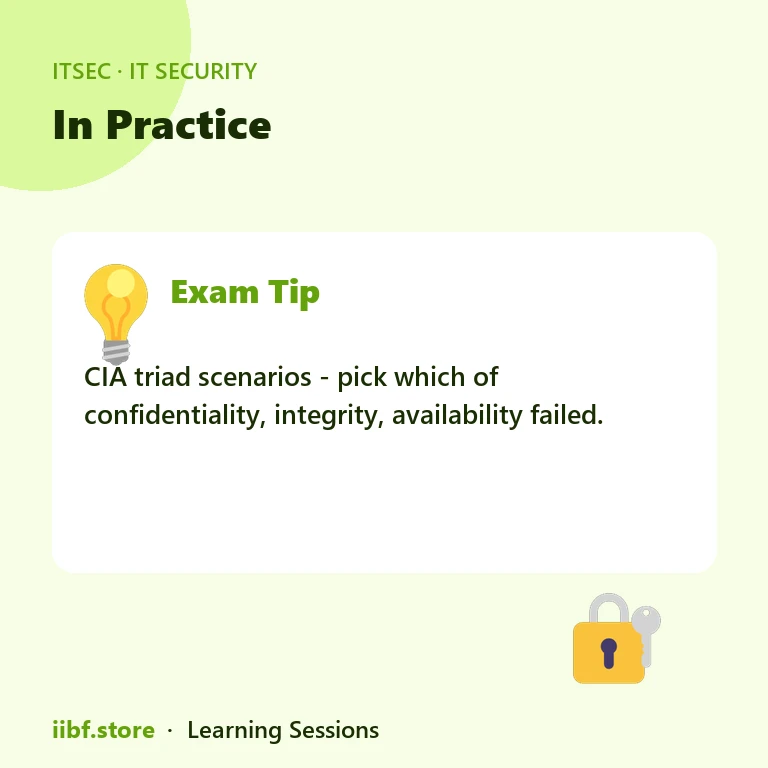
💡 Exam Tip: If a question asks which principle explains revoking a session because a device suddenly shows an unusual location, the answer is continuous verification, not least privilege.
🧩 Policy Engine, Administrator and Enforcement Point
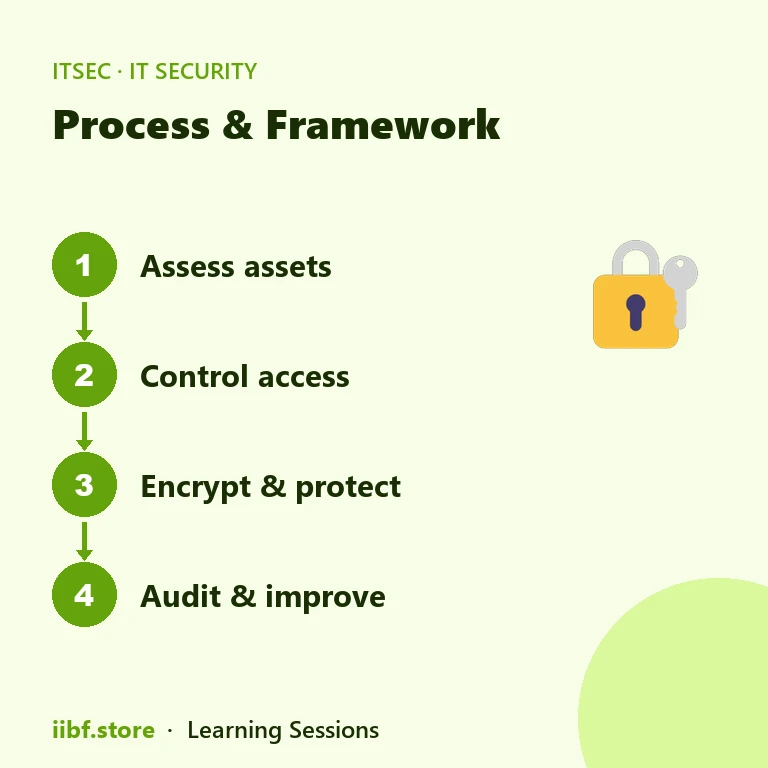
NIST's zero trust reference model, the usual teaching framework in Indian banking IT security literature, breaks the control plane into three logical pieces working together for every access decision. The Policy Engine (PE) is the decision-maker: it evaluates identity, device posture, resource sensitivity, and threat intelligence, then outputs a grant or deny decision. The Policy Administrator (PA) executes that decision, establishing or terminating the actual session. The Policy Enforcement Point (PEP) sits directly in front of the core banking application, treasury system, or payment gateway, and physically permits or blocks the connection.
Picture a relationship manager opening a customer's loan file. The PEP intercepts the request, the PE checks identity, role, device compliance, and file sensitivity, and the PA opens a narrowly scoped connection just for that file, for that session — nothing broader. This request-by-request pipeline is what makes zero trust enforceable at scale rather than a policy statement on paper. Study how these controls sit alongside conventional network controls for the fuller module treatment.
🔐 Identity, Micro-Segmentation and Zero Trust Network Access
With no reliable network boundary left, identity becomes the control point banks actually enforce. Strong multi-factor authentication is table stakes, but zero trust ties access to device posture too — is the laptop encrypted, patched, and running approved endpoint protection? A user with perfect credentials on a non-compliant device should still be denied or stepped down to restricted access. Machine identities matter just as much: service accounts and batch jobs need their own least-privilege scoping, since a stolen API key is as dangerous as a stolen password.
Inside the data centre, micro-segmentation replaces the flat internal network with tightly walled zones around core banking, treasury dealing systems, and the payment gateway, so even a compromised branch reporting server cannot move east-west into the payment gateway zone. This tiering is explained in the chapter on asset classification and controls.
Most banks still route remote users through a flat VPN that, once authenticated, drops them onto a broad internal subnet. Software-Defined Perimeter (SDP) and Zero Trust Network Access (ZTNA) replace that: identity and device are verified first, and only then is an encrypted, application-specific tunnel opened — nothing else on the network is even visible, sometimes called "black cloud" networking.
| Aspect | Traditional Flat VPN | SDP / ZTNA |
|---|---|---|
| Network visibility after login | ❌ Broad internal subnet | Only the requested app |
| Per-request verification | ❌ One-time at login | Continuous, per session |
| Device posture check | ❌ Rarely enforced | Mandatory before access |
| Fits business correspondent access | ❌ Coarse-grained | Scoped to one app |
This snapshot is why zero trust architecture in banks deliberately retires flat VPN access for remote staff and third-party integrators. Data-centric controls complete the picture — classifying data by sensitivity, encrypting it at rest and in transit, and applying rights management so even an authorised viewer cannot forward a restricted file, extending the same logic covered under software security control.
🛣️ Continuous Monitoring and a Staged Migration Roadmap
Every access decision and denied request generates telemetry that must feed the Security Operations Centre in near real time — an identity requesting access outside its normal pattern, a device posture score dropping mid-session, an API partner calling unfamiliar endpoints. The richer this telemetry, the sharper the anomaly detection, which is why monitoring is inseparable from the policy engine described above; the operational detail on staffing and SIEM tuning is covered in security operations centre in banks.
No Indian bank can flip a switch and go zero trust overnight — core banking mainframes and latency-sensitive payment rails make a big-bang rewrite risky. A realistic rollout is staged: first enforce MFA and inventory every identity; then segment treasury, payment gateway, and core banking zones, since these carry the highest loss-given-breach; next replace flat VPN with SDP/ZTNA for remote staff and business correspondents; then layer classification, encryption, and rights management; finally extend continuous verification bank-wide.
Latency is the recurring exam trap: a policy engine call added to every transaction must resolve in milliseconds, so banks cache trust decisions briefly and place enforcement points close to the resource. Legacy systems that cannot run modern agents sit behind a segmented gateway that enforces the rules on their behalf. This staged, risk-prioritised approach is why zero trust architecture in banks is best understood as a multi-year programme, not a single purchase — and it is a favourite scenario question in IIBF's IT Security paper. The RBI's supervisory expectations on IT governance and cyber resilience provide the regulatory backdrop; see the framework at rbi.org.in.
⚠️ Common Mistake: Treating zero trust as purely a network redesign. Without continuous analytics feeding the SOC, "continuous verification" has no signal to act on.
🧠 Practice MCQs: Zero Trust in Bank Networks
Q1. In the NIST zero trust reference model, which component actually makes the grant-or-deny decision for a resource request? (a) Policy Enforcement Point (b) Policy Engine (c) Policy Administrator (d) Identity Provider
Answer: (b) — The Policy Engine evaluates the trust algorithm and outputs the decision; the Administrator executes it and the Enforcement Point applies it in the traffic path.
Q2. A bank replaces its branch VPN with per-application encrypted tunnels invisible until identity and device posture are verified. This is best described as: (a) A firewall upgrade (b) Software-Defined Perimeter / ZTNA (c) A wider flat VPN (d) A DMZ expansion
Answer: (b) — SDP/ZTNA opens narrow, identity-bound tunnels to a single application rather than exposing a broad internal subnet.
Q3. Which zero trust tenet is violated when a batch job is given standing, unrestricted access to all core banking tables instead of only the ones it processes? (a) Continuous verification (b) Assumed breach (c) Least privilege (d) Per-request authentication
Answer: (c) — Least privilege requires scoping every identity, including machine identities, to the minimum access needed for its task.
Q4. Micro-segmentation around the treasury and payment gateway zones is primarily intended to: (a) Speed up transaction processing (b) Reduce the blast radius of a breach elsewhere in the network (c) Eliminate the need for MFA (d) Replace the need for encryption
Answer: (b) — Under the assumed-breach principle, segmentation contains an attacker who has already compromised another zone, preventing lateral movement into high-value systems.
Q5. Why do banks typically stage a zero trust rollout instead of implementing it in one step? (a) Zero trust is optional under RBI rules (b) Legacy core systems and latency-sensitive payment rails cannot absorb a big-bang redesign (c) Zero trust only applies to cloud systems (d) MFA cannot be deployed gradually
Answer: (b) — Legacy mainframe dependencies and transaction latency constraints make a phased, risk-prioritised migration the realistic path for most banks.
Want chapter-wise mock tests with 100+ MCQs? Start practising free →
Is zero trust the same as installing a stronger firewall?
No. A firewall guards a network boundary, while zero trust removes the assumption of implicit trust altogether, verifying every request by identity, device posture, and context regardless of network location.
Can a bank with an old core banking mainframe still adopt zero trust?
Yes, through a staged rollout. Legacy systems that cannot run modern agents are placed behind a segmented gateway enforcing zero trust policies on their behalf, while identity and remote-access controls are modernised first.
What is the difference between the Policy Engine and the Policy Enforcement Point?
The Policy Engine decides whether to grant or deny a request based on identity, device, and risk signals; the Policy Enforcement Point sits in the traffic path and physically permits or blocks the connection based on that decision.
Does zero trust eliminate the need for VPNs entirely?
It replaces flat, broad-access VPNs with Software-Defined Perimeter or ZTNA tunnels scoped to one application at a time, so remote connectivity remains but the flat-trust design behind it does not.
Conclusion: Build Your Zero Trust Foundations Now
The perimeter is gone, and pretending otherwise leaves core banking and payment systems one stolen credential away from a serious breach. Understanding zero trust architecture in banks — its never-trust-always-verify tenets, the policy engine/administrator/enforcement point pipeline, identity and device controls, micro-segmentation, and a realistic staged roadmap — is now core exam territory for IIBF's IT Security paper. Compare notes against types of security controls in banks and endpoint security in banks, and see how these controls connect to messaging risk in swift payment fraud controls. Browse the full IT Security blog archive for more exam-focused reading, then test yourself free at iibf.store/tests.
Practice this topic
Take a free mock test, download chapter PDFs, or watch a video class — all included on iibf.store.