Basel III Capital Adequacy Norms for Indian Banks (CAIIB ABM 2026)

For CAIIB Advanced Bank Management candidates, basel iii capital adequacy is one of the highest-yield topics in the syllabus because it links risk, capital planning and regulatory compliance in a single framework. Every Indian bank must hold capital against credit, market and operational risk, and examiners love testing the exact ratios, buffers and 2026 timelines around it. This article breaks the framework into exam-ready pieces, with worked structure, a comparison table, and five practice MCQs so you walk into the CAIIB ABM paper knowing precisely how the numbers fit together.
🏦 What Basel III Capital Adequacy Means for Indian Banks
Basel III is the third and current iteration of the Basel Committee on Banking Supervision's global capital framework, built after the 2008 financial crisis exposed how thin bank capital cushions actually were. It tightened the definition of eligible capital, raised minimum ratios, and added buffers that did not exist under Basel II. The Reserve Bank of India adopted the framework through a phased roadmap and it now governs how every scheduled commercial bank measures and reports solvency.
At its core, basel iii capital adequacy asks one question: does a bank hold enough high-quality capital to absorb unexpected losses without needing a taxpayer bailout? The answer is expressed as the Capital to Risk-weighted Assets Ratio, or CRAR, which compares a bank's capital base to its risk-weighted exposures across the loan book, investments and off-balance-sheet items. RBI has kept the regulatory minimum well above the global floor for Indian banks, reflecting a deliberately conservative supervisory stance.
For an exam candidate, the practical skill is knowing which capital layer absorbs which kind of loss first, and why regulators insist on holding buffers on top of the bare minimum rather than trusting banks to self-regulate. See the RBI's consolidated capital regulations at rbi.org.in for the current master circular list.
🧮 How the Capital Adequacy Ratio Is Computed
CRAR is calculated as Total Capital (Tier 1 plus Tier 2) divided by Risk-Weighted Assets, expressed as a percentage. Tier 1 capital is further split into Common Equity Tier 1 (CET1) — paid-up equity, share premium and retained earnings — and Additional Tier 1 (AT1), which includes perpetual instruments that can absorb losses on a going-concern basis. Tier 2 capital covers subordinated debt, general provisions and revaluation reserves, and only kicks in once Tier 1 is exhausted.
Risk-weighted assets are not simply the loan book at face value. Each exposure is multiplied by a risk weight that reflects its credit quality — a sovereign exposure might carry a near-zero weight while an unrated corporate loan can carry 100% or more. Banks using the Standardised Approach apply RBI-prescribed weights, while larger banks using Internal Ratings-Based (IRB) approaches build their own probability-of-default and loss-given-default models, which is exactly where CAIIB's statistical toolkit becomes relevant.
💡 Exam Tip: Remember the hierarchy — CET1 is the strictest, most loss-absorbing layer; AT1 is the going-concern cushion; Tier 2 is the gone-concern layer. Questions often ask which instrument qualifies where.
🛡️ Capital Buffers: CCB, CCyB and the D-SIB Surcharge
Basel III did not stop at raising minimum ratios — it layered discretionary and structural buffers on top. The Capital Conservation Buffer (CCB) requires banks to hold an extra cushion of CET1 above the minimum; if a bank dips into this buffer, RBI restricts discretionary distributions like dividends and bonuses until it is rebuilt. This buffer exists purely to force early, automatic capital conservation rather than waiting for a crisis to force it.
The Countercyclical Capital Buffer (CCyB) is a separate, time-varying layer that regulators can activate when credit growth looks excessive system-wide, forcing banks to build capital during good times so it is available to absorb losses during a downturn. It has generally stayed at zero for Indian banks through most cycles but remains a live regulatory tool that examiners expect candidates to explain conceptually.
On top of these sits the Domestic Systemically Important Bank (D-SIB) surcharge, an additional CET1 requirement for banks whose failure would disrupt the wider financial system. RBI publishes and periodically revises its D-SIB list, and banks on it must hold a graded additional buffer depending on their systemic bucket.
⚠️ Common Mistake: Students often confuse the Capital Conservation Buffer with the Countercyclical Buffer — CCB is always-on and static, CCyB is discretionary and cyclical. Keep the two separate in your answer sheet.
⚖️ Basel III vs Basel II: Key Differences
Basel II focused mainly on the size of the capital number; Basel III focused equally on its quality, its consistency across cycles, and the bank's ability to survive a liquidity shock, not just a solvency one. It introduced entirely new concepts — the leverage ratio as a non-risk-based backstop, and the Liquidity Coverage Ratio (LCR) and Net Stable Funding Ratio (NSFR) as liquidity-specific requirements that did not exist in the earlier framework at all.
The table below summarises the shift candidates are most often tested on.
| Parameter | Basel II | Basel III |
|---|---|---|
| Capital Conservation Buffer | ❌ Not present | ✅ Mandatory 2.5% CET1 |
| Leverage Ratio backstop | Not defined | Minimum 3% (non-risk-based) |
| Liquidity standards (LCR/NSFR) | Absent | Introduced as binding ratios |
| Minimum CET1 requirement | 2% | 4.5% (plus buffers) |
| Countercyclical buffer | Not available | 0% to 2.5%, activated by regulator |
Notice how every Basel III addition is designed to close a gap that the 2008 crisis exposed directly — thin equity quality, no leverage backstop, and no standardised liquidity discipline across the banking system.
📊 RBI's 2026 Roadmap and the Statistics Behind Risk Weights
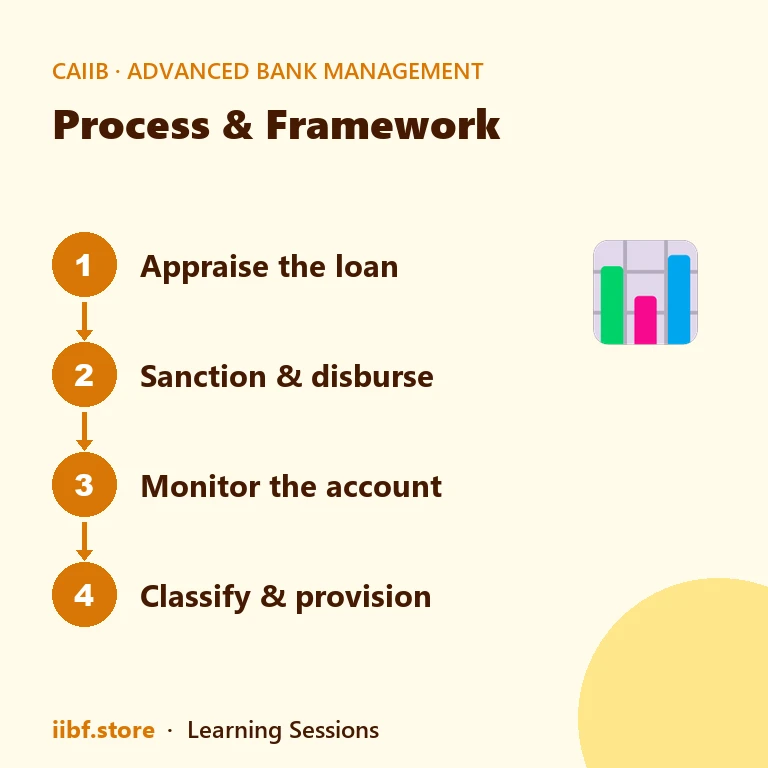
RBI's implementation of basel iii capital adequacy for Indian banks has moved from a transitional phase into steady-state compliance, with periodic recalibration of risk weights for specific asset classes such as unsecured retail credit and NBFC exposures, where weights have been tightened in recent cycles to curb concentration risk. Banks are expected to run capital planning several quarters ahead, factoring projected credit growth, expected provisioning and buffer requirements into their internal capital adequacy assessment process.
Banks running IRB models lean heavily on statistical estimation to justify their risk weights to supervisors — validating a probability-of-default model requires disciplined sampling design and confidence-interval thinking, which is exactly what our chapters on sampling methods and estimation build up from first principles. The same statistical grounding — including the central-tendency measures covered in our piece on measures of central tendency in banking statistics and the conditional-probability logic in Bayes theorem in banking decisions — underlies how banks model default risk internally.
Capital adequacy does not sit in isolation from the rest of the balance sheet either. Stronger CRAR usually means a bank can grow its loan book without a fresh capital raise, which is the same lens used in our article on balance sheet management in banks when discussing capital, RoA and NIM together. Banks also hedge their capital-sensitive exposures using instruments explained in hedge accounting for banks, since fair-value swings can otherwise erode CET1 unexpectedly.
📌 Remember: A rising CRAR is not automatically good news — check whether it improved because capital grew or because risk-weighted assets shrank through de-risking. Examiners test this distinction directly.
For the complete tag archive of ABM regulatory topics like this one, browse our Advanced Bank Management tag hub, and track live repo/reverse-repo and SLR movements on the RBI rates resource page, since policy rate changes indirectly influence credit growth and hence risk-weighted asset planning.

🧠 Practice MCQs: Basel III Capital Adequacy
Q1. Under Basel III, which capital layer must be replenished first if a bank breaches the Capital Conservation Buffer, with RBI restricting discretionary distributions until it is rebuilt? (a) Tier 2 capital (b) Additional Tier 1 (c) Common Equity Tier 1 (d) Revaluation reserves
Answer: (c) — The Capital Conservation Buffer is built entirely from Common Equity Tier 1, so it is CET1 that must be rebuilt before distribution restrictions are lifted.
Q2. The Countercyclical Capital Buffer under Basel III is best described as: (a) A fixed 2.5% requirement at all times (b) A discretionary, time-varying buffer activated during excessive credit growth (c) A liquidity ratio unrelated to capital (d) A one-time capital charge at bank incorporation
Answer: (b) — CCyB is activated at regulatory discretion when system-wide credit growth appears excessive, unlike the always-on Capital Conservation Buffer.
Q3. Which ratio did Basel III introduce as a non-risk-weighted backstop to overall bank leverage? (a) Net Stable Funding Ratio (b) Liquidity Coverage Ratio (c) Leverage Ratio (d) Capital Conservation Ratio
Answer: (c) — The Leverage Ratio compares Tier 1 capital to total exposure without risk-weighting, capping balance-sheet growth regardless of asset risk weights.
Q4. A bank on RBI's Domestic Systemically Important Bank (D-SIB) list must additionally hold: (a) Extra provisioning against NPAs only (b) A graded additional CET1 surcharge based on its systemic bucket (c) A reduced minimum CRAR (d) No additional requirement beyond regular banks
Answer: (b) — D-SIBs carry an additional CET1 surcharge scaled to their assigned systemic-importance bucket, on top of the standard minimum and buffers.
Q5. In the CRAR formula, risk-weighted assets under the Standardised Approach are derived by: (a) Taking the loan book at face value (b) Multiplying each exposure by an RBI-prescribed risk weight reflecting its credit quality (c) Applying a flat 100% weight to every asset (d) Using only off-balance-sheet items
Answer: (b) — Each on- and off-balance-sheet exposure is multiplied by a risk weight tied to its credit quality under RBI's prescribed schedule, not taken at face value.
Want chapter-wise mock tests with 100+ MCQs? Start practising free
What is the minimum CRAR Indian banks must maintain under Basel III as implemented by RBI?
RBI has set minimum capital requirements for Indian banks above the global Basel III floor, combining the base CET1, Tier 1 and total capital ratios with the Capital Conservation Buffer, making the effective minimum higher than the Basel Committee's own baseline.
Is basel iii capital adequacy the same as CRAR?
CRAR (Capital to Risk-weighted Assets Ratio) is the specific metric used to measure compliance with basel iii capital adequacy norms; the framework is the broader rulebook, and CRAR is the number banks report against it.
Why does Basel III include a leverage ratio when CRAR already measures capital strength?
CRAR is risk-weighted and can be gamed through aggressive risk-weight assumptions; the leverage ratio ignores risk weights entirely and caps total exposure against Tier 1 capital, acting as a simple backstop against under-estimated risk weights.
How often does RBI revise D-SIB surcharges and risk weights?
RBI reviews and publishes its D-SIB list periodically, and revises risk weights for specific segments such as unsecured retail or NBFC exposures whenever it judges concentration risk in the system has increased.
🏁 Conclusion: Master Basel III Capital Adequacy for CAIIB ABM
Basel iii capital adequacy ties together capital structure, buffers, risk-weighted assets and RBI's supervisory judgement into one integrated framework, and CAIIB ABM tests it from every one of those angles. The fastest way to lock it in is to work through timed questions rather than just re-reading definitions. Build your recall with a full CAIIB mock at iibf.store/course/caiib and keep revisiting the buffer hierarchy until CCB, CCyB and D-SIB stop feeling interchangeable.
Quick quiz on this topic
5 exam-style questions from our free test bank — check yourself before you move on.
Practice this topic
Take a free mock test, download chapter PDFs, or watch a video class — all included on iibf.store.
Keep reading