Board for Financial Supervision: RBI's Supervisory Arm (CAIIB)
Most candidates can name the Reserve Bank's Central Board and its Monetary Policy Committee, then go blank when asked who actually signs off on bank supervision. The answer is the Board for Financial Supervision — a committee of the Central Board that has met, largely out of public view, roughly once a month since 1994. For the CAIIB Central Banking elective it is exactly the kind of institutional-machinery question that separates a prepared candidate from a memoriser.
🏛️ Why the RBI Built a Separate Supervisory Board
Until the mid-1990s, regulation and supervision inside the Reserve Bank ran through the same channels, and both competed for attention with monetary policy at the Central Board table. The Narasimham Committee on the Financial System (1991) argued that supervision needed dedicated, quasi-autonomous attention rather than whatever time was left over after policy business.
The Reserve Bank acted on that in November 1994, constituting this board under the RBI (Board for Financial Supervision) Regulations, 1994, framed in exercise of the powers under Section 58 of the RBI Act, 1934. Note the legal architecture carefully, because it is examined: the BFS is not a statutory body created by its own Act. It is a committee of the Central Board, operating under regulations the Central Board itself framed.
The design goal was integrated supervision. Instead of banks, financial institutions and non-banking companies being watched by disconnected teams applying different standards, one board would see the whole regulated perimeter and could ask why a risk building up in one segment was not being priced in another.
This sits at the heart of the supervisory story told in development, regulation and supervision of scheduled commercial banks, and it is the mechanism through which the Reserve Bank's broader functions of central banks translate into action on individual institutions.
👥 Who Sits on It and How Often It Meets
The composition is compact and deliberately senior. The Governor is the Chairman. The Deputy Governor in charge of supervision serves as Vice-Chairman, and the remaining Deputy Governors are ex-officio members. Four Directors drawn from the Central Board are nominated by the Governor as members, which is what keeps the board connected to the Reserve Bank's wider governance rather than becoming a closed circle of executives.
The Board for Financial Supervision is required to meet normally once every month. That cadence matters: monthly meetings mean inspection findings, fraud reports and problem-bank reviews land on a senior table within weeks rather than at the end of a supervisory cycle.
It is supported by an Audit Sub-Committee, chaired by the Vice-Chairman, whose specific brief is to raise the quality of statutory audit and internal audit in banks and financial institutions — a quiet but important lever, since supervisors depend on audited numbers being real.
| Parameter | Board for Financial Supervision (BFS) | Central Board of Directors |
|---|---|---|
| Constituted under | RBI (BFS) Regulations, 1994, under Section 58 of the RBI Act | The RBI Act, 1934 itself |
| Chaired by | Governor | Governor |
| Vice-Chairman | Deputy Governor in charge of supervision | Not applicable |
| Meeting frequency | Normally once a month | At least six times a year |
| Dedicated supervisory mandate over banks, NBFCs, UCBs and PDs | ✅ | ❌ |
| Decides the policy repo rate | ❌ | ❌ (that is the Monetary Policy Committee) |
⚠️ Common Mistake: Calling the BFS a statutory authority separate from the Reserve Bank. It is a committee of the RBI's own Central Board, set up by regulations — not by a dedicated Act of Parliament.
🔍 What Actually Comes Up on Its Agenda
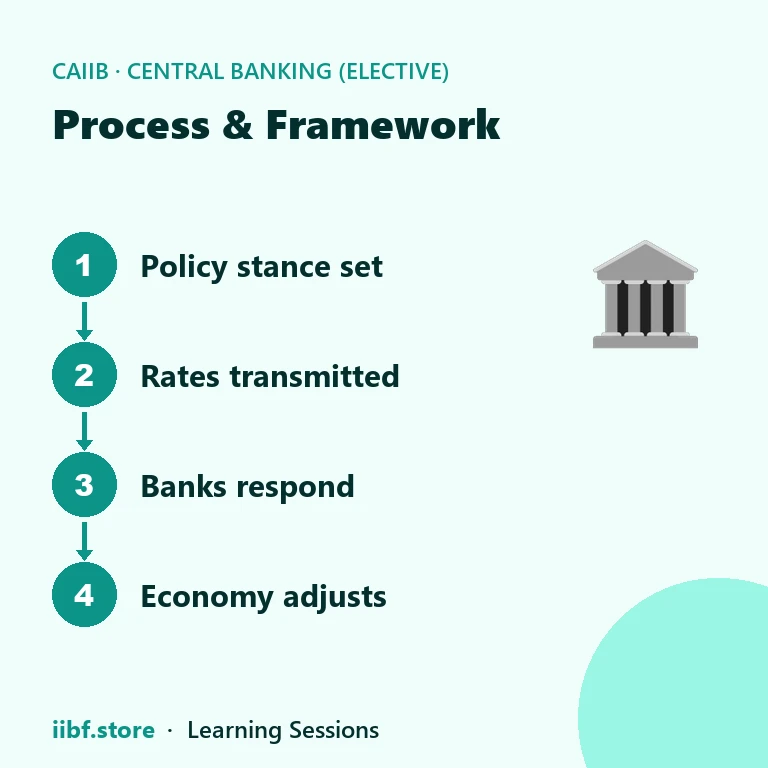
The supervisory perimeter is wide. The BFS exercises oversight over commercial banks, all-India financial institutions, non-banking financial companies, urban co-operative banks and primary dealers. In practice its agenda runs to inspection reports and the supervisory action that follows, problem exposures, large-value frauds, and the state of internal controls and audit at supervised entities.
The methodology has shifted underneath it. The old approach rated banks on the CAMELS template — capital adequacy, asset quality, management, earnings, liquidity and systems — with a parallel scale for foreign banks. From 2012-13 the Reserve Bank moved to Risk Based Supervision, under which the intensity of supervision is calibrated to an institution's assessed risk and capital rather than applied uniformly.
Institutional support was rebuilt to match. In November 2019 the Reserve Bank merged its separate supervisory departments into a unified Department of Supervision and its regulatory departments into a Department of Regulation, so that a single team could see a bank, an NBFC and a co-operative bank through the same lens. A College of Supervisors was later set up to professionalise supervisory skills.
That unified perimeter is why the same board that reviews a large private bank also reviews the entities covered in non-banking financial institutions: development, regulation and supervision and in development, regulation and supervision of co-operative banks. Governance findings feed straight into the board-level expectations described in corporate governance in banks.
💡 Exam Tip: Lock four facts about the Board for Financial Supervision and most objective questions fall — constituted November 1994, under regulations framed using Section 58 of the RBI Act, chaired by the Governor, and meeting normally once a month.
⚖️ Where It Sits Among the RBI's Other Hats
The Reserve Bank wears several hats at once, and the exam rewards candidates who can keep them apart. Monetary policy decisions belong to the Monetary Policy Committee. Currency issue and note quality run through the currency management machinery behind the clean note policy of RBI. Sovereign borrowing is handled in the debt-manager role explained under public debt management by RBI.
Supervision is the hat the Board for Financial Supervision wears. The distinction from regulation is worth stating plainly: regulation writes the rules — capital norms, exposure limits, and prescriptions such as the cash reserve ratio in India — while supervision checks whether an individual institution is complying and remains safe. The BFS owns the second half of that sentence.
It is also distinct from inter-regulatory coordination. Bodies that bring the securities, insurance and pension regulators to one table are chaired outside the Reserve Bank; the BFS is internal to it and looks only at entities the Reserve Bank itself supervises. Where a supervised bank breaches thresholds, corrective frameworks and supervisory action flow from decisions taken under this board's oversight. For the current committee composition and the latest supervisory circulars, check the RBI website directly rather than relying on dated notes.
🧠 Practice MCQs: RBI's Supervisory Board
Q1. The BFS was constituted by the Reserve Bank in: (a) 1991 (b) 1994 (c) 1997 (d) 2004
Answer: (b) — It was constituted in November 1994, acting on the recommendation of the Narasimham Committee on the Financial System.
Q2. The Chairman of the BFS is: (a) the Deputy Governor in charge of supervision (b) the Finance Secretary (c) the Governor of the Reserve Bank (d) a nominated Director of the Central Board
Answer: (c) — The Governor chairs the board; the Deputy Governor in charge of supervision is its Vice-Chairman.
Q3. The regulations constituting the BFS were framed in exercise of powers under which section of the RBI Act, 1934? (a) Section 58 (b) Section 42 (c) Section 45 (d) Section 22
Answer: (a) — The RBI (BFS) Regulations, 1994 were framed under Section 58 of the RBI Act, 1934.
Q4. Which of the following does NOT fall within the supervisory oversight of the BFS? (a) Non-banking financial companies (b) Urban co-operative banks (c) Primary dealers (d) Listed non-financial manufacturing companies
Answer: (d) — The board's remit covers commercial banks, all-India financial institutions, NBFCs, urban co-operative banks and primary dealers, not general corporates.
Q5. How often is the BFS required to meet? (a) Once a quarter (b) Normally once every month (c) Twice a year (d) Once a fortnight
Answer: (b) — The board normally meets once a month, which keeps inspection findings and fraud reviews in front of senior management quickly.
Want chapter-wise mock tests with 100+ MCQs? Start practising free →
❓ Frequently Asked Questions
What is the Board for Financial Supervision?
It is a committee of the Reserve Bank's Central Board, constituted in November 1994 under regulations framed using Section 58 of the RBI Act, 1934, to provide undivided attention to the supervision of banks, financial institutions, NBFCs, urban co-operative banks and primary dealers.
Who are the members of the BFS?
The Governor chairs it, the Deputy Governor in charge of supervision is Vice-Chairman, the other Deputy Governors are ex-officio members, and four Directors of the Central Board are nominated by the Governor as members.
Does the BFS regulate banks or supervise them?
It supervises. Rule-making sits with the Reserve Bank's regulatory departments and the Central Board; the BFS reviews inspections, frauds, audit quality and the supervisory action taken against individual institutions.
Is the BFS the same as an inter-regulatory coordination council?
No. Inter-regulatory councils bring several regulators and the government together and are chaired outside the Reserve Bank. The BFS is internal to the Reserve Bank and covers only the entities it supervises.
Treat this topic as institutional plumbing you can score on. Once you can place the Board for Financial Supervision correctly — a committee of the Central Board, chaired by the Governor, meeting monthly, sitting on the supervision side of the regulation-supervision line — most questions on the RBI's supervisory architecture answer themselves.
Cover the rest of the paper with the complete set of Central Banking elective notes, then lock it in with the structured modules in the CAIIB preparation course.
Quick quiz on this topic
5 exam-style questions from our free test bank — check yourself before you move on.
Practice this topic
Take a free mock test, download chapter PDFs, or watch a video class — all included on iibf.store.
Keep reading