Chinese Wall and Insider Trading Controls in Banks (2026)
A chinese wall and insider trading controls framework is one of the first things an IIBF Banking Compliance Professional (BCP) examiner expects a candidate to explain in detail, because it sits at the intersection of market conduct, confidentiality and personal accountability inside a bank. When a single banking group runs treasury dealing, investment banking, wealth management and corporate credit desks under one roof, price-sensitive information moves between departments unless it is physically and procedurally blocked. That blocking mechanism is the Chinese wall, and it works hand-in-hand with insider trading controls to stop unpublished price sensitive information (UPSI) from being misused for personal or institutional gain.
This guide breaks down how such an information barrier is built, monitored and enforced in Indian banks, how it links to SEBI's Prohibition of Insider Trading (PIT) Regulations, and what a compliance officer actually does when a wall-crossing request lands on their desk.
🧱 What Is a Chinese Wall in Banking?
A Chinese wall is an internal information barrier that separates the "public side" of a bank (research, retail banking, general treasury operations) from the "private side" (investment banking, M&A advisory, structured finance, credit committees handling unlisted price-sensitive deals). The wall is not a single control — it is a bundle of physical, electronic and procedural restrictions: separate floors or access-card zones, restricted IT folders, need-to-know distribution lists, and a formal register of employees who have crossed from the public side to the private side on a specific deal.
The purpose of this information barrier is twofold. First, it prevents UPSI generated on a private-side mandate (say, a proposed rights issue or a loan restructuring for a listed borrower) from reaching dealers, relationship managers or research analysts who could act on it. Second, it protects the bank itself from regulatory action, because SEBI and RBI both hold the institution responsible if UPSI leaks and is traded upon, even if no individual employee intended harm. Employees whose roles require crossing the wall — say, a credit officer joining a due-diligence team — must be added to a "restricted list" and their trading in that scrip frozen for the duration.
💡 Exam Tip: BCP questions often test whether you know the wall is maintained by the Compliance function, not by IT or HR — remember Compliance owns the restricted list, wall-crossing register and pre-clearance process end to end.
📈 Insider Trading Controls Under SEBI PIT Regulations
Insider trading controls in Indian banks are built around SEBI (Prohibition of Insider Trading) Regulations, 2015, as amended. Every bank that deals in listed securities — or advises on them — must adopt a Code of Conduct for prevention of insider trading, appoint a Compliance Officer, and maintain a Structured Digital Database (SDD) that time-stamps every instance UPSI is shared internally or externally. The SDD is non-negotiable: it must record the name of the person sharing UPSI, the recipient, the nature of the information and the date, and it cannot be edited retroactively.
Designated employees — those in dealing rooms, investment banking, credit, and their immediate relatives — must obtain pre-clearance before trading in securities above a threshold value, observe a trading window closure around results and other material events, and hold positions for a minimum period before reversing a trade. A chinese wall and insider trading controls regime typically layers three lists on top of each other: a Restricted List (no trading permitted for anyone), a Grey List (heightened surveillance, pre-clearance mandatory) and a general Designated Persons list (standard trading-window rules apply).
Related regulatory restrictions on lending exposures during such deals are covered in the loans and advances regulatory restrictions chapter, since credit committees handling a soon-to-be-listed exposure are frequently the ones crossing the wall.
🔐 Building Effective Chinese Wall and Insider Trading Controls
An effective compliance program built around these controls has five working parts. First, a wall-crossing protocol: any employee moving from the public side to a private-side deal must sign a confirmation, be logged in the SDD, and be added to the Restricted List before receiving any document. Second, physical and system segregation — separate email domains or access-controlled folders, no shared drives between dealing rooms and deal teams. Third, surveillance — trade surveillance software flags any trade by a designated person in a scrip that later appears on the Restricted List, triggering a look-back investigation.
Fourth, periodic attestations, where every designated employee confirms annually (and often quarterly) that they have not traded on UPSI and have disclosed all trades by themselves and immediate relatives. Fifth, escalation and reporting — any suspected leak is reported to the board-level Audit Committee and, where material, to SEBI within the prescribed timeline. Banks also cross-reference wall-crossing logs against large-value credit exposures; see the large exposures and exposure norms chapter for how exposure concentration itself is separately monitored and reported to the board.
⚠️ Common Mistake: Candidates often assume the Chinese wall only applies to listed-company deals. It also applies to material non-public information about the bank's own borrowers, forthcoming credit rating actions, and unpublished financial results of the bank itself.
⚖️ Consequences of Chinese Wall Breaches
A breach of chinese wall and insider trading controls carries consequences at three levels. At the individual level, SEBI can levy penalties up to three times the profit made or ₹25 crore (whichever is higher) under Section 15G of the SEBI Act, and can bar the individual from the securities market. At the institutional level, the bank faces reputational damage, regulatory scrutiny of its entire compliance function, and possible directions to strengthen internal controls under RBI supervision. At the employment level, breach of the Code of Conduct almost always triggers disciplinary action, up to and including termination, because it is treated as a matter of integrity, not just process failure.
Because wall breaches so often stem from personal relationships or undisclosed interests rather than deliberate fraud, compliance teams treat this topic alongside conflict of interest in banking training, since an employee who fails to disclose a personal stake is the most common root cause of a wall-crossing lapse.
| Control Feature | Chinese Wall (Information Barrier) | Insider Trading Control (PIT Code) |
|---|---|---|
| Primary objective | Blocks flow of UPSI between departments | Blocks trading on UPSI once received |
| Owned by | Compliance / Information Security jointly | Compliance Officer under PIT Regulations |
| Key register | Wall-crossing log | Structured Digital Database (SDD) |
| Applies before a trade? | Yes — prevents access | Yes — pre-clearance required |
| Applies after a trade? | ❌ No — access control only | ✅ Yes — trade surveillance & disclosure |
| Covers non-employees (e.g. relatives) | Rarely | Yes — immediate relatives included |
Chinese Wall in Practice: A Compliance Officer's Checklist
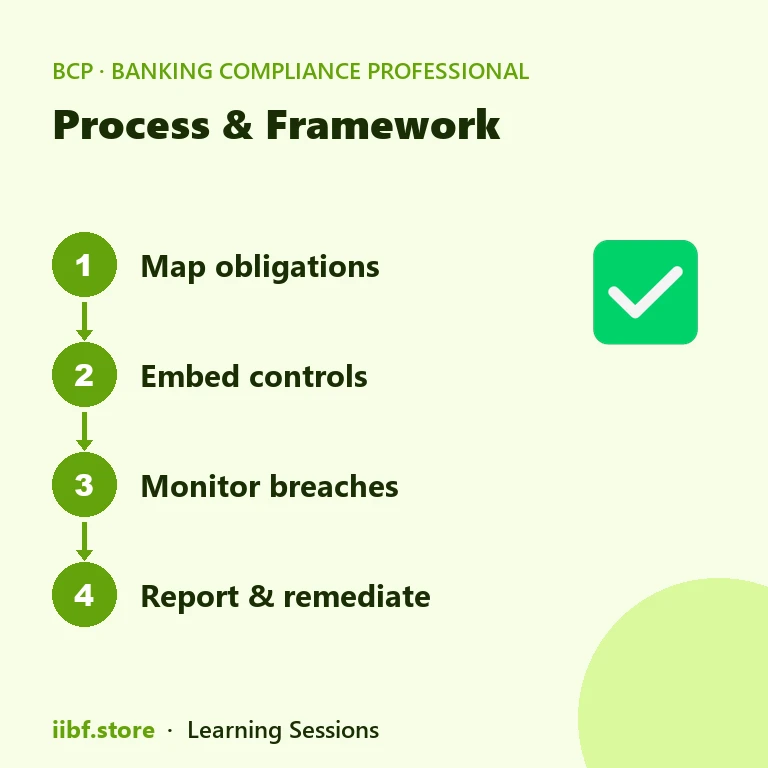
When a deal team is formed, the compliance officer first confirms the mandate genuinely involves UPSI, then opens a wall-crossing file, adds every team member to the Restricted List, and freezes their trading in the relevant scrip. Throughout the deal, the officer monitors the SDD for unauthorised access, runs periodic trade surveillance reports against the Restricted List, and ensures no research report or credit note referencing the target is published without a Chinese-wall clearance. On deal closure or public announcement, the officer removes the names from the Restricted List and documents the closure date in the SDD — a step examiners specifically test, because leaving stale entries on the list is itself flagged as a control weakness during RBI or SEBI inspection.
These information-barrier and insider-trading safeguards also intersect with data governance: access logs, document retention and need-to-know distribution all depend on how tightly a bank manages sensitive data more broadly, a theme explored further in data protection framework for banks. Compliance officers who set up wall-crossing protocols typically build on the same governance muscle used for regulatory restrictions on bank loans and the large exposures framework, since all three depend on timely, accurate internal disclosure.
📌 Remember: The three pillars examiners test repeatedly are (1) the wall-crossing register, (2) the Restricted/Grey list mechanism, and (3) the Structured Digital Database — know how these three interact, not just their definitions in isolation.
🧠 Practice MCQs: Chinese Walls and Insider Trading Controls
Q1. Under SEBI (Prohibition of Insider Trading) Regulations, 2015, the mandatory time-stamped record of every instance UPSI is shared internally is called the: (a) Restricted List (b) Structured Digital Database (c) Wall-Crossing Register (d) Compliance Ledger
Answer: (b) — The Structured Digital Database (SDD) is the statutory, non-editable record of every UPSI-sharing event, mandated under the PIT Regulations.
Q2. Which employee list under an information-barrier and insider-trading compliance program prohibits ALL trading in a specific scrip? (a) Grey List (b) Designated Persons List (c) Restricted List (d) Watch List
Answer: (c) — The Restricted List bars any trading in the named scrip for all employees on it, typically those who have crossed the Chinese wall on a live deal.
Q3. A credit officer joins a due-diligence team for a listed borrower's proposed rights issue. What is the FIRST compliance step required before the officer sees any deal documents? (a) Sign a wall-crossing confirmation and be added to the Restricted List (b) Inform the borrower's relationship manager (c) Obtain RBI's prior approval (d) Complete an annual PIT attestation
Answer: (a) — Wall-crossing must be logged and the employee added to the Restricted List before any UPSI access is granted, freezing their personal trading in that scrip.
Q4. Under Section 15G of the SEBI Act, the penalty for insider trading can extend up to: (a) ₹1 crore or the profit made, whichever is lower (b) ₹25 crore or three times the profit made, whichever is higher (c) A fixed penalty of ₹10 lakh (d) No monetary penalty, only market debarment
Answer: (b) — SEBI can impose a penalty of up to ₹25 crore or three times the profit made, whichever is higher, along with possible debarment from the securities market.
Q5. Which of the following is a control weakness commonly flagged during RBI/SEBI inspection of a bank's Chinese wall process? (a) Freezing trading for wall-crossed employees (b) Removing employees from the Restricted List immediately after public announcement (c) Leaving stale, unclosed entries on the Restricted List after deal closure (d) Maintaining a Structured Digital Database
Answer: (c) — Failing to close out and remove names from the Restricted List once a deal is public or terminated is a documented control gap examiners specifically look for.
Want chapter-wise mock tests with 100+ MCQs? Start practising free →
Frequently Asked Questions
What is the difference between a Chinese wall and a firewall in banking compliance?
A Chinese wall is an organisational and procedural information barrier between departments handling public versus private (UPSI-bearing) information, enforced through access controls, restricted lists and wall-crossing logs. A firewall, by contrast, is a technical network-security tool that blocks unauthorised external access to IT systems — the two terms are often confused but serve different control objectives.
Who is responsible for maintaining Chinese wall and insider trading controls in an Indian bank?
The Compliance Officer, appointed under SEBI's PIT Regulations, owns the Restricted List, the wall-crossing register and the Structured Digital Database. In practice this function reports to the Chief Compliance Officer and is subject to review by the board-level Audit Committee.
Does the Chinese wall apply only to listed company transactions?
No. While it is most closely associated with UPSI on listed securities, the same wall-crossing discipline applies to unpublished information about the bank's own results, forthcoming credit rating actions on borrowers, and other material non-public information that could influence trading decisions.
What happens if an employee is found trading while on the Restricted List?
The bank investigates through trade surveillance flags, reports the matter internally to the Audit Committee, and where material, escalates to SEBI within the prescribed timeline. Consequences range from disciplinary action up to termination for the employee, and possible SEBI penalties including fines and market debarment.
Conclusion: Master Chinese Walls Before Your BCP Exam
Chinese wall and insider trading controls form one of the most frequently tested governance topics in the Banking Compliance Professional syllabus, precisely because real-world lapses are common and costly. Know the three pillars — wall-crossing register, Restricted/Grey lists, and the Structured Digital Database — cold, and be ready to apply them to scenario-based questions involving credit teams, deal desks and relationship managers. Explore more compliance topics on the Banking Compliance Professional blog hub, and when you're ready, test your recall with a full mock set on practice tests.
Prefer revising from a printed book?
Chapter-wise books with MCQs after every chapter — minimal pages, complete coverage, delivered anywhere in India. Every book has a free sample to read first.
Learning Sessions · Ashish Sir
132 pages · 225 MCQs
Learning Sessions · Ashish Sir
188 pages · 435 MCQs
Learning Sessions · Ashish Sir
117 pages · 236 MCQs
Learning Sessions · Ashish Sir
Learning Sessions · Ashish Sir
118 pages · 299 MCQs
Learning Sessions · Ashish Sir
Learning Sessions · Ashish Sir
Learning Sessions · Ashish Sir
Learning Sessions · Ashish Sir
115 pages · 255 MCQs
Learning Sessions · Ashish Sir
Learning Sessions · Ashish Sir
334 pages · 936 MCQs
Learning Sessions · Ashish Sir
Learning Sessions · Ashish Sir
115 pages · 344 MCQs
Learning Sessions · Ashish Sir
107 pages · 240 MCQs
Learning Sessions · Ashish Sir
90 pages · 150 MCQs
Learning Sessions · Ashish Sir
131 pages · 672 MCQs
Learning Sessions · Ashish Sir
221 pages · 831 MCQs
Learning Sessions · Ashish Sir
128 pages · 524 MCQs
Learning Sessions · Ashish Sir
107 pages · 445 MCQs
Learning Sessions · Ashish Sir
148 pages · 478 MCQs
Learning Sessions · Ashish Sir
151 pages · 465 MCQs
Learning Sessions · Ashish Sir
148 pages · 375 MCQs
Learning Sessions · Ashish Sir
216 pages · 895 MCQs
Learning Sessions · Ashish Sir
109 pages · 300 MCQs
Learning Sessions · Ashish Sir
104 pages · 360 MCQs
Learning Sessions · Ashish Sir
82 pages · 297 MCQs
Learning Sessions · Ashish Sir
151 pages · 600 MCQs
Learning Sessions · Ashish Sir
98 pages · 282 MCQs
Learning Sessions · Ashish Sir
Practice this topic
Take a free mock test, download chapter PDFs, or watch a video class — all included on iibf.store.
Keep reading