Cloud Security Shared Responsibility Model: IIBF ITSEC Guide
When your bank signs a cloud services agreement, one question decides how much sleep your CISO loses: who is responsible for what. The cloud security shared responsibility model is the framework that answers this — it splits security duties between the cloud provider and your bank, and misreading that split is one of the most tested traps in the IT Security paper. Banks in India now run core banking, UPI switches, and even loan origination systems on public cloud, and every audit checks whether the bank truly understands its half of the deal.
This guide breaks that model down layer by layer — IaaS, PaaS, and SaaS — explains what RBI expects from banks that outsource to the cloud, and walks through the checklist auditors actually use. We will also flag the gaps banks miss most often, from patching lag to shared encryption keys, and close with practice MCQs for your exam.
☁️ What Is the Cloud Security Shared Responsibility Model?
Every major cloud provider — AWS, Azure, Google Cloud — draws the same line: the provider secures "of the cloud" and the customer secures "in the cloud." In practice, the cloud security shared responsibility model means the provider looks after physical data centres, the hypervisor layer, and the global network backbone. Your bank looks after everything it puts on top of that: operating system configuration, identity controls, application code, and the data itself.
The exact line shifts depending on which service you buy. The more the provider manages for you, the more of the stack they secure — but accountability for a breach never fully leaves the bank. This distinction between the topics covered under corporate IT security and pure infrastructure security is exactly why examiners like this topic: it tests whether you can reason about layers, not just recite definitions.
💡 Exam Tip: If a question asks "who is responsible for patching the guest operating system," the answer changes with the service model — memorise the IaaS/PaaS/SaaS split, not one fixed answer.
Understanding this layered view also ties back to core information security principles of confidentiality, integrity, and availability — each layer of the cloud stack must preserve all three, regardless of who manages it.
🏦 RBI Outsourcing Norms and Why the Split Matters for Banks
RBI has been explicit for years: a bank can outsource an activity, but it cannot outsource accountability. Under the regulator's outsourcing and IT governance directions, the board and senior management remain answerable for customer data even when a third-party cloud vendor hosts it. This principle sits at the heart of the cloud security shared responsibility model as applied to Indian banking — you can read the primary guidance directly at rbi.org.in.
This is also why cloud due diligence now sits alongside the topics covered under regulatory mechanism in Indian banks. Examiners increasingly frame cloud questions as regulatory questions, not just technical ones — the syllabus expects you to connect the two.
⚠️ Common Mistake: Assuming that a "cloud-managed" service means the bank has no residual security duty. RBI's inspection teams treat this assumption as a control failure, not a technical detail.
A cloud outage or a provider-side breach is also a business continuity event. Banks that map their cloud dependencies properly feed that data straight into their resilience planning — a subject our guide on business continuity and disaster recovery in banks covers in more depth. Skipping that link between cloud risk and continuity planning is one of the more common gaps regulators flag during IT audits.
🔐 IaaS vs PaaS vs SaaS: Who Secures What
The cleanest way to remember the cloud security shared responsibility model is to walk down the stack for each service type. In Infrastructure as a Service (IaaS), the bank rents raw compute and storage, so it owns almost everything above the hardware — operating systems, patches, firewall rules, and application code. In Platform as a Service (PaaS), the provider also manages the operating system and runtime, leaving the bank responsible mainly for application logic, data, and access controls. In Software as a Service (SaaS), the provider runs the entire application, and the bank's job narrows to managing users, permissions, and the data it puts into the system.
Identity and access controls, however, never fully move to the provider — that ownership sits with the bank across all three models, which is why our detailed guide to identity and access management in banks is worth reading alongside this one. The same logic applies to encryption: even when a provider offers built-in key management, the bank usually retains responsibility for how those keys are classified and rotated, a theme explored fully in our piece on encryption key management in banking systems.
| Security Layer | IaaS — Bank's Job? | PaaS — Bank's Job? | SaaS — Bank's Job? |
|---|---|---|---|
| Physical data centre & hardware | ❌ | ❌ | ❌ |
| Guest OS patching | ✅ | ❌ | ❌ |
| Network & firewall configuration | ✅ | ✅ | ❌ |
| Application code security | ✅ | ✅ | ❌ |
| Identity & access management | ✅ | ✅ | ✅ |
| Data classification & encryption keys | ✅ | ✅ | ✅ |
🕵️ Common Gaps Banks Miss in Cloud Contracts
Most cloud-related audit findings do not trace back to a technical flaw in the provider's platform — they trace back to a bank misreading its own side of the cloud security shared responsibility model. A missing right-to-audit clause means the bank cannot verify a provider's controls when RBI asks for evidence. A vague data residency clause can leave customer KYC data sitting on servers outside India without anyone noticing until an inspection.
Logging is another frequent gap. Providers often retain access logs for a default period that is shorter than what a bank needs for forensic investigation or regulatory reporting, and few contracts are renegotiated to fix this before go-live. Storage misconfiguration — a bucket or container left with wider access than intended — remains one of the single most common causes of cloud data exposure worldwide, and Indian banks are not exempt from that pattern.
📌 Remember: A signed SLA is not proof of security. Ask for the provider's independent audit reports and map every clause back to a control you can actually verify.
When these gaps go unnoticed for long enough, the fallout looks less like a compliance memo and more like real fraud. It is worth pairing this topic with our guide to card skimming fraud detection in banking, which shows how a control gap in one layer of a payment system can be exploited well outside the cloud stack itself.
🧩 Building a Cloud Security Checklist Before You Sign
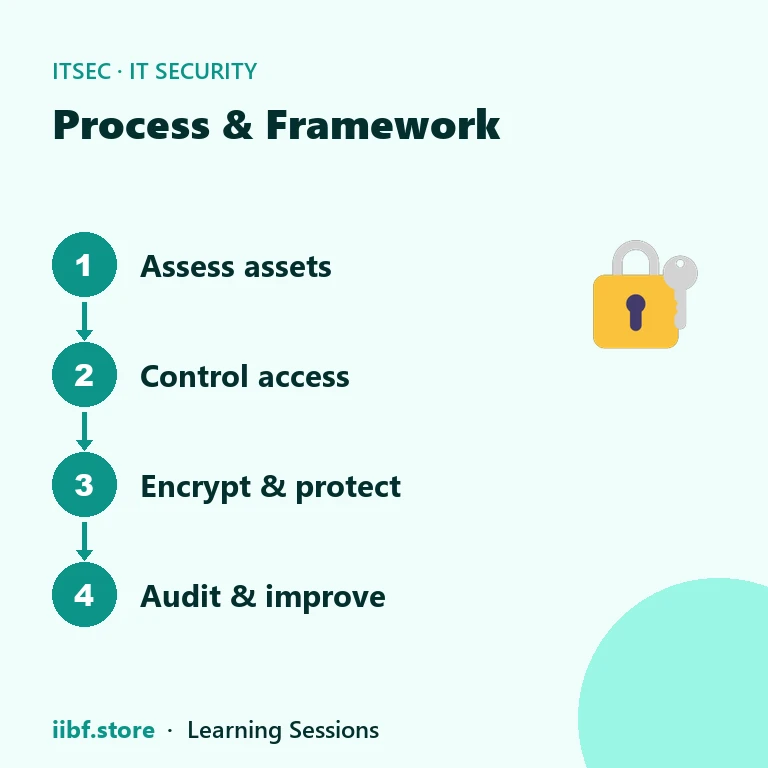
A practical checklist keeps the cloud security shared responsibility model from staying a theory exercise. Start by mapping every workload to its service model — IaaS, PaaS, or SaaS — because the ownership questions below only make sense once you know which column of the table applies. Next, request the provider's current SOC 2 or ISO certification reports rather than accepting a marketing claim of compliance.
Insist on a written data residency commitment for anything touching customer PII, and confirm the exit plan: how quickly can the bank retrieve and delete its data if it switches providers? Finally, schedule an independent penetration test of the layers the bank owns, not the layers the provider owns — testing a provider's own infrastructure without authorisation is both pointless and against most cloud contracts.
Browse more exam-focused breakdowns like this one on our IT Security topic hub, and revisit the fundamentals whenever a new cloud question style shows up in a mock test.
🧠 Practice MCQs: Cloud Security Shared Responsibility Model
Q1. Under the cloud security shared responsibility model, who is always responsible for physical data centre security, regardless of service type? (a) The bank's IT department (b) The cloud service provider (c) RBI's inspection team (d) A third-party auditor
Answer: (b) — Physical infrastructure and hardware always remain with the cloud provider across IaaS, PaaS, and SaaS.
Q2. In a PaaS deployment, which of the following typically remains the bank's responsibility? (a) Hypervisor security (b) Physical server maintenance (c) Application code and data (d) Data centre cooling systems
Answer: (c) — In PaaS, the provider manages the OS and runtime, but the bank still owns its application code, configuration, and data.
Q3. Which RBI principle is most directly relevant to cloud outsourcing by banks? (a) Outsourcing removes the bank's regulatory accountability (b) Accountability for customer data cannot be outsourced (c) Only foreign banks need outsourcing approval (d) Cloud vendors are exempt from RBI oversight
Answer: (b) — RBI's outsourcing guidance holds that a bank may delegate an activity but never the accountability for it.
Q4. In a SaaS model, which security layer almost always remains with the bank? (a) Network firewall rules (b) Guest operating system patches (c) Identity and access management (d) Physical hardware maintenance
Answer: (c) — Even in fully managed SaaS, the bank retains responsibility for user identities, roles, and access permissions.
Q5. A bank discovers that its cloud vendor's default log retention period is shorter than what regulators require for forensic review. This is best classified as a gap in: (a) Physical security (b) Contractual and audit provisions (c) Hardware redundancy (d) Network bandwidth planning
Answer: (b) — Log retention and audit rights are contractual controls the bank must negotiate; providers will not exceed their default terms unasked.
Want chapter-wise mock tests with 100+ MCQs? Start practising free →
❓ Frequently Asked Questions
What does the cloud security shared responsibility model actually mean for a bank?
It means security duties are split between the bank and its cloud provider based on the service type used, but the bank always keeps ultimate accountability for customer data and regulatory compliance.
Does using a reputed cloud provider reduce a bank's compliance burden with RBI?
It reduces operational effort but not accountability. RBI still expects the bank's board and senior management to demonstrate oversight of any activity it outsources, including cloud hosting.
Which cloud service model gives a bank the least security responsibility?
SaaS shifts the most responsibility to the provider, since the provider manages the application itself. The bank still owns user access, permissions, and its own data.
Why is the shared responsibility model tested so often in IT Security exams?
Because it combines technical layering (IaaS/PaaS/SaaS) with regulatory principles (accountability cannot be outsourced), making it a favourite way to test applied understanding rather than rote definitions.
The cloud security shared responsibility model rewards banks that treat it as an ongoing contract review, not a one-time checkbox at onboarding. Revisit your vendor agreements each time a workload moves between IaaS, PaaS, and SaaS, and keep testing your understanding with structured practice. Continue your preparation with full-length mocks on our CAIIB course page.
Prefer revising from a printed book?
Chapter-wise books with MCQs after every chapter — minimal pages, complete coverage, delivered anywhere in India. Every book has a free sample to read first.


















Practice this topic
Take a free mock test, download chapter PDFs, or watch a video class — all included on iibf.store.
Keep reading