Card Skimming Fraud Detection in Banking: IIBF Exam Guide
Card skimming fraud detection is a core skill every banker must master under the IIBF's Prevention of Cyber Crime and Fraud Management syllabus, because skimming remains one of the oldest yet most persistent card-cloning techniques hitting Indian banks. From tampered ATM card slots to hidden shimmers inside chip readers, fraudsters keep adapting faster than the warning posters pasted at branch doors. This article breaks down how skimming actually works, the tell-tale signs branch staff and customers must watch for, and the safeguards banks deploy to catch it before losses mount — all mapped to what the IIBF certificate exam expects you to know.
🔍 Understanding Card Skimming: How Fraudsters Clone Your Card
Card skimming is the illegal copying of data stored on a debit or credit card's magnetic stripe (and, in rarer cases, its chip) using a concealed device attached to a genuine card-accepting terminal. A skimmer reads the stripe the instant a card is swiped, while a hidden pinhole camera or a fake PIN pad overlay captures the PIN entered alongside it. The two pieces of stolen data together — card number plus PIN — let fraudsters manufacture a cloned card or make card-not-present purchases. This chapter of Introduction To Cyber Crimes frames skimming as a physical-plus-digital hybrid crime: the device is physical, but the payoff is a digital transaction executed anywhere in the world within minutes. Because EMV chip cards encrypt each transaction with a unique cryptogram, chip-based skimming is far harder to monetise than magnetic-stripe skimming, which is why RBI has pushed banks hard toward mandatory chip-and-PIN issuance and stripe-only fallback restrictions. For exam purposes, remember that skimming differs from phishing in one crucial respect: no email or SMS is involved at all — the compromise happens entirely at a physical card-accepting device, which is exactly what the Electronic Card Frauds chapter categorises as a "point of compromise" attack rather than a social-engineering one.
💡 Exam Tip: If a question describes a hidden device reading stripe data at an ATM slot, the answer is "skimming," not "phishing" — phishing always requires a deceptive communication channel (email, SMS, call), skimming never does.
💳 Skimming Techniques Every Banker Should Recognise
Modern skimming has branched into several distinct sub-methods, and IIBF questions frequently test whether candidates can tell them apart. ATM skimming uses a false slot overlay fitted onto the genuine card reader, often paired with a pinhole camera above the keypad or a transparent PIN-pad overlay. POS skimming targets merchant swipe machines, sometimes through a compromised or tampered terminal supplied by a dishonest vendor rather than the bank. Shimming is the newer, chip-targeting variant: a paper-thin shim is inserted inside the card slot to intercept data exchanged between the chip and the reader during a transaction — it cannot clone the chip itself but can sometimes harvest enough data for a downgraded magnetic-stripe clone. E-skimming, also called formjacking, moves the attack online: malicious code injected into an e-commerce checkout page silently copies card details as a customer types them in, with no physical device at all. Recognising these categories matters operationally too — a branch that understands Computer Hackers tactics knows that e-skimming is really a website-compromise problem for the merchant's IT team, not a card-manufacturing defect. Field staff trained to spot loose, wobbly, or oddly coloured card slots — and to compare an ATM's keypad against neighbouring machines of the same brand — remain the single most effective frontline control against the physical variants, well ahead of any software fix.
| Skimming Type | Where It Occurs | Defeats Chip (EMV)? | Primary Prevention |
|---|---|---|---|
| ATM skimming | ATM card slot / keypad overlay | ❌ No | Physical slot inspection, anti-skimming jitter devices |
| POS skimming | Merchant swipe terminal | ❌ No | Insist on chip/contactless tap, avoid stripe swipe |
| Shimming | Inside the chip reader slot | ✅ Partially | Real-time SMS/app transaction alerts |
| E-skimming (formjacking) | E-commerce checkout page | ✅ Yes (no physical card read) | Virtual/masked card numbers for online spends |
🛡️ Bank and RBI Safeguards Against Card Skimming
Indian banks now run layered defences that map neatly onto the IIBF's fraud-prevention framework. At the hardware level, anti-skimming devices — jittering motors, foil-lined slots, and sensor-triggered alarms — are mandatory on most public-facing ATMs and are inspected during regular branch audits, a control area covered in the Computer Fraud Protection chapter. At the network level, card networks and issuing banks run real-time fraud-scoring engines that flag transactions from unusual geographies, merchant categories, or spending velocities within seconds, often blocking a cloned-card transaction before the fraudster even leaves the ATM vestibule. RBI's broader push toward EMV chip-and-PIN migration, contactless tap-and-pay limits, and mandatory two-factor authentication for online card transactions (through 3-D Secure OTP) has structurally reduced the payoff from stripe-only skimming, which is why fraudsters have shifted meaningful volume toward e-skimming and card-not-present channels instead. When a customer does report a suspected skimming incident, banks are expected to freeze the card immediately, initiate chargeback proceedings with the card network, and — where warranted — escalate to the 1930 cyber crime helpline reporting workflow alongside their own internal fraud desk. Candidates should note that RBI circulars place the primary duty of physical-device security squarely on the acquiring bank that owns the ATM or POS terminal, not on the card-issuing bank, a distinction examiners like to test.
⚠️ Common Mistake: Candidates often assume the card-issuing bank is always liable for skimming losses. In reality, liability frameworks distinguish between the issuer, the acquirer who owns the compromised terminal, and the customer's own diligence — don't collapse all three into one party on the exam.
📋 Detecting and Responding to a Skimming Incident
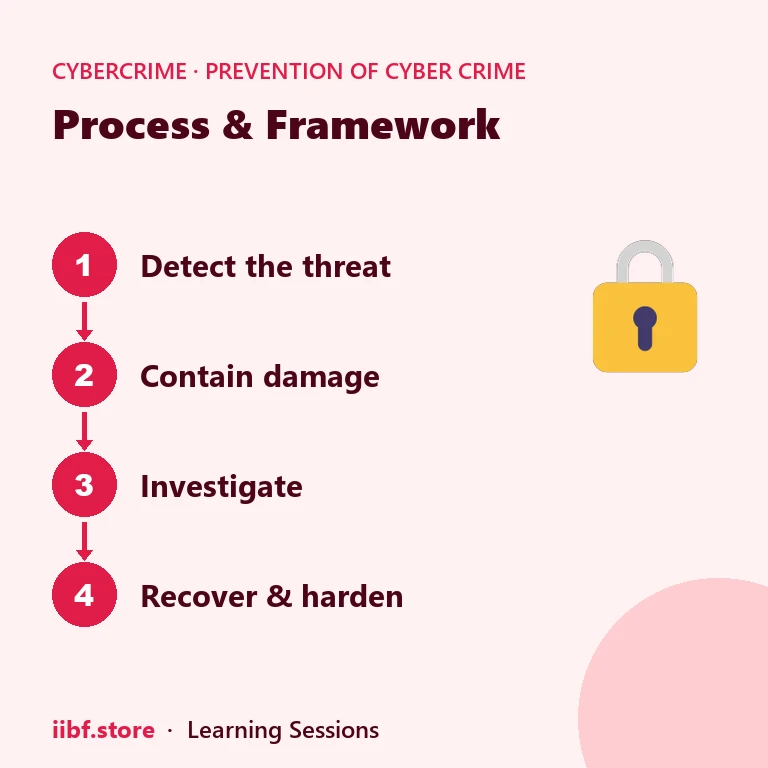
Early detection hinges on pattern recognition at three levels: the customer, the branch, and the bank's central fraud-monitoring desk. Customers should be trained to cover the keypad while entering a PIN, wiggle the card slot before inserting a card, and check statements for small "test" debits — fraudsters often run a tiny transaction first to confirm a cloned card works before attempting a larger withdrawal. Branch staff conducting routine ATM upkeep should treat any loose fascia, extra wiring, or a keypad that feels different from usual as a red flag requiring immediate escalation, not a maintenance ticket to be logged for later. At the institutional level, transaction-monitoring systems correlate multiple compromised cards used first at a common merchant or ATM location — a technique that also helps investigators trace how stolen data later moves through money mule accounts used to launder the cashed-out funds. Once a skimming device is confirmed, the bank must disable the affected terminal, preserve CCTV footage as evidence, notify the card network, and file a report consistent with RBI's incident-reporting obligations. This full lifecycle — detect, isolate, report, remediate — is exactly what IIBF case-study questions test, so candidates should be comfortable sequencing these steps rather than just naming them. Banks operating in the wider financial ecosystem, including NBFCs offering co-branded cards, follow a parallel process; readers wanting the regulatory backdrop for that overlap can see how non-banking financial companies in India are supervised for similar consumer-protection obligations under RBI.
📌 Remember: The sequence is always detect → isolate the compromised terminal → report to the network and regulator → remediate customer losses — memorise this order, not just the individual actions.
🧠 Practice MCQs: Card Skimming Fraud Detection
Q1. A device fitted over a genuine ATM card slot to copy magnetic-stripe data is known as: (a) A phishing kit (b) A skimmer (c) A rootkit (d) A honeypot
Answer: (b) — A skimmer is a covert hardware device attached to a card reader to capture stripe data.
Q2. Which skimming variant specifically targets EMV chip transactions inside the card slot? (a) POS skimming (b) E-skimming (c) Shimming (d) Vishing
Answer: (c) — Shimming inserts a thin shim inside the chip reader to intercept chip-transaction data.
Q3. E-skimming (formjacking) primarily compromises: (a) ATM hardware (b) An e-commerce checkout page (c) A bank's core banking server (d) A customer's physical wallet
Answer: (b) — E-skimming injects malicious code into online checkout pages to capture card data as it is typed.
Q4. Under RBI's framework, primary responsibility for physical security of a compromised ATM generally rests with: (a) The card-issuing bank (b) The acquiring bank that owns the ATM (c) The customer (d) The card network exclusively
Answer: (b) — The acquiring bank owning and operating the terminal bears primary responsibility for its physical security.
Q5. Which control is LEAST effective against e-skimming (formjacking) specifically? (a) Using virtual/masked card numbers online (b) Merchant website code integrity monitoring (c) Physically inspecting ATM card slots (d) 3-D Secure OTP for online transactions
Answer: (c) — Physical ATM slot inspection addresses hardware skimming, not e-skimming, which occurs entirely on a compromised website.
Want chapter-wise mock tests with 100+ MCQs? Start practising free →
Is card skimming still relevant now that most Indian cards have EMV chips?
Yes — while chip migration has sharply cut magnetic-stripe skimming losses, shimming and e-skimming have emerged as chip-era successors, and stripe fallback still exists on many international transactions, keeping skimming firmly on the IIBF syllabus.
How can a bank customer physically detect a skimmer at an ATM?
Wiggle the card slot and keypad before use — genuine fittings are firmly fixed, while overlay devices tend to feel loose, slightly raised, or oddly coloured compared to the rest of the machine.
What is the difference between skimming and shimming?
Skimming reads magnetic-stripe data through an external overlay device, while shimming is inserted inside the chip-reading slot to intercept data exchanged during an EMV chip transaction.
Who bears the loss when a card is cloned via a skimmed ATM?
Liability is assessed case by case under RBI's customer-protection circulars, weighing the acquiring bank's terminal security, the issuing bank's monitoring, and how promptly the customer reported the unauthorised transaction.
Take Your Cyber Crime Prep Further
Card skimming fraud detection is just one thread in the broader Prevention of Cyber Crime and Fraud Management syllabus, and IIBF exams reward candidates who can connect device-level fraud to the regulatory and reporting chain around it. Revisit the chapter on Incident Management to tie together detection and response timelines, cross-check your understanding against the RBI's official guidance at rbi.org.in, and browse more coverage on our Prevention of Cyber Crime tag hub. For deeper background on related fraud typologies, see our guide on computer insecurity in banking. Ready to test yourself? Start a free chapter-wise mock test →
Prefer revising from a printed book?
Chapter-wise books with MCQs after every chapter — minimal pages, complete coverage, delivered anywhere in India. Every book has a free sample to read first.






























Practice this topic
Take a free mock test, download chapter PDFs, or watch a video class — all included on iibf.store.