Computer Hacking Techniques Every Banker Should Know: IIBF Cyber Crime Guide 2026
Every bank employee preparing for IIBF exams needs a working map of computer hacking techniques — not to become a hacker, but to recognise the entry points criminals use against core banking systems, ATMs, and customer accounts. This guide breaks down the methods examiners expect you to know, links them to real study chapters, and gives you exam-ready recall points.
🖥️ What Are Computer Hacking Techniques?
In banking exam terminology, computer hacking techniques cover any method used to gain unauthorised access to a system, network, or account — from guessing a weak password to exploiting a software flaw in core banking software. Hackers broadly fall into three categories tested in IIBF papers: white-hat (ethical, hired to find gaps), black-hat (criminal intent), and grey-hat (unauthorised but not always malicious). Understanding this classification matters because incident-response policy and disciplinary action differ depending on which category an intruder falls into. The Computer Hackers chapter walks through this taxonomy in detail, including how hacker motives shape the attack pattern a bank should anticipate. Most techniques exploit one of three weaknesses: a human decision, a software flaw, or a misconfigured network boundary. Knowing which weakness a technique targets is the fastest way to remember its correct countermeasure in an exam scenario question.
🎣 Social Engineering And Password Attacks
The largest share of successful intrusions into banking systems still begins with a human, not a machine. Social engineering tricks an employee or customer into voluntarily handing over credentials — through a fake IT-helpdesk call, a spoofed login page, or a message urging "immediate verification" of account details. Password-based techniques sit alongside this: brute-force attacks try every combination systematically, while dictionary attacks run common words and leaked-password lists against a login form. Credential-stuffing attacks reuse passwords leaked from unrelated websites, betting that a customer or staff member has repeated the same password across services. Banks counter these with multi-factor authentication, account lockout after failed attempts, and staff awareness drills. The Channels Of Cyber Crimes chapter maps each of these delivery channels — email, SMS, voice call, and fake apps — so you can match a case study in the exam to the right channel category quickly.
💡 Exam Tip: If a question describes an attacker trying thousands of password combinations automatically, that is a brute-force attack, not credential stuffing — credential stuffing always implies passwords stolen from a different breach.
🦠 Malware, Trojans And Backdoors
Once initial access is gained, or sometimes as the entry point itself, attackers deploy malicious software. A virus attaches itself to legitimate files and spreads when those files are shared; a worm self-replicates across a network without needing a host file, which is why worm outbreaks spread faster inside a bank's internal LAN. A trojan disguises itself as legitimate software — a "security update" or invoice attachment — and once opened, installs a backdoor that gives the attacker persistent remote access. Keyloggers silently record every keystroke, capturing net-banking passwords and OTPs as they are typed. Spyware monitors browsing and transaction activity without the user's knowledge. The Cyber Crime Methods chapter and the Introduction To Cyber Crimes chapter both classify these malware families with the definitions IIBF question-setters draw from most often, so treat them as your primary revision source for this section.
⚠️ Common Mistake: Candidates often use "virus" as a catch-all term for any malware. In exam MCQs, a self-replicating program that needs no host file is specifically a worm — mixing the two up costs easy marks.
💳 Card Skimming And Network Intrusion
Hardware-level hacking techniques remain common at ATMs and point-of-sale terminals. Skimming devices clone the magnetic stripe of a debit or credit card, often paired with a hidden camera or fake keypad overlay to capture the PIN. Shimming is the chip-card equivalent, inserting a thin device inside the card slot to intercept EMV chip data. On the network side, man-in-the-middle attacks intercept traffic between a customer's device and the bank's server — commonly over unsecured public Wi-Fi — while SQL injection and cross-site scripting exploit poorly validated input fields on banking web applications to reach the underlying database. The Electronic Card Frauds chapter and Computer Insecurity chapter cover the hardware and network angles respectively, and both are frequently tested together as a single case-study question.
🛡️ How Banks Detect And Respond
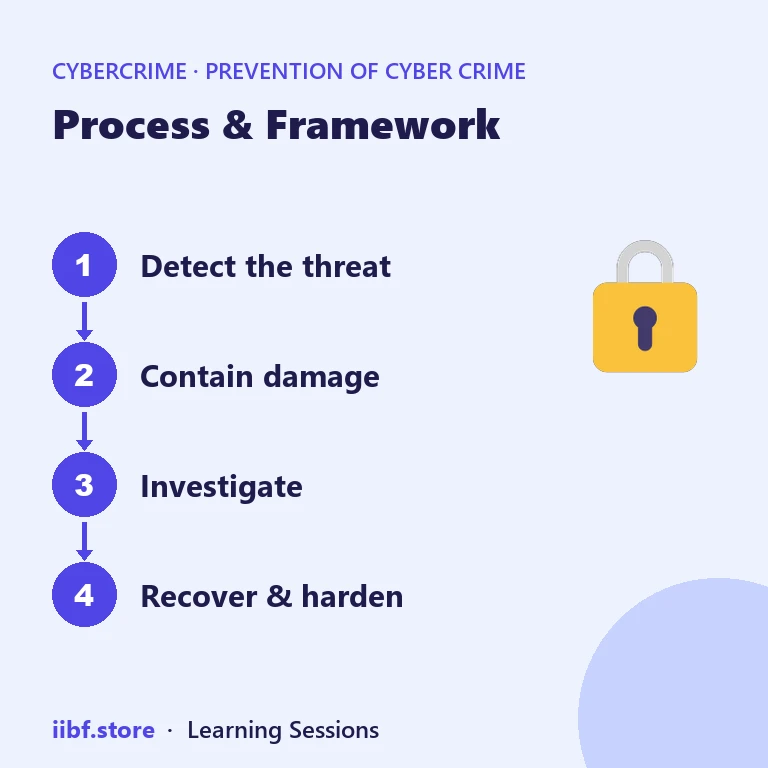
Recognising a technique is only half the syllabus — banks are equally tested on the response side. Intrusion detection systems flag anomalous login patterns, firewalls restrict unauthorised network paths, and a documented incident-response plan governs what staff must do once a breach is suspected: isolate the affected system, preserve logs for forensic review, and escalate through the bank's designated reporting chain. The table below summarises how the major technique families map to their primary defence and whether they are commonly tested as standalone exam questions.
| Hacking Technique | Typical Entry Point | Primary Defence | Frequently Tested |
|---|---|---|---|
| Social engineering | Human decision (call/email/SMS) | Staff and customer awareness training | ✅ Yes |
| Brute-force / credential stuffing | Login form | Multi-factor authentication, lockout policy | Yes |
| Trojan / backdoor malware | Email attachment, fake update | Endpoint antivirus, application whitelisting | Yes |
| Card skimming / shimming | ATM or POS hardware | Anti-skimming devices, EMV chip verification | Yes |
| SQL injection / XSS | Web application input field | Input validation, secure coding review | ❌ No |
Working through the Incident Management chapter alongside Computer Fraud Protection gives you both sides of the answer — the attack and the bank's playbook — which is exactly how scenario-based questions are structured in the actual paper.
📌 Remember: Detection and response are process controls; encryption and authentication are preventive controls. Exam questions often ask you to classify a given control as one or the other.
📚 Exam Focus: Hacking Techniques In JAIIB/CAIIB
For JAIIB and CAIIB papers, examiners rarely ask you to define a technique in isolation — they present a short scenario and expect you to identify the technique, the exploited weakness, and the appropriate control in one go. Build your revision around technique families rather than isolated terms: human-targeted (social engineering, phishing-style channels), credential-targeted (brute force, credential stuffing, keyloggers), software-targeted (malware, injection attacks), and hardware-targeted (skimming, shimming). This mirrors how the related articles on this site treat adjacent topics — our guide to ransomware attack prevention extends the malware discussion above, and the piece on phishing attacks in banking goes deeper into the social-engineering channel. If your revision plan also covers investment and treasury topics, the explainer on the G-Sec auction process is a useful cross-subject anchor for TIRM candidates studying alongside this module. For the full spread of chapters on this subject, browse more Prevention of Cyber Crime articles on the blog.
Official sources: cross-check the latest syllabus, circulars and rates on the IIBF official website and the Reserve Bank of India.
🧠 Practice MCQs: Computer Hacking Techniques
Q1. A program that self-replicates across a network without attaching itself to a host file is best classified as a: (a) Virus (b) Worm (c) Trojan (d) Keylogger
Answer: (b) — Worms self-replicate independently across a network, unlike viruses which need a host file.
Q2. An attacker who reuses passwords leaked from an unrelated website to log into banking accounts is performing: (a) Brute-force attack (b) Credential stuffing (c) SQL injection (d) Shimming
Answer: (b) — Credential stuffing specifically relies on passwords stolen from a separate, prior data breach.
Q3. A thin device inserted inside a card slot to intercept EMV chip data is called: (a) Skimming (b) Shimming (c) Spoofing (d) Sniffing
Answer: (b) — Shimming targets chip cards; skimming targets the magnetic stripe.
Q4. Malware disguised as legitimate software that installs a hidden backdoor once opened is a: (a) Worm (b) Trojan (c) Adware (d) Rootkit patch
Answer: (b) — A trojan hides malicious code inside what appears to be a genuine program or update.
Q5. Which control category do multi-factor authentication and account lockout policies belong to? (a) Detective control (b) Preventive control (c) Corrective control (d) Forensic control
Answer: (b) — MFA and lockout policies stop unauthorised access before it happens, making them preventive controls.
Want chapter-wise mock tests with 100+ MCQs? Start practising free →
What is the difference between hacking and cracking?
Hacking broadly means exploring or manipulating a system's limits, which can be ethical when authorised; cracking specifically refers to breaking security controls with malicious or unauthorised intent.
Are ethical hackers relevant to IIBF exam syllabus?
Yes — ethical or white-hat hackers are tested as part of the hacker-classification topic, since banks employ them for authorised penetration testing to find weaknesses before criminals do.
What is the quickest way to remember malware types for the exam?
Group them by behaviour: viruses need a host file, worms self-replicate independently, trojans disguise themselves as legitimate software, and keyloggers/spyware focus on silent data capture.
Why do exam questions pair a hacking technique with its defence?
Because real IIBF scenario questions test applied understanding, not just definitions — you are expected to match the exploited weakness to the correct preventive or detective control.
Next Step: Practice With Real Scenarios
Reading definitions is not enough to clear scenario-based questions on computer hacking techniques — you need timed practice against exam-style cases. Work through chapter tests and full mocks on iibf.store/tests, or enrol in the structured CAIIB course for a complete, chapter-mapped revision plan.
Practice this topic
Take a free mock test, download chapter PDFs, or watch a video class — all included on iibf.store.