Designated Director and Principal Officer Under PMLA: Roles (KYC AML)
For JAIIB and CAIIB candidates studying KYC, AML and CFT, the designated director and principal officer roles under the Prevention of Money Laundering Act, 2002 (PMLA) are among the most frequently tested compliance concepts. Every reporting entity - banks, NBFCs and financial institutions - must appoint both officials to discharge the obligations cast by Section 12 of the Act. This article explains who holds each role, how they are appointed, the FIU-IND registration and reporting chain they operate within, and the personal liability that attaches when compliance fails.
📋 Who Is the Designated Director Under PMLA
The Designated Director is defined under the Prevention of Money-laundering (Maintenance of Records) Rules, 2005, as the person a reporting entity nominates to ensure overall compliance with the obligations imposed by the Act and the Rules framed under it. In practice, banks appoint a whole-time director, Managing Director, CEO, or an equivalent senior management functionary who sits at or near Board level - not a branch-level employee.
The appointment is formalised through a Board resolution, and the Board remains accountable for the AML/CFT framework even after delegating operational duties. This is the person regulators expect to answer for systemic lapses, which is why the role sits above day-to-day transaction monitoring.
The obligations the Designated Director must oversee - record maintenance, client identification procedure, and reporting of prescribed transactions - trace back to the legislation at national level chapter, which sets out how the PMLA fits within India's broader AML statute. Banks must also intimate the name and details of the Designated Director to their regulator (RBI, for banking companies) and to FIU-IND, and update this promptly whenever the appointee changes.
💡 Exam Tip: The Designated Director is a Board-level appointment responsible for overall PMLA compliance; the Principal Officer is the operational officer who actually files reports. Examiners frequently swap these two in distractor options - read the question stem carefully.
🧾 Principal Officer: Appointment and Core Duties
The Principal Officer is a separate, senior officer nominated by the reporting entity to act as the central reference point for all AML/CFT compliance activity. Unlike the Designated Director, the Principal Officer is hands-on: this person receives escalated alerts from branches and business units, evaluates them, and decides which transactions must be reported to the Financial Intelligence Unit-India (FIU-IND).
Core duties include ensuring timely cash transaction report filing, Suspicious Transaction Reports (STRs), Non-Profit Organisation Transaction Reports (NTRs) and Counterfeit Currency Reports (CCRs) as prescribed under Section 12 of the PMLA, maintaining the records that support these filings, and coordinating with branches on client identification and ongoing due diligence. Where the Principal Officer suspects a transaction may relate to proceeds of crime, the decision on suspicious transaction reporting to FIU-India rests with this office, independent of business-line pressure. For higher-risk relationships, the Principal Officer also determines when a customer needs enhanced due diligence rather than standard verification.
Because the role touches every business vertical, the Principal Officer needs adequate seniority, access to customer and transaction records across the organisation, and a reporting line that keeps the function independent of sales targets. Banks typically structure this within the compliance function, as covered in the organization structure in India chapter, so escalations from branches reach the Principal Officer without dilution.
⚠️ Common Mistake: Candidates often assume the Principal Officer only handles STRs. In reality the role covers CTR, STR, NTR and CCR filing, plus record maintenance obligations under Section 12(1) of the PMLA - not suspicious reporting alone.
🔗 FIU-IND Registration and the Reporting Chain
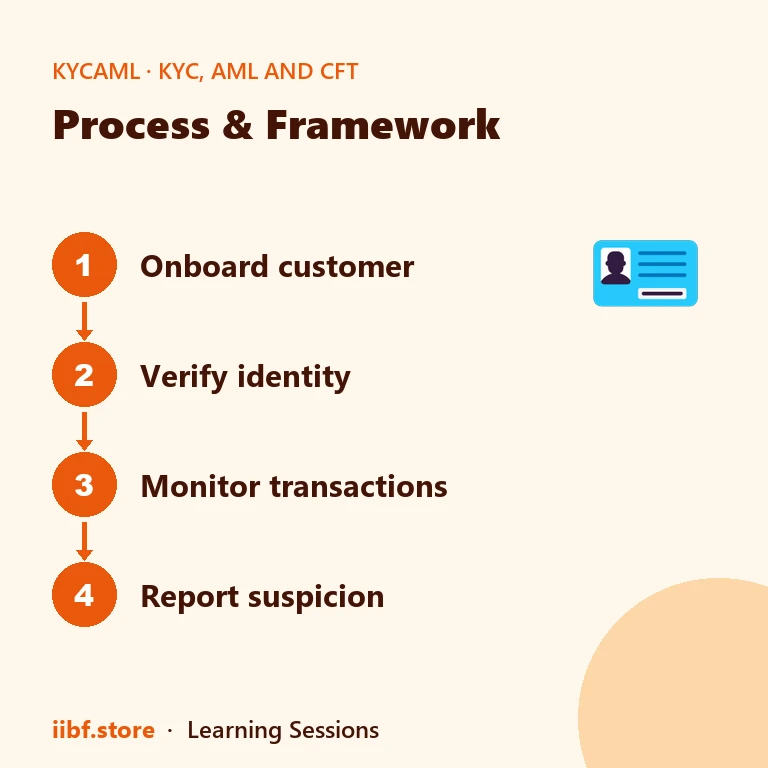
Every reporting entity must register on the FINnet portal maintained by FIU-IND, the central national agency that receives, processes, analyses and disseminates information on suspicious financial transactions. The Principal Officer usually holds the entity's registration credentials and is the named contact through whom CTRs, STRs, NTRs and CCRs are electronically filed within the prescribed timelines.
The reporting chain typically flows from the branch or business unit, which raises an internal alert, to the Principal Officer, who reviews the alert and decides on filing, and onward to the Designated Director and the Board, who retain oversight of the overall framework and are informed of material trends or systemic gaps. This chain is what regulators examine during onsite inspections - a bank cannot show only policy documents; it must demonstrate the alert actually moved through this hierarchy.
The reporting chain also has a cross-border dimension. Where a bank deals with respondent banks or high-risk jurisdictions, the same Principal Officer function absorbs inputs from correspondent banking due diligence and from the international guidelines & standards that shape FATF-aligned reporting expectations. Fraud signals from digital channels feed into the same pipeline: alerts triggered by phishing vishing and smishing attempts are routed through the identical STR workflow the Principal Officer manages, since compromised accounts are a common money-laundering vector.
📌 Remember: Registration with FIU-IND and day-to-day filing sit with the Principal Officer; overall accountability for the framework sits with the Designated Director and the Board.
⚖️ Personal Liability and Penalties Under Section 13
Compliance with Section 12 is not merely procedural - it carries personal consequences. Section 13(2) of the PMLA empowers the Director, FIU-IND to issue directions and impose a monetary penalty on the reporting entity, and separately on its Designated Director, where there is a failure to comply with the record-keeping, client identification or reporting obligations under Chapter IV of the Act. This is one of the few places in Indian banking law where a named senior officer, not just the institution, can be fined for a compliance lapse.
Before any penalty is imposed, the Director, FIU-IND must issue a show-cause notice and give the entity and the Designated Director a reasonable opportunity of being heard. The power extends to ordering compliance, imposing a fine for each instance of failure, and in serious or repeated cases, referring matters for further regulatory action by RBI or other sector regulators.
For candidates, the key exam distinction is this: the Principal Officer's lapses are usually addressed as an internal control failure attributable to the entity and the Designated Director's oversight, whereas Section 13(2) specifically names the Designated Director alongside the reporting entity as a target of penalty. This is why banks insist the Designated Director be senior enough to genuinely direct the compliance programme, not a token nominee. Weak methods used to bypass AML controls - layering, structuring and other tactics covered under money laundering: some methods - are exactly the failures Section 12 reporting is meant to catch, and exactly what regulators test the Designated Director's oversight against.
| Aspect | Designated Director | Principal Officer |
|---|---|---|
| Level of appointment | Board-level / whole-time director or CEO | Senior compliance officer |
| Primary role | Overall PMLA/AML-CFT compliance oversight | Day-to-day filing and internal reference point |
| Files CTR/STR/CCR with FIU-IND | ❌ No, delegates this function | ✅ Yes, files directly |
| Can be personally fined under Section 13(2) | ✅ Yes, named alongside the entity | ❌ Not directly named under Section 13(2) |
| Reports to | Board of Directors | Designated Director |
🎯 Final Word: Master the PMLA Reporting Chain
The designated director and principal officer structure exists so that AML/CFT compliance has both board-level accountability and an operational engine that actually files reports. For exam purposes, anchor the distinction firmly: the Designated Director owns the framework and can be personally penalised under Section 13(2); the Principal Officer runs the reporting machinery day to day and is the entity's registered contact with FIU-IND. Revisit the related chapters on this subject through the KYC, AML and CFT topic hub, and build speed on this and adjacent themes with graded practice on CAIIB mock sets.
🧠 Practice MCQs: Designated Director and Principal Officer
Q1. Under the Prevention of Money-laundering (Maintenance of Records) Rules, 2005, who typically qualifies to be appointed as a bank's Designated Director? (a) Any branch manager (b) A whole-time director, MD/CEO, or equivalent senior functionary approved by the Board (c) The bank's external statutory auditor (d) Any employee nominated by the Principal Officer
Answer: (b) — the Designated Director must be a senior, Board-level functionary formally appointed by the Board, not a branch-level nominee.
Q2. Which section of the PMLA casts the primary record-keeping and reporting obligations on banks and financial institutions? (a) Section 3 (b) Section 8 (c) Section 12 (d) Section 24
Answer: (c) Section 12 — Section 12 requires reporting entities to maintain records and furnish information to FIU-IND as prescribed.
Q3. The Principal Officer under PMLA is primarily responsible for: (a) Setting the bank's lending rates (b) Furnishing CTRs, STRs, NTRs and CCRs to FIU-IND and acting as the central AML reference point (c) Approving loan sanctions (d) Conducting the bank's statutory audit
Answer: (b) — the Principal Officer is the operational compliance officer who files prescribed reports with FIU-IND and coordinates internal AML escalations.
Q4. Under Section 13(2) of the PMLA, who can be held personally liable, along with the reporting entity, for failure to comply with Chapter IV obligations? (a) Any customer of the bank (b) The Designated Director (c) The RBI Governor (d) The Director, FIU-IND
Answer: (b) The Designated Director — Section 13(2) allows the Director, FIU-IND to penalise the reporting entity and, separately, its Designated Director.
Q5. Reporting entities are required to communicate the appointment details of their Designated Director and Principal Officer to: (a) SEBI only (b) FIU-IND and the concerned sector regulator, such as RBI (c) Only their internal audit committee (d) The Ministry of Corporate Affairs alone
Answer: (b) — appointment details must be intimated to FIU-IND and to the entity's regulator, and updated whenever the appointee changes.
Want chapter-wise mock tests with 100+ MCQs? Start practising free →
What is the difference between the Designated Director and the Principal Officer under PMLA?
The Designated Director is a Board-level appointee accountable for the overall AML/CFT compliance framework and can be personally penalised under Section 13(2). The Principal Officer is the senior operational officer who runs day-to-day compliance, including filing CTRs, STRs, NTRs and CCRs with FIU-IND.
Can the same person be both Designated Director and Principal Officer?
Regulatory guidance under the RBI Master Direction on KYC expects these to be distinct individuals so that Board-level oversight is not exercised by the same person who performs the operational filing function, keeping a check-and-balance between the two roles.
Who does the Principal Officer report to in the PMLA compliance structure?
The Principal Officer reports functionally to the Designated Director, who in turn is accountable to the Board of Directors for the entity's overall AML/CFT compliance posture.
What happens if a bank fails to appoint a Designated Director under PMLA?
Failure to appoint or maintain a properly empowered Designated Director exposes the bank and the responsible officers to directions and monetary penalties under Section 13(2) of the PMLA, besides being flagged as a serious lapse in RBI compliance inspections.
Quick quiz on this topic
5 exam-style questions from our free test bank — check yourself before you move on.
Practice this topic
Take a free mock test, download chapter PDFs, or watch a video class — all included on iibf.store.
Keep reading